Privacy Policy | Refund and Returns Policy | Terms and Conditions
Table of Contents
This page provides access to a comprehensive selection of evidence-informed handouts developed by the Mindful Ecotherapy Center. These materials are designed to support therapeutic interventions, psychoeducation, and client self-guided work across a range of mental health concerns.
Resources are appropriate for use by licensed clinicians, counselors, educators, and members of the general public seeking structured tools for emotional regulation, mindfulness practice, and ecotherapy-based approaches. Topics include cognitive restructuring, distress tolerance, nature-assisted mindfulness, and interpersonal effectiveness.
Disclaimer
These handouts are intended for educational and self-help purposes only and are not a substitute for professional mental health treatment or therapy. While they are based on evidence-based principles, they are not a replacement for working with a licensed mental health professional. If you are experiencing significant emotional distress or mental health challenges, we strongly encourage you to seek support from a qualified therapist or healthcare provider.
Usage Guidelines
All handouts are available for free distribution, provided that copyright information remains intact. This ensures proper attribution and preserves the integrity of the original content.
Included materials may be used in:
- Individual and group therapy sessions
- Educational and training settings
- Personal development and wellness routines
Key focus areas:
- Cognitive-behavioral strategies
- Mindfulness and ecotherapy integration
- Emotional regulation and stress management
- Communication and relational skills
- Self-assessment and goal setting
These tools are intended to enhance clinical practice and promote client engagement through structured, accessible, and therapeutically sound resources. If you find these tools helpful or would like to request more handouts on a specific topic, please contact us!
ACT Worksheets
These Acceptance and Commitment Therapy (ACT) worksheets are designed to enhance psychological flexibility and support meaningful change. These resources help you to clarify personal values, defuse unhelpful thoughts, practice mindfulness, and take committed action toward a more fulfilling life.
These tools are ideal for therapists, coaches, or individuals seeking growth. Each worksheet is grounded in ACT’s core principles and easy to integrate into sessions or daily routines.
Boundary-Setting Worksheets
Boundary-setting is an essential part of emotional well-being, healthy relationships, and effective self-care. The Mindful Ecotherapy Center‘s boundary-setting worksheets help people recognize different types of boundaries, including healthy boundaries, which balance self-respect with respect for others; permeable boundaries, which can lead to overextending oneself or difficulty saying no; rigid boundaries, which may create emotional distance and isolation; and inconsistent boundaries, which change unpredictably and often create confusion in relationships. Understanding these patterns helps people develop greater self-awareness and make intentional choices about how they interact with others.
These worksheets, grounded in mindfulness and nature-based therapeutic principles, encourage people to slow down, observe their thoughts, emotions, and physical sensations, and respond intentionally rather than automatically. Through reflective exercises, guided mindfulness practices, and practical boundary-setting skills, participants learn to communicate their needs clearly, reduce guilt associated with saying no, strengthen self-respect, and cultivate healthier, more balanced relationships at home, at work, and in their communities.
CBT Worksheets (Cognitive Behavioral Therapy)
These CBT Worksheets are based on Cognitive Behavioral Therapy (CBT). CBT is a structured, evidence-based approach to psychotherapy that helps you understand how your thoughts, feelings, and behaviors interact. The core idea is that it is not only events themselves that affect you, but also how you interpret those events. By learning to identify and shift unhelpful thinking patterns, you can change emotional responses and behavioral outcomes in practical, measurable ways (Beck, 2011).
At the Mindful Ecotherapy Center, CBT is often integrated with nature-based and mindfulness-informed practices, helping you connect cognitive awareness with present-moment grounding. This combination supports emotional regulation while encouraging a deeper sense of connection with yourself and your environment.
DBT Worksheets (Dialectical Behavioral Therapy)
These Dialectical Behavioral Therapy (DBT) Worksheets offer practical tools designed to help you build emotional regulation, distress tolerance, interpersonal effectiveness, and mindfulness skills. These worksheets are grounded in evidence-based DBT principles and are ideal for both personal growth and clinical use. Whether you’re navigating intense emotions, working through relationship challenges, or seeking greater emotional balance, these resources provide step-by-step guidance to support healing and transformation through mindful awareness and behavioral change.
The DBT Worksheets from the Mindful Ecotherapy Center integrate the structured, evidence-based practices of Dialectical Behavior Therapy with the grounding and relational focus of Mindfulness-Based Ecotherapy. Rather than teaching the DBT skills of distress tolerance, emotion regulation, interpersonal effectiveness, and mindfulness in a purely clinical or indoor context, these worksheets invite you to engage with the natural world as an active partner in the healing process. Exercises might encourage you to practice observing thoughts while sitting with a tree, regulating emotions through sensory awareness in a natural setting, or using ecological metaphors (like cycles, seasons, and interdependence) to better understand internal experiences.
This integration deepens the impact of DBT by anchoring abstract skills in lived, embodied experience. Mindfulness becomes not just an internal exercise but a relational one that is attuning to wind, water, earth, and living systems as mirrors for inner states. Distress tolerance skills are reframed through nature’s capacity to hold and transform intensity, while interpersonal effectiveness is enriched by reflecting on reciprocity and balance in ecosystems. In this way, the worksheets help you to move beyond coping toward connection, nurturing both psychological resilience and a renewed sense of belonging within the larger web of life.
Diagnostic Worksheets
Disclaimer: The diagnostic worksheets provided by the Mindful Ecotherapy Center are intended for informational and educational purposes only. They are not intended to provide a diagnosis, constitute medical or mental health advice, or serve as a substitute for a comprehensive evaluation and diagnosis by a qualified mental health professional.
Completing a worksheet does not establish or confirm a diagnosis. If you have questions or concerns about your mental health, or if you are uncertain about how to interpret the information provided, please seek advice from a qualified mental health professional. When in doubt, seek professional guidance.
Ecoplay
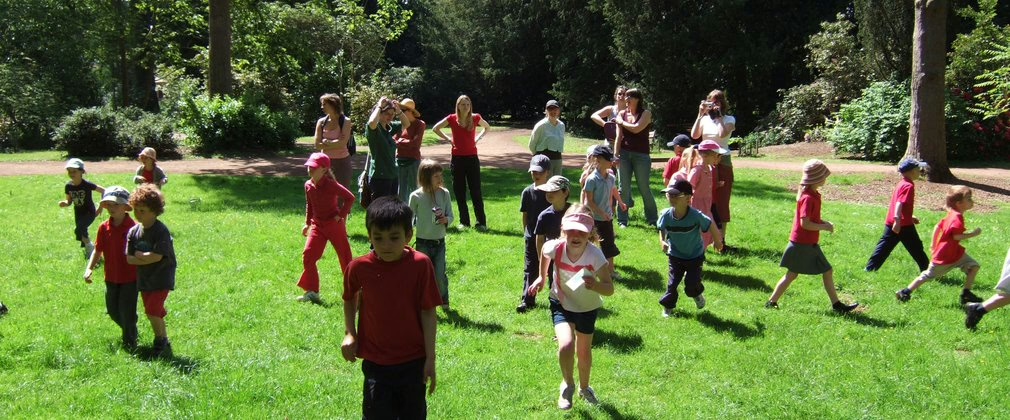
Ecoplay, developed by Dr. Charlton Hall, is an integrative therapeutic model that combines principles of ecotherapy, play therapy, and mindfulness-based approaches to promote emotional healing through nature-based and expressive interventions. Rooted in systems theory and grounded in attachment science, Ecoplay emphasizes the healing power of play in natural settings or using natural elements (like sand, water, stones, or leaves) to foster connection, regulation, and resilience in children and families. By engaging the senses and imagination within a mindful, ecological framework, Ecoplay helps clients develop healthier relationships with themselves, others, and the natural world. These handouts are utilized in the Ecoplay eight-week program.
Mindfulness-Based Ecotherapy
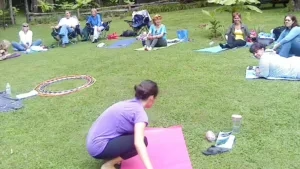
Mindfulness-based ecotherapy (MBE) combines mindfulness (the practice of paying non-judgmental attention to the present moment) with intentional connection to nature. By engaging the senses in outdoor settings, MBE helps you notice thoughts, feelings, and bodily sensations without being overwhelmed, while using natural metaphors (like flowing water, drifting clouds, or rooted trees) to support insight and growth. The worksheets guide you through ACT and DBT processes like defusion, acceptance, present-moment awareness, self-as-context, values, and committed action using exercises designed for outdoor practice. To use them, find a safe outdoor space, practice the exercises mindfully, and reflect in the provided journaling sections. Repeating the exercises regularly helps build psychological flexibility, strengthen awareness, and translate insights into meaningful actions, with nature serving as both anchor and metaphor throughout the process.
Motivational Interviewing
These free Motivational Interviewing worksheets are designed to help therapists, counselors, educators, and other helping professionals apply practical MI principles in their work. These resources provide structured exercises for exploring motivation, strengthening empathy, identifying discrepancies between values and behavior, and supporting meaningful change. The worksheets can also be integrated with Mindfulness-Based Ecotherapy practices to encourage greater self-awareness, intentional decision-making, and connection. Offered as free educational resources, they are intended to complement professional practice and provide accessible tools for incorporating Motivational Interviewing concepts into counseling and other helping relationships.
Substance Use Disorder
Substance Use Disorders (SUDs) occur when the use of alcohol, drugs, or other substances interferes with daily life, health, or relationships. They involve patterns of compulsive use, cravings, and difficulty controlling behavior despite negative consequences. SUDs are complex, influenced by genetics, environment, and emotional health.
Recovery is possible, but it often requires a combination of support, skill-building, and self-awareness.
Trauma Recovery
These Trauma Recovery Worksheets and Handouts offered by the Mindful Ecotherapy Center provide practical, mindfulness-based tools to support healing from emotional and psychological trauma. These resources are designed to help you process traumatic experiences in a safe, grounded, and compassionate way. Drawing on principles from ecotherapy, mindfulness, and trauma-informed care, the worksheets guide users through exercises that build emotional resilience, increase self-awareness, and foster a deeper connection with the natural world as a source of healing. Whether used independently or in conjunction with therapy, these materials can help you reclaim a sense of safety, empowerment, and wholeness on the path to recovery.
Adverse Childhood Experiences Questionnaire (ACE)
The Adverse Childhood Experiences (ACE) Survey is a research-based questionnaire that measures exposure to various forms of childhood trauma, including abuse, neglect, and household dysfunction. The ACE Survey helps identify patterns of early adversity that can significantly impact long-term physical, emotional, and mental health. Understanding your ACE score is a valuable tool for clinicians and individuals alike, as it sheds light on how early experiences may influence current behavior, relationships, and well-being. Recognizing these connections is an important first step in trauma-informed care and healing.
Privacy Policy | Refund and Returns Policy | Terms and Conditions