Posted on Leave a comment

Forest Bathing for ADHD: How MBE Supports Focus

Forest bathing for ADHD

Forest bathing for ADHD is an evidence-based practice that immerses children in nature to reduce hyperactivity, enhance focus, and promote emotional well-being. Rooted in the Japanese practice of shinrin-yoku, forest bathing encourages mindful engagement with natural environments. When combined with Mindfulness-Based Ecotherapy (MBE), it offers children with ADHD a holistic, non-pharmacological approach to improving attention, self-regulation, and cognitive function.


What Forest Bathing for ADHD Entails

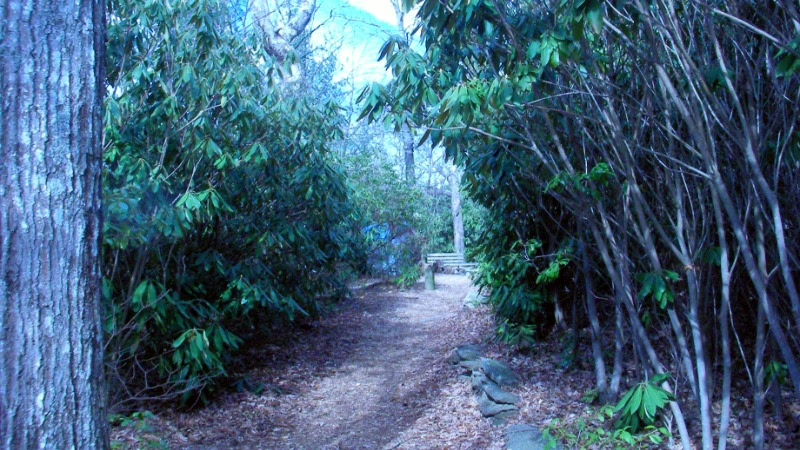
Forest bathing for ADHD goes beyond simply walking outdoors. It involves intentional, mindful interaction with the natural world. Children are guided to notice sensory details such as the rustle of leaves, the texture of tree bark, and the scent of pine or earth. This focused attention fosters present-moment awareness, which is often a challenge for children with ADHD, whose attention may be fragmented or easily diverted.

Spending time in green spaces has been shown to lower stress hormone levels, reduce hyperactivity, and improve mood. For children with ADHD, these physiological benefits help create a foundation for better cognitive control, calmer behavior, and enhanced emotional regulation. Forest bathing thus becomes a therapeutic activity that engages both body and mind in restorative ways.


Combining MBE with Forest Bathing for ADHD

Integrating MBE into forest bathing amplifies its benefits by incorporating structured mindfulness exercises. Guided activities may include mindful breathing while observing the forest canopy, slow walking with focused awareness of each step, or sensory exercises such as noticing the sound of birds or feeling the texture of soil and leaves.

These practices teach children to observe their internal states encompassing thoughts, feelings, and bodily sensations without judgment. Learning to pause and respond thoughtfully rather than react impulsively strengthens self-regulation, a critical skill often underdeveloped in ADHD. Mindful engagement in natural settings helps children practice attention and patience while reducing the cognitive and emotional strain that can trigger hyperactive behaviors.


Cognitive and Emotional Benefits of Forest Bathing for ADHD

Forest bathing for ADHD has measurable benefits for both cognition and emotional health. Research indicates that children who spend regular time in nature demonstrate improved working memory, sustained attention, and executive functioning. Coupling these experiences with MBE helps children integrate mindfulness techniques into everyday life, further enhancing focus and self-control.

Emotionally, forest bathing supports stress reduction, lowers irritability, and promotes calm. Immersion in natural surroundings fosters a sense of connection, grounding, and emotional stability. By combining mindfulness with nature, children develop resilience, coping skills, and greater awareness of their thoughts and emotions, all of which reduce behaviors associated with ADHD.


Practical Ways to Implement Forest Bathing for ADHD

Forest bathing for ADHD can be incorporated into daily routines by parents, educators, and therapists. Simple practices include:

  • Guided walks in parks or wooded areas with mindful observation prompts
  • Sensory exercises, such as listening to birds or feeling the texture of leaves
  • Breathing exercises and gentle stretching outdoors
  • Journaling reflections on natural experiences and sensations

Short, consistent sessions can provide meaningful improvements in attention, emotional regulation, and overall behavior. Over time, these practices help children develop lifelong strategies for focus, calm, and self-awareness.


Forest Bathing for ADHD as a Holistic Intervention

Forest bathing for ADHD, especially when paired with Mindfulness-Based Ecotherapy, provides a natural and effective approach to improving focus, emotional regulation, and cognitive function in children. By fostering mindful engagement with nature, children learn to manage hyperactivity, strengthen resilience, and build self-awareness in a supportive environment.

This practice is more than a therapeutic tool; it is an opportunity for children to reconnect with the restorative power of the natural world while developing skills that support lifelong growth. Forest bathing for ADHD demonstrates that combining mindfulness and nature can help children thrive both emotionally and cognitively.


Share Your Thoughts!

What do you think? Share your thoughts in the comments below! And don’t forget to subscribe to our newsletter!
Posted on

Shinrin-Yoku: Forest Bathing for Anxiety

Shinrin-Yoku

Anxiety is a common struggle that affects millions of people. Whether it’s the pressures of work, family, or personal challenges, it can feel overwhelming at times. While there are various treatments and therapies available, one that has gained significant attention in recent years is Shinrin-Yoku, or forest bathing. This practice, originating in Japan, involves immersing oneself in nature and using the sensory experience of the forest to reduce stress, improve mental health, and alleviate symptoms of anxiety. In this blog post, we will explore the science behind forest bathing and how it can be a natural and effective way to manage anxiety.

What is Shinrin-Yoku?

Shinrin-Yoku, which translates to “forest bathing” or “taking in the forest atmosphere,” is a practice that encourages individuals to slow down, breathe deeply, and connect with nature by spending time in a forest or wooded area. Unlike hiking or other outdoor activities, the goal of forest bathing is not exercise or reaching a specific destination. Instead, it focuses on being present and fully engaging with the sights, sounds, smells, and sensations of the forest environment.

The practice was first developed in Japan during the 1980s in response to increasing stress levels and burnout among urban populations. It quickly became a cornerstone of Japanese wellness culture and has since spread to other countries as a holistic method for managing stress and anxiety.

The Science Behind Forest Bathing

Numerous studies have demonstrated the positive effects of spending time in nature on mental health. Forest bathing, in particular, has been linked to reduced levels of anxiety, improved mood, and a general sense of relaxation. The science behind this practice is rooted in the concept of biophilia, the idea that humans have an innate connection to nature. Research has shown that being in natural environments can have a calming effect on the brain, lowering cortisol levels and decreasing overall stress (Li, 2018).

A study by Park et al. (2010) found that participants who spent time in forests had significantly lower levels of cortisol, lower blood pressure, and lower heart rates compared to those who spent time in urban environments. These physiological changes are associated with a reduction in anxiety and stress levels, as they help to activate the body’s parasympathetic nervous system, which is responsible for promoting relaxation.

Another study conducted by Miyazaki et al. (2007) found that forest environments significantly decreased anxiety and depression levels in individuals who had been exposed to high levels of stress. The participants who engaged in forest bathing reported feeling more relaxed and at ease, with improved mood and a greater sense of well-being.

Shinrin-Yoku and Anxiety Relief

Anxiety, characterized by excessive worry, nervousness, and fear, can be debilitating. It often leads to physical symptoms such as a racing heart, shallow breathing, and tension in the muscles. The chronic activation of the body’s stress response system can negatively impact overall health and well-being.

Shinrin-Yoku offers a natural remedy to alleviate these symptoms. The act of walking slowly through the forest, paying attention to the sensory experiences around you, helps to shift the focus away from stressors and into the present moment. Forest bathing promotes mindfulness, which is a proven technique for reducing anxiety. By focusing on the sounds of birds chirping, the scent of pine trees, or the feel of the earth beneath your feet, individuals practicing Shinrin-Yoku become more grounded and less overwhelmed by their anxious thoughts.

Research by Berman et al. (2012) also supports the idea that exposure to nature can improve mental health by reducing symptoms of anxiety and depression. In their study, participants who spent time in natural settings exhibited improved cognitive functioning and were better able to manage stress.

In addition to reducing anxiety symptoms, Shinrin-Yoku has been linked to an overall improvement in mood. A study by Jiang et al. (2019) demonstrated that forest environments have a significant positive effect on mood, with participants reporting feelings of happiness, tranquility, and calmness after spending time in the woods. These mood improvements are critical for individuals with anxiety, as they help to counteract the constant state of worry and stress.

How to Practice Shinrin-Yoku

The beauty of Shinrin-Yoku is its simplicity. Anyone can engage in forest bathing, regardless of their fitness level or experience with outdoor activities. Here are some tips for incorporating forest bathing into your routine:

  1. Find a Quiet Forest Area: Choose a local forest, park, or nature reserve where you can immerse yourself in nature without distractions.
  2. Leave Your Devices Behind: Avoid bringing your phone or other electronic devices. This is a time to disconnect from technology and reconnect with the natural world.
  3. Slow Down and Breathe: Walk slowly and take deep breaths. Pay attention to your surroundings, focusing on the sights, sounds, and smells of the forest.
  4. Engage Your Senses: Use all of your senses to take in the environment. Listen to the rustling of the leaves, feel the texture of the trees, and breathe in the fresh air.
  5. Stay Present: If your mind starts to wander, gently guide your focus back to the present moment. Mindfulness is key to the effectiveness of forest bathing.

Conclusion

Shinrin-Yoku, or forest bathing, is a natural and scientifically supported practice that can provide significant relief for those struggling with anxiety. By spending time in nature and immersing yourself in the calming atmosphere of the forest, you can reduce stress, improve mood, and promote overall well-being. With the growing body of research supporting its benefits, forest bathing is an excellent addition to any wellness routine. Whether you’re looking to alleviate anxiety or simply take a break from the stresses of daily life, Shinrin-Yoku can offer a peaceful and restorative solution.

References

Berman, M. G., Jonides, J., & Kaplan, S. (2012). The cognitive benefits of interacting with nature. Psychological Science, 23(5), 565-570. https://doi.org/10.1177/0956797612437426

Jiang, B., Li, D., & Liu, Y. (2019). The effects of the natural environment on psychological well-being: A meta-analysis. International Journal of Environmental Research and Public Health, 16(7), 1052. https://doi.org/10.3390/ijerph16071052

Li, Q. (2018). Effect of forest bathing trips on human health: A review. Environmental Health and Preventive Medicine, 23(1), 1-11. https://doi.org/10.1186/s12199-018-0737-1

Miyazaki, Y., & Tsunetsugu, Y. (2007). Physiological effects of urban forest environments on human health: A review. HortTechnology, 17(3), 374-380. https://doi.org/10.21273/HORTTECH.17.3.374

Park, B. J., Tsunetsugu, Y., Kasetani, T., et al. (2010). Physiological effects of forest bathing (Shinrin-yoku) in the forest: The results of a 2-day forest bathing program. Environmental Health and Preventive Medicine, 15(1), 18-26. https://doi.org/10.1007/s12199-009-0142-7

Share Your Thoughts!

Have you ever used Mindfulness-Based Ecotherapy? What’s your experience with it? Share your thoughts in the comments below!

Don’t forget to check out our YouTube channel!


Schedule a Teletherapy Appointment with Dr. Charlton Hall

For those seeking personalized guidance in incorporating Mindfulness-Based Ecotherapy into their lives, Charlton Hall, MMFT, PhD, LMFT, offers professional teletherapy sessions. With extensive expertise in MBE, Dr. Hall provides tailored strategies to help individuals overcome insomnia and achieve restorative sleep.

How to Schedule an Appointment:

  1. Visit the Mindful Ecotherapy Center Website to find more information about Dr. Hall’s approach to sleep wellness and mindfulness-based therapies.
  2. Book a Consultation – Easily schedule a teletherapy session that fits your availability.
  3. Receive Expert Guidance – Work one-on-one with Dr. Hall to develop a personalized sleep-improvement plan using MBE techniques.

By integrating Mindfulness-Based Ecotherapy into your daily routine, you can naturally enhance your sleep quality, reduce stress, and achieve long-term wellness.


Schedule an Appointment Today!

Ready to take the next step? Schedule a session with Charlton Hall today and start your journey to better sleep through the healing power of nature.