
Table of Contents
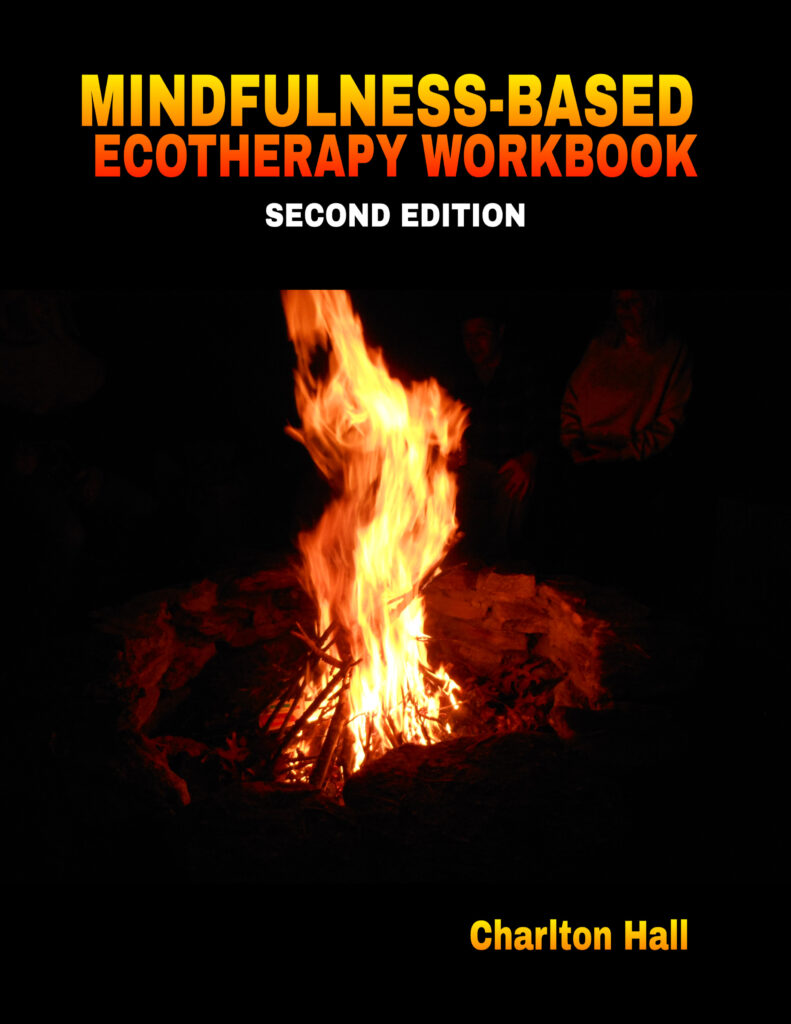
This is the second edition of the Mindfulness-Based Ecotherapy Workbook. The original workbook was published in 2015, and the sciences of mindfulness and ecotherapy have advanced a great deal since that time. This second edition was updated to reflect this new research. This edition, like its predecessor, was written to accompany the 12-week Mindfulness-Based Ecotherapy workshop series. Some of the exercises in this new edition have changed based on participant feedback regarding what is more helpful in facilitating nature experiences.
This new version of the handbook introduces the 12 skills of Mindfulness-Based Ecotherapy (MBE) and introduces one of these skills at each of the 12 sessions in the program. Although this book is designed to accompany the 12-week Mindfulness-Based Ecotherapy workshop series, it may also be completed on your own at home. The experiential nature of the work allows anyone with access to outdoor spaces the opportunity to complete the series. If you are interested in participating in a workshop series near you, you can visit the Mindful Ecotherapy Center’s website at www.mindfulecotherapy.org. The website contains a directory of Mindfulness-Based Ecotherapists worldwide
The second edition of the Mindfulness-Based Ecotherapy Workbook represents a significant evolution in the integration of mindfulness, nature-based practices, and therapeutic skill development. The original workbook, first published in 2015, emerged at a time when mindfulness-based interventions and ecotherapy were gaining momentum but had not yet fully matured as research-informed practices. In the years since, the sciences of mindfulness, trauma treatment, somatic awareness, and nature-based mental health interventions have advanced substantially. This revised workbook reflects those developments while staying grounded in experiential, accessible practice.
The Mindfulness-Based Ecotherapy Workbook is designed to accompany the 12-week Mindfulness-Based Ecotherapy (MBE) workshop series. However, one of its strengths is its flexibility. While it functions seamlessly within a structured group setting, it can also be completed independently by individuals who wish to engage in the practices on their own. The experiential nature of the workbook allows participants to move beyond theory and into direct engagement with the natural world, using outdoor spaces as co-facilitators in the therapeutic process.
What’s New in the Second Edition
One of the most important updates in this second edition is the explicit introduction of the 12 core skills of Mindfulness-Based Ecotherapy. Each skill is presented in sequence, with one skill explored in depth during each of the 12 sessions of the program. This structure provides clarity, coherence, and a clear developmental arc, allowing participants to gradually build capacity rather than feeling overwhelmed.
Several exercises have been revised or replaced based on participant feedback from previous workshop cohorts. This feedback-driven approach ensures that the workbook prioritizes practices that genuinely support embodied awareness, emotional regulation, and meaningful connection with nature. Rather than offering abstract reflection prompts, the workbook emphasizes lived experience, sensory engagement, and mindful presence in outdoor environments.
The updated content also reflects newer research in areas such as:
- Trauma-informed mindfulness
- Nervous system regulation
- Embodied and somatic awareness
- The psychological benefits of green and blue spaces
- Nature-based interventions for anxiety, depression, and stress
An Experiential Approach to Learning
Unlike many traditional self-help books, this workbook is intentionally experiential rather than purely instructional. The practices are designed to be done, not just read about. Participants are encouraged to spend time outdoors, observe natural processes, notice bodily sensations, and reflect on how these experiences intersect with thoughts, emotions, and values.
This approach aligns with the foundational philosophy of Mindfulness-Based Ecotherapy, which views nature not as a backdrop, but as an active participant in healing. Anyone with access to outdoor spaces—whether a forest, park, backyard, or urban green area—can meaningfully engage with the workbook. The practices are adaptable, making the material accessible across diverse environments and life circumstances.
For Groups and Individuals Alike
While the workbook was created to support the 12-week MBE workshop series, it is equally valuable for individual use. Therapists may integrate the workbook into their clinical work, while individuals may use it as a structured self-guided program. The pacing encourages reflection without pressure, reinforcing the principle that growth unfolds over time and through repeated, mindful engagement.
For those interested in participating in a facilitated workshop, the Mindful Ecotherapy Center maintains a global directory of Mindfulness-Based Ecotherapy programs. This directory, available at www.mindfulecotherapy.org, connects individuals with trained providers offering workshops and groups worldwide.
A Living Resource for Ongoing Practice
The second edition of the Mindfulness-Based Ecotherapy Workbook is not meant to be completed once and shelved. Instead, it serves as a living resource that participants can return to as their relationship with mindfulness, nature, and self-awareness deepens. By grounding therapeutic skills in direct experience with the natural world, the workbook offers a sustainable and compassionate pathway toward psychological resilience and ecological connection.
Share Your Thoughts!
What do you think? Share your thoughts in the comments below! And don’t forget to subscribe to our newsletter!