Posted on Leave a comment

Masculinity, Disconnection, and the Modern Emotional Landscape

masculinity for a new age

Masculinity is a living, evolving experience shaped by culture, family systems, personal history, and the environments you move through. In this time of rapid social and ecological change, many of the older narratives about manhood no longer fit the complexity of modern life. For some people, this creates confusion, tension, or emotional strain. For others, it opens a meaningful opportunity to reconsider what manliness can become when it is grounded in awareness, embodiment, and connection to the natural world. Mindfulness-based ecotherapy offers a way to support that shift by helping you experience male identity not as a performance or role, but as something that naturally emerges through presence and relationship with life itself.

Many of the challenges associated with masculinity today are less about masculine identity itself and more about disconnection. When emotional expression is discouraged, and inner experience is pushed aside in favor of performance or self-reliance, you can gradually become separated from your own emotional signals, from others, and from the natural world. Over time, this disconnection can show up as emotional shutdown, difficulty in relationships, chronic stress, or a sense of isolation that is hard to name. From a mindfulness-based ecotherapy perspective, these patterns are adaptive responses to environments that often fail to support emotional integration and embodied awareness. What is often labeled as a “problem with masculinity” is more accurately a reflection of unmet relational and ecological needs.

Nature and Masculinity
masculinity can be nurturing
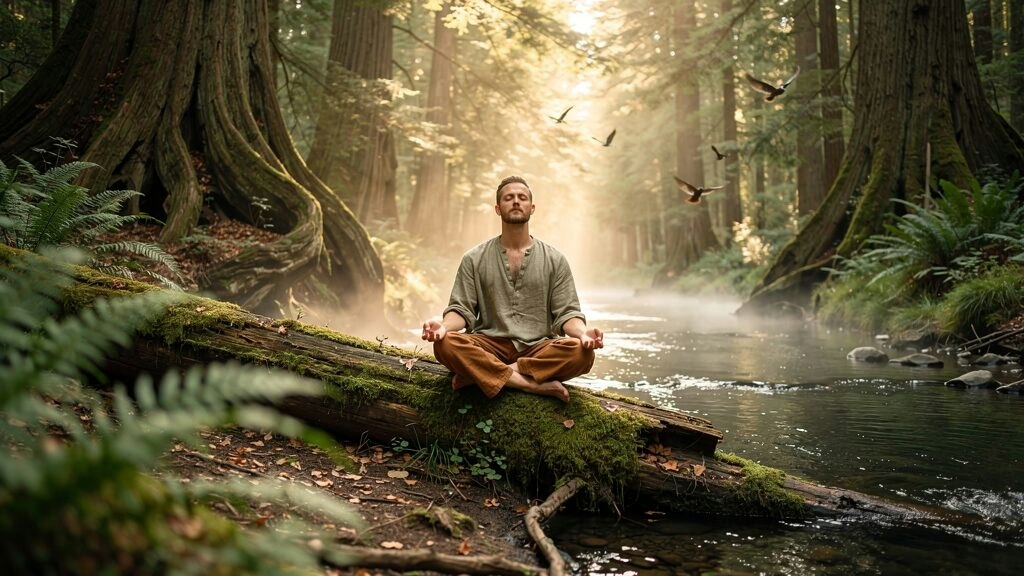
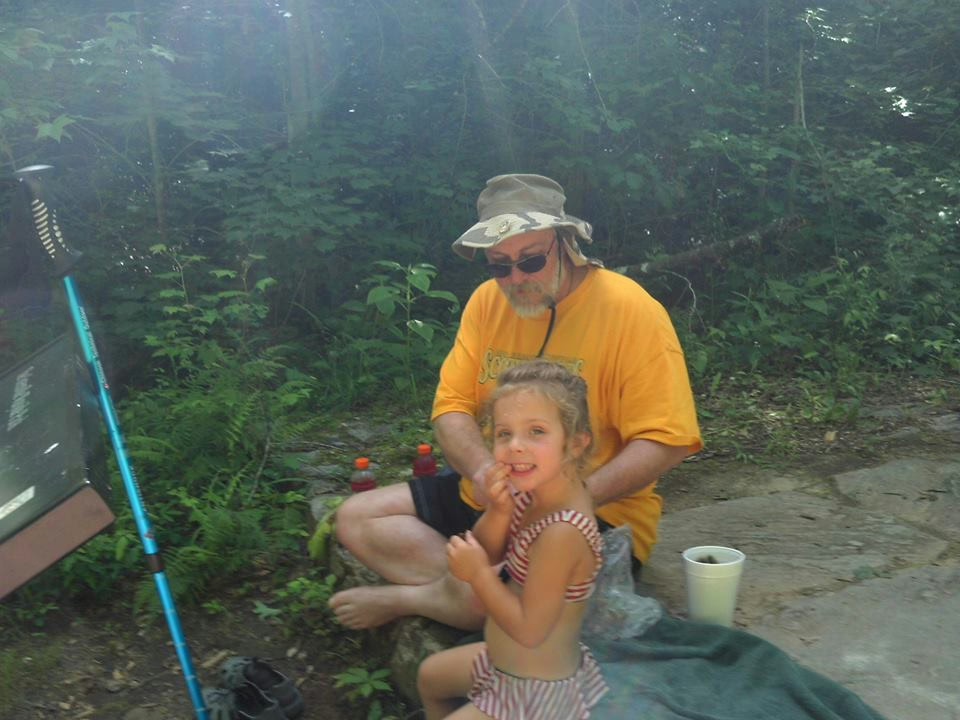
Masculinity can be nurturing

Nature provides a direct and nonjudgmental context for rethinking masculine expression in healthier ways. When you spend time in natural environments with mindful attention, you begin to notice that strength and softness are not opposites in the natural world. A river can be both powerful and yielding, a tree can be both rooted and flexible, and a mountain can be both enduring and shaped by time. These qualities are not in conflict; they coexist. Through this lived experience, masculinity begins to shift away from rigidity and toward integration. Strength becomes steadiness rather than control, emotional awareness becomes clarity rather than weakness, and vulnerability becomes a form of openness rather than threat. In this way, nature does not teach through concepts, but through direct experience of balance and interconnection.

Mindfulness-based ecotherapy also supports emotional reconnection by helping you slow down enough to notice what is actually happening within your body and mind without judgment. In natural settings, attention naturally returns to breath, sensation, and the present moment. Emotional states can be experienced as passing patterns rather than fixed identities, which allows for greater flexibility and self-understanding. This process is especially important in redefining masculine presence because it shifts identity away from performance and toward awareness. As you continue this practice, you may begin to notice that emotional regulation becomes more accessible, not through suppression, but through acceptance and grounded presence in the body.

Re-Imagining Male Identity

Over time, masculine energy can also be reimagined as something that exists in relationships rather than in isolation. Traditional cultural models of masculinity often emphasize independence and self-reliance in ways that can unintentionally limit connection. Ecotherapy expands this framework by helping you experience yourself in ongoing relationships with your body, with other people, and with the natural world. When these relationships are restored, masculinity becomes less about defending identity and more about participating fully in life with awareness and responsiveness. You are no longer separate from your environment, but an active part of a larger living system.

Masculinity and Healing

Healing in this context is not only psychological but also embodied. Many of the emotional patterns associated with masculine nature are held in the body as tension, stress, or habitual guarding. Mindfulness-based ecotherapy helps bring awareness back into the body through sensory engagement with natural environments. Walking on uneven ground, noticing wind against skin, listening to water, or simply observing light shifting through trees all help reestablish a sense of grounding. As the body relaxes and reorients to natural rhythms, emotional rigidity often softens, making space for a more flexible and integrated experience of masculinity.

In this way, masculinity can be redefined for a new ecological age as something that includes strength without suppression, awareness without detachment, and connection without dependency. It becomes less about performing a role and more about inhabiting a way of being that is responsive, grounded, and alive to the present moment. Mindfulness-based ecotherapy does not ask you to abandon masculine qualities, but to deepen them by restoring connection to yourself, to others, and to the living world around you.


Share Your Thoughts About Modern Masculinity!

What do you think? Share your thoughts in the comments below!


  And don’t forget to subscribe to our newsletter!

Posted on

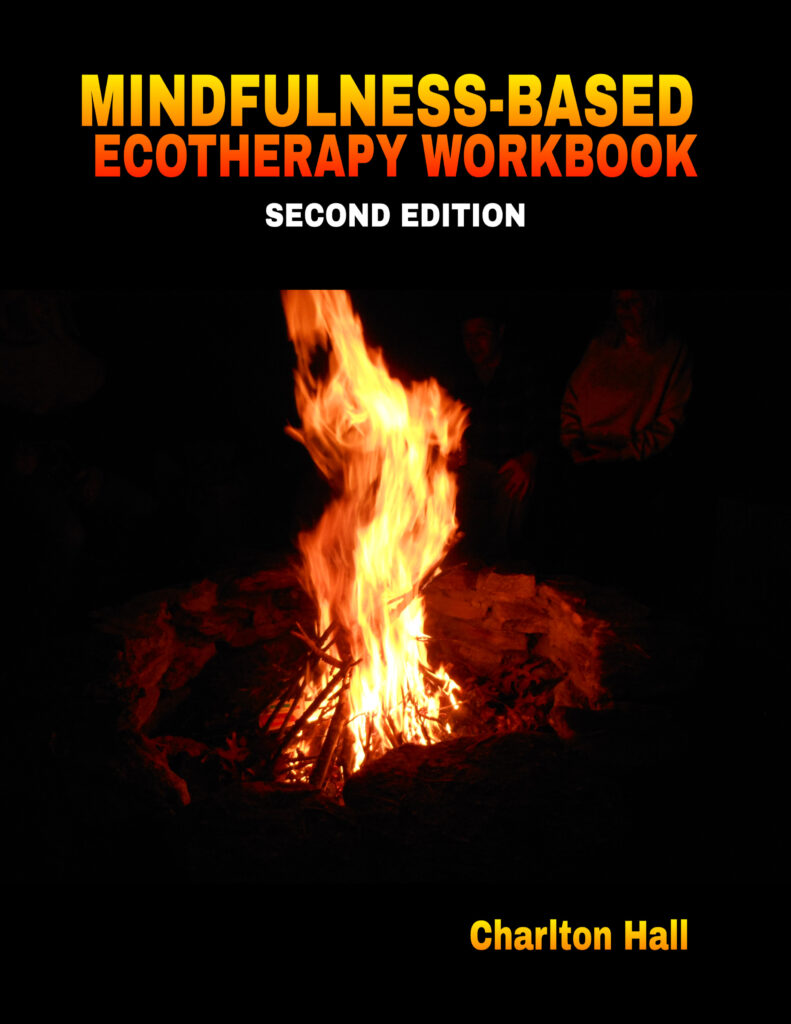
Mindfulness-Based Ecotherapy Workbook 2nd Edition

workbook
Click on the image to purchase

This is the second edition of the Mindfulness-Based Ecotherapy WorkbookThe original workbook was published in 2015, and the sciences of mindfulness and ecotherapy have advanced a great deal since that time. This second edition was updated to reflect this new research. This edition, like its predecessor, was written to accompany the 12-week Mindfulness-Based Ecotherapy workshop series. Some of the exercises in this new edition have changed based on participant feedback regarding what is more helpful in facilitating nature experiences.

This new version of the handbook introduces the 12 skills of Mindfulness-Based Ecotherapy (MBE) and introduces one of these skills at each of the 12 sessions in the program. Although this book is designed to accompany the 12-week Mindfulness-Based Ecotherapy workshop series, it may also be completed on your own at home. The experiential nature of the work allows anyone with access to outdoor spaces the opportunity to complete the series. If you are interested in participating in a workshop series near you, you can visit the Mindful Ecotherapy Center’s website at www.mindfulecotherapy.org. The website contains a directory of Mindfulness-Based Ecotherapists worldwide

The second edition of the Mindfulness-Based Ecotherapy Workbook represents a significant evolution in the integration of mindfulness, nature-based practices, and therapeutic skill development. The original workbook, first published in 2015, emerged at a time when mindfulness-based interventions and ecotherapy were gaining momentum but had not yet fully matured as research-informed practices. In the years since, the sciences of mindfulness, trauma treatment, somatic awareness, and nature-based mental health interventions have advanced substantially. This revised workbook reflects those developments while staying grounded in experiential, accessible practice.

The Mindfulness-Based Ecotherapy Workbook is designed to accompany the 12-week Mindfulness-Based Ecotherapy (MBE) workshop series. However, one of its strengths is its flexibility. While it functions seamlessly within a structured group setting, it can also be completed independently by individuals who wish to engage in the practices on their own. The experiential nature of the workbook allows participants to move beyond theory and into direct engagement with the natural world, using outdoor spaces as co-facilitators in the therapeutic process.

What’s New in the Second Edition

One of the most important updates in this second edition is the explicit introduction of the 12 core skills of Mindfulness-Based Ecotherapy. Each skill is presented in sequence, with one skill explored in depth during each of the 12 sessions of the program. This structure provides clarity, coherence, and a clear developmental arc, allowing participants to gradually build capacity rather than feeling overwhelmed.

Several exercises have been revised or replaced based on participant feedback from previous workshop cohorts. This feedback-driven approach ensures that the workbook prioritizes practices that genuinely support embodied awareness, emotional regulation, and meaningful connection with nature. Rather than offering abstract reflection prompts, the workbook emphasizes lived experience, sensory engagement, and mindful presence in outdoor environments.

The updated content also reflects newer research in areas such as:

  • Trauma-informed mindfulness
  • Nervous system regulation
  • Embodied and somatic awareness
  • The psychological benefits of green and blue spaces
  • Nature-based interventions for anxiety, depression, and stress

An Experiential Approach to Learning

Unlike many traditional self-help books, this workbook is intentionally experiential rather than purely instructional. The practices are designed to be done, not just read about. Participants are encouraged to spend time outdoors, observe natural processes, notice bodily sensations, and reflect on how these experiences intersect with thoughts, emotions, and values.

This approach aligns with the foundational philosophy of Mindfulness-Based Ecotherapy, which views nature not as a backdrop, but as an active participant in healing. Anyone with access to outdoor spaces—whether a forest, park, backyard, or urban green area—can meaningfully engage with the workbook. The practices are adaptable, making the material accessible across diverse environments and life circumstances.

For Groups and Individuals Alike

While the workbook was created to support the 12-week MBE workshop series, it is equally valuable for individual use. Therapists may integrate the workbook into their clinical work, while individuals may use it as a structured self-guided program. The pacing encourages reflection without pressure, reinforcing the principle that growth unfolds over time and through repeated, mindful engagement.

For those interested in participating in a facilitated workshop, the Mindful Ecotherapy Center maintains a global directory of Mindfulness-Based Ecotherapy programs. This directory, available at www.mindfulecotherapy.org, connects individuals with trained providers offering workshops and groups worldwide.

A Living Resource for Ongoing Practice

The second edition of the Mindfulness-Based Ecotherapy Workbook is not meant to be completed once and shelved. Instead, it serves as a living resource that participants can return to as their relationship with mindfulness, nature, and self-awareness deepens. By grounding therapeutic skills in direct experience with the natural world, the workbook offers a sustainable and compassionate pathway toward psychological resilience and ecological connection.


Share Your Thoughts!

What do you think? Share your thoughts in the comments below! And don’t forget to subscribe to our newsletter!