Posted on Leave a comment

Grief Disorders? Rethinking Prolonged Grief Through Mindfulness

grief disorder

Grief is one of the most universal human experiences, yet it remains one of the most deeply personal. When a person experiences loss, there is no fixed timeline for healing, no standardized emotional progression, and no “correct” way to mourn. Still, in clinical settings, increasing attention has been given to the point at which grief may shift from a natural response to loss into what is sometimes labeled a grief disorder.

From the perspective of Mindfulness-Based Ecotherapy (MBE), this distinction must be approached with great care. While it is important to recognize when someone is suffering in a way that significantly impairs functioning, it is equally important not to medicalize a fundamentally human experience too quickly or too broadly. Grief is not an illness in itself; it is a response to attachment, love, and loss.

You can learn more about our work at the Mindful Ecotherapy Center: https://www.mindfulecotherapycenter.com

Prolonged Grief Disorder

grief disorder

Grief typically involves a wide range of emotional, cognitive, and physical experiences. People may feel deep sadness, yearning for the person who has died, fatigue, changes in appetite, disrupted sleep, or waves of anger, guilt, or emotional numbness. These reactions are not inherently signs of pathology. Instead, they reflect the natural way the human nervous system responds when a significant attachment is broken. From an MBE perspective, grief is not something to eliminate, but something to move through with awareness, patience, and support.

However, there are situations in which grief becomes more clinically concerning. The term grief disorder, often used interchangeably with Prolonged Grief Disorder in clinical literature, is generally applied when intense grief persists in a way that significantly interferes with daily functioning over an extended period of time. This may include ongoing, overwhelming longing for the deceased, persistent emotional pain that does not soften, a sense of being “stuck” in the moment of loss, or a diminished ability to engage with life long after the expected period of acute mourning. In these cases, the issue is not the presence of grief itself, but its chronic intensity and its impact on the person’s ability to reengage with life.

Over-Pathologizing Grief Disorders

At the same time, there is an ongoing concern in mental health care about the risk of over-pathologizing grief. When grief is too quickly categorized as a grief disorder, normal variations in mourning can be mistaken for illness. This can lead to individuals feeling as though there is something wrong with them simply because they are grieving deeply or for an extended period. It can also result in the loss of cultural context, where mourning practices that differ across communities are misinterpreted through a narrow clinical lens. Grief is shaped not only by biology but also by culture, relationships, personal history, and the environment in which a person lives.

Grief Disorders and Mindfulness-Based Ecotherapy

Mindfulness-Based Ecotherapy offers a broader framework for understanding grief that moves beyond diagnosis alone. In MBE, grief is viewed as an ecological and relational process rather than solely an internal disorder. Emotional suffering is seen in context: within relationships, within systems of support or isolation, and within a person’s connection (or disconnection) to the natural world. Rather than immediately trying to eliminate grief, MBE encourages individuals to develop mindful awareness of their experience, allowing emotions to arise and shift without suppression or avoidance.

Nature-based practices are central to this approach. Time in natural environments can help regulate the nervous system and provide powerful metaphors for the grieving process. Just as ecosystems undergo cycles of death, decay, and renewal, human emotional life also moves through cycles of loss and transformation. This perspective does not minimize grief but situates it within a larger context of ongoing change and continuity.

Reframing the question of when grief becomes a grief disorder may ultimately be more helpful than focusing strictly on diagnostic thresholds. Instead of asking only whether grief meets criteria for a disorder, it can be more meaningful to ask whether grief is still moving in some way, whether the person has access to support, whether meaning-making is still possible, and whether unresolved trauma or life circumstances are complicating the healing process. These questions shift the focus from labeling to understanding.

Healthy Grieving

Supporting healthy grieving often requires a combination of approaches. Psychotherapy can help individuals process loss and integrate meaning. Support groups and community rituals can provide shared space for mourning. Mindfulness practices can help individuals stay present with emotional waves without becoming overwhelmed by them. Time in nature can support regulation and reflection. In some cases, medical or psychiatric care may also be appropriate when symptoms are severe and persistent. The goal is not to eliminate grief, but to help it integrate into the fabric of a continuing life.

Ultimately, grief does not need to be quickly classified as a grief disorder to be taken seriously. Most grief is not pathological; it is a reflection of deep human attachment and love. However, when grief becomes immobilizing and persistent to the point of significantly impairing life functioning, additional support may be necessary. The challenge lies in distinguishing between natural mourning and entrenched suffering without losing respect for the profound emotional reality of loss.

Through Mindfulness-Based Ecotherapy, grief is understood not as a problem to be fixed, but as an experience to be witnessed, held, and gradually transformed. Healing does not mean forgetting or “moving on” in a simplistic sense. Instead, it means learning how to carry loss with greater awareness, compassion, and connection to life itself.


Share Your Thoughts!

What do you think? Share your thoughts in the comments below!


  And don’t forget to subscribe to our newsletter!

Posted on Leave a comment

Is Depression Being Overmedicalized in Today’s Mental Health System?

overmedicalized

Depression is one of the most widely discussed mental health conditions in the world today, yet it is also one of the most misunderstood. As diagnosis rates rise and prescriptions for antidepressants continue to increase, many clinicians, researchers, and clients are beginning to ask a difficult question: Is depression being overmedicalized in today’s mental health system?

From the perspective of Mindfulness-Based Ecotherapy (MBE), this question is not about rejecting medical treatment, but about widening the lens through which we understand human suffering. When depression is viewed only as a biochemical imbalance, we risk missing the emotional, relational, environmental, and existential dimensions that contribute to it.

For more information about our work, visit the Mindful Ecotherapy Center at: https://www.mindfulecotherapycenter.com

What Does “Overmedicalized” Mean?

The term overmedicalized refers to the tendency to define human emotional and psychological experiences primarily as medical conditions requiring pharmaceutical or clinical intervention.

In the context of depression, this can look like:

  • Rapid diagnosis based primarily on symptom checklists
  • Immediate prescription of antidepressant medications
  • Limited exploration of life circumstances, trauma, or environmental stressors
  • Reduced emphasis on meaning, relationships, and lifestyle factors

While medical intervention is essential in many cases, overmedicalization occurs when the medical model becomes the only lens used to understand distress.

The Role of the Medical Model in Depression

It is important to acknowledge that the medical model has contributed significantly to mental health care:

  • It has reduced stigma by framing depression as a legitimate health condition
  • It has made effective medications available for many people
  • It has standardized diagnostic criteria for clinicians

However, the limitation arises when depression is treated solely as a biological malfunction.

Depression is often multi-layered. It may include:

  • Neurochemical factors
  • Trauma history
  • Chronic stress
  • Grief and loss
  • Social isolation
  • Disconnection from nature or purpose

When these layers are ignored, treatment can feel incomplete or ineffective for many people. It’s important to remember that medication is symptom management. It doesn’t treat the issues that led to the depression in the first place. While every situation is different, research continues to demonstrate that the best treatment often involves a combination of medication to manage symptoms and behavioral therapy to learn coping skills.

Why the Question of Overmedicalization Matters

The concern about whether depression is being overmedicalized has real consequences:

overmedicalized
  • People may feel reduced to a diagnosis rather than a whole person
  • Coping strategies beyond medication may be underutilized
  • Root causes of distress may remain unaddressed
  • People may become dependent on medication without parallel therapeutic or lifestyle support

This does not mean medication is “wrong.” Rather, it highlights the importance of balance in treatment approaches.

Mindfulness-Based Ecotherapy as a Broader Framework

Mindfulness-Based Ecotherapy (MBE) offers an integrative perspective that expands beyond the purely medical model. MBE combines mindfulness practices with ecotherapy principles, emphasizing the healing relationship between humans and the natural world.

Instead of asking only, “What is wrong biologically?” MBE also asks:

  • What is this experience teaching you about your life?
  • How are your environment and relationships influencing your emotional state?
  • Where are you disconnected from nature, meaning, or self-awareness?
  • How can mindful awareness support emotional regulation and insight?

This approach does not reject medical treatment but complements it by addressing the whole person.

Reframing Depression: From Disorder to Signal

One of the most important shifts in reducing overmedicalized thinking is reframing depression not only as a disorder, but also as a signal.

From an MBE perspective, depressive symptoms may sometimes indicate:

  • A need for rest or withdrawal from overstimulation
  • Unprocessed grief or trauma
  • Misalignment between values and lifestyle
  • Lack of connection with nature or community
  • Chronic stress without adequate recovery

This reframing allows people to explore meaning alongside symptoms, rather than focusing exclusively on symptom elimination.

A Balanced Approach to Care

Clinical guidelines, including those from the American Psychological Association (APA) and the UK’s National Institute for Health and Care Excellence (NICE), recommend offering psychotherapy as a first-line treatment for mild to moderate depression, reserving medication for severe cases or when therapy alone is insufficient. A more balanced mental health system does not eliminate the need for medical treatment. A thorough assessment integrates it within a broader framework. An ideal approach to depression may include:

  • Medication when clinically appropriate
  • Psychotherapy to address cognition, emotion, and trauma
  • Mindfulness practices to build awareness and emotional regulation
  • Ecotherapy and nature-based interventions to restore grounding and connection
  • Lifestyle changes that support sleep, movement, and social support

This integrated model helps prevent depression from being reduced to a single cause or solution.

The question of whether depression is being overmedicalized is ultimately a question about how we understand human suffering. While the medical model has brought tremendous advances in treatment, it is not sufficient on its own to capture the full complexity of depression.

Mindfulness-Based Ecotherapy offers a complementary perspective that recognizes the biological, psychological, social, and ecological dimensions of mental health. By expanding our understanding beyond diagnosis alone, we open the door to more compassionate, individualized, and holistic care and avoid overmedicalized care.

Depression is not just a set of symptoms to eliminate. It is also a human experience to understand. And in that understanding, healing often becomes more complete.


Share Your Thoughts on Overmedicalized Treatment!

What do you think? Share your thoughts in the comments below!


  And don’t forget to subscribe to our newsletter!

Posted on Leave a comment

NEW BOOK! Addressing Burnout: Self-Care for Therapists

addressing burnout self care for therapists
addressing burnout self-care for therapists with mindfulness-based ecotherapy
CLICK TO PURCHASE

Therapists devote their professional lives to helping others navigate trauma, anxiety, depression, grief, relationship challenges, and life’s many transitions. Yet in the process of caring for others, many clinicians quietly neglect their own well-being. Compassion fatigue, emotional exhaustion, vicarious trauma, and professional burnout have become increasingly common across the mental health professions. Charlton Hall, MMFT, PhD’s newest book, Self-Care for Therapists: Addressing Burnout with Mindfulness-Based Ecotherapy, was written to help change that reality by providing therapists with practical, evidence-informed strategies for restoring balance, resilience, and professional fulfillment.

Rather than treating self-care as an occasional luxury, the book presents it as an ethical responsibility and an essential component of competent clinical practice. Drawing upon the principles of Mindfulness-Based Ecotherapy, Hall offers an integrative approach that combines mindfulness, psychology, systems thinking, and nature connection to help therapists recognize burnout early and respond with intentional, restorative care.

Why Addressing Burnout Matters

Burnout has become one of the greatest challenges facing today’s mental health professionals. Heavy caseloads, increasing documentation requirements, insurance pressures, secondary exposure to trauma, administrative demands, and the emotional weight of caring for clients can gradually deplete even the most dedicated clinician.

Burnout rarely develops overnight. It often begins with subtle warning signs such as emotional fatigue, irritability, difficulty concentrating, reduced empathy, sleep disturbances, or the growing feeling that one’s work has lost its sense of meaning. Because therapists are trained to prioritize the needs of others, many continue working through these early symptoms until exhaustion becomes overwhelming.

Self-Care for Therapists emphasizes that addressing burnout begins with awareness. Therapists cannot care for themselves if they fail to recognize that their own well-being has begun to deteriorate.

A Different Way of Understanding Self-Care

Many discussions of therapist self-care focus primarily on work-life balance, vacations, exercise, or stress management techniques. While each of these practices can be beneficial, Hall argues that sustainable self-care requires something deeper.

Mindfulness-Based Ecotherapy views therapists as whole people whose psychological health is influenced by their relationships with themselves, other people, and the natural world. Rather than encouraging clinicians simply to “push through” difficult periods, the book teaches readers how to cultivate mindful awareness, reconnect with their emotional needs, regulate their nervous systems, and rediscover the sense of purpose that first inspired them to enter the helping professions.

This broader perspective transforms self-care from a checklist of activities into an ongoing way of living.

What Readers Will Learn

Throughout the book, therapists are guided through practical exercises designed to increase self-awareness while building long-term resilience. Readers learn to identify early indicators of compassion fatigue, emotional exhaustion, and burnout before these patterns become entrenched.

The book introduces mindfulness practices that strengthen present-moment awareness while reducing habitual rumination and self-criticism. Nature-based exercises encourage therapists to experience forests, parks, gardens, rivers, and other natural settings as restorative environments that support emotional regulation and reflective practice.

Readers also examine professional boundaries, perfectionistic expectations, workload patterns, and internal beliefs that often contribute to chronic stress. Rather than offering quick fixes, the book helps therapists develop sustainable habits that support both personal well-being and clinical effectiveness.

The Role of Mindfulness-Based Ecotherapy

At the heart of the book is the understanding that mindfulness and nature complement one another in powerful ways. Hall describes mindfulness as the “what” and ecotherapy as the “how.” Mindfulness cultivates awareness without judgment, while nature provides the living environment in which that awareness can deepen through direct experience.

Whether sitting quietly beneath an old-growth tree, walking mindfully beside a flowing stream, observing changing seasons, or practicing ecological grounding in a neighborhood park, therapists discover practical ways to calm the nervous system and reconnect with the present moment.

Nature becomes more than a pleasant setting. It functions as an active therapeutic partner that reinforces many of the psychological processes associated with resilience, reflection, and healing.

Burnout Is Not a Personal Failure

One of the book’s central messages is that burnout should not be viewed as a sign of weakness or professional inadequacy. Therapists often enter the profession because they genuinely care about helping others, and that very compassion can make them vulnerable to overextending themselves while neglecting their own needs.

Hall encourages readers to approach burnout with the same compassion they routinely offer their clients. Instead of asking, “What’s wrong with me?” therapists learn to ask, “What conditions have contributed to my exhaustion, and what changes would support my healing?”

This shift from self-judgment to mindful curiosity opens the door to meaningful, lasting change.

Practical Tools for Everyday Clinical Life

The book includes numerous reflective exercises, mindfulness practices, self-assessment tools, and journaling prompts that readers can immediately integrate into their daily routines. Rather than requiring dramatic lifestyle changes, many of these practices can be completed in just a few minutes between sessions or incorporated into regular outdoor activities.

By focusing on small, consistent changes, therapists gradually build habits that strengthen resilience over time. This practical emphasis makes the book accessible to both experienced clinicians and graduate students preparing to enter the profession.

An Ethical Commitment to Self-Care

Professional ethical codes consistently recognize that therapist impairment can negatively affect client care. Maintaining personal wellness is therefore not simply a matter of individual preference but an important aspect of ethical clinical practice.

Self-Care for Therapists reframes self-care as a professional responsibility. Caring for oneself allows therapists to remain emotionally available, clinically effective, and personally fulfilled throughout long careers devoted to helping others. Addressing burnout ultimately benefits not only therapists themselves but also the clients, families, and communities they serve.

About Charlton Hall

Charlton Hall, MMFT, PhD, is the developer of Mindfulness-Based Ecotherapy and has spent decades integrating mindfulness, systems thinking, ecopsychology, and evidence-based psychotherapy into an innovative approach that emphasizes healing through connection with nature. His work has focused on helping therapists, counselors, and other helping professionals develop practical skills that foster resilience, self-awareness, and sustainable clinical practice.

Therapists are often taught how to care for others but receive far less guidance on caring for themselves. Self-Care for Therapists: Addressing Burnout with Mindfulness-Based Ecotherapy helps fill that gap by combining mindfulness, ecological awareness, reflective practice, and evidence-informed psychology into a practical guide for professional well-being.

In a profession where emotional demands continue to grow, addressing burnout is no longer optional. It is an essential investment in both personal health and ethical clinical care. Hall’s latest book offers therapists a thoughtful, compassionate roadmap for restoring balance, preventing burnout, and rediscovering the meaning that first called them to the helping professions.


References

Barnett, J. E., & Cooper, N. (2009). Creating a culture of self-care. Clinical Psychology: Science and Practice, 16(1), 16–20.

Norcross, J. C., & Phillips, C. M. (2023). Self-care for mental health professionals: A guide to maintaining wellness. Guilford Press.

Richardson, M., Hamlin, I., Butler, C. W., Thomas, R., & Hunt, A. (2022). Actively noticing nature and well-being: A systematic review. People and Nature, 4(2), 405–421.


The Mindful Ecotherapy Center on YouTube

Subscribe to the Mindful Ecotherapy Center’s YouTube channel to bring peace, presence, and healing into your daily life. Our videos guide you through mindfulness-based ecotherapy practices, including forest bathing, tree planting rituals, nature meditations, and reflective exercises for grief, stress, and emotional well-being.

Whether you’re seeking to reconnect with the natural world, cultivate inner calm, or find restorative tools for personal growth, our content offers practical guidance, inspiration, and community support. Join us to explore the transformative power of nature and mindfulness, and start your journey toward balance, resilience, and deeper connection today!


Share Your Thoughts!

What do you think? Share your thoughts in the comments below! And don’t forget to subscribe to our newsletter!

Posted on

Redefining Masculinity Through Mindfulness-Based Ecotherapy

redefining masculinity

Redefining masculinity in healthier ways is becoming a pressing need because across the world, conversations about masculinity are changing. For generations, many men were taught that masculinity meant control, toughness, stoicism, competition, and dominance. While resilience and strength can certainly be healthy qualities, many traditional cultural messages about manhood also discouraged emotional openness, vulnerability, tenderness, and self-awareness. As a result, countless men learned to disconnect from their emotional lives in order to fit into rigid expectations of what a “real man” was supposed to be.

Today, however, more people are recognizing the need for redefining masculinity in healthier and more sustainable ways. This shift is not about rejecting masculinity itself. It is about creating a more balanced and emotionally intelligent vision of what masculine identity can become in a rapidly changing world. Mindfulness-based ecotherapy offers a powerful framework for supporting this transformation by helping individuals reconnect with themselves, with others, and with the natural world.

Why Redefining Masculinity Matters

Many men grow up internalizing the belief that emotional vulnerability is weakness. From an early age, boys are often encouraged to suppress sadness, hide fear, avoid asking for help, and prioritize achievement over emotional connection. Over time, this conditioning can create emotional isolation and psychological fragmentation.

The consequences of these patterns can be seen in rising rates of loneliness, anxiety, depression, addiction, burnout, relationship struggles, and emotional disconnection among men. In some cases, suppressed emotional pain may emerge as anger, numbness, compulsive behavior, or hostility toward others. The problem is not masculinity itself, but rather the narrow definitions of masculinity that leave little room for emotional authenticity and human complexity.

Redefining masculinity means allowing men to become whole human beings rather than emotional performers trapped inside rigid social roles. It means recognizing that strength and sensitivity are not opposites. Courage can coexist with compassion. Leadership can exist alongside vulnerability. Emotional awareness can strengthen resilience rather than weaken it.

The Disconnection Crisis in Modern Masculinity

Modern culture often intensifies emotional disconnection. Many men spend increasing amounts of time online, isolated from meaningful community, nature, and face-to-face relationships. Social media and algorithm-driven digital spaces frequently reward performance, status, outrage, and comparison rather than emotional presence or authentic connection.

At the same time, many traditional pathways for healthy masculine development have weakened. In previous generations, community rituals, mentorship structures, outdoor activities, apprenticeships, and intergenerational guidance often helped young men transition into adulthood with a stronger sense of identity and purpose. Today, many individuals navigate these challenges largely alone.

Without healthy grounding, men may seek identity through external validation, hyper-independence, emotional suppression, or rigid ideological thinking. This can leave individuals feeling disconnected not only from others but from themselves.

Mindfulness-based ecotherapy directly addresses this disconnection by restoring embodied awareness and relationship with the living world.

How Mindfulness-Based Ecotherapy Supports Healing

Mindfulness-based ecotherapy combines mindfulness practices with therapeutic engagement in nature. Rather than treating healing as purely intellectual, ecotherapy recognizes that emotional well-being is deeply connected to the body, the nervous system, and the environment.

Nature offers a radically different experience from modern digital culture. In forests, rivers, mountains, gardens, and natural landscapes, there is no pressure to perform, compete, or constantly prove worth. Nature operates through balance, interdependence, rhythm, and adaptation.

Mindfulness practices within natural settings help individuals slow down and reconnect with direct sensory experience. This can include mindful walking, meditation outdoors, gardening, grounding exercises, reflective journaling, or simply sitting quietly in a natural environment while observing breath and bodily sensations.

These experiences help regulate the nervous system and create emotional safety. When the body begins to relax, individuals often become more capable of accessing emotions that were previously suppressed or avoided.

Redefining Masculinity Through Presence and Connection

One of the most important aspects of redefining masculinity is shifting away from domination-based identity and toward presence-based identity.

A healthier masculine ideal is not rooted in emotional avoidance or control over others. Instead, it is grounded in self-awareness, integrity, compassion, accountability, and emotional resilience. It recognizes that true strength includes the capacity to remain present with discomfort rather than escaping it through anger, detachment, or performance.

Mindfulness teaches individuals to observe emotions without immediately reacting to them. Rather than suppressing sadness or converting fear into aggression, mindfulness creates space for reflection and emotional understanding. Ecotherapy deepens this process by reconnecting individuals with natural cycles that mirror human emotional life itself: growth, rest, change, loss, and renewal.

Nature reminds us that vulnerability is part of life, not evidence of failure.

A More Integrated Vision of Masculinity

Redefining masculinity does not mean eliminating masculine energy or denying healthy masculine traits. Instead, it means integrating strength with emotional intelligence and independence with relational awareness.

A healthier masculine ideal may include:

  • Emotional honesty without shame
  • The ability to nurture and protect simultaneously
  • Accountability and self-reflection
  • Respect for boundaries and consent
  • Connection to community and environment
  • Compassion without loss of strength
  • Presence instead of emotional suppression

Men who reconnect with these qualities often discover that they no longer need to constantly prove themselves. Identity becomes less performative and more authentic.

Mindfulness-based ecotherapy supports this transformation by helping individuals experience groundedness directly through the body and the natural environment rather than through external validation.

Healing Through Reconnection

The growing movement toward redefining masculinity reflects a deeper cultural need for healing. Many men are exhausted by emotional isolation, performance pressure, and disconnection from meaningful community. They are searching for ways to live with greater authenticity, balance, and emotional clarity.

Mindfulness-based ecotherapy offers a compassionate path toward that healing. Through mindfulness, nature connection, nervous system regulation, and embodied awareness, individuals can begin to rediscover what it means to live as fully integrated human beings.

Healthy masculinity is not about domination or emotional numbness. It is about grounded presence, relational integrity, emotional courage, and connection to life itself.

Learn more about mindfulness-based ecotherapy at the Mindful Ecotherapy Center


Share Your Thoughts About Redefining Masculinity!

What do you think? Share your thoughts in the comments below!


  And don’t forget to subscribe to our newsletter!

Posted on

Student Discount for the Mindfulness-Based Ecotherapist Certification Program

student discount

At the Mindful Ecotherapy Center, PLLC, we are committed to supporting the next generation of mental health professionals as they develop skills in mindfulness-based and nature-based clinical practice. Graduate students represent the future of our field, and we recognize both the financial challenges and the educational dedication required to pursue advanced clinical training.

For that reason, we are pleased to offer a 25% student discount on the Mindfulness-Based Ecotherapist Certification Program for eligible graduate students currently enrolled in mental health degree programs.

You can learn more about the certification program here:
https://www.mindfulecotherapycenter.com/

Eligibility Requirements for the Student Discount

To qualify for the student discount, applicants must meet all of the following criteria:

  • You must be currently enrolled in a graduate-level mental health program (such as counseling, social work, marriage and family therapy, psychology, or a closely related field).
  • You must provide a valid student ID.
  • Your student ID must be submitted as both front and back images.
  • The student ID must be currently valid and not expired.
  • The expiration date must be clearly visible on the submitted documentation.

Discount approval is contingent upon verification of enrollment status and document authenticity.

Why We Offer a Student Discount

Graduate students are often balancing coursework, internships, and financial pressure while preparing for professional licensure. The Mindfulness-Based Ecotherapist Certification Program is designed to complement your graduate education by offering practical, integrative clinical tools that blend mindfulness practices with ecotherapy approaches.

This training supports your development in areas such as:

  • Integrating nature-based interventions into clinical practice
  • Strengthening mindfulness-based therapeutic skills
  • Enhancing client engagement through experiential and ecological awareness
  • Expanding your theoretical and applied understanding of ecotherapy frameworks

By offering a student discount, we aim to make this specialized training more accessible while supporting the growth of emerging clinicians who are interested in innovative, evidence-informed approaches to mental health care.

How to Apply the Student Discount

To apply, send an email to support@mindfulecotherapy.com. Include a copy of your student ID, both front and back, in either jpg or png format as an attachment or embedded in the email. Include the graduate program you’re enrolled in and your anticipated date of graduation. When your application is accepted, you will receive an email containing a coupon code for your discount. The process is usually completed in two weeks or less.

If you are eligible, simply submit your documentation or contact our administrative team with your enrollment verification and student ID (front and back). When you enter your coupon code, your 25% student discount will be applied to your enrollment in the certification program.

We encourage all applicants to ensure that their documents are clear, legible, and include an unexpired expiration date. Incomplete submissions may delay processing.

Advancing Your Clinical Skills

The Mindfulness-Based Ecotherapist Certification Program is designed for clinicians who want to expand their therapeutic toolkit beyond traditional office-based practice. It emphasizes the healing relationship between human well-being and the natural environment, integrating mindfulness practices into ecotherapy interventions.

As a student, this training can help you begin building a strong clinical foundation that aligns with emerging trends in holistic, experiential, and nature-based therapy models.

For full program details and enrollment information, visit:
https://www.mindfulecotherapycenter.com/


The Mindful Ecotherapy Center is honored to support your journey toward becoming a skilled, grounded, and ethically informed mental health professional. We look forward to welcoming you into the growing community of mindfulness-based ecotherapists!


Share Your Thoughts About Student Discounts!

What do you think? Share your thoughts in the comments below!


  And don’t forget to subscribe to our newsletter!


Posted on

Toxic Masculinity and How Mindfulness-Based Ecotherapy Can Help Heal It

toxic masculinity

The phrase toxic masculinity has entered mainstream cultural conversations in psychology, education, media, and mental health discussions. Unfortunately, the term is often misunderstood. Toxic masculinity does not mean that masculinity itself is harmful. Instead, it refers to unhealthy social conditioning that pressures men and boys to suppress vulnerability, avoid emotional expression, seek dominance over others, and measure their value through power, control, aggression, or emotional detachment. These rigid expectations can damage relationships, isolate individuals emotionally, and negatively impact the psychological well-being of men themselves.

Healthy masculinity can include courage, resilience, responsibility, integrity, leadership, emotional steadiness, and protectiveness. Toxic masculinity develops when those healthy traits become distorted through cultural pressures that discourage emotional honesty and human vulnerability. Many boys grow up hearing messages such as “don’t cry,” “man up,” or “real men never show weakness.” Over time, these messages can create a deep internal conflict because human beings naturally experience sadness, fear, loneliness, tenderness, grief, and uncertainty. When individuals are taught to suppress these emotions instead of processing them in healthy ways, the emotions do not disappear. Instead, they often re-emerge indirectly through anger, emotional numbness, addiction, compulsive behavior, social withdrawal, or hostility.

Impact of Toxic Masculinity on Neurobiology

The body and nervous system are deeply affected by chronic emotional suppression. Many men socialized under rigid masculine expectations live in a constant state of emotional vigilance, where vulnerability feels unsafe and emotional openness feels threatening. This can contribute to anxiety, depression masked as irritability, relationship difficulties, emotional disconnection, loneliness, and burnout. Unfortunately, many men have never been taught how to identify emotions, regulate stress, or communicate vulnerability without shame. Instead, emotional distance is often rewarded while emotional openness is discouraged.

This is where mindfulness-based ecotherapy offers a profoundly different approach to healing. Mindfulness-based ecotherapy combines mindfulness practices with nature-centered therapeutic experiences. Rather than focusing only on intellectual discussion, ecotherapy engages the entire person through sensory awareness, movement, reflection, and connection with the living world. Nature becomes part of the healing process itself.

Mindfulness and Toxic Masculinity

Mindfulness practices encourage you to observe your thoughts and emotions without immediately reacting to them or suppressing them. Instead of turning fear into anger or hiding sadness behind emotional detachment, mindfulness creates space to witness emotions with compassion and curiosity. Ecotherapy deepens this experience by grounding mindfulness within direct sensory contact with nature. Walking quietly through a forest trail, sitting beside moving water, gardening, or practicing breath awareness outdoors can calm the nervous system and reconnect individuals with their bodies and emotions in ways that feel less threatening than traditional confrontational approaches.

Nature itself quietly challenges the assumptions of toxic masculinity. Modern culture often teaches men to disconnect from vulnerability, embodiment, and interdependence, while nature continuously demonstrates cycles of growth, rest, renewal, loss, and adaptation. Forests, rivers, changing seasons, and ecosystems function through relationships and balance rather than domination. Spending mindful time in nature can help individuals realize that vulnerability is not weakness but an essential part of being alive and connected.

Benefits of Nature

Research on exposure to natural environments has shown benefits, including reduced stress, improved emotional regulation, lower rumination, and increased psychological well-being. These experiences create the internal safety necessary for emotional healing and growth. Many men who struggle with emotional expression find that they are more capable of opening emotionally while walking outdoors or engaging in grounded, physical activities in natural settings than they are in traditional indoor environments. Nature reduces social pressure and creates space for reflection without judgment.

Healing toxic masculinity does not require abandoning masculinity altogether. Instead, it involves redefining masculinity in healthier and more integrated ways. A healthier vision of masculinity includes emotional intelligence, accountability, compassion, presence, self-awareness, healthy boundaries, and meaningful connections with others. Mindfulness-based ecotherapy supports these qualities by helping individuals reconnect with themselves, regulate their emotions, and cultivate greater awareness of their inner lives.

Healing from Toxic Masculinity

As men reconnect with their emotional experiences and the natural world, they often rediscover a deeper sense of groundedness, purpose, and belonging that modern digital culture frequently fails to provide. Emotional strength becomes less about suppression and more about presence. Courage becomes less about domination and more about authenticity. Healing becomes possible when individuals no longer feel pressured to perform an impossible version of masculinity that disconnects them from their humanity.

The conversation around toxic masculinity is ultimately not about blame. It is about understanding how systems of emotional disconnection harm individuals and communities alike. Mindfulness-based ecotherapy offers a compassionate and grounded pathway toward healing by helping people reconnect with themselves, with others, and with the living world around them.

Learn more about mindfulness-based ecotherapy at the Mindful Ecotherapy Center


Share Your Thoughts About Toxic Masculinity!

What do you think? Share your thoughts in the comments below!


  And don’t forget to subscribe to our newsletter!

Posted on

Masculinity, Disconnection, and the Modern Emotional Landscape

masculinity for a new age

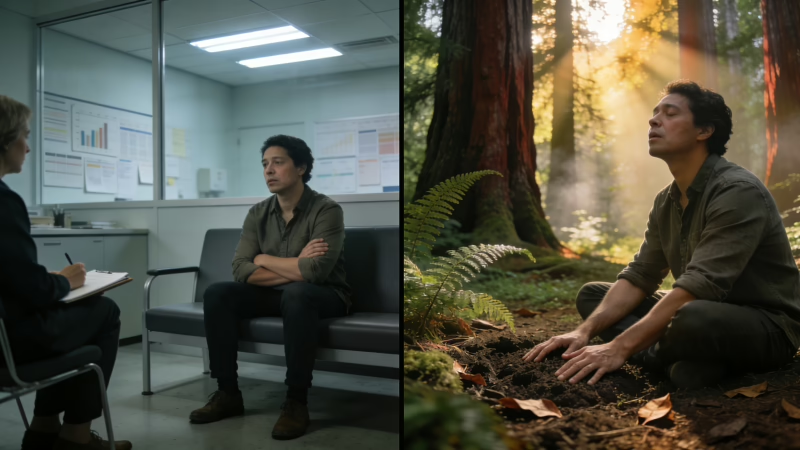
Masculinity is a living, evolving experience shaped by culture, family systems, personal history, and the environments you move through. In this time of rapid social and ecological change, many of the older narratives about manhood no longer fit the complexity of modern life. For some people, this creates confusion, tension, or emotional strain. For others, it opens a meaningful opportunity to reconsider what manliness can become when it is grounded in awareness, embodiment, and connection to the natural world. Mindfulness-based ecotherapy offers a way to support that shift by helping you experience male identity not as a performance or role, but as something that naturally emerges through presence and relationship with life itself.

Many of the challenges associated with masculinity today are less about masculine identity itself and more about disconnection. When emotional expression is discouraged, and inner experience is pushed aside in favor of performance or self-reliance, you can gradually become separated from your own emotional signals, from others, and from the natural world. Over time, this disconnection can show up as emotional shutdown, difficulty in relationships, chronic stress, or a sense of isolation that is hard to name. From a mindfulness-based ecotherapy perspective, these patterns are adaptive responses to environments that often fail to support emotional integration and embodied awareness. What is often labeled as a “problem with masculinity” is more accurately a reflection of unmet relational and ecological needs.

Nature and Masculinity

masculinity can be nurturing
Masculinity can be nurturing

Nature provides a direct and nonjudgmental context for rethinking masculine expression in healthier ways. When you spend time in natural environments with mindful attention, you begin to notice that strength and softness are not opposites in the natural world. A river can be both powerful and yielding, a tree can be both rooted and flexible, and a mountain can be both enduring and shaped by time. These qualities are not in conflict; they coexist. Through this lived experience, masculinity begins to shift away from rigidity and toward integration. Strength becomes steadiness rather than control, emotional awareness becomes clarity rather than weakness, and vulnerability becomes a form of openness rather than threat. In this way, nature does not teach through concepts, but through direct experience of balance and interconnection.

Mindfulness-based ecotherapy also supports emotional reconnection by helping you slow down enough to notice what is actually happening within your body and mind without judgment. In natural settings, attention naturally returns to breath, sensation, and the present moment. Emotional states can be experienced as passing patterns rather than fixed identities, which allows for greater flexibility and self-understanding. This process is especially important in redefining masculine presence because it shifts identity away from performance and toward awareness. As you continue this practice, you may begin to notice that emotional regulation becomes more accessible, not through suppression, but through acceptance and grounded presence in the body.

Re-Imagining Male Identity

Over time, masculine energy can also be reimagined as something that exists in relationships rather than in isolation. Traditional cultural models of masculinity often emphasize independence and self-reliance in ways that can unintentionally limit connection. Ecotherapy expands this framework by helping you experience yourself in ongoing relationships with your body, with other people, and with the natural world. When these relationships are restored, masculinity becomes less about defending identity and more about participating fully in life with awareness and responsiveness. You are no longer separate from your environment, but an active part of a larger living system.

Masculinity and Healing

Healing in this context is not only psychological but also embodied. Many of the emotional patterns associated with masculine nature are held in the body as tension, stress, or habitual guarding. Mindfulness-based ecotherapy helps bring awareness back into the body through sensory engagement with natural environments. Walking on uneven ground, noticing wind against skin, listening to water, or simply observing light shifting through trees all help reestablish a sense of grounding. As the body relaxes and reorients to natural rhythms, emotional rigidity often softens, making space for a more flexible and integrated experience of masculinity.

In this way, masculinity can be redefined for a new ecological age as something that includes strength without suppression, awareness without detachment, and connection without dependency. It becomes less about performing a role and more about inhabiting a way of being that is responsive, grounded, and alive to the present moment. Mindfulness-based ecotherapy does not ask you to abandon masculine qualities, but to deepen them by restoring connection to yourself, to others, and to the living world around you.


Share Your Thoughts About Modern Masculinity!

What do you think? Share your thoughts in the comments below!


  And don’t forget to subscribe to our newsletter!
Posted on

NEW COURSE! Self-Care for Therapists

self-care for therapists

The Mindful Ecotherapy Center is pleased to announce the official release of a new continuing education offering designed specifically for mental health professionals experiencing stress, compassion fatigue, and occupational burnout. The course, Self-Care for Therapists: Addressing Burnout with Mindfulness-Based Ecotherapy, is a five-hour online home study program created to support clinicians in strengthening emotional resilience through nature-based mindfulness practices.

As an approved continuing education provider with the National Board for Certified Counselors (NBCC ACEP #7022), the Mindful Ecotherapy Center is committed to delivering high-quality, evidence-informed training that meets professional development standards while also addressing the lived realities of clinical work. This course reflects that mission by integrating mindfulness, ecological awareness, and practical self-care strategies tailored to therapists and other helping professionals.

Self-Care for Therapists: Addressing Burnout in Clinical Practice

Burnout among therapists is a well-documented concern, particularly in the wake of increasing caseload demands, administrative burden, and emotional labor. Many clinicians find themselves supporting clients through trauma while having limited space to process their own stress responses. Over time, this imbalance can lead to emotional exhaustion, reduced empathy, and diminished professional satisfaction.

Self-Care for Therapists: Addressing Burnout with Mindfulness-Based Ecotherapy was developed to directly address these challenges. The course explores burnout not as a personal failure, but as a systemic and occupational phenomenon that requires intentional, structured self-care practices. Through the lens of mindfulness-based ecotherapy, participants learn how nature engagement and present-moment awareness can serve as restorative interventions for nervous system regulation and emotional replenishment.

Self-Care for Therapists: Mindfulness-Based Ecotherapy Foundations

At the core of this training is the Mindfulness-Based Ecotherapy (MBE) framework, which integrates mindfulness practices with ecological connection. Participants are introduced to the concept of nature as a co-regulator, where the natural environment is used intentionally to support grounding, reflection, and cognitive-emotional balance.

Rather than treating self-care as an optional add-on, this course positions it as an ethical responsibility for clinicians. When therapists are better regulated and emotionally resourced, they are more capable of providing attuned and effective care to clients. The course includes experiential exercises that can be adapted for outdoor practice, including mindful walking, sensory grounding in natural environments, and reflective journaling using nature-based metaphors.

Self-Care for Therapists: Course Structure and Learning Objectives

This five-hour home study course is self-paced and designed for flexibility, making it accessible to busy professionals. Participants can engage with the material in segments or complete it in one sitting, depending on their learning style and schedule.

Key learning objectives include understanding the psychological and physiological components of burnout, identifying early warning signs of compassion fatigue, and developing personalized self-care strategies grounded in mindfulness-based ecotherapy principles. The course also explores how ecological awareness can enhance emotional resilience and support long-term sustainability in clinical practice.

Special attention is given to helping therapists recognize the difference between restorative self-care and avoidance-based coping. By developing greater awareness of internal states and stress responses, clinicians can begin to respond to burnout signals earlier and more effectively.

Self-Care for Therapists: Pricing, Enrollment, and Continuing Education Credit

The “Self-Care for Therapists: Addressing Burnout with Mindfulness-Based Ecotherapy” course is normally priced at $129.99. However, to support greater access during a time when clinician burnout remains especially high, the course will be offered at a discounted rate of $109.99 throughout the month of June 2026.

Upon successful completion of the course requirements, participants will receive a certificate of completion in PDF format. As an NBCC Approved Continuing Education Provider (ACEP #7022), the Mindful Ecotherapy Center ensures that this course meets established continuing education standards for professional counselors seeking CE credit.

Enrollment is available online, and participants will have immediate access to course materials upon registration. The home study format allows clinicians to complete the training at their own pace while integrating learning into their personal and professional schedules.

Supporting Therapist Well-Being Through Self-Care for Therapists

The development of this course reflects a growing recognition within the mental health field: therapist well-being is not separate from client care, but fundamentally intertwined with it. When clinicians are supported in their own regulation and resilience, the entire therapeutic system benefits.

Mindfulness-based ecotherapy offers a unique and accessible pathway for restoring balance. By reconnecting with the natural world and cultivating present-moment awareness, therapists can begin to counteract the cumulative effects of burnout and emotional depletion.

This course is intended not only as an educational experience but as an invitation to reframe self-care as an ongoing, embodied practice rather than an occasional intervention. Through consistent engagement with these principles, therapists may find renewed clarity, presence, and sustainability in their work.

The Mindful Ecotherapy Center is honored to offer this program to the clinical community and remains committed to supporting therapists through accessible, nature-based continuing education opportunities.


Mindful Ecotherapy Center on YouTube

Subscribe to the Mindful Ecotherapy Center’s YouTube channel to bring peace, presence, and healing into your daily life. Our videos guide you through mindfulness-based ecotherapy practices, including forest bathing, tree planting rituals, nature meditations, and reflective exercises for grief, stress, and emotional well-being.

Whether you’re seeking to reconnect with the natural world, cultivate inner calm, or find restorative tools for personal growth, our content offers practical guidance, inspiration, and community support. Join us to explore the transformative power of nature and mindfulness, and start your journey toward balance, resilience, and deeper connection today!


Share Your Thoughts!

What do you think? Share your thoughts in the comments below! And don’t forget to subscribe to our newsletter!

Posted on

America’s “Incel” Problem and How Mindfulness-Based Ecotherapy Can Help

incel problem

Across the United States, there has been growing concern about social isolation among young men and the rise of what is commonly referred to as the “incel” (involuntary celibate) subculture. While the term has been sensationalized in media and internet discourse, it often reflects a deeper human struggle: loneliness, disconnection, rejection, and a lack of healthy emotional tools for processing pain.

Rather than framing this issue as a fixed identity or a hopeless condition, it is more useful and more humane to view it as a signal of unmet psychological, social, and ecological needs. This is where mindfulness-based ecotherapy can offer meaningful pathways toward healing and reconnection.

Understanding the Roots of Isolation and Disconnection

Many young men who become immersed in online “incel” communities are not initially driven by ideology, but by emotional pain. Repeated experiences of rejection, difficulty forming relationships, low self-esteem, and social anxiety can create a feedback loop of withdrawal.

Over time, digital spaces may replace real-world interaction, reinforcing distorted beliefs about oneself and others. In this context, the internet can amplify resentment and hopelessness, especially when there are few offline supports available. It doesn’t help that America’s current political and cultural zeitgeist frames cruelty and bullying as signs of ‘alpha male’ strength instead of what it truly is: fear and pain masquerading as dominance.

It is important to understand that isolation is not just a personal issue. It is also environmental and cultural. Modern life often reduces opportunities for community bonding, shared ritual, time in nature, and intergenerational mentorship. The mentors young men seek out often turn out to be podcasters and influencers who have a hidden agenda. This can have a long-lasting impact on the socialization of our young men.

The Nervous System, Stress, and Emotional Survival

When someone experiences prolonged social rejection or loneliness, the nervous system adapts to stress. Hypervigilance, distrust, emotional numbing, and anger can become protective responses. These responses are not moral failures. They are survival adaptations.

However, without intervention, these patterns can become rigid. The longer they go uncorrected, the more permanent and difficult to change they become. The young male may begin interpreting the world through a narrow emotional lens shaped by pain rather than possibility. In extreme cases, it can become a way to avoid personal responsibility by blaming society, or politicians, or even women for the alleged victim’s own failures.

Mindfulness-based practices help interrupt this cycle by restoring awareness of the present moment and softening automatic reactive patterns.

What Mindfulness-Based Ecotherapy Offers

Mindfulness-based ecotherapy integrates traditional mindfulness practices with nature-based therapeutic approaches. Instead of treating healing as something that happens only in a clinical setting, it recognizes the natural world as a co-therapist.

When young men engage with forests, rivers, soil, plants, and seasonal cycles, something important happens neurologically and emotionally: the nervous system begins to regulate more naturally.

Nature does not demand performance, status, or social comparison. It offers presence, rhythm, and nonjudgmental awareness.

In this context, individuals struggling with deep loneliness can begin to experience:

  • A reduction in rumination and obsessive thought cycles
  • Increased emotional regulation through grounding in sensory experience
  • A sense of belonging to something larger than themselves
  • Reconnection to embodied presence rather than digital identity

Rebuilding Connection Through Embodied Experience

One of the core challenges in chronic isolation is disembodiment. In disembodiment, the person ends up living primarily in thought, fantasy, or online interaction with the incel community rather than in direct sensory engagement with the real world.

Ecotherapy practices such as walking meditations in natural settings, gardening, forest bathing, and mindful observation of ecological systems help restore this embodied awareness and reduce incel tendencies.

These experiences also gently reintroduce relational safety. For young men who feel disconnected from people, nature provides a transitional relational field that is consistent, nonjudgmental, and stabilizing.

Over time, this can make human connection feel less threatening and more accessible.

Incel: From Alienation to Integration

Healing does not mean forcing social conformity or suppressing emotional pain. Instead, it involves integration by learning to hold difficult emotions without being controlled by them. This is ultimately the path away from incel culture, incel thoughts, and behaviors.

Mindfulness-based ecotherapy supports this process by encouraging young men to observe thoughts and feelings as temporary phenomena, much like weather patterns in nature. Anger, sadness, shame, and grief can be witnessed rather than acted upon impulsively or internalized destructively. This eliminates the need for incel ideology and returns personal responsibility to its rightful place.

This shift away from incel culture creates psychological space. And within that space, new choices become possible.

A Path Toward Reconnection

Addressing America’s broader challenges of loneliness and disconnection requires more than online discourse or ideological debates. It requires grounded, embodied practices that rebuild the human capacity for presence, empathy, and relational trust. This embodied presence in nature is the quickest way out of the incel mindset.

Mindfulness-based ecotherapy offers one such pathway. It does not erase pain, but it helps transform isolation into awareness, and awareness into connection. Over time, connections established in this way can help reduce or eliminate emotional pain. Even if it does not totally eliminate the reliance on incel thinking, it can still help young men to recognize such thoughts as just thoughts, and not reality.

Over time, young men who once felt disconnected may begin to rediscover not only their relationship with nature but also their capacity for healthy human relationships. And that reduces or eliminates the incel mindset.


Mindful Ecotherapy Center on YouTube

Subscribe to the Mindful Ecotherapy Center’s YouTube channel to bring peace, presence, and healing into your daily life. Our videos guide you through mindfulness-based ecotherapy practices, including forest bathing, tree planting rituals, nature meditations, and reflective exercises for grief, stress, and emotional well-being.

Whether you’re seeking to reconnect with the natural world, cultivate inner calm, or find restorative tools for personal growth, our content offers practical guidance, inspiration, and community support. Join us to explore the transformative power of nature and mindfulness, and start your journey toward balance, resilience, and deeper connection today!


Share Your Thoughts!

What do you think? Share your thoughts in the comments below! And don’t forget to subscribe to our newsletter!

Posted on

Understanding the Phases of Love Bombing

phases of love bombing

The phrase “love bombing” has become increasingly common in discussions about unhealthy relationships, emotional manipulation, and coercive control. At first, love bombing may seem exciting, romantic, or even magical. The attention can feel overwhelming in a positive way. Someone may shower you with compliments, gifts, constant messages, affection, and promises about the future very early in the relationship. They may describe you as their soulmate within days or weeks of meeting.

However, beneath the intensity, love bombing is often less about authentic connection and more about gaining emotional influence and control. Understanding the phases of love bombing can help people recognize unhealthy patterns before they become emotionally damaging.

At the Mindful Ecotherapy Center, we believe mindfulness and nature-based healing practices can help you recover from emotionally manipulative relationships by restoring clarity, self-awareness, and emotional balance.

What Are the Phases of Love Bombing?

Mental health professionals often describe the phases of love bombing as a repeating emotional cycle involving idealization, devaluation, and discard. These stages can create confusion and emotional dependency, especially when the person being targeted mistakes emotional intensity for genuine intimacy.

Phase One: Idealization

The first of the phases of love bombing is known as idealization. This is the “honeymoon” stage where the person doing the love bombing showers the other person with attention, admiration, and affection.

During this phase, everything may feel almost too good to be true. The individual may constantly text or call, insist that they have never met anyone like you, or talk about marriage and long-term commitment almost immediately. Lavish gifts, extravagant dates, and dramatic emotional declarations are common.

While affection itself is not unhealthy, the pace of love bombing is often unusually fast. Instead of allowing trust and intimacy to develop naturally over time, the relationship becomes emotionally intense almost overnight.

Many people describe feeling swept off their feet during this phase. Unfortunately, the emotional intensity can make it difficult to notice red flags such as boundary violations, possessiveness, or pressure for rapid commitment.

Phase Two: Devaluation

The second of the phases of love bombing is devaluation. This is where the emotional dynamic begins to shift.

The same person who once idealized you may suddenly become critical, emotionally distant, controlling, or unpredictable. Compliments may turn into criticism. Affection may become conditional. You may feel as though you are constantly trying to regain the warmth and approval that existed at the beginning of the relationship.

This stage often creates emotional confusion because the contrast between idealization and criticism can be dramatic. One day you may feel adored, while the next you feel ignored, blamed, or emotionally manipulated.

Devaluation frequently includes guilt-tripping, passive aggression, jealousy, emotional withdrawal, or attempts to control your time and attention. If you try to establish boundaries or ask for space, the person may react with anger, sadness, or accusations of betrayal.

Over time, many individuals begin doubting themselves during this phase. They may wonder if they are “too sensitive” or somehow responsible for the tension in the relationship.

Phase Three: Discard

The final of the phases of love bombing is discard. In this stage, the relationship may abruptly end once the person feels they have gained enough control or no longer benefits emotionally from the connection.

Some people may suddenly ghost the relationship, while others may alternate between leaving and returning to maintain emotional influence. This can leave the other person feeling devastated, confused, and emotionally destabilized.

Because the relationship began with such intense affection, the discard phase can feel psychologically shocking. Many people become trapped trying to understand how someone who once seemed deeply devoted could become so emotionally detached.

Healthy Interest Versus Love Bombing

One reason the phases of love bombing can be difficult to recognize is that healthy attraction can also involve excitement and emotional enthusiasm. The difference usually lies in pacing, boundaries, and consistency.

Healthy relationships develop gradually. Trust, affection, and commitment deepen over time through shared experiences and mutual respect. Healthy partners respect your need for space, friendships, personal identity, and emotional boundaries.

Love bombing, by contrast, often feels rushed and emotionally consuming. The affection may seem overwhelming rather than grounding. In healthy relationships, affection remains relatively stable. In manipulative relationships, affection is often withdrawn once emotional dependency develops.

How Mindfulness-Based Ecotherapy Can Help

Recovering from emotionally manipulative relationships often requires reconnecting with your own intuition, emotions, and bodily awareness. Mindfulness-based ecotherapy combines mindfulness practices with the healing effects of nature to support emotional recovery.

Nature can help calm the nervous system and reduce emotional overwhelm. Mindful walking, outdoor meditation, journaling in natural settings, gardening, and spending time near water or forests can help restore emotional clarity and inner stability.

Mindfulness also helps individuals become more aware of emotional patterns and red flags without immediately reacting out of fear or confusion. Over time, this awareness can strengthen healthy boundaries and self-trust.

Healing from the phases of love bombing involves learning that genuine love does not require emotional pressure, manipulation, or control. Healthy relationships allow space for authenticity, respect, emotional safety, and mutual growth.

For more information, visit the Mindful Ecotherapy Center at Mindful Ecotherapy Center


Share Your Thoughts About the Phases of Love Bombing!

What do you think? Share your thoughts in the comments below!


  And don’t forget to subscribe to our newsletter!