
Table of Contents
EMDR therapy, short for Eye Movement Desensitization and Reprocessing, has become one of the most discussed trauma treatments in modern psychotherapy. It is widely used for trauma-related conditions, especially post-traumatic stress disorder (PTSD), and is often presented as a breakthrough intervention. However, EMDR remains a subject of ongoing scientific debate, particularly regarding what aspects of the treatment are actually responsible for its therapeutic effects. While EMDR is recognized in several clinical guidelines as an evidence-based treatment for trauma, researchers continue to question whether its distinctive elements (such as eye movements and tapping) are truly necessary or whether the core benefits come from more traditional cognitive-behavioral therapy (CBT) components embedded within the approach.
What EMDR Therapy Is Designed to Do
EMDR was developed by Francine Shapiro in the late 1980s as a structured therapy for processing traumatic memories. The method involves recalling distressing experiences while simultaneously engaging in bilateral stimulation, such as guided eye movements, alternating sounds, or tapping. The goal is to reduce the emotional intensity of traumatic memories and help the brain reprocess them in a less distressing way.
Over time, EMDR has been applied not only to PTSD but also to anxiety, depression, grief, and other trauma-related conditions. Many people report significant symptom relief, and numerous studies have shown that EMDR can be effective in reducing PTSD symptoms (Shapiro, 2001; Bisson et al., 2013).
Because of these findings, EMDR is included in treatment recommendations by organizations such as the World Health Organization and the American Psychological Association for trauma-related disorders.
The Scientific Debate Around How EMDR Works
Despite its clinical popularity, researchers continue to debate what actually drives the effectiveness of EMDR. The central question is whether the eye movements or tapping are essential therapeutic mechanisms or whether the benefits come from other components that resemble established psychotherapies.
Several meta-analyses suggest that EMDR is effective for trauma treatment, but they also indicate that its outcomes are often comparable to trauma-focused cognitive behavioral therapy (CBT) (Bisson et al., 2013; Watts et al., 2013). This has led some researchers to argue that EMDR may not be fundamentally different from CBT in terms of clinical outcomes.
One of the most discussed perspectives in the literature is that the exposure and cognitive restructuring elements of EMDR may be the primary drivers of change. In this view, the client is essentially engaging in structured exposure to traumatic memories while simultaneously reframing meaning and reducing emotional distress, which are hallmark features of CBT-based trauma treatments.
From this standpoint, the bilateral stimulation component (eye movements or tapping) may not be essential to the therapeutic outcome.
Is It the Eye Movements or the Cognitive Work?
A number of controlled studies have attempted to isolate the role of eye movements in EMDR. Some findings suggest that eye movements may slightly reduce the emotional intensity of memories in the short term, possibly by taxing working memory (van den Hout & Engelhard, 2012). However, other research indicates that similar therapeutic improvements occur even when eye movements are removed from the protocol.
This has led some clinicians and researchers to conclude that the most active ingredients in EMDR are likely the exposure to traumatic memory and the cognitive processing that occurs during therapy, rather than the bilateral stimulation itself.
In other words, what appears to be doing much of the therapeutic work is the structured recall of distressing experiences combined with guided cognitive reframing. These are processes that are already central to CBT approaches.
EMDR as Part of a Broader Trauma Treatment Landscape
Even with these debates, EMDR remains widely respected as a trauma treatment, particularly because many people report meaningful symptom reduction after completing therapy. For some, EMDR provides a structured and tolerable way to engage with traumatic memories that might otherwise feel overwhelming.
At the same time, it is important to understand EMDR within the broader context of trauma therapy. Approaches such as trauma-focused CBT, prolonged exposure therapy, and mindfulness-based interventions all emphasize similar mechanisms: exposure to avoided material, cognitive restructuring, emotional regulation, and integration of traumatic memories.
From a clinical perspective, EMDR may be best understood not as a completely separate mechanism of healing, but as a structured variation within the broader family of exposure- and cognition-based trauma therapies.
What Mindfulness-Based Ecotherapy Can Add to Trauma Treatment
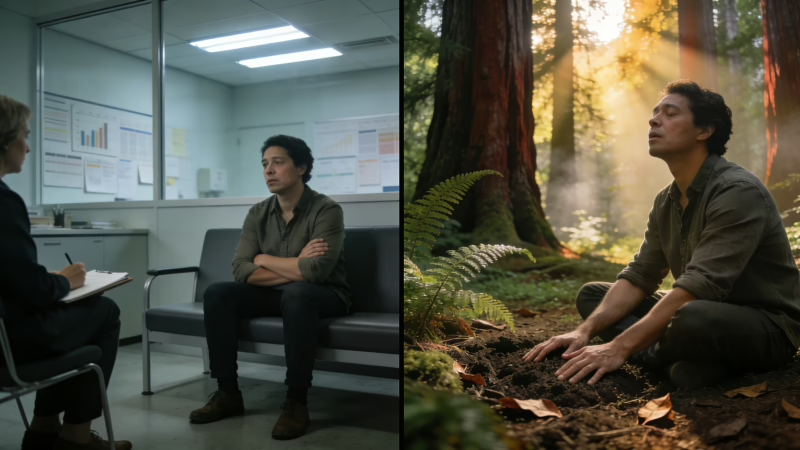
While EMDR focuses heavily on memory processing, Mindfulness-Based Ecotherapy expands the therapeutic frame to include present-moment awareness, body-based regulation, and reconnection with the natural world. For many people experiencing trauma-related symptoms, healing is not only about processing past events but also about rebuilding a sense of safety and connection in the present.
Mindfulness-Based Ecotherapy supports this process by helping people develop awareness of emotional states without becoming overwhelmed by them. Nature-based experiences can also reduce physiological stress responses, support grounding, and foster a sense of stability and belonging.
Where EMDR primarily targets memory reconsolidation, Mindfulness-Based Ecotherapy emphasizes ongoing regulation of the nervous system and the rebuilding of adaptive relationships with both internal experiences and external environments.
These approaches are not mutually exclusive. In fact, many trauma-informed clinicians see value in integrating structured trauma processing methods like EMDR with mindfulness-based and nature-based interventions to support long-term recovery.
A Useful Tool Within an Evolving Field
EMDR continues to be a valuable and widely used trauma treatment, but its exact mechanisms remain a topic of scientific discussion. While many people benefit from EMDR, research suggests that its core effectiveness may be closely tied to cognitive-behavioral and exposure-based elements rather than the eye movements or tapping themselves.
Understanding this distinction helps place EMDR within a larger therapeutic landscape rather than treating it as a standalone or uniquely mechanistic intervention. For many people, the most effective trauma recovery may come from combining structured memory processing approaches with broader practices that support emotional regulation, present-moment awareness, and reconnection with life, areas where Mindfulness-Based Ecotherapy offers meaningful contributions.
References
Bisson, J. I., Roberts, N. P., Andrew, M., Cooper, R., & Lewis, C. (2013). Psychological therapies for chronic post-traumatic stress disorder (PTSD) in adults. Cochrane Database of Systematic Reviews, (12), CD003388.
Shapiro, F. (2001). Eye movement desensitization and reprocessing: Basic principles, protocols, and procedures (2nd ed.). Guilford Press.
van den Hout, M., & Engelhard, I. M. (2012). How does EMDR work? Journal of Experimental Psychopathology, 3(5), 724–738.
Watts, B. V., Schnurr, P. P., Mayo, L., Young-Xu, Y., Weeks, W. B., & Friedman, M. J. (2013). Meta-analysis of the efficacy of treatments for posttraumatic stress disorder. Journal of Clinical Psychiatry, 74(6), e541–e550.
The Mindful Ecotherapy Center on YouTube
Subscribe to the Mindful Ecotherapy Center’s YouTube channel to bring peace, presence, and healing into your daily life. Our videos guide you through mindfulness-based ecotherapy practices, including forest bathing, tree planting rituals, nature meditations, and reflective exercises for grief, stress, and emotional well-being.
Whether you’re seeking to reconnect with the natural world, cultivate inner calm, or find restorative tools for personal growth, our content offers practical guidance, inspiration, and community support. Join us to explore the transformative power of nature and mindfulness, and start your journey toward balance, resilience, and deeper connection today!
Share Your Thoughts!
What do you think? Share your thoughts in the comments below! And don’t forget to subscribe to our newsletter!