Posted on Leave a comment

Toxic Masculinity and How Mindfulness-Based Ecotherapy Can Help Heal It

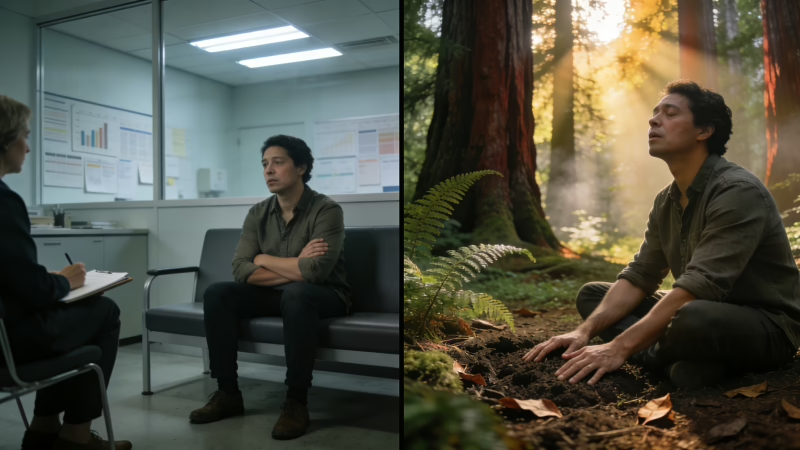
toxic masculinity

The phrase toxic masculinity has entered mainstream cultural conversations in psychology, education, media, and mental health discussions. Unfortunately, the term is often misunderstood. Toxic masculinity does not mean that masculinity itself is harmful. Instead, it refers to unhealthy social conditioning that pressures men and boys to suppress vulnerability, avoid emotional expression, seek dominance over others, and measure their value through power, control, aggression, or emotional detachment. These rigid expectations can damage relationships, isolate individuals emotionally, and negatively impact the psychological well-being of men themselves.

Healthy masculinity can include courage, resilience, responsibility, integrity, leadership, emotional steadiness, and protectiveness. Toxic masculinity develops when those healthy traits become distorted through cultural pressures that discourage emotional honesty and human vulnerability. Many boys grow up hearing messages such as “don’t cry,” “man up,” or “real men never show weakness.” Over time, these messages can create a deep internal conflict because human beings naturally experience sadness, fear, loneliness, tenderness, grief, and uncertainty. When individuals are taught to suppress these emotions instead of processing them in healthy ways, the emotions do not disappear. Instead, they often re-emerge indirectly through anger, emotional numbness, addiction, compulsive behavior, social withdrawal, or hostility.

Impact of Toxic Masculinity on Neurobiology

The body and nervous system are deeply affected by chronic emotional suppression. Many men socialized under rigid masculine expectations live in a constant state of emotional vigilance, where vulnerability feels unsafe and emotional openness feels threatening. This can contribute to anxiety, depression masked as irritability, relationship difficulties, emotional disconnection, loneliness, and burnout. Unfortunately, many men have never been taught how to identify emotions, regulate stress, or communicate vulnerability without shame. Instead, emotional distance is often rewarded while emotional openness is discouraged.

This is where mindfulness-based ecotherapy offers a profoundly different approach to healing. Mindfulness-based ecotherapy combines mindfulness practices with nature-centered therapeutic experiences. Rather than focusing only on intellectual discussion, ecotherapy engages the entire person through sensory awareness, movement, reflection, and connection with the living world. Nature becomes part of the healing process itself.

Mindfulness and Toxic Masculinity

Mindfulness practices encourage you to observe your thoughts and emotions without immediately reacting to them or suppressing them. Instead of turning fear into anger or hiding sadness behind emotional detachment, mindfulness creates space to witness emotions with compassion and curiosity. Ecotherapy deepens this experience by grounding mindfulness within direct sensory contact with nature. Walking quietly through a forest trail, sitting beside moving water, gardening, or practicing breath awareness outdoors can calm the nervous system and reconnect individuals with their bodies and emotions in ways that feel less threatening than traditional confrontational approaches.

Nature itself quietly challenges the assumptions of toxic masculinity. Modern culture often teaches men to disconnect from vulnerability, embodiment, and interdependence, while nature continuously demonstrates cycles of growth, rest, renewal, loss, and adaptation. Forests, rivers, changing seasons, and ecosystems function through relationships and balance rather than domination. Spending mindful time in nature can help individuals realize that vulnerability is not weakness but an essential part of being alive and connected.

Benefits of Nature

Research on exposure to natural environments has shown benefits, including reduced stress, improved emotional regulation, lower rumination, and increased psychological well-being. These experiences create the internal safety necessary for emotional healing and growth. Many men who struggle with emotional expression find that they are more capable of opening emotionally while walking outdoors or engaging in grounded, physical activities in natural settings than they are in traditional indoor environments. Nature reduces social pressure and creates space for reflection without judgment.

Healing toxic masculinity does not require abandoning masculinity altogether. Instead, it involves redefining masculinity in healthier and more integrated ways. A healthier vision of masculinity includes emotional intelligence, accountability, compassion, presence, self-awareness, healthy boundaries, and meaningful connections with others. Mindfulness-based ecotherapy supports these qualities by helping individuals reconnect with themselves, regulate their emotions, and cultivate greater awareness of their inner lives.

Healing from Toxic Masculinity

As men reconnect with their emotional experiences and the natural world, they often rediscover a deeper sense of groundedness, purpose, and belonging that modern digital culture frequently fails to provide. Emotional strength becomes less about suppression and more about presence. Courage becomes less about domination and more about authenticity. Healing becomes possible when individuals no longer feel pressured to perform an impossible version of masculinity that disconnects them from their humanity.

The conversation around toxic masculinity is ultimately not about blame. It is about understanding how systems of emotional disconnection harm individuals and communities alike. Mindfulness-based ecotherapy offers a compassionate and grounded pathway toward healing by helping people reconnect with themselves, with others, and with the living world around them.

Learn more about mindfulness-based ecotherapy at the Mindful Ecotherapy Center


Share Your Thoughts About Toxic Masculinity!

What do you think? Share your thoughts in the comments below!


  And don’t forget to subscribe to our newsletter!

Posted on

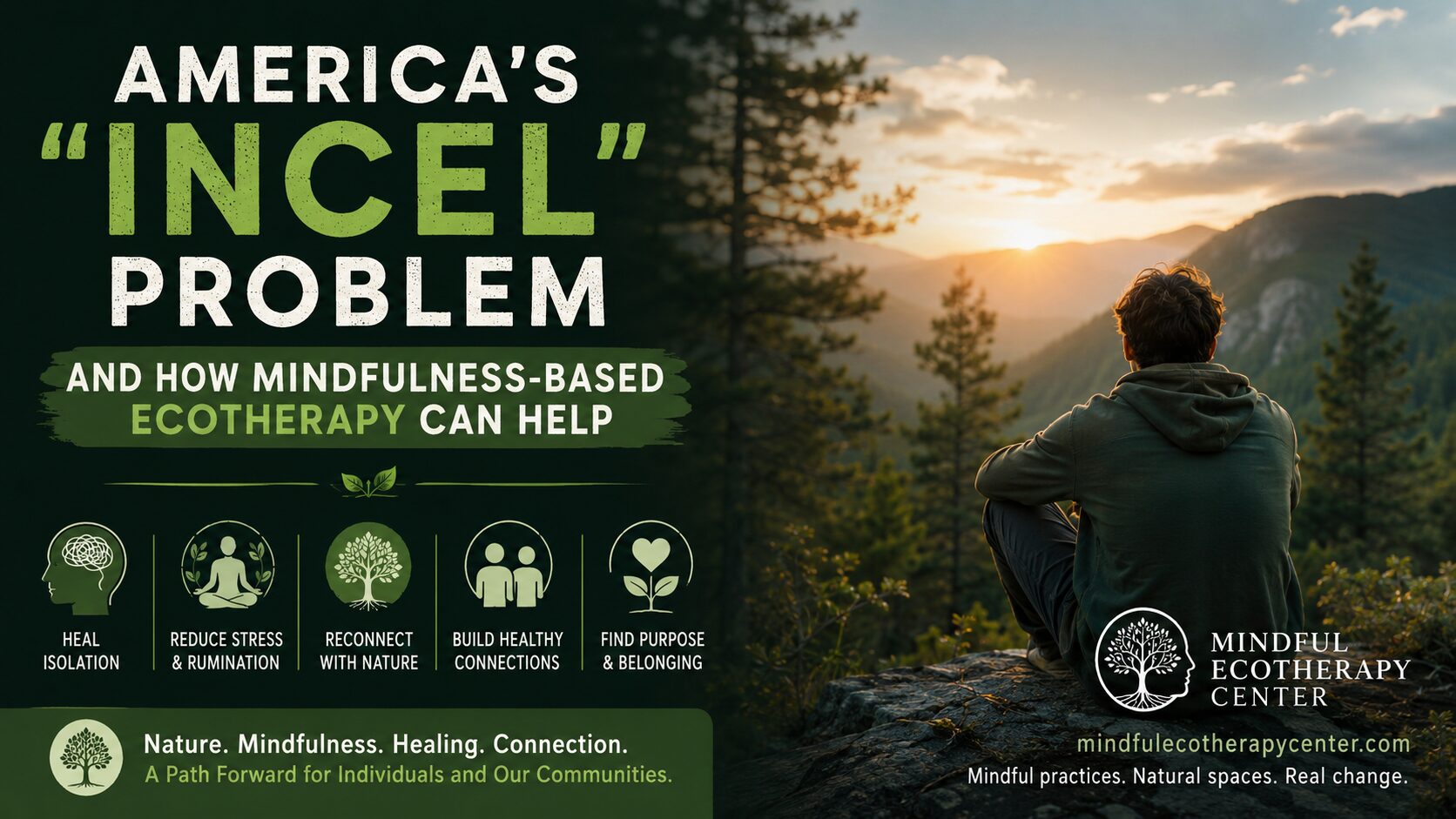
America’s “Incel” Problem and How Mindfulness-Based Ecotherapy Can Help

incel problem

Across the United States, there has been growing concern about social isolation among young men and the rise of what is commonly referred to as the “incel” (involuntary celibate) subculture. While the term has been sensationalized in media and internet discourse, it often reflects a deeper human struggle: loneliness, disconnection, rejection, and a lack of healthy emotional tools for processing pain.

Rather than framing this issue as a fixed identity or a hopeless condition, it is more useful and more humane to view it as a signal of unmet psychological, social, and ecological needs. This is where mindfulness-based ecotherapy can offer meaningful pathways toward healing and reconnection.

Understanding the Roots of Isolation and Disconnection

Many young men who become immersed in online “incel” communities are not initially driven by ideology, but by emotional pain. Repeated experiences of rejection, difficulty forming relationships, low self-esteem, and social anxiety can create a feedback loop of withdrawal.

Over time, digital spaces may replace real-world interaction, reinforcing distorted beliefs about oneself and others. In this context, the internet can amplify resentment and hopelessness, especially when there are few offline supports available. It doesn’t help that America’s current political and cultural zeitgeist frames cruelty and bullying as signs of ‘alpha male’ strength instead of what it truly is: fear and pain masquerading as dominance.

It is important to understand that isolation is not just a personal issue. It is also environmental and cultural. Modern life often reduces opportunities for community bonding, shared ritual, time in nature, and intergenerational mentorship. The mentors young men seek out often turn out to be podcasters and influencers who have a hidden agenda. This can have a long-lasting impact on the socialization of our young men.

The Nervous System, Stress, and Emotional Survival

When someone experiences prolonged social rejection or loneliness, the nervous system adapts to stress. Hypervigilance, distrust, emotional numbing, and anger can become protective responses. These responses are not moral failures. They are survival adaptations.

However, without intervention, these patterns can become rigid. The longer they go uncorrected, the more permanent and difficult to change they become. The young male may begin interpreting the world through a narrow emotional lens shaped by pain rather than possibility. In extreme cases, it can become a way to avoid personal responsibility by blaming society, or politicians, or even women for the alleged victim’s own failures.

Mindfulness-based practices help interrupt this cycle by restoring awareness of the present moment and softening automatic reactive patterns.

What Mindfulness-Based Ecotherapy Offers

Mindfulness-based ecotherapy integrates traditional mindfulness practices with nature-based therapeutic approaches. Instead of treating healing as something that happens only in a clinical setting, it recognizes the natural world as a co-therapist.

When young men engage with forests, rivers, soil, plants, and seasonal cycles, something important happens neurologically and emotionally: the nervous system begins to regulate more naturally.

Nature does not demand performance, status, or social comparison. It offers presence, rhythm, and nonjudgmental awareness.

In this context, individuals struggling with deep loneliness can begin to experience:

  • A reduction in rumination and obsessive thought cycles
  • Increased emotional regulation through grounding in sensory experience
  • A sense of belonging to something larger than themselves
  • Reconnection to embodied presence rather than digital identity

Rebuilding Connection Through Embodied Experience

One of the core challenges in chronic isolation is disembodiment. In disembodiment, the person ends up living primarily in thought, fantasy, or online interaction with the incel community rather than in direct sensory engagement with the real world.

Ecotherapy practices such as walking meditations in natural settings, gardening, forest bathing, and mindful observation of ecological systems help restore this embodied awareness and reduce incel tendencies.

These experiences also gently reintroduce relational safety. For young men who feel disconnected from people, nature provides a transitional relational field that is consistent, nonjudgmental, and stabilizing.

Over time, this can make human connection feel less threatening and more accessible.

Incel: From Alienation to Integration

Healing does not mean forcing social conformity or suppressing emotional pain. Instead, it involves integration by learning to hold difficult emotions without being controlled by them. This is ultimately the path away from incel culture, incel thoughts, and behaviors.

Mindfulness-based ecotherapy supports this process by encouraging young men to observe thoughts and feelings as temporary phenomena, much like weather patterns in nature. Anger, sadness, shame, and grief can be witnessed rather than acted upon impulsively or internalized destructively. This eliminates the need for incel ideology and returns personal responsibility to its rightful place.

This shift away from incel culture creates psychological space. And within that space, new choices become possible.

A Path Toward Reconnection

Addressing America’s broader challenges of loneliness and disconnection requires more than online discourse or ideological debates. It requires grounded, embodied practices that rebuild the human capacity for presence, empathy, and relational trust. This embodied presence in nature is the quickest way out of the incel mindset.

Mindfulness-based ecotherapy offers one such pathway. It does not erase pain, but it helps transform isolation into awareness, and awareness into connection. Over time, connections established in this way can help reduce or eliminate emotional pain. Even if it does not totally eliminate the reliance on incel thinking, it can still help young men to recognize such thoughts as just thoughts, and not reality.

Over time, young men who once felt disconnected may begin to rediscover not only their relationship with nature but also their capacity for healthy human relationships. And that reduces or eliminates the incel mindset.


Mindful Ecotherapy Center on YouTube

Subscribe to the Mindful Ecotherapy Center’s YouTube channel to bring peace, presence, and healing into your daily life. Our videos guide you through mindfulness-based ecotherapy practices, including forest bathing, tree planting rituals, nature meditations, and reflective exercises for grief, stress, and emotional well-being.

Whether you’re seeking to reconnect with the natural world, cultivate inner calm, or find restorative tools for personal growth, our content offers practical guidance, inspiration, and community support. Join us to explore the transformative power of nature and mindfulness, and start your journey toward balance, resilience, and deeper connection today!


Share Your Thoughts!

What do you think? Share your thoughts in the comments below! And don’t forget to subscribe to our newsletter!


Posted on

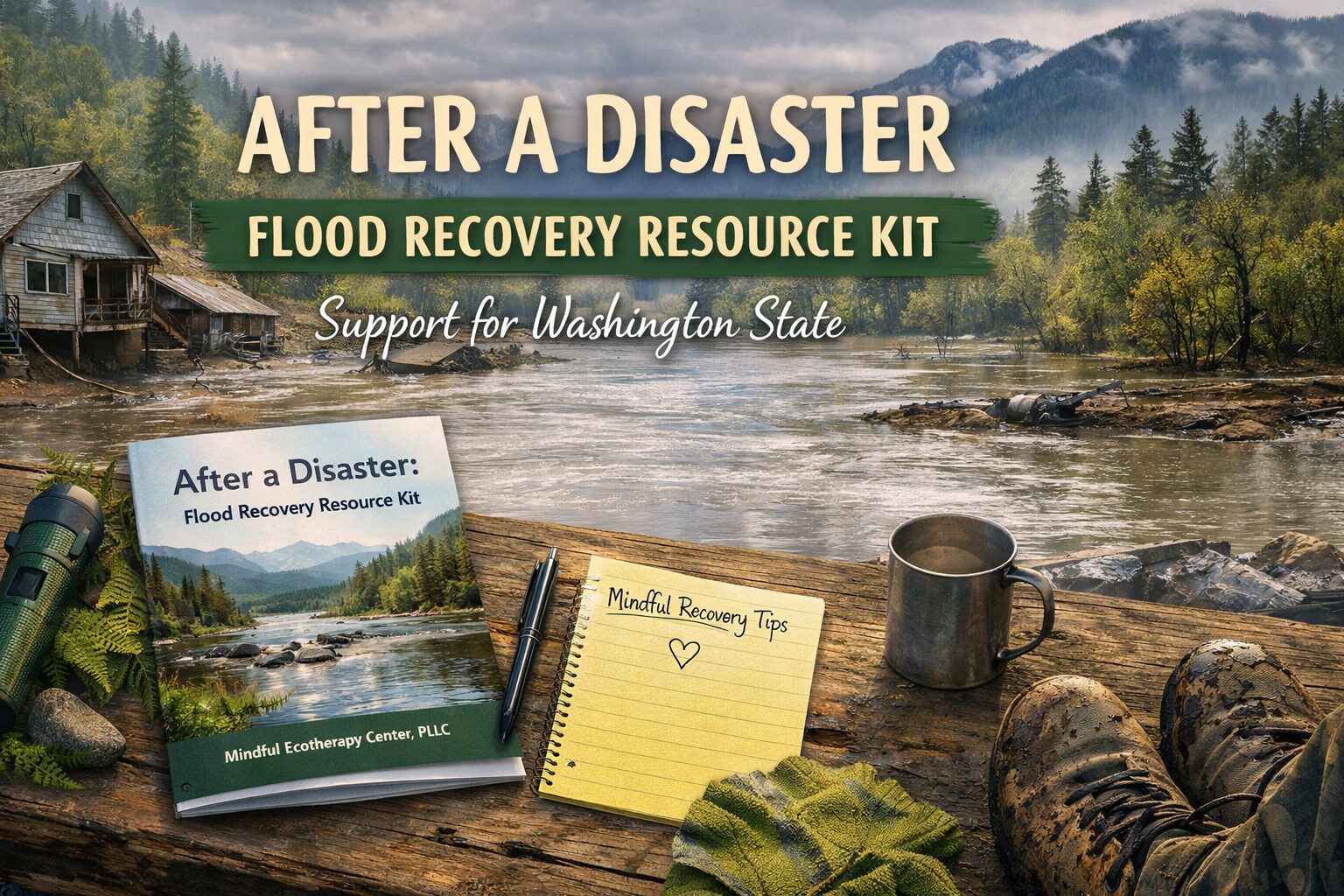
After a Disaster: Flood Recovery Resource Kit

after a disaster

When flooding hits, it doesn’t ask whether you were ready. It doesn’t check your calendar. It shows up, does damage, and leaves you to sort through what’s left. The recent flooding across Washington State has been exactly that kind of natural disaster—sudden, destabilizing, and deeply disruptive to entire communities.

At the Mindful Ecotherapy Center, PLLC, we work with people every day who are carrying an invisible weight. After a disaster, that weight multiplies. News coverage tends to focus on water levels, property losses, and infrastructure damage. What gets less attention is the emotional aftermath: shock, exhaustion, grief, anxiety, irritability, numbness, and the quiet fear that things may never feel stable again.

After a Disaster – Flood Recovery Resource Kit

We created the After a Disaster – Flood Recovery Resource Kit because telling people to “take care of themselves” after a flood is not sufficient support. It’s a vague suggestion offered when people are already overwhelmed. This kit is our way of offering something tangible, practical, and grounded to the local community during a time when clarity is in short supply.

The kit is completely free. That part is intentional. During a natural disaster, access matters. People are already dealing with insurance claims, temporary housing, disrupted work schedules, and the emotional toll of uncertainty. Support should not come with barriers or price tags attached. Making this resource freely available is one way we show up for our community beyond words.

Practical, Real-Life Help

The After a Disaster – Flood Recovery Resource Kit is designed for use in real-life situations. It meets people where they are. The worksheets and practices inside are meant to be used quickly, imperfectly, and revisited as needed. There is no expectation that you complete everything or do it “right.” Partial answers count. Skipping sections that feel overwhelming is not failure; it’s self-regulation.

This kit draws directly from mindfulness-based ecotherapy principles. That means it recognizes that healing after a natural disaster happens on multiple levels at once. The nervous system needs stabilization. The mind needs tools to manage intrusive thoughts and emotional swings. The body needs grounding. And connection, to the natural world and to other people, needs to be restored after it has been disrupted.

Recovery is Not Linear

Flooding can permanently alter someone’s relationship with their environment. Nature, which once may have felt neutral or even calming, can suddenly feel threatening. Land that once felt stable may feel unreliable. The kit gently supports rebuilding a sense of safety with the environment rather than avoiding it entirely. Mindful awareness of surroundings, sensory grounding, and nature-based practices are woven throughout because the environment can also be part of recovery.

The resource kit also acknowledges something that doesn’t get said out loud often enough: emotional reactions after a natural disaster are not linear, predictable, or tidy. People may feel “fine” one moment and completely depleted the next. Anger, guilt, grief, and relief can coexist in uncomfortable ways. The kit offers structured reflection and emotional check-ins that help people name what they’re experiencing without getting stuck in it.

Reconnecting to Community After a Disaster

Community connection is another core focus. Flooding often isolates people at the exact moment they need support most. Displacement, damaged roads, and disrupted routines can quietly erode social contact. The kit includes guidance for rebuilding connection, asking for help without shame, and engaging in collective healing efforts that honor both emotional experience and environmental impact.

This is not therapy in a box, and it’s not meant to replace professional care when that’s needed. It is a bridge. A stabilizing support offered during the window when people are most vulnerable and least resourced. It reflects the Mindful Ecotherapy Center’s belief that mental health support should be responsive, compassionate, and grounded in real-world conditions, especially during a natural disaster where help may be hard to access.

Supporting Our Community

Offering the After a Disaster – Flood Recovery Resource Kit is one way we extend care beyond our office walls and into the community. It’s our way of saying: you are not expected to hold this alone, and your emotional recovery matters just as much as the physical rebuilding.

The kit is available now as a free download through the Mindful Ecotherapy Center: https://www.mindfulecotherapy.org

If the flood has left you feeling unsteady, overwhelmed, or disconnected, this resource was created with you in mind.


Share Your Thoughts on the Washington Floods!

What do you think? Have you experienced difficulties due to the recent flooding? Do you have any resources for victims of this or other natural disasters? Share your thoughts in the comments below! And don’t forget to subscribe to our newsletter!

Posted on

Replacing Negative Coping Mechanisms with Nature-Based Mindfulness Practices

negative coping mechanisms

Coping with stress, trauma, or overwhelming emotions can sometimes lead people to adopt harmful habits, such as substance use, overeating, or other compulsive behaviors. While these negative coping mechanisms may provide temporary relief, they often create long-term physical, emotional, and psychological harm. Recovery and behavioral change require replacement strategies that are nurturing, restorative, and sustainable. Mindfulness-based ecotherapy (MBE) offers a powerful solution by integrating mindfulness practices with direct engagement in nature. This approach not only supports emotional regulation but also fosters resilience, self-awareness, and healthy coping skills to replace negative coping mechanisms.

Understanding Negative Coping Mechanisms

Negative coping mechanisms often emerge as a response to stress, grief, trauma, or chronic anxiety. For many people, these behaviors serve as a temporary escape from discomfort, providing immediate, but fleeting relief. Substance use, for example, may numb emotional pain or alleviate anxiety, yet it does not address underlying emotional issues. Over time, reliance on negative coping mechanisms and harmful coping strategies can exacerbate emotional instability, increase dependency, and reduce overall well-being.

Replacing negative coping mechanisms requires interventions that both soothe and empower. Mindfulness-based ecotherapy offers an integrative method for doing just that: it helps people pause, reflect, and engage with their emotions in healthy, constructive ways while reconnecting with the restorative qualities of nature.

Why Nature Matters in Healing

Nature has profound physiological and psychological benefits. Spending time in natural environments reduces stress hormones, lowers heart rate, and calms the nervous system. Sensory-rich experiences can include things like feeling the texture of tree bark, hearing birdsong, and observing sunlight through leaves. These sensory experiences anchor attention in the present moment. This grounding in the here and now is essential for disrupting automatic negative coping mechanisms and retraining the brain to respond in healthier ways.

Nature also provides symbolic guidance. Observing seasonal change, growth, decay, and renewal can inspire people to reflect on their own processes of transformation. Just as a tree sheds leaves in autumn to prepare for new growth, people can release harmful coping patterns and cultivate healthier alternatives.

Mindfulness-Based Ecotherapy Practices

Integrating mindfulness with nature provides practical strategies for replacing negative coping mechanisms:

  1. Mindful Walking – Walking slowly in a park, forest, or along a river encourages attention to the present moment. Focusing on the sensation of each step, breath, and surrounding sights helps people disrupt habitual responses and cultivate intentional behavior.
  2. Nature Observation Meditation – Sitting quietly and observing natural patterns, such as flowing water, rustling leaves, or cloud formations, enhances attention and emotional regulation. People learn to notice thoughts and urges without judgment, reducing the impulse to resort to negative coping strategies.
  3. Reflective Journaling Outdoors – Writing about stressors, cravings, or emotional triggers in a natural setting helps people externalize difficult emotions and process them constructively. Journaling strengthens self-awareness and reinforces positive coping alternatives.
  4. Sensory Grounding Exercises – Engaging touch, sight, hearing, and smell in nature anchors people in the present moment. Touching soil, feeling the wind, or listening to natural sounds can replace harmful behaviors with calming, grounding sensations.
  5. Rituals and Creative Expression – Activities like planting trees, creating natural art, or tending a garden provide symbolic and tangible acts of renewal. These rituals reinforce intention, provide a sense of accomplishment, and activate reward pathways in the brain in positive ways.

Benefits of Nature-Based Mindfulness in Recovery

Replacing negative coping mechanisms with nature-based mindfulness offers numerous benefits:

  • Stress Reduction – Nature engagement reduces physiological stress responses, lowering the likelihood of reverting to harmful habits.
  • Emotional Regulation – Mindfulness helps people observe cravings and emotions without reacting impulsively, fostering self-control and resilience.
  • Cognitive Rewiring – Repeated mindfulness practice in nature strengthens neural pathways associated with healthy coping and executive functioning.
  • Self-Compassion – Nature and mindfulness together cultivate nonjudgmental awareness, allowing people to treat themselves with care and patience during recovery.
  • Connection and Meaning – Spending time in nature nurtures a sense of belonging and interconnectedness, countering isolation and enhancing well-being.

Practical Steps for Incorporating Nature-Based Mindfulness

  1. Start Small – Even ten minutes of mindful nature observation daily can create meaningful changes in coping habits.
  2. Create a Routine – Consistency reinforces new habits and strengthens brain pathways associated with healthy coping.
  3. Engage the Senses – Fully immerse in the environment, paying attention to tactile, visual, auditory, and olfactory experiences.
  4. Reflect and Journal – Record observations, emotions, and progress to track patterns and insights over time.
  5. Combine with Support Systems – Pair MBE practices with therapy, support groups, or medical guidance for comprehensive recovery support.

Conclusion

Negative coping mechanisms may offer temporary relief, but they ultimately undermine long-term well-being. Mindfulness-based ecotherapy provides a sustainable, restorative alternative by combining the grounding, calming influence of nature with mindful awareness of thoughts, emotions, and behaviors. By engaging in practices such as mindful walking, nature observation, journaling, and ritualized activities, people can replace harmful habits with positive coping strategies that support emotional regulation, resilience, and holistic health.

At the Mindful Ecotherapy Center, we encourage people seeking to break free from negative coping patterns to explore nature-based mindfulness practices as a central component of their healing journey. By connecting deeply with the natural world and cultivating present-moment awareness, people can develop healthier responses to stress, navigate cravings, and foster a more balanced, empowered, and meaningful life. Nature is not only a sanctuary for reflection—it is a partner in transformation and recovery.


The Mindful Ecotherapy Center on YouTube

Subscribe to the Mindful Ecotherapy Center’s YouTube channel to bring peace, presence, and healing into your daily life. Our videos guide you through mindfulness-based ecotherapy practices, including forest bathing, tree planting rituals, nature meditations, and reflective exercises for grief, stress, and emotional well-being. Whether you’re seeking to reconnect with the natural world, cultivate inner calm, or find restorative tools for personal growth, our content offers practical guidance, inspiration, and community support. Join us to explore the transformative power of nature and mindfulness, and start your journey toward balance, resilience, and deeper connection today!


Share Your Thoughts!

What do you think? Share your thoughts in the comments below! And don’t forget to subscribe to our newsletter!

Posted on

The Adverse Childhood Experiences Study and Mental and Physical Health

ACEs Study

The Adverse Childhood Experiences (ACEs) Study is a groundbreaking research project that has transformed our understanding of how early-life trauma impacts long-term health. Conducted by the Centers for Disease Control and Prevention (CDC) and Kaiser Permanente, the study revealed a strong correlation between childhood adversity and a wide array of mental and physical health issues in adulthood. This blog explores the ACEs Study, its implications for health, and how Mindfulness-Based Ecotherapy (MBE) can offer a pathway to healing.

What is the ACEs Study?

The ACEs Study evaluates the impact of adverse experiences during childhood, such as abuse, neglect, and household dysfunction. Participants answer questions across ten categories:

  1. Physical abuse
  2. Emotional abuse
  3. Sexual abuse
  4. Physical neglect
  5. Emotional neglect
  6. Parental separation or divorce
  7. Household substance abuse
  8. Household mental illness
  9. Domestic violence
  10. Incarcerated household member

Each positive response counts as one ACE. Higher ACE scores correlate with increased risks of health challenges such as depression, anxiety, chronic diseases, and even early death.

ACEs Survey:

  1. Did a parent or other adult in your household often or very often… swear at you, insult you, put you down, or humiliate you? Or act in a way that made you afraid you might be physically hurt?
  2. Did a parent or other adult in your household often or very often… push, grab, slap, or throw something at you? Or ever hit you so hard that you had marks or were injured?
  3. Did an adult or person at least 5 years older than you ever… touch or fondle you in a sexual way? Or have you touch their body in a sexual way? Or attempt or actually have oral, anal, or vaginal intercourse with you?
  4. Did you often or very often feel that… no one in your family loved you or thought you were important or special? Or your family didn’t look out for each other, feel close to each other, or support each other?
  5. Did you often or very often feel that… you didn’t have enough to eat, had to wear dirty clothes, and had no one to protect you? Or your parents were too drunk or high to take care of you or take you to the doctor if you needed it?
  6. Were your parents ever separated or divorced?
  7. Was your mother or stepmother: Often or very often pushed, grabbed, slapped, or had something thrown at her? Or sometimes, often, or very often kicked, bitten, hit with a fist, or hit with something hard? Or ever repeatedly hit over at least a few minutes or threatened with a gun or knife?
  8. Did you live with anyone who was a problem drinker or alcoholic or who used street drugs?
  9. Was a household member depressed or mentally ill, or did a household member attempt suicide?
  10. Did a household member go to prison?
ACEs Study mindfulness

Impacts of ACEs on Health

The ACEs Study uncovered that individuals with higher ACE scores are at greater risk for the following:

  • Mental Health Issues: Depression, anxiety, PTSD, and suicidal ideation are common among those with high ACE scores.
  • Physical Health Problems: Chronic diseases such as heart disease, diabetes, and autoimmune disorders are more prevalent in those with childhood trauma.
  • Behavioral Challenges: Increased likelihood of substance abuse, risky behaviors, and difficulty forming healthy relationships.
  • Shortened Lifespan: Studies indicate a reduced life expectancy of up to 20 years for those with the highest ACE scores.

Healing Through Mindfulness-Based Ecotherapy

Mindfulness-Based Ecotherapy (MBE) is a therapeutic approach that combines mindfulness practices with nature-based activities. It is particularly effective for individuals recovering from childhood trauma and attachment disorders. Here’s how MBE can help:

1. Rebuilding Secure Attachments

ACEs often disrupt the ability to form secure relationships. MBE includes exercises like grounding and mindful observation in natural settings, fostering a sense of safety and connection. These practices encourage individuals to rebuild trust—both in themselves and in their environment.

2. Managing Stress and Anxiety

MBE techniques such as mindful breathing, walking meditations, and sensory awareness exercises help regulate the nervous system. These activities mitigate the hyperarousal and emotional dysregulation common in individuals with high ACE scores.

3. Fostering Resilience

By engaging in eco-art activities like sandtray therapy or nature journaling, participants can explore their trauma narratives in a non-threatening way. These creative outlets enable them to reframe their experiences, cultivating resilience and empowerment.

4. Improving Physical Health

Spending time in nature has been shown to lower blood pressure, reduce inflammation, and improve overall physical health. The incorporation of mindfulness enhances these benefits by reducing chronic stress, a key factor linking ACEs to poor health outcomes.

5. Encouraging Emotional Regulation

Nature-based mindfulness exercises encourage individuals to stay present and process emotions as they arise. Over time, these practices strengthen emotional regulation skills, reducing symptoms of PTSD and anxiety.

Conclusion

The ACEs Study has provided invaluable insights into how childhood adversity impacts health across the lifespan. While the effects of high ACE scores can be profound, healing is possible. Mindfulness-Based Ecotherapy offers a holistic approach to addressing trauma, fostering resilience, and improving both mental and physical health. By integrating mindfulness practices with the healing power of nature, MBE provides a pathway for individuals to reclaim their well-being and build a brighter future.

If you or someone you know has experienced childhood trauma, consider exploring Mindfulness-Based Ecotherapy as a powerful tool for healing and growth.


Share Your Thoughts on the Adverse Childhood Experiences Study!

Do you find the ACE Study useful? Share your thoughts in the comments below!

Don’t forget to check out our YouTube Channel!