
Posted on Leave a comment

Is ADHD Being Overdiagnosed in Modern Life? A Mindful Ecotherapy Perspective

ADHD Overdiagnosis

ADHD overdiagnosis is a hot topic in mental health these days, but is it really a thing? Attention-Deficit/Hyperactivity Disorder (ADHD) has become one of the most widely discussed neurodevelopmental conditions in modern mental health conversations. As awareness has grown, so too have diagnosis rates, leading many clinicians, educators, and families to ask an important question: Is ADHD overdiagnosis becoming a feature of modern life, or are we finally getting better at recognizing what was previously missed?

From a mindful ecotherapy perspective, the answer is not simple. It involves balancing legitimate clinical recognition with cultural, environmental, and lifestyle factors that may be shaping how attention and behavior are interpreted today.

Understanding ADHD Overdiagnosis in Context

ADHD is typically characterized by patterns of inattention, hyperactivity, and impulsivity that interfere with functioning or development. However, these behaviors exist on a spectrum in all human beings. The challenge begins when normal variations in attention and energy are interpreted through a medical lens without sufficient context.

Modern life complicates this picture. You live in an environment saturated with constant stimulation like phones, notifications, multitasking demands, and reduced exposure to restorative natural settings. From a neuroecological standpoint, it becomes harder to distinguish between a clinical disorder and a nervous system overwhelmed by chronic overstimulation.

The Case for ADHD Overdiagnosis

Those who argue that ADHD overdiagnosis is occurring point to several trends:

1. Expanded diagnostic criteria and awareness

Greater awareness has made ADHD more recognizable in children and adults who were previously undiagnosed. However, broader awareness can sometimes lead to over-attribution of symptoms, especially when normal developmental behaviors are pathologized.

2. Educational and performance pressures

In school and workplace environments that demand constant focus and productivity, individuals who struggle with these expectations may be quickly labeled. In some cases, diagnosis becomes a pathway to accommodations rather than a full exploration of environmental mismatch.

3. Pharmaceutical influence and treatment pathways

Critics also note that medication is often presented early in the diagnostic process. While medication can be life-changing for many, it may also contribute to a tendency to diagnose rather than first explore lifestyle, trauma, sleep, diet, and ecological stressors.

4. Overlapping symptoms with modern stress

Anxiety, trauma responses, sleep deprivation, and digital overload can mimic ADHD symptoms. Without careful differential assessment, these conditions may be misclassified.

The Case Against Overdiagnosis Claims

At the same time, it is important not to dismiss ADHD as merely a modern misinterpretation of attention struggles.

1. Underdiagnosis still exists

Many people were historically overlooked. What looks like an increase in diagnosis may partly reflect the correction of past underdiagnosis as awareness and education on symptoms and diagnosis increased.

2. ADHD is neurodevelopmental and persistent

For many people, ADHD symptoms are consistent across environments and life stages, suggesting a stable neurological pattern rather than situational stress alone.

3. Improved diagnostic tools and awareness

Clinicians today are better trained to identify ADHD across diverse populations, including those without hyperactivity but with significant internal attention difficulties.

A Mindful Ecotherapy Perspective

Mindful ecotherapy offers a different lens: rather than asking only “Is this ADHD or not?”, it asks, “What is this nervous system responding to?”

From this perspective, attention is an ecological interaction between the human mind and its environment.

Nature deprivation and attention fatigue

Research increasingly suggests that time in natural environments restores attention and reduces cognitive fatigue. When individuals are deprived of these restorative environments, symptoms resembling ADHD can intensify.

Nervous system regulation

Mindful ecotherapy emphasizes grounding practices in nature to regulate the nervous system. This includes forest bathing, sensory awareness in outdoor settings, and rhythmic movement in natural spaces, all of which support attention stability.

Trauma and adaptive attention patterns

What appears as inattention may sometimes be a protective response to past overwhelm. The mind learns to scan, shift, or disconnect as a survival adaptation. Ecotherapy helps gently reestablish safety in the present moment.

Finding Balance: Diagnosis and Environment

The most responsible approach to ADHD overdiagnosis concerns is not rejection of the diagnosis, but integration. ADHD can be real and valid while also being influenced by environmental and cultural conditions.

A balanced perspective includes:

  • Careful clinical assessment
  • Consideration of trauma and stress history
  • Evaluation of sleep, diet, and digital exposure
  • Inclusion of nature-based and mindfulness interventions
  • Recognition that attention is shaped by the environment, not just biology

The question of ADHD overdiagnosis reflects a deeper cultural tension: how do we distinguish between neurological difference and environmental overload in a world that rarely allows stillness?

From a mindful ecotherapy perspective, healing begins not only in diagnosis or medication, but in restoring the human relationship with nature, rhythm, and presence. When attention is supported by ecological balance, many symptoms can be understood with greater clarity and compassion.

ADHD Differential Diagnosis Course

We offer an ADHD differential diagnosis course that looks at some of the more common misdiagnoses of ADHD. You can learn more here.


Mindful Ecotherapy Center on YouTube

Subscribe to the Mindful Ecotherapy Center’s YouTube channel to bring peace, presence, and healing into your daily life. Our videos guide you through mindfulness-based ecotherapy practices, including forest bathing, tree planting rituals, nature meditations, and reflective exercises for grief, stress, and emotional well-being.

Whether you’re seeking to reconnect with the natural world, cultivate inner calm, or find restorative tools for personal growth, our content offers practical guidance, inspiration, and community support. Join us to explore the transformative power of nature and mindfulness, and start your journey toward balance, resilience, and deeper connection today!


Share Your Thoughts!

What do you think? Share your thoughts in the comments below! And don’t forget to subscribe to our newsletter!


Posted on Leave a comment

Redefining Masculinity Through Mindfulness-Based Ecotherapy

redefining masculinity

Redefining masculinity in healthier ways is becoming a pressing need because across the world, conversations about masculinity are changing. For generations, many men were taught that masculinity meant control, toughness, stoicism, competition, and dominance. While resilience and strength can certainly be healthy qualities, many traditional cultural messages about manhood also discouraged emotional openness, vulnerability, tenderness, and self-awareness. As a result, countless men learned to disconnect from their emotional lives in order to fit into rigid expectations of what a “real man” was supposed to be.

Today, however, more people are recognizing the need for redefining masculinity in healthier and more sustainable ways. This shift is not about rejecting masculinity itself. It is about creating a more balanced and emotionally intelligent vision of what masculine identity can become in a rapidly changing world. Mindfulness-based ecotherapy offers a powerful framework for supporting this transformation by helping individuals reconnect with themselves, with others, and with the natural world.

Why Redefining Masculinity Matters

Many men grow up internalizing the belief that emotional vulnerability is weakness. From an early age, boys are often encouraged to suppress sadness, hide fear, avoid asking for help, and prioritize achievement over emotional connection. Over time, this conditioning can create emotional isolation and psychological fragmentation.

The consequences of these patterns can be seen in rising rates of loneliness, anxiety, depression, addiction, burnout, relationship struggles, and emotional disconnection among men. In some cases, suppressed emotional pain may emerge as anger, numbness, compulsive behavior, or hostility toward others. The problem is not masculinity itself, but rather the narrow definitions of masculinity that leave little room for emotional authenticity and human complexity.

Redefining masculinity means allowing men to become whole human beings rather than emotional performers trapped inside rigid social roles. It means recognizing that strength and sensitivity are not opposites. Courage can coexist with compassion. Leadership can exist alongside vulnerability. Emotional awareness can strengthen resilience rather than weaken it.

The Disconnection Crisis in Modern Masculinity

Modern culture often intensifies emotional disconnection. Many men spend increasing amounts of time online, isolated from meaningful community, nature, and face-to-face relationships. Social media and algorithm-driven digital spaces frequently reward performance, status, outrage, and comparison rather than emotional presence or authentic connection.

At the same time, many traditional pathways for healthy masculine development have weakened. In previous generations, community rituals, mentorship structures, outdoor activities, apprenticeships, and intergenerational guidance often helped young men transition into adulthood with a stronger sense of identity and purpose. Today, many individuals navigate these challenges largely alone.

Without healthy grounding, men may seek identity through external validation, hyper-independence, emotional suppression, or rigid ideological thinking. This can leave individuals feeling disconnected not only from others but from themselves.

Mindfulness-based ecotherapy directly addresses this disconnection by restoring embodied awareness and relationship with the living world.

How Mindfulness-Based Ecotherapy Supports Healing

Mindfulness-based ecotherapy combines mindfulness practices with therapeutic engagement in nature. Rather than treating healing as purely intellectual, ecotherapy recognizes that emotional well-being is deeply connected to the body, the nervous system, and the environment.

Nature offers a radically different experience from modern digital culture. In forests, rivers, mountains, gardens, and natural landscapes, there is no pressure to perform, compete, or constantly prove worth. Nature operates through balance, interdependence, rhythm, and adaptation.

Mindfulness practices within natural settings help individuals slow down and reconnect with direct sensory experience. This can include mindful walking, meditation outdoors, gardening, grounding exercises, reflective journaling, or simply sitting quietly in a natural environment while observing breath and bodily sensations.

These experiences help regulate the nervous system and create emotional safety. When the body begins to relax, individuals often become more capable of accessing emotions that were previously suppressed or avoided.

Redefining Masculinity Through Presence and Connection

One of the most important aspects of redefining masculinity is shifting away from domination-based identity and toward presence-based identity.

A healthier masculine ideal is not rooted in emotional avoidance or control over others. Instead, it is grounded in self-awareness, integrity, compassion, accountability, and emotional resilience. It recognizes that true strength includes the capacity to remain present with discomfort rather than escaping it through anger, detachment, or performance.

Mindfulness teaches individuals to observe emotions without immediately reacting to them. Rather than suppressing sadness or converting fear into aggression, mindfulness creates space for reflection and emotional understanding. Ecotherapy deepens this process by reconnecting individuals with natural cycles that mirror human emotional life itself: growth, rest, change, loss, and renewal.

Nature reminds us that vulnerability is part of life, not evidence of failure.

A More Integrated Vision of Masculinity

Redefining masculinity does not mean eliminating masculine energy or denying healthy masculine traits. Instead, it means integrating strength with emotional intelligence and independence with relational awareness.

A healthier masculine ideal may include:

  • Emotional honesty without shame
  • The ability to nurture and protect simultaneously
  • Accountability and self-reflection
  • Respect for boundaries and consent
  • Connection to community and environment
  • Compassion without loss of strength
  • Presence instead of emotional suppression

Men who reconnect with these qualities often discover that they no longer need to constantly prove themselves. Identity becomes less performative and more authentic.

Mindfulness-based ecotherapy supports this transformation by helping individuals experience groundedness directly through the body and the natural environment rather than through external validation.

Healing Through Reconnection

The growing movement toward redefining masculinity reflects a deeper cultural need for healing. Many men are exhausted by emotional isolation, performance pressure, and disconnection from meaningful community. They are searching for ways to live with greater authenticity, balance, and emotional clarity.

Mindfulness-based ecotherapy offers a compassionate path toward that healing. Through mindfulness, nature connection, nervous system regulation, and embodied awareness, individuals can begin to rediscover what it means to live as fully integrated human beings.

Healthy masculinity is not about domination or emotional numbness. It is about grounded presence, relational integrity, emotional courage, and connection to life itself.

Learn more about mindfulness-based ecotherapy at the Mindful Ecotherapy Center


Share Your Thoughts About Redefining Masculinity!

What do you think? Share your thoughts in the comments below!


  And don’t forget to subscribe to our newsletter!
Posted on Leave a comment

Toxic Masculinity and How Mindfulness-Based Ecotherapy Can Help Heal It

toxic masculinity

The phrase toxic masculinity has entered mainstream cultural conversations in psychology, education, media, and mental health discussions. Unfortunately, the term is often misunderstood. Toxic masculinity does not mean that masculinity itself is harmful. Instead, it refers to unhealthy social conditioning that pressures men and boys to suppress vulnerability, avoid emotional expression, seek dominance over others, and measure their value through power, control, aggression, or emotional detachment. These rigid expectations can damage relationships, isolate individuals emotionally, and negatively impact the psychological well-being of men themselves.

Healthy masculinity can include courage, resilience, responsibility, integrity, leadership, emotional steadiness, and protectiveness. Toxic masculinity develops when those healthy traits become distorted through cultural pressures that discourage emotional honesty and human vulnerability. Many boys grow up hearing messages such as “don’t cry,” “man up,” or “real men never show weakness.” Over time, these messages can create a deep internal conflict because human beings naturally experience sadness, fear, loneliness, tenderness, grief, and uncertainty. When individuals are taught to suppress these emotions instead of processing them in healthy ways, the emotions do not disappear. Instead, they often re-emerge indirectly through anger, emotional numbness, addiction, compulsive behavior, social withdrawal, or hostility.

Impact of Toxic Masculinity on Neurobiology

The body and nervous system are deeply affected by chronic emotional suppression. Many men socialized under rigid masculine expectations live in a constant state of emotional vigilance, where vulnerability feels unsafe and emotional openness feels threatening. This can contribute to anxiety, depression masked as irritability, relationship difficulties, emotional disconnection, loneliness, and burnout. Unfortunately, many men have never been taught how to identify emotions, regulate stress, or communicate vulnerability without shame. Instead, emotional distance is often rewarded while emotional openness is discouraged.

This is where mindfulness-based ecotherapy offers a profoundly different approach to healing. Mindfulness-based ecotherapy combines mindfulness practices with nature-centered therapeutic experiences. Rather than focusing only on intellectual discussion, ecotherapy engages the entire person through sensory awareness, movement, reflection, and connection with the living world. Nature becomes part of the healing process itself.

Mindfulness and Toxic Masculinity

Mindfulness practices encourage you to observe your thoughts and emotions without immediately reacting to them or suppressing them. Instead of turning fear into anger or hiding sadness behind emotional detachment, mindfulness creates space to witness emotions with compassion and curiosity. Ecotherapy deepens this experience by grounding mindfulness within direct sensory contact with nature. Walking quietly through a forest trail, sitting beside moving water, gardening, or practicing breath awareness outdoors can calm the nervous system and reconnect individuals with their bodies and emotions in ways that feel less threatening than traditional confrontational approaches.

Nature itself quietly challenges the assumptions of toxic masculinity. Modern culture often teaches men to disconnect from vulnerability, embodiment, and interdependence, while nature continuously demonstrates cycles of growth, rest, renewal, loss, and adaptation. Forests, rivers, changing seasons, and ecosystems function through relationships and balance rather than domination. Spending mindful time in nature can help individuals realize that vulnerability is not weakness but an essential part of being alive and connected.

Benefits of Nature

Research on exposure to natural environments has shown benefits, including reduced stress, improved emotional regulation, lower rumination, and increased psychological well-being. These experiences create the internal safety necessary for emotional healing and growth. Many men who struggle with emotional expression find that they are more capable of opening emotionally while walking outdoors or engaging in grounded, physical activities in natural settings than they are in traditional indoor environments. Nature reduces social pressure and creates space for reflection without judgment.

Healing toxic masculinity does not require abandoning masculinity altogether. Instead, it involves redefining masculinity in healthier and more integrated ways. A healthier vision of masculinity includes emotional intelligence, accountability, compassion, presence, self-awareness, healthy boundaries, and meaningful connections with others. Mindfulness-based ecotherapy supports these qualities by helping individuals reconnect with themselves, regulate their emotions, and cultivate greater awareness of their inner lives.

Healing from Toxic Masculinity

As men reconnect with their emotional experiences and the natural world, they often rediscover a deeper sense of groundedness, purpose, and belonging that modern digital culture frequently fails to provide. Emotional strength becomes less about suppression and more about presence. Courage becomes less about domination and more about authenticity. Healing becomes possible when individuals no longer feel pressured to perform an impossible version of masculinity that disconnects them from their humanity.

The conversation around toxic masculinity is ultimately not about blame. It is about understanding how systems of emotional disconnection harm individuals and communities alike. Mindfulness-based ecotherapy offers a compassionate and grounded pathway toward healing by helping people reconnect with themselves, with others, and with the living world around them.

Learn more about mindfulness-based ecotherapy at the Mindful Ecotherapy Center


Share Your Thoughts About Toxic Masculinity!

What do you think? Share your thoughts in the comments below!


  And don’t forget to subscribe to our newsletter!

Posted on

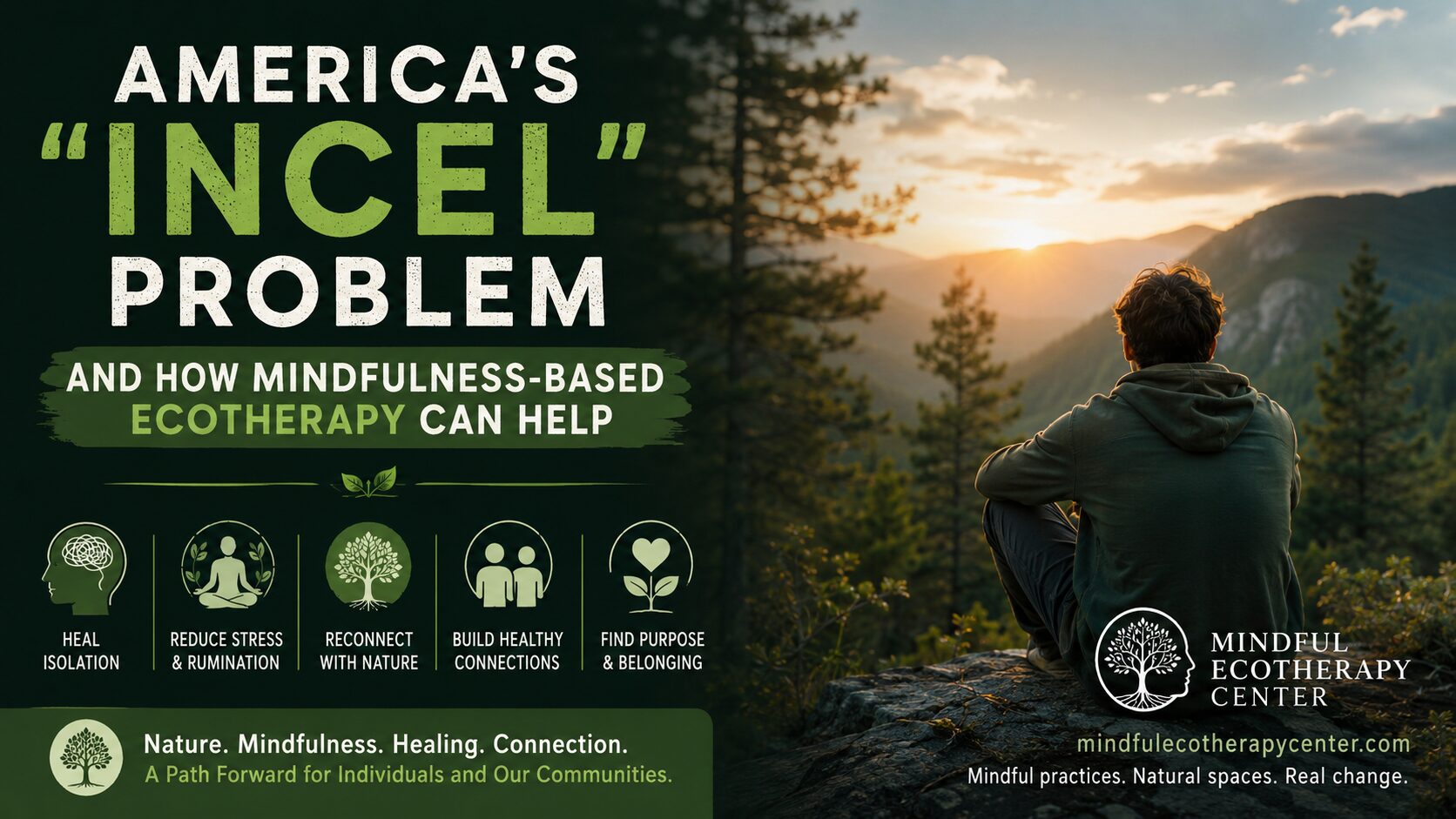
America’s “Incel” Problem and How Mindfulness-Based Ecotherapy Can Help

incel problem

Across the United States, there has been growing concern about social isolation among young men and the rise of what is commonly referred to as the “incel” (involuntary celibate) subculture. While the term has been sensationalized in media and internet discourse, it often reflects a deeper human struggle: loneliness, disconnection, rejection, and a lack of healthy emotional tools for processing pain.

Rather than framing this issue as a fixed identity or a hopeless condition, it is more useful and more humane to view it as a signal of unmet psychological, social, and ecological needs. This is where mindfulness-based ecotherapy can offer meaningful pathways toward healing and reconnection.

Understanding the Roots of Isolation and Disconnection

Many young men who become immersed in online “incel” communities are not initially driven by ideology, but by emotional pain. Repeated experiences of rejection, difficulty forming relationships, low self-esteem, and social anxiety can create a feedback loop of withdrawal.

Over time, digital spaces may replace real-world interaction, reinforcing distorted beliefs about oneself and others. In this context, the internet can amplify resentment and hopelessness, especially when there are few offline supports available. It doesn’t help that America’s current political and cultural zeitgeist frames cruelty and bullying as signs of ‘alpha male’ strength instead of what it truly is: fear and pain masquerading as dominance.

It is important to understand that isolation is not just a personal issue. It is also environmental and cultural. Modern life often reduces opportunities for community bonding, shared ritual, time in nature, and intergenerational mentorship. The mentors young men seek out often turn out to be podcasters and influencers who have a hidden agenda. This can have a long-lasting impact on the socialization of our young men.

The Nervous System, Stress, and Emotional Survival

When someone experiences prolonged social rejection or loneliness, the nervous system adapts to stress. Hypervigilance, distrust, emotional numbing, and anger can become protective responses. These responses are not moral failures. They are survival adaptations.

However, without intervention, these patterns can become rigid. The longer they go uncorrected, the more permanent and difficult to change they become. The young male may begin interpreting the world through a narrow emotional lens shaped by pain rather than possibility. In extreme cases, it can become a way to avoid personal responsibility by blaming society, or politicians, or even women for the alleged victim’s own failures.

Mindfulness-based practices help interrupt this cycle by restoring awareness of the present moment and softening automatic reactive patterns.

What Mindfulness-Based Ecotherapy Offers

Mindfulness-based ecotherapy integrates traditional mindfulness practices with nature-based therapeutic approaches. Instead of treating healing as something that happens only in a clinical setting, it recognizes the natural world as a co-therapist.

When young men engage with forests, rivers, soil, plants, and seasonal cycles, something important happens neurologically and emotionally: the nervous system begins to regulate more naturally.

Nature does not demand performance, status, or social comparison. It offers presence, rhythm, and nonjudgmental awareness.

In this context, individuals struggling with deep loneliness can begin to experience:

  • A reduction in rumination and obsessive thought cycles
  • Increased emotional regulation through grounding in sensory experience
  • A sense of belonging to something larger than themselves
  • Reconnection to embodied presence rather than digital identity

Rebuilding Connection Through Embodied Experience

One of the core challenges in chronic isolation is disembodiment. In disembodiment, the person ends up living primarily in thought, fantasy, or online interaction with the incel community rather than in direct sensory engagement with the real world.

Ecotherapy practices such as walking meditations in natural settings, gardening, forest bathing, and mindful observation of ecological systems help restore this embodied awareness and reduce incel tendencies.

These experiences also gently reintroduce relational safety. For young men who feel disconnected from people, nature provides a transitional relational field that is consistent, nonjudgmental, and stabilizing.

Over time, this can make human connection feel less threatening and more accessible.

Incel: From Alienation to Integration

Healing does not mean forcing social conformity or suppressing emotional pain. Instead, it involves integration by learning to hold difficult emotions without being controlled by them. This is ultimately the path away from incel culture, incel thoughts, and behaviors.

Mindfulness-based ecotherapy supports this process by encouraging young men to observe thoughts and feelings as temporary phenomena, much like weather patterns in nature. Anger, sadness, shame, and grief can be witnessed rather than acted upon impulsively or internalized destructively. This eliminates the need for incel ideology and returns personal responsibility to its rightful place.

This shift away from incel culture creates psychological space. And within that space, new choices become possible.

A Path Toward Reconnection

Addressing America’s broader challenges of loneliness and disconnection requires more than online discourse or ideological debates. It requires grounded, embodied practices that rebuild the human capacity for presence, empathy, and relational trust. This embodied presence in nature is the quickest way out of the incel mindset.

Mindfulness-based ecotherapy offers one such pathway. It does not erase pain, but it helps transform isolation into awareness, and awareness into connection. Over time, connections established in this way can help reduce or eliminate emotional pain. Even if it does not totally eliminate the reliance on incel thinking, it can still help young men to recognize such thoughts as just thoughts, and not reality.

Over time, young men who once felt disconnected may begin to rediscover not only their relationship with nature but also their capacity for healthy human relationships. And that reduces or eliminates the incel mindset.


Mindful Ecotherapy Center on YouTube

Subscribe to the Mindful Ecotherapy Center’s YouTube channel to bring peace, presence, and healing into your daily life. Our videos guide you through mindfulness-based ecotherapy practices, including forest bathing, tree planting rituals, nature meditations, and reflective exercises for grief, stress, and emotional well-being.

Whether you’re seeking to reconnect with the natural world, cultivate inner calm, or find restorative tools for personal growth, our content offers practical guidance, inspiration, and community support. Join us to explore the transformative power of nature and mindfulness, and start your journey toward balance, resilience, and deeper connection today!


Share Your Thoughts!

What do you think? Share your thoughts in the comments below! And don’t forget to subscribe to our newsletter!

Posted on

Mindfulness-Based Ecotherapy Reconnects You With Healing and the Natural World

mindfulness-based ecotherapy

Mindfulness-based ecotherapy, or mindful ecotherapy, is a structured, evidence-informed therapeutic approach that integrates mindfulness practices with intentional engagement with the natural world to support psychological, emotional, and relational healing. At the Mindful Ecotherapy Center, mindfulness-based ecotherapy is used as a grounded, ethical, and clinically informed modality that helps clients reconnect with themselves, others, and the ecosystems they inhabit.

Mindful ecotherapy recognizes a simple but often ignored truth: human wellbeing is deeply intertwined with the wellbeing of the natural world. When people feel disconnected from nature, they often experience increased anxiety, depression, stress, and a sense of meaninglessness. When connection is restored through mindful awareness and ecological engagement, psychological flexibility, resilience, and emotional regulation tend to follow.

Defining Mindfulness-Based Ecotherapy

Mindful ecotherapy is the intentional use of experiences in nature combined with mindfulness practices to promote mental health and personal growth. It draws from multiple disciplines, including psychology, ecology, contemplative traditions, and environmental philosophy. Rather than treating nature as a passive backdrop, ecotherapy treats the natural environment as an active participant in the therapeutic process. Nature becomes the therapist.

Mindfulness within this framework means paying attention to present-moment experience with openness, curiosity, and compassion. When practiced outdoors or in relationship with natural elements, mindfulness helps you notice sensations, emotions, thoughts, and bodily responses as they arise in connection with the living world. This process often reveals patterns of avoidance, control, or disconnection that mirror challenges in everyday life.

How Mindfulness-Based Ecotherapy Works

At the Mindful Ecotherapy Center, mindfulness-based ecotherapy is applied through structured interventions that may include guided experiences in nature, mindfulness practices, reflective exercises, symbolic rituals, and experiential activities. These approaches are often informed by Acceptance and Commitment Therapy (ACT), Dialectical Behavior Therapy (DBT), Cognitive Behavioral Therapy (CBT), and solution-focused strategies.

For example, a client struggling with chronic anxiety may engage in a mindfulness-based ecotherapy exercise focused on sensory awareness during a slow, intentional walk outdoors. Rather than trying to eliminate anxious thoughts, the client learns to observe them while grounding attention in natural rhythms such as breath, wind, or birdsong. This reinforces psychological flexibility and reduces experiential avoidance.

Similarly, clients experiencing burnout or depression may use ecotherapy practices to reconnect with values related to care, stewardship, and belonging. Nature often provides metaphors for growth, impermanence, and resilience that feel more accessible than abstract cognitive reframing.

The Role of Connection and Relationship

One of the defining features of mindful ecotherapy is its emphasis on relationship. Traditional therapy often focuses exclusively on the person. Ecotherapy expands the frame to include relationships with others, with the land, with place, and with non-human life. This broader perspective can help reduce shame and self-blame by enabling people to see their struggles as part of larger systems rather than personal failures. It’s a method of focusing on relationships and solutions rather than on problems.

Mindfulness-based ecotherapy also supports nervous system regulation. Natural environments tend to promote parasympathetic activation, which supports rest, digestion, and emotional regulation. When mindfulness is layered onto these environments, clients often experience deeper grounding and an increased capacity to tolerate difficult emotions.

Ethical and Clinical Foundations

Mindful ecotherapy is practiced ethically and intentionally. At the Mindful Ecotherapy Center, it is not about forcing outdoor exposure or assuming nature is universally safe or accessible. Cultural context, physical ability, trauma history, and individual preference are central considerations.

Ecotherapy can take place in urban parks, backyards, gardens, or even through mindful engagement with natural elements indoors. The therapeutic value lies not in wilderness extremes but in cultivating awareness and relationship wherever one is.

Why Mindfulness-Based Ecotherapy Matters

In an era of ecological crisis, digital overload, and chronic stress, mindfulness-based ecotherapy offers a way to address both personal suffering and collective disconnection. It helps clients develop skills that extend beyond symptom reduction toward meaning-making, responsibility, and care for the wider world.

By integrating mindfulness with ecological awareness, this approach supports not only individual well-being but also a sense of belonging within the larger web of life. Clients often report increased clarity, emotional balance, and a renewed sense of purpose that aligns with both personal values and ecological responsibility.

Mindfulness-Based Ecotherapy at the Mindful Ecotherapy Center

The Mindful Ecotherapy Center approaches mindfulness-based ecotherapy as a clinically sound, adaptable, and deeply human practice. It honors the science of psychology while acknowledging the healing potential of mindful connection with nature. Whether used in therapy, education, or professional training, this approach invites people to slow down, pay attention, and rediscover their place in the living world.

In doing so, mindfulness-based ecotherapy offers something rare: healing that is both personal and planetary.


Share Your Thoughts on Mindfulness-Based Ecotherapy!

What do you think? Have you experienced the healing power of nature? Share your thoughts in the comments below! And don’t forget to subscribe to our newsletter!

Posted on

Why Social Media is Impacting Your Mental Health and How MBE Can Help

social media instagram cell phone

Social media has revolutionized how we connect, communicate, and consume information. Platforms like Facebook, Instagram, TikTok, and Twitter provide instant access to news, entertainment, and personal updates. However, this constant connectivity comes with a cost: social media can significantly impact mental health. The good news is that Mindfulness-Based Ecotherapy (MBE) offers a holistic solution to counteract these effects, helping users regain balance and emotional well-being.

The Mental Health Effects of Social Media

1. Increased Anxiety and Depression

Scrolling through carefully curated feeds can lead to unrealistic comparisons. People often share only their best moments, creating a distorted perception of reality. This “highlight reel” phenomenon fosters feelings of inadequacy, low self-esteem, and, in many cases, anxiety or depression.

2. Addiction to Validation

Likes, comments, and shares activate the brain’s reward system, releasing dopamine and creating a cycle of dependency. Over time, this craving for validation can lead to compulsive behavior, negatively affecting self-worth when the desired engagement isn’t achieved.

3. Sleep Disruption

Endless scrolling, particularly before bedtime, interferes with sleep patterns. The blue light emitted by screens suppresses melatonin production, making it harder to fall asleep and stay asleep. Poor sleep quality further exacerbates mental health issues.

4. Fear of Missing Out (FOMO)

Constant exposure to others’ activities and achievements can trigger FOMO. This fear can lead to excessive social media use, reinforcing feelings of inadequacy and isolation.

5. Cyberbullying and Harassment

Online interactions are not always positive. Cyberbullying, negative comments, and online harassment can significantly impact self-esteem, leading to anxiety, depression, and even PTSD in severe cases.

Enter Mindfulness-Based Ecotherapy (MBE)

Mindfulness-Based Ecotherapy combines traditional mindfulness practices with the healing power of nature. This innovative approach is uniquely suited to address the mental health challenges exacerbated by social media.

How MBE Counteracts Social Media’s Negative Effects

1. Promotes Presence and Awareness

Mindfulness encourages individuals to focus on the present moment rather than being consumed by past regrets or future anxieties. Techniques such as mindful breathing or grounding exercises help reduce the compulsive urge to check social media and shift attention to more meaningful experiences.

2. Encourages a Healthy Dopamine Reset

Spending time in nature—a core component of MBE—stimulates the brain’s reward system in a healthier way. Activities like forest bathing, nature walks, or eco-art therapy naturally boost dopamine levels without the negative side effects of social media dependency.

3. Improves Sleep Hygiene

Engaging in outdoor activities as part of MBE enhances physical tiredness and helps regulate the circadian rhythm. Exposure to natural light during the day and a mindful bedtime routine can improve sleep quality, alleviating mental health issues linked to sleep deprivation.

4. Rebuilds Genuine Connections

Social media often fosters shallow interactions, but MBE emphasizes genuine human and environmental connections. Group mindfulness sessions or eco-therapy workshops encourage face-to-face interactions, fostering a sense of belonging and community.

5. Enhances Self-Acceptance

Through mindfulness practices, individuals learn to accept themselves without judgment. Instead of comparing their lives to others on social media, they can focus on their own journey, fostering self-compassion and resilience.

Practical Steps to Integrate MBE into Your Life

1. Digital Detox in Nature

Designate time to unplug from social media and immerse yourself in nature. Whether it’s a hike, a visit to a local park, or simply sitting in your backyard, the key is to be fully present in the moment.

2. Mindful Nature Walks

During a nature walk, pay attention to your surroundings. Observe the colors, textures, and sounds of nature. This practice helps ground your thoughts and reduces the anxiety often triggered by social media.

3. Eco-Art Therapy

Use natural materials like leaves, stones, or flowers to create art. This creative expression not only fosters mindfulness but also provides a tangible way to reconnect with the environment.

4. Gratitude Journaling

After spending time outdoors, write down three things you’re grateful for. This practice shifts focus from external validation to internal fulfillment, reducing the emotional reliance on social media.

5. Join an MBE Program

Many therapists now offer MBE sessions that combine mindfulness practices with nature-based activities. These programs provide structured support for integrating mindfulness into daily life.

social media detox go sailing in Canada

Conclusion

Social media is a double-edged sword: while it offers unparalleled connectivity, it also poses significant risks to mental health. By recognizing these challenges and adopting mindfulness-based ecotherapy, individuals can mitigate the negative effects of social media and cultivate a healthier, more balanced life.

Through mindful practices and time spent in nature, MBE empowers individuals to reclaim their mental well-being, fostering resilience, self-acceptance, and authentic connections. So, the next time you feel overwhelmed by social media, step outside, breathe deeply, and let nature guide you back to the present moment.


Share Your Thoughts on Social Media and Mental Health!

What do you think? Does social media damage our mental health? Share your thoughts in the comments below!

Don’t forget to check out our YouTube Channel!


Posted on

The Adverse Childhood Experiences Study and Mental and Physical Health

ACEs Study

The Adverse Childhood Experiences (ACEs) Study is a groundbreaking research project that has transformed our understanding of how early-life trauma impacts long-term health. Conducted by the Centers for Disease Control and Prevention (CDC) and Kaiser Permanente, the study revealed a strong correlation between childhood adversity and a wide array of mental and physical health issues in adulthood. This blog explores the ACEs Study, its implications for health, and how Mindfulness-Based Ecotherapy (MBE) can offer a pathway to healing.

What is the ACEs Study?

The ACEs Study evaluates the impact of adverse experiences during childhood, such as abuse, neglect, and household dysfunction. Participants answer questions across ten categories:

  1. Physical abuse
  2. Emotional abuse
  3. Sexual abuse
  4. Physical neglect
  5. Emotional neglect
  6. Parental separation or divorce
  7. Household substance abuse
  8. Household mental illness
  9. Domestic violence
  10. Incarcerated household member

Each positive response counts as one ACE. Higher ACE scores correlate with increased risks of health challenges such as depression, anxiety, chronic diseases, and even early death.

ACEs Survey:

  1. Did a parent or other adult in your household often or very often… swear at you, insult you, put you down, or humiliate you? Or act in a way that made you afraid you might be physically hurt?
  2. Did a parent or other adult in your household often or very often… push, grab, slap, or throw something at you? Or ever hit you so hard that you had marks or were injured?
  3. Did an adult or person at least 5 years older than you ever… touch or fondle you in a sexual way? Or have you touch their body in a sexual way? Or attempt or actually have oral, anal, or vaginal intercourse with you?
  4. Did you often or very often feel that… no one in your family loved you or thought you were important or special? Or your family didn’t look out for each other, feel close to each other, or support each other?
  5. Did you often or very often feel that… you didn’t have enough to eat, had to wear dirty clothes, and had no one to protect you? Or your parents were too drunk or high to take care of you or take you to the doctor if you needed it?
  6. Were your parents ever separated or divorced?
  7. Was your mother or stepmother: Often or very often pushed, grabbed, slapped, or had something thrown at her? Or sometimes, often, or very often kicked, bitten, hit with a fist, or hit with something hard? Or ever repeatedly hit over at least a few minutes or threatened with a gun or knife?
  8. Did you live with anyone who was a problem drinker or alcoholic or who used street drugs?
  9. Was a household member depressed or mentally ill, or did a household member attempt suicide?
  10. Did a household member go to prison?
ACEs Study mindfulness

Impacts of ACEs on Health

The ACEs Study uncovered that individuals with higher ACE scores are at greater risk for the following:

  • Mental Health Issues: Depression, anxiety, PTSD, and suicidal ideation are common among those with high ACE scores.
  • Physical Health Problems: Chronic diseases such as heart disease, diabetes, and autoimmune disorders are more prevalent in those with childhood trauma.
  • Behavioral Challenges: Increased likelihood of substance abuse, risky behaviors, and difficulty forming healthy relationships.
  • Shortened Lifespan: Studies indicate a reduced life expectancy of up to 20 years for those with the highest ACE scores.

Healing Through Mindfulness-Based Ecotherapy

Mindfulness-Based Ecotherapy (MBE) is a therapeutic approach that combines mindfulness practices with nature-based activities. It is particularly effective for individuals recovering from childhood trauma and attachment disorders. Here’s how MBE can help:

1. Rebuilding Secure Attachments

ACEs often disrupt the ability to form secure relationships. MBE includes exercises like grounding and mindful observation in natural settings, fostering a sense of safety and connection. These practices encourage individuals to rebuild trust—both in themselves and in their environment.

2. Managing Stress and Anxiety

MBE techniques such as mindful breathing, walking meditations, and sensory awareness exercises help regulate the nervous system. These activities mitigate the hyperarousal and emotional dysregulation common in individuals with high ACE scores.

3. Fostering Resilience

By engaging in eco-art activities like sandtray therapy or nature journaling, participants can explore their trauma narratives in a non-threatening way. These creative outlets enable them to reframe their experiences, cultivating resilience and empowerment.

4. Improving Physical Health

Spending time in nature has been shown to lower blood pressure, reduce inflammation, and improve overall physical health. The incorporation of mindfulness enhances these benefits by reducing chronic stress, a key factor linking ACEs to poor health outcomes.

5. Encouraging Emotional Regulation

Nature-based mindfulness exercises encourage individuals to stay present and process emotions as they arise. Over time, these practices strengthen emotional regulation skills, reducing symptoms of PTSD and anxiety.

Conclusion

The ACEs Study has provided invaluable insights into how childhood adversity impacts health across the lifespan. While the effects of high ACE scores can be profound, healing is possible. Mindfulness-Based Ecotherapy offers a holistic approach to addressing trauma, fostering resilience, and improving both mental and physical health. By integrating mindfulness practices with the healing power of nature, MBE provides a pathway for individuals to reclaim their well-being and build a brighter future.

If you or someone you know has experienced childhood trauma, consider exploring Mindfulness-Based Ecotherapy as a powerful tool for healing and growth.


Share Your Thoughts on the Adverse Childhood Experiences Study!

Do you find the ACE Study useful? Share your thoughts in the comments below!

Don’t forget to check out our YouTube Channel!


Posted on

The Link Between Mental Health and Physical Health: A Holistic Perspective

mental health and physical health

The intricate connection between mental health and physical health has been a topic of growing interest in both scientific and holistic wellness communities for several years now. More than just coexisting, mental and physical health profoundly influence each other. When the mind suffers, the body often follows suit, creating a cycle that can be challenging to break. Fortunately, integrative approaches such as Mindfulness-Based Ecotherapy (MBE) offer powerful tools for simultaneously addressing mental and physical well-being.

How Mental Health Impacts Physical Health

The relationship between mental and physical health is well-documented. Chronic stress, anxiety, and depression can take a toll on the body in several ways:

  • Cardiovascular Issues: Persistent stress and anxiety can elevate heart rate and blood pressure, increasing the risk of heart disease.
  • Weakened Immune System: Prolonged mental distress can suppress immune function, making the body more vulnerable to infections and illnesses.
  • Chronic Pain: Mental health conditions such as depression can exacerbate conditions like fibromyalgia and arthritis, creating a vicious cycle of pain and emotional distress.
  • Sleep Disruptions: Anxiety and depression often interfere with sleep, leading to fatigue and diminished physical health.

On the flip side, physical health problems can exacerbate mental health challenges. Chronic illnesses, for example, often lead to feelings of helplessness, isolation, and depression.

mental health and physical health

The Role of Mindfulness-Based Ecotherapy (MBE)

Mindfulness-Based Ecotherapy (MBE) is a therapeutic approach that combines mindfulness practices with nature-based interventions. By fostering a connection with the natural world, MBE helps individuals cultivate mindfulness, reduce stress, and improve overall well-being. Here’s how MBE supports both mental and physical health:

  1. Stress Reduction: MBE encourages individuals to spend time in natural settings, which has been shown to lower cortisol levels—the hormone associated with stress. Reduced stress not only alleviates anxiety but also mitigates its physical effects, such as high blood pressure and muscle tension.
  2. Enhanced Immune Function: Research suggests that spending time in nature boosts immune system function. Forest bathing, a cornerstone of MBE, has been linked to increased production of natural killer cells that combat infections and cancer.
  3. Improved Cardiovascular Health: Engaging in mindful walking or meditative activities in natural environments promotes physical activity and relaxation, which are essential for maintaining cardiovascular health.
  4. Pain Management: Mindfulness practices taught in MBE help individuals develop a nonjudgmental awareness of their physical sensations. This can reduce the perception of pain and enhance the ability to cope with chronic conditions.
  5. Better Mood and Emotional Resilience: Regular engagement with nature and mindfulness exercises fosters a sense of grounding and emotional stability, reducing symptoms of depression and anxiety.

Practical Tips for Integrating MBE into Your Life

If you’re interested in harnessing the benefits of MBE for mental and physical health, here are some practical steps to get started:

  1. Take a Mindful Walk: Head to a local park or forest and walk slowly, focusing on your breath and the sensations around you. Notice the sounds of birds, the rustling of leaves, and the feeling of the ground beneath your feet.
  2. Create a Nature Sanctuary: Dedicate a corner of your yard or balcony to plants, flowers, and natural elements. Spend a few minutes each day observing and appreciating this space.
  3. Practice Grounding Techniques: Sit or stand barefoot on grass, sand, or soil. Feel the connection between your body and the earth, and take slow, deep breaths to anchor yourself in the present moment.
  4. Incorporate Mindful Breathing: Whether indoors or outdoors, practice deep breathing exercises to calm your mind and body. Pair this with visualizations of natural landscapes for added benefits.

Why the Connection Matters

Understanding the link between mental and physical health is vital for cultivating a more holistic approach to wellness. Ignoring one aspect often leads to imbalances in the other, perpetuating a cycle of poor health. By addressing both simultaneously, we can achieve a more sustainable and harmonious state of well-being.

Mindfulness-Based Ecotherapy exemplifies the utility of this holistic perspective. By integrating mindfulness and nature, MBE provides a path to healing that respects the interconnectedness of body and mind. Whether you’re managing stress, coping with chronic illness, or seeking greater emotional balance, MBE offers a versatile and effective solution.

Embrace the synergy of mental and physical health. With tools like MBE, you can nurture your entire being, one mindful moment at a time.


Have you used mindfulness or ecotherapy to improve your mental or physical health? What was your experience? Share your thoughts in the comments below!

Don’t forget to check out our YouTube channel!


Posted on

Mindful Acceptance: Letting Go with Mindfulness-Based Ecotherapy

mindful acceptance

“Never underestimate your power to change yourself; never overestimate your power to change others.”

— H. Jackson Brown, Jr.

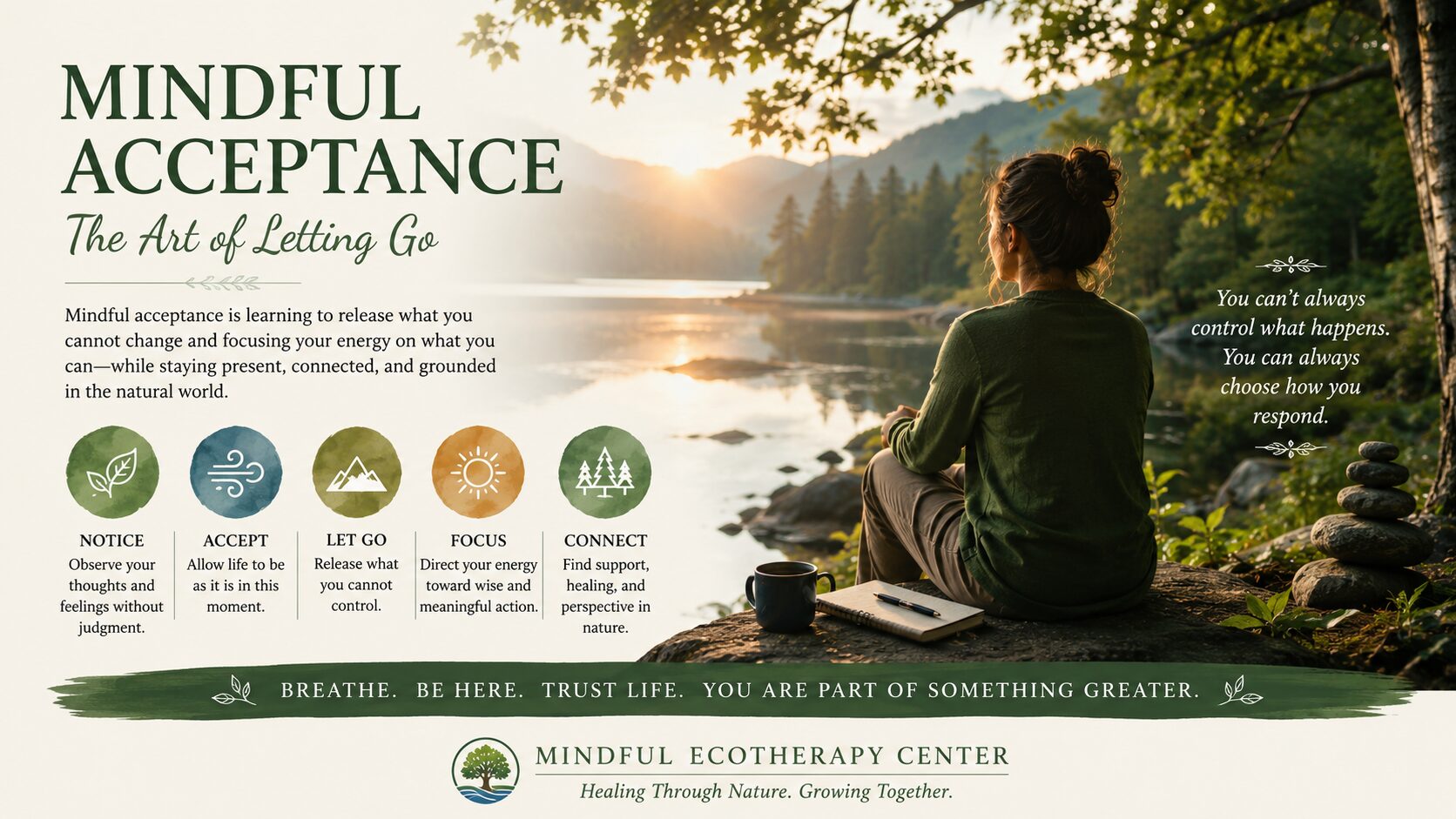
One of the most powerful skills in mindfulness-based ecotherapy is mindful acceptance. Mindful acceptance is the art of letting go of unnecessary suffering while remaining fully present with life as it is. Unlike some approaches that focus only on changing thoughts or managing symptoms internally, mindfulness-based ecotherapy (MBE) emphasizes reconnecting with the natural world, the body, the senses, and the present-moment experience as pathways toward healing and resilience.

Mindfulness-based ecotherapy differs from many traditional mindfulness practices because it does not view mindfulness as something that occurs only inside the mind. Instead, MBE recognizes that humans are part of an interconnected ecological system. Healing happens not only through awareness of thoughts and emotions, but also through restoring a relationship with the earth, the body, community, and the rhythms of nature itself.

The skill of mindful acceptance teaches you to recognize the difference between what you can change and what you cannot. Once you have done everything realistically within your power to address a problem, continued anxiety and rumination no longer serve a useful purpose. At that point, mindful acceptance asks you to loosen your grip on the stress attached to the situation.

Mindful Acceptance Doesn’t Mean Giving Up

Importantly, letting go of anxiety does not necessarily mean giving up on solving the problem.

Suppose you have a car payment due and you do not currently have the money to pay it. Naturally, this situation may trigger fear, worry, and stress. You may brainstorm solutions, ask for help, reduce expenses, or search for additional income. However, once you have taken every practical step available in the present moment, the constant cycle of worry becomes emotionally exhausting and often counterproductive.

In mindfulness-based ecotherapy, one of the twelve core skills involves learning to observe your thoughts and feelings nonjudgmentally while grounding yourself in sensory awareness. You might sit outdoors beneath a tree, feel your feet on the earth, notice the movement of the wind, or listen to birdsong while observing the anxious thoughts moving through your awareness. Nature becomes an anchor that reminds you that life continues unfolding even during uncertainty.

Unlike purely cognitive approaches that may focus primarily on changing thought patterns, MBE integrates embodied awareness and ecological connection. The natural world helps regulate the nervous system by drawing your attention away from repetitive mental loops and back into the present moment.

Mindful Acceptance, Observing, and Describing

Another essential MBE skill is mindful observing. Instead of immediately reacting to anxiety, you learn to notice it with curiosity. What does the anxiety feel like in your body? Is your chest tight? Is your breathing shallow? Are your thoughts racing toward worst-case scenarios? By observing rather than fighting the experience, you create space between yourself and the anxiety.

This space allows you to make conscious decisions rather than reacting automatically.

The same principle applies in relationships. Imagine you feel disconnected from your partner because they rarely spend time with you. You suggest activities, initiate conversations, and communicate your feelings honestly, yet nothing changes. Many people respond to this situation by escalating their efforts to control the outcome. They may criticize, plead, withdraw emotionally, or become consumed with resentment.

Mindfulness-based ecotherapy approaches this differently.

Self-Compassion and Mindful Acceptance

One of the MBE skills involves recognizing the limits of personal control while strengthening self-awareness and self-compassion. You cannot force another person to change. However, you can change how you respond internally and externally. Practicing mindful acceptance means acknowledging your sadness, frustration, or disappointment without allowing those emotions to dominate your life.

In ecotherapy, the natural world often serves as a mirror for this process. Seasons change without resistance. Trees release leaves when it is time to let go. Rivers flow around obstacles instead of endlessly struggling against them. Nature teaches flexibility, adaptation, and resilience.

This ecological perspective is one of the major ways MBE differs from other mindfulness approaches. While many mindfulness practices emphasize internal awareness alone, mindfulness-based ecotherapy intentionally uses nature as both teacher and therapeutic partner.

Another of the twelve skills of MBE involves reducing rumination through present-moment sensory grounding. Rumination occurs when the mind repeatedly replays fears, regrets, or imagined future disasters. The more mental energy you feed into these cycles, the stronger they become.

Mindful acceptance interrupts this process.

You may notice the anxious thought arise, acknowledge it compassionately, and then redirect your awareness toward immediate sensory experience: the smell of rain, the warmth of sunlight, the sound of leaves moving in the wind, or the sensation of breathing deeply in fresh air. These practices help regulate emotional overwhelm by reconnecting you with the physical world instead of remaining trapped inside mental narratives.

Anxiety Has a Purpose

Mindfulness-based ecotherapy also recognizes that anxiety itself has a purpose. Anxiety evolved as a protective system designed to alert us to danger. In mindful acceptance, you are not trying to destroy anxiety or suppress difficult emotions. Instead, you learn to relate to them differently.

You might silently say:

“Thank you, anxiety, for trying to protect me. I am listening carefully, but I will also trust my own wisdom.”

This compassionate inner dialogue reflects another MBE principle: developing a collaborative relationship with your emotions instead of waging war against them.

Finally, mindful acceptance teaches that mistakes are not evidence of failure, but growth opportunities. In nature, growth rarely occurs without struggle. Forests regenerate after fires. Rivers carve canyons through persistence over time. Ecosystems adapt continuously to changing conditions.

Human beings are no different.

Every mistake contains information that can deepen wisdom, resilience, and self-understanding. Through mindful acceptance, you learn that healing does not require perfection. It requires awareness, compassion, flexibility, and the willingness to remain present even during uncertainty.

Mindfulness-based ecotherapy reminds you that while you cannot always control life’s circumstances, you can learn to live more peacefully within them. By reconnecting with nature, practicing mindful awareness, and letting go of unnecessary struggle, you create space for healing, growth, and inner balance.


Share Your Thoughts About Mindful Acceptance!

What do you think? Share your thoughts in the comments below!


  And don’t forget to subscribe to our newsletter!