Posted on Leave a comment

Radical Acceptance: A Positive Path Out of Emotional Struggle

radical acceptance

Radical acceptance is one of the most powerful and misunderstood skills in Mindfulness-Based Ecotherapy. You are often taught, implicitly or explicitly, that uncomfortable emotions must be fixed, suppressed, or eliminated. Radical acceptance offers a different and far more effective approach. It teaches you that you can experience emotions and thoughts fully without engaging in behavioral cycles that lead to negative consequences. You learn that pain is part of being human, but suffering is often optional.

The Mindfulness-Based Ecotherapy skill of radical acceptance teaches you that you are not your thoughts and you are not your emotions. Thoughts and feelings are not commands, identities, or truths. They are temporary processes of the brain, shaped by learning, memory, trauma, biology, and context. When you fuse with them, believing they define who you are or dictate what you must do, you lose flexibility. When you relate to them with awareness and acceptance, you regain choice.

Radical Acceptance and the Shift From Reaction to Response

Radical acceptance does not mean liking what is happening, approving of harm, or giving up on change. It means clearly acknowledging reality as it is in this moment, without adding layers of resistance. When you fight reality internally, your nervous system remains activated, keeping you locked in cycles of anxiety, anger, shame, or avoidance. Research consistently shows that experiential avoidance, the attempt to escape unwanted internal experiences, is strongly linked to psychological distress and maladaptive behavior (Hayes et al., 2020).

When you practice radical acceptance, you stop arguing with what already exists. You allow thoughts to arise and pass. You allow emotions to move through the body. This creates space between what you feel and what you do. Instead of reacting automatically, you respond intentionally. This skill is foundational in mindfulness-based and acceptance-based therapies, including Acceptance and Commitment Therapy and Dialectical Behavior Therapy, both of which emphasize acceptance as a pathway to psychological flexibility (Linehan, 2020; Hayes et al., 2020).

You Are Not Your Thoughts or Emotions

One of the most liberating aspects of radical acceptance is learning to defuse from internal experiences. A thought like “I am failing” is no longer treated as a fact. An emotion like fear is no longer treated as a threat that must be eliminated. Instead, thoughts are seen as mental events and emotions as physiological and psychological processes. Neuroscience research supports this perspective, showing that emotional experiences are dynamic brain-body states that change when they are observed with nonjudgmental awareness rather than suppressed or amplified (Dahl et al., 2020).

This shift matters because behavior follows relationship, not content. When you believe your thoughts unquestioningly, you act as if they are instructions. When you accept their presence without attachment, you gain the freedom to choose actions aligned with your values rather than your impulses.

Radical Acceptance in Mindfulness-Based Ecotherapy

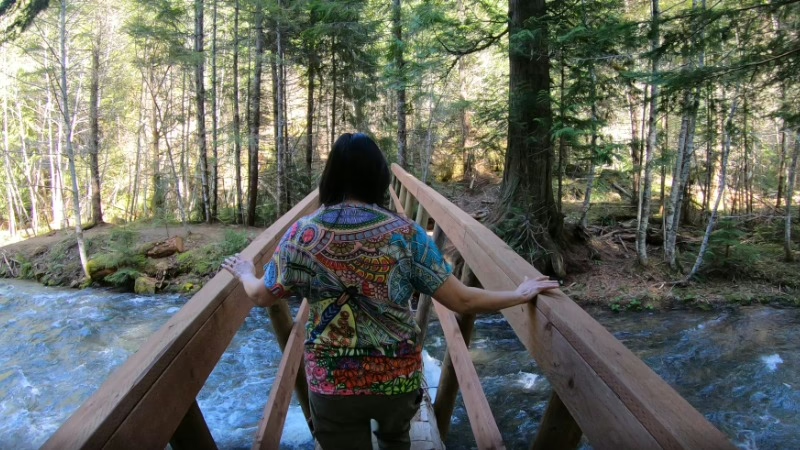
In Mindfulness-Based Ecotherapy, radical acceptance is practiced not only internally but also in relationship with the natural world. Nature offers constant demonstrations of acceptance without resignation. A river does not resist obstacles; it moves around them. A forest does not judge decay; it integrates it into renewal. When you practice radical acceptance outdoors, your body often understands the lesson before your mind catches up.

Ecotherapy supports radical acceptance by engaging your senses and grounding you in the present moment. Sitting with discomfort while noticing birdsong or the rhythm of waves can regulate the nervous system, making acceptance more accessible. Research since 2020 shows that nature-based mindfulness practices reduce rumination and emotional reactivity while increasing psychological flexibility and self-regulation (Schutte & Malouff, 2021; Passmore & Howell, 2020).

Acceptance Is the Doorway to Change

Paradoxically, radical acceptance is what allows meaningful change to occur. When you stop wasting energy fighting internal experiences, that energy becomes available for skillful action. You can feel anger without acting aggressively. You can feel anxiety without avoiding life. You can feel sadness without collapsing into hopelessness. Acceptance creates stability. Stability creates choice.

At the Mindful Ecotherapy Center, radical acceptance is taught as a lived practice,. You learn to notice when resistance shows up in your body, your thoughts, and your behaviors. You learn to soften your grip. Over time, you experience a quiet but profound shift. Life becomes less about controlling what you feel and more about living fully, even when feelings are difficult.

To explore how radical acceptance and other Mindfulness-Based Ecotherapy skills can support your well-being, visit www.mindfulecotherapycenter.com


References

Dahl, C. J., Wilson-Mendenhall, C. D., & Davidson, R. J. (2020). The plasticity of well-being: A training-based framework for the cultivation of human flourishing. Proceedings of the National Academy of Sciences, 117(51), 32197–32206. https://doi.org/10.1073/pnas.2014859117

Hayes, S. C., Strosahl, K. D., & Wilson, K. G. (2020). Acceptance and commitment therapy: The process and practice of mindful change (2nd ed.). Guilford Press.

Linehan, M. M. (2020). DBT skills training manual (2nd ed.). Guilford Press.

Passmore, H. A., & Howell, A. J. (2020). Nature involvement increases hedonic and eudaimonic well-being: A two-week experimental study. Ecopsychology, 12(1), 1–11. https://doi.org/10.1089/eco.2019.0025

Schutte, N. S., & Malouff, J. M. (2021). Mindfulness and connectedness to nature: A meta-analytic investigation. Personality and Individual Differences, 179, 110984. https://doi.org/10.1016/j.paid.2021.110984


Share Your Thoughts About Radical Acceptance!

What do you think? Share your thoughts in the comments below!


  And don’t forget to subscribe to our newsletter!
Posted on Leave a comment

Acceptance and Commitment Therapy (ACT) Worksheets

ACT Worksheets

About Acceptance and Commitment Therapy (ACT)

Acceptance and Commitment Therapy (ACT) is an evidence-based behavioral therapy that helps people develop psychological flexibility, the ability to stay present, open up to difficult thoughts and feelings, and take meaningful action guided by their values.

Rather than trying to eliminate distress, ACT teaches skills like mindfulness, acceptance, and cognitive defusion to change one’s relationship with inner experiences. The goal isn’t to feel better all the time. It’s to live better, even when life is uncomfortable.

About ACT Worksheets

These Acceptance and Commitment Therapy (ACT) worksheets are designed to enhance psychological flexibility and support meaningful change. These resources help you to clarify personal values, defuse unhelpful thoughts, practice mindfulness, and take committed action toward a more fulfilling life.

These tools are ideal for therapists, coaches, or individuals seeking growth. Each worksheet is grounded in ACT’s core principles and easy to integrate into sessions or daily routines, and incorporates the principles of Mindfulness-Based Ecotherapy.

ACT Worksheets

These worksheets are provided for personal, educational, and clinical use. You are welcome to download, print, and share them with clients or students, provided that all copyright and attribution information remains intact and unaltered.

These materials may not be resold, redistributed for profit, or incorporated into commercial products, training, or publications without prior written permission from the copyright holder, Mindful Ecotherapy Center, PLLC.

All rights reserved. All ACT Worksheet materials ©2026 by the Mindful Ecotherapy Center, PLLC, and Charlton Hall, MMFT, PhD, unless otherwise noted.

Posted on

Why Social Media is Impacting Your Mental Health and How MBE Can Help

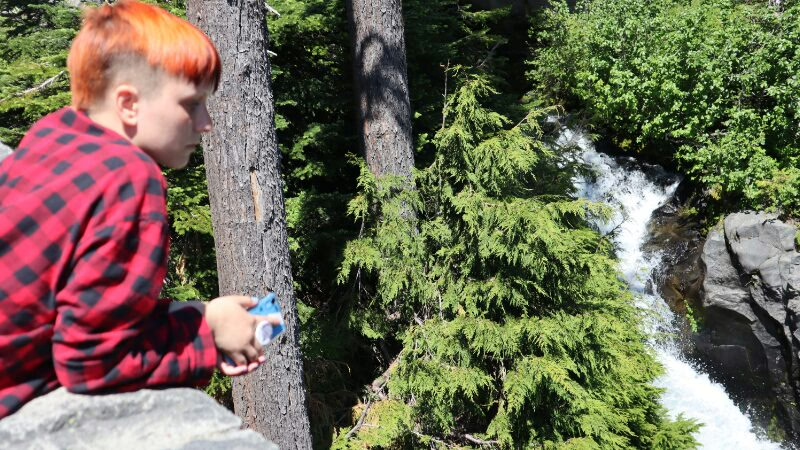
social media instagram cell phone

Social media has revolutionized how we connect, communicate, and consume information. Platforms like Facebook, Instagram, TikTok, and Twitter provide instant access to news, entertainment, and personal updates. However, this constant connectivity comes with a cost: social media can significantly impact mental health. The good news is that Mindfulness-Based Ecotherapy (MBE) offers a holistic solution to counteract these effects, helping users regain balance and emotional well-being.

The Mental Health Effects of Social Media

1. Increased Anxiety and Depression

Scrolling through carefully curated feeds can lead to unrealistic comparisons. People often share only their best moments, creating a distorted perception of reality. This “highlight reel” phenomenon fosters feelings of inadequacy, low self-esteem, and, in many cases, anxiety or depression.

2. Addiction to Validation

Likes, comments, and shares activate the brain’s reward system, releasing dopamine and creating a cycle of dependency. Over time, this craving for validation can lead to compulsive behavior, negatively affecting self-worth when the desired engagement isn’t achieved.

3. Sleep Disruption

Endless scrolling, particularly before bedtime, interferes with sleep patterns. The blue light emitted by screens suppresses melatonin production, making it harder to fall asleep and stay asleep. Poor sleep quality further exacerbates mental health issues.

4. Fear of Missing Out (FOMO)

Constant exposure to others’ activities and achievements can trigger FOMO. This fear can lead to excessive social media use, reinforcing feelings of inadequacy and isolation.

5. Cyberbullying and Harassment

Online interactions are not always positive. Cyberbullying, negative comments, and online harassment can significantly impact self-esteem, leading to anxiety, depression, and even PTSD in severe cases.

Enter Mindfulness-Based Ecotherapy (MBE)

Mindfulness-Based Ecotherapy combines traditional mindfulness practices with the healing power of nature. This innovative approach is uniquely suited to address the mental health challenges exacerbated by social media.

How MBE Counteracts Social Media’s Negative Effects

1. Promotes Presence and Awareness

Mindfulness encourages individuals to focus on the present moment rather than being consumed by past regrets or future anxieties. Techniques such as mindful breathing or grounding exercises help reduce the compulsive urge to check social media and shift attention to more meaningful experiences.

2. Encourages a Healthy Dopamine Reset

Spending time in nature—a core component of MBE—stimulates the brain’s reward system in a healthier way. Activities like forest bathing, nature walks, or eco-art therapy naturally boost dopamine levels without the negative side effects of social media dependency.

3. Improves Sleep Hygiene

Engaging in outdoor activities as part of MBE enhances physical tiredness and helps regulate the circadian rhythm. Exposure to natural light during the day and a mindful bedtime routine can improve sleep quality, alleviating mental health issues linked to sleep deprivation.

4. Rebuilds Genuine Connections

Social media often fosters shallow interactions, but MBE emphasizes genuine human and environmental connections. Group mindfulness sessions or eco-therapy workshops encourage face-to-face interactions, fostering a sense of belonging and community.

5. Enhances Self-Acceptance

Through mindfulness practices, individuals learn to accept themselves without judgment. Instead of comparing their lives to others on social media, they can focus on their own journey, fostering self-compassion and resilience.

Practical Steps to Integrate MBE into Your Life

1. Digital Detox in Nature

Designate time to unplug from social media and immerse yourself in nature. Whether it’s a hike, a visit to a local park, or simply sitting in your backyard, the key is to be fully present in the moment.

2. Mindful Nature Walks

During a nature walk, pay attention to your surroundings. Observe the colors, textures, and sounds of nature. This practice helps ground your thoughts and reduces the anxiety often triggered by social media.

3. Eco-Art Therapy

Use natural materials like leaves, stones, or flowers to create art. This creative expression not only fosters mindfulness but also provides a tangible way to reconnect with the environment.

4. Gratitude Journaling

After spending time outdoors, write down three things you’re grateful for. This practice shifts focus from external validation to internal fulfillment, reducing the emotional reliance on social media.

5. Join an MBE Program

Many therapists now offer MBE sessions that combine mindfulness practices with nature-based activities. These programs provide structured support for integrating mindfulness into daily life.

social media detox go sailing in Canada

Conclusion

Social media is a double-edged sword: while it offers unparalleled connectivity, it also poses significant risks to mental health. By recognizing these challenges and adopting mindfulness-based ecotherapy, individuals can mitigate the negative effects of social media and cultivate a healthier, more balanced life.

Through mindful practices and time spent in nature, MBE empowers individuals to reclaim their mental well-being, fostering resilience, self-acceptance, and authentic connections. So, the next time you feel overwhelmed by social media, step outside, breathe deeply, and let nature guide you back to the present moment.


Share Your Thoughts on Social Media and Mental Health!

What do you think? Does social media damage our mental health? Share your thoughts in the comments below!

Don’t forget to check out our YouTube Channel!