
Posted on Leave a comment

Trauma vs Normal Stress: Are We Expanding PTSD Too Far?

trauma vs normal stress

How do we tell the difference between trauma vs normal stress? Conversations about trauma have become increasingly common in modern society. Terms like “triggered,” “traumatized,” and “PTSD” now appear frequently in social media discussions, news stories, workplaces, and everyday conversations. Greater awareness of mental health has undoubtedly helped many people recognize and seek treatment for genuine psychological suffering. However, some clinicians and researchers have raised an important question: Are we beginning to blur the distinction between serious trauma and ordinary life stress?

Understanding the difference between trauma vs normal stress is essential. While both can be emotionally painful, they are not necessarily the same thing, and recognizing the distinction can help people better understand their experiences and seek appropriate support.

Understanding What Trauma Actually Means

Trauma is more than simply experiencing something unpleasant, upsetting, or stressful. In clinical psychology, trauma generally refers to exposure to actual or threatened death, serious injury, sexual violence, or other events that overwhelm a person’s ability to cope.

Examples of potentially traumatic experiences may include:

  • Military combat
  • Serious accidents
  • Physical or sexual assault
  • Natural disasters
  • Terrorist attacks
  • Witnessing severe injury or death

Not everyone who experiences trauma develops post-traumatic stress disorder (PTSD). However, PTSD involves specific symptoms that persist long after the event and significantly interfere with daily functioning.

These symptoms may include:

  • Intrusive memories or flashbacks
  • Nightmares
  • Hypervigilance
  • Emotional numbing
  • Avoidance of trauma reminders
  • Intense physiological reactions to triggers

PTSD is a serious mental health condition that deserves accurate recognition and treatment.

The Rise of Trauma Language

As public awareness of mental health has increased, trauma-related language has expanded as well. Today, people may describe a difficult breakup, a harsh criticism, an uncomfortable conversation, or a stressful workplace situation as “traumatizing.”

While these experiences can certainly be painful, not every difficult event meets the clinical definition of trauma.

This does not mean people’s suffering is unimportant. Emotional pain is real regardless of whether it qualifies as trauma. However, when every unpleasant experience is labeled as trauma, it can become harder to distinguish between severe psychological injury and the normal challenges that are part of human life.

The discussion about trauma vs normal stress is about preserving meaningful distinctions that help people understand what they are experiencing.

Stress Is a Normal Part of Life

Stress is an unavoidable aspect of being human. Most people encounter stress through work responsibilities, financial pressures, relationship conflicts, parenting challenges, health concerns, and major life transitions.

Stress can feel overwhelming at times. It may cause anxiety, frustration, irritability, fatigue, and temporary emotional distress. Yet stress itself is not necessarily pathological.

In fact, moderate levels of stress often help people adapt, learn, and grow. Successfully navigating challenges can strengthen resilience, confidence, and coping skills.

When discussing trauma vs normal stress, it is important to recognize that emotional discomfort is not always evidence of psychological injury. Sometimes discomfort reflects the natural process of adapting to life’s inevitable difficulties.

Why the Distinction Matters

Some mental health professionals worry that overextending trauma terminology may have unintended consequences.

When ordinary stress is consistently framed as trauma, people may begin to view themselves as damaged rather than challenged. They may underestimate their capacity for resilience and recovery.

Additionally, expanding trauma definitions too broadly can risk minimizing the experiences of those who have endured severe traumatic events. Someone coping with workplace criticism faces a very different psychological reality than someone recovering from combat, assault, or catastrophic loss.

Maintaining clear distinctions does not invalidate anyone’s struggles. Rather, it allows for more accurate understanding and more appropriate interventions.

Trauma and Stress Exist on a Spectrum

Although distinctions matter, reality is rarely black and white. Human experiences exist along a continuum.

Some events may not meet strict PTSD criteria yet still leave lasting emotional wounds. Chronic bullying, emotional abuse, neglect, discrimination, or prolonged exposure to adversity can have profound psychological effects.

This is why discussions of trauma vs normal stress should avoid oversimplification. The goal is not to create rigid categories but to understand the varying degrees of impact that different experiences can have on people.

Every person’s history, temperament, support system, and coping resources influence how stressful events are experienced and processed.

How Mindfulness-Based Ecotherapy Can Help

Whether someone is dealing with trauma or ordinary life stress, Mindfulness-Based Ecotherapy offers practical tools for healing and resilience.

Mindfulness encourages awareness of thoughts, emotions, and bodily sensations without judgment. Rather than becoming overwhelmed by difficult experiences, people learn to observe them with greater clarity and compassion.

Nature-based practices can be especially helpful for regulating stress responses. Spending time in natural settings has been associated with reduced stress, improved mood, enhanced emotional regulation, and greater feelings of connection.

Mindfulness-Based Ecotherapy may include:

  • Mindful nature walks
  • Forest bathing
  • Outdoor meditation
  • Nature journaling
  • Gardening activities
  • Reflective experiences in natural environments

These practices can help people reconnect with their inner resources while fostering a deeper sense of calm and balance.

Building Resilience Without Pathologizing Life

One of the challenges of modern mental health conversations is finding the balance between validating suffering and over-pathologizing normal human experiences.

People deserve compassion when they struggle. Difficult emotions are real and worthy of attention. At the same time, not every painful experience represents trauma, and not every stressful event requires a psychiatric label.

By understanding the difference between trauma vs normal stress, people can develop a more balanced perspective on emotional well-being. They can recognize when professional support may be needed while also cultivating confidence in their ability to navigate life’s inevitable challenges.

Mindfulness-Based Ecotherapy encourages this balanced approach. It honors genuine suffering while helping people reconnect with resilience, self-awareness, and the healing power of the natural world.

To learn more about Mindfulness-Based Ecotherapy, visit the Mindful Ecotherapy Center at https://mindfulecotherapycenter.com


The Mindful Ecotherapy Center on YouTube

Subscribe to the Mindful Ecotherapy Center’s YouTube channel to bring peace, presence, and healing into your daily life. Our videos guide you through mindfulness-based ecotherapy practices, including forest bathing, tree planting rituals, nature meditations, and reflective exercises for grief, stress, and emotional well-being. Whether you’re seeking to reconnect with the natural world, cultivate inner calm, or find restorative tools for personal growth, our content offers practical guidance, inspiration, and community support. Join us to explore the transformative power of nature and mindfulness, and start your journey toward balance, resilience, and deeper connection today!


Share Your Thoughts!

What do you think? Share your thoughts in the comments below! And don’t forget to subscribe to our newsletter!


Posted on Leave a comment

Clinical Depression: Where is the Line?

clinical depression

Feeling sad is part of being human. Everyone experiences disappointment, grief, loneliness, frustration, and emotional pain at different points in life. Sadness often arises in response to difficult events such as the loss of a loved one, the end of a relationship, financial hardship, health challenges, or major life transitions. While sadness can be uncomfortable, it is also a normal and healthy emotional response that helps people process life’s challenges. However, there are times when sadness goes beyond a temporary emotional state and becomes something more serious. Understanding the difference between normal sadness and clinical depression is an important step toward recognizing when support may be needed.

Understanding Normal Sadness

Sadness is a natural emotional response to loss, disappointment, or adversity. It typically has a recognizable cause and tends to fluctuate over time. Even when people are sad, they can usually still experience moments of pleasure, connection, or hope. They may enjoy spending time with friends, find comfort in nature, laugh at a joke, or look forward to future events despite feeling emotionally burdened.

Normal sadness often lessens as circumstances improve or as people gradually adapt to difficult situations. While the emotional pain may feel intense at times, it does not usually interfere significantly with daily functioning over an extended period.

In many cases, sadness serves a valuable purpose. It encourages reflection, helps people process important experiences, and can deepen empathy and understanding. Rather than something that must always be eliminated, sadness is often an essential part of emotional growth and healing.

What Makes Clinical Depression Different?

Clinical depression involves more than simply feeling sad. It is a mental health condition characterized by persistent emotional, cognitive, and physical symptoms that significantly affect a person’s daily life.

People experiencing clinical depression may feel sad, empty, hopeless, numb, or emotionally disconnected for much of the day, nearly every day, for at least two weeks or longer. Unlike ordinary sadness, these feelings often persist even when circumstances improve or when positive events occur.

Common symptoms of clinical depression may include:

  • Persistent sadness or low mood
  • Loss of interest in activities once enjoyed
  • Fatigue or low energy
  • Changes in sleep patterns
  • Changes in appetite or weight
  • Difficulty concentrating
  • Feelings of worthlessness or excessive guilt
  • Restlessness or slowed movement
  • Thoughts of death or suicide

Not everyone experiences depression in the same way. Some people feel overwhelming sadness, while others report feeling emotionally numb or disconnected from life altogether.

The Role of Functioning

One of the most important distinctions between normal sadness and clinical depression is the impact on daily functioning.

A person experiencing normal sadness may still be able to work, maintain relationships, complete household responsibilities, and engage in meaningful activities, even if doing so feels more difficult than usual.

In contrast, clinical depression often interferes significantly with everyday life. Tasks that once seemed routine may become overwhelming. Getting out of bed, maintaining personal hygiene, focusing at work, or interacting with loved ones may require tremendous effort.

When emotional symptoms consistently impair a person’s ability to function across multiple areas of life, it may indicate that professional evaluation is warranted.

Grief and Clinical Depression

Grief can sometimes resemble depression because both involve sadness, crying, sleep disturbances, and emotional pain. However, grief and clinical depression are not necessarily the same thing.

overmedicalized clinical depression

During grief, emotions often come in waves. A grieving person may experience intense sorrow one moment and moments of warmth, gratitude, or connection the next. Their thoughts are often focused on the specific loss they have experienced.

With clinical depression, the emotional suffering tends to be more pervasive and generalized. Feelings of hopelessness, worthlessness, and self-criticism are often more prominent. The person may struggle to experience positive emotions even briefly.

That said, grief and depression can occur together, and prolonged or complicated grief may sometimes develop into a depressive disorder.

How Mindfulness-Based Ecotherapy Can Help

Whether someone is experiencing normal sadness or clinical depression, Mindfulness-Based Ecotherapy offers valuable tools for emotional healing and resilience.

Mindfulness encourages people to observe their thoughts and emotions without judgment. Instead of fighting sadness or becoming overwhelmed by it, people learn to acknowledge their emotional experiences with curiosity and compassion.

Nature-based practices can also provide powerful support. Research suggests that spending time in natural environments may help reduce stress, improve mood, and promote emotional well-being. Activities such as mindful walking, nature meditation, gardening, forest bathing, and outdoor reflection can help people reconnect with themselves and the world around them.

For those struggling with clinical depression, Mindfulness-Based Ecotherapy should not replace appropriate medical or psychological treatment when needed. However, it can serve as a valuable complementary approach to support recovery and nurture greater emotional balance.

When to Seek Professional Help

It may be time to seek professional support if:

  • Symptoms persist for more than two weeks
  • Daily functioning is significantly impaired
  • Feelings of hopelessness are increasing
  • Sleep or appetite changes are severe
  • Social withdrawal becomes pronounced
  • Thoughts of self-harm or suicide occur

Seeking help is not a sign of weakness. It is a proactive step toward healing and well-being.

Finding Compassion for Human Emotions

In a culture that often prioritizes constant happiness, it can be tempting to view every experience of sadness as a problem to be fixed. Yet sadness is a normal part of life and an important aspect of being human. At the same time, it is equally important to recognize when emotional suffering has crossed the line into clinical depression and requires additional support.

The goal is not to eliminate sadness but to develop a healthy relationship with all emotions. Through mindfulness, connection with nature, supportive relationships, and professional care when needed, people can navigate emotional challenges with greater resilience, self-awareness, and hope.

To learn more about Mindfulness-Based Ecotherapy, visit the Mindful Ecotherapy Center at https://mindfulecotherapycenter.com


The Mindful Ecotherapy Center on YouTube

Subscribe to the Mindful Ecotherapy Center’s YouTube channel to bring peace, presence, and healing into your daily life. Our videos guide you through mindfulness-based ecotherapy practices, including forest bathing, tree planting rituals, nature meditations, and reflective exercises for grief, stress, and emotional well-being. Whether you’re seeking to reconnect with the natural world, cultivate inner calm, or find restorative tools for personal growth, our content offers practical guidance, inspiration, and community support. Join us to explore the transformative power of nature and mindfulness, and start your journey toward balance, resilience, and deeper connection today!


Share Your Thoughts!

What do you think? Share your thoughts in the comments below! And don’t forget to subscribe to our newsletter!
Posted on

Are We Overpathologizing Everyday Human Emotion in Modern Society?

overpathologizing

In recent years, conversations about mental health have become more common and more accepted than ever before. This shift has brought many positive changes, including reduced stigma, increased access to treatment, and greater awareness of emotional well-being. Yet alongside these advances, some clinicians, researchers, and mental health advocates have begun to ask an important question: Are we overpathologizing everyday human emotions?

The concept of overpathologizing refers to the tendency to interpret normal emotional experiences as signs of mental illness. While recognizing and treating genuine mental health conditions remains critically important, there is growing concern that ordinary reactions to life’s challenges are increasingly being viewed through a clinical lens. At the Mindful Ecotherapy Center, we believe it is worth examining this issue carefully and compassionately.

Understanding Overpathologizing in Modern Culture

The term overpathologizing describes a process in which normal human thoughts, feelings, and behaviors are labeled as symptoms of psychological disorders. Human beings naturally experience sadness, anxiety, grief, loneliness, anger, disappointment, and uncertainty. These emotions are not necessarily signs that something is wrong. In many cases, they are healthy responses to difficult circumstances.

For example, losing a loved one often brings intense grief. Losing a job may create anxiety and uncertainty. Experiencing rejection can trigger sadness or self-doubt. These reactions are part of the human condition and often serve important psychological functions.

However, in a culture increasingly focused on diagnosis and symptom identification, it can be tempting to view every uncomfortable feeling as evidence of a disorder requiring treatment.

The Rise of Mental Health Awareness and Overpathologizing

Greater mental health awareness has undoubtedly benefited millions of people. Conditions such as depression, anxiety disorders, post-traumatic stress disorder, and substance use disorders are now more widely recognized and treated than in previous generations.

At the same time, increased awareness can sometimes contribute to overpathologizing when educational messages are oversimplified. Social media platforms, self-help influencers, and online mental health content frequently encourage people to self-identify symptoms within themselves. While this can promote self-awareness, it can also blur the distinction between normal emotional experiences and clinical conditions.

Not every period of sadness is depression. Not every worry is an anxiety disorder. Not every disagreement indicates trauma or toxicity. Human emotions exist on a spectrum, and context matters. To ignore the context runs the risk of trivializing those who actually suffer from disorders.

Why Emotional Discomfort Is Not Always a Problem

One consequence of overpathologizing is the assumption that emotional discomfort should be eliminated as quickly as possible. Yet emotional pain often carries valuable information.

Grief reflects love and attachment. Anxiety can signal uncertainty or potential danger. Guilt may encourage accountability and personal growth. Sadness can prompt reflection and healing.

When people begin viewing every uncomfortable feeling as pathological, they may become less willing to tolerate the natural ups and downs of life. This can create a cycle in which normal emotions feel increasingly threatening, leading people to believe they are unwell simply because they are experiencing ordinary human struggles.

Mindfulness-Based Ecotherapy teaches that emotions are not inherently good or bad. Instead, emotions are experiences to be observed, understood, and accepted with curiosity and compassion.

How Overpathologizing Can Affect Personal Growth

Another concern surrounding overpathologizing is that it may unintentionally undermine resilience.

Throughout history, people have developed coping skills by navigating challenges, learning from adversity, and adapting to changing circumstances. While severe psychological distress certainly warrants professional support, many life challenges also offer growth opportunities.

When every difficult emotion is viewed as a symptom, people may become more likely to see themselves as broken rather than as people navigating normal life experiences. In extreme cases, this can lead to what psychotherapists call “learned helplessness.” It becomes a way of avoiding challenges instead of learning to deal with them.

Mindfulness practices encourage a different perspective. Instead of asking, “How do I get rid of this feeling?” mindfulness invites us to ask, “What is this feeling trying to teach me?”

This shift in perspective can lead to greater emotional flexibility, self-awareness, and resilience.

Overpathologizing and the Loss of Connection to Nature

One factor often overlooked in discussions about emotional well-being is our relationship with the natural world. Human beings evolved in close connection with nature, yet many people now spend most of their time indoors, disconnected from natural environments.

As a result, experiences that may once have been processed through community, physical activity, and connection to nature are increasingly interpreted solely through medical or psychological frameworks.

Mindfulness-Based Ecotherapy suggests that some emotional struggles may be eased not only through clinical intervention but also through reconnecting with nature. Time spent outdoors can promote perspective, reduce stress, support emotional regulation, and remind us that change, growth, loss, and renewal are natural parts of life.

Nature does not judge human emotions. It simply provides a space where emotions can be experienced without immediate pressure to diagnose or eliminate them.

Finding Balance Without Overpathologizing

Acknowledging the risks of overpathologizing does not mean dismissing legitimate mental health concerns. Mental illness is real, and professional treatment can be life-changing or even life-saving for many.

The challenge is finding balance.

A healthy approach recognizes that some emotional experiences require clinical attention, while others represent normal responses to life’s challenges. Rather than assuming every difficult feeling is a disorder, we can learn to approach our emotions with curiosity, patience, and self-compassion.

Mindfulness-Based Ecotherapy offers a framework for this balanced perspective. Through mindfulness, nature connection, and reflective practices, people can learn to distinguish between ordinary emotional experiences and symptoms that may require additional support.

Human beings are not meant to feel happy all the time. We are meant to experience the full range of emotions that accompany a meaningful life. Sadness, grief, anxiety, joy, hope, frustration, and love are all part of the human journey. Like the weather, they are part of the human condition. Rainy days are just as natural as sunny days.

As mental health awareness continues to grow throughout the world, it is important to remember that emotional discomfort is not always a sign of pathology. Sometimes it is simply evidence that we are human.

For more information about Mindfulness-Based Ecotherapy and emotional well-being, visit the Mindful Ecotherapy Center at https://www.mindfulecotherapycenter.com.


The Mindful Ecotherapy Center on YouTube

Subscribe to the Mindful Ecotherapy Center’s YouTube channel to bring peace, presence, and healing into your daily life. Our videos guide you through mindfulness-based ecotherapy practices, including forest bathing, tree planting rituals, nature meditations, and reflective exercises for grief, stress, and emotional well-being. Whether you’re seeking to reconnect with the natural world, cultivate inner calm, or find restorative tools for personal growth, our content offers practical guidance, inspiration, and community support. Join us to explore the transformative power of nature and mindfulness, and start your journey toward balance, resilience, and deeper connection today!


Share Your Thoughts!

What do you think? Share your thoughts in the comments below! And don’t forget to subscribe to our newsletter!
Posted on

Independence Day as a Reflection of Inner and Outer Freedom

freedom

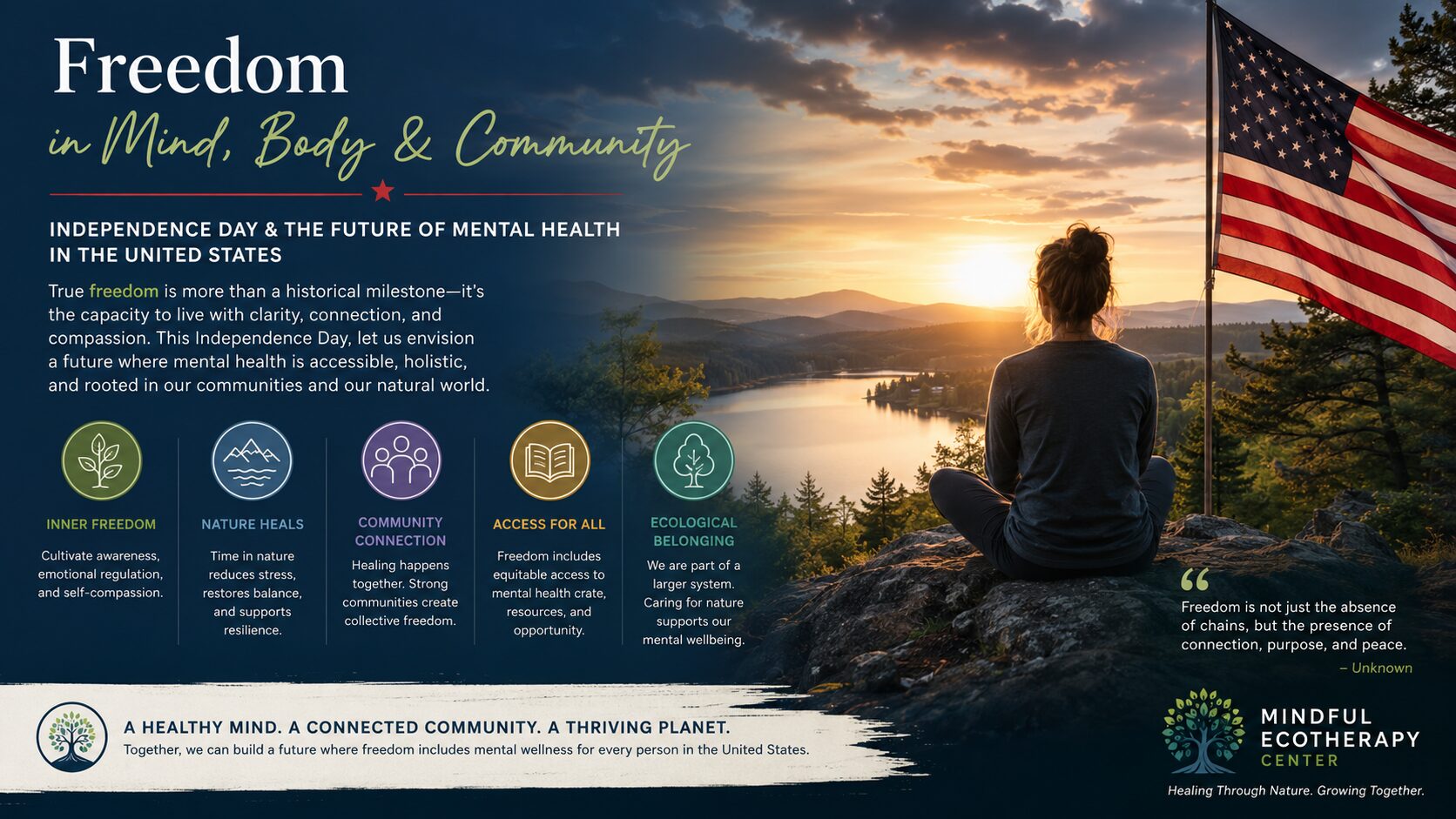
From the perspective of mindfulness-based ecotherapy, liberty is not limited to political history or civic ideals. It also includes psychological, emotional, relational, and ecological dimensions. This Independence Day, I invite you to consider whether you experience freedom only as an external condition or also as an internal state of balance, awareness, and connection.

When mental health is fragile or unsupported, the promise of liberty remains incomplete. A society can declare independence while many individuals still feel trapped in cycles of anxiety, trauma, disconnection, or chronic stress. This tension between outer liberty and inner struggle is one of the defining mental health challenges of modern life in the United States.

Mental Health in the United States: A Freedom Gap

Across the United States, mental health concerns continue to rise. Anxiety, depression, trauma-related conditions, and substance use challenges affect millions of people across all demographics. While awareness of mental health has improved significantly, access to meaningful care remains uneven.

You may notice that liberty in a mental health context is about access, stability, and support. If care is unavailable, unaffordable, or culturally disconnected, then psychological liberty becomes limited in practice.

In this sense, freedom becomes a useful lens for understanding mental health systems. It raises important questions: Are people free to receive care when they need it? Are they free from stigma when they seek help? Are they free from environments that continually reinforce stress and disconnection?

freedom

Mindfulness-Based Ecotherapy and the Experience of Freedom

Mindfulness-based ecotherapy offers a way to experience liberty directly, not just conceptually. It integrates mindfulness practices with nature-based engagement, helping you reconnect with your body, emotions, and environment in grounded, restorative ways.

When you spend time in nature with awareness, engaging in activities like feeling your breath, noticing sensory details, and allowing thoughts to come and go without judgment, you begin to regulate the nervous system more naturally. Research has shown that time in natural environments can reduce stress hormones, improve mood, and support cognitive recovery.

In this context, freedom becomes experiential. You are rediscovering it through presence. You are learning to relate to it differently, with more space and less reactivity.

Emotional Freedom and the Inner Landscape

True psychological liberty includes the ability to experience your emotions without being controlled by them. It is not the absence of distress, but the capacity to remain present with it.

You may notice that many mental health struggles are not simply about what you feel, but about how you relate to what you feel. Mindfulness-based ecotherapy encourages you to slow down enough to observe emotional patterns rather than becoming consumed by them.

In this way, freedom includes emotional literacy. It includes the ability to recognize stress responses, to pause before reacting, and to reconnect with grounding sensations in the body and in nature. This kind of internal liberty is essential for long-term mental well-being.

The Future of Mental Health: Toward Integrated Freedom

The future of mental health in the United States is likely to move toward more integrated and holistic approaches. Rather than focusing solely on diagnosis and symptom reduction, emerging models increasingly emphasize prevention, resilience, and whole-person care.

You can already see early signs of this shift in the growing interest in mindfulness, ecotherapy, trauma-informed care, and community-based mental health initiatives. These approaches recognize that mental health is shaped not only by biology but also by environment, relationships, culture, and access to nature.

In this future, freedom becomes more than a personal experience. It becomes a system-level goal. Schools may prioritize emotional regulation alongside academic learning. Workplaces may support psychological sustainability rather than burnout culture. Communities may integrate green spaces and nature-based healing as essential infrastructure, not an optional luxury.

Collective Freedom and Shared Wellbeing

Independence Day also invites reflection on collective mental health. You are not isolated from the systems around you. Your well-being is influenced by your environment, and your well-being also influences others.

When communities are under chronic stress, fragmented by polarization, or lacking access to care, collective liberty is weakened. Mental health becomes not only an individual concern but a shared responsibility.

From an ecotherapy perspective, healing is both personal and ecological. Just as you are part of a social system, you are also part of a natural one. Reconnecting with nature is not just therapeutic—it is a reminder of belonging within something larger than yourself.

Conclusion: Redefining Freedom Through Healing and Awareness

Independence Day can be more than a historical commemoration. It can be a moment of reflection on what freedom truly means in lived experience. Beyond political liberty, there is psychological freedom that encompasses the ability to feel, to heal, to connect, and to live with awareness.

Through mindfulness-based ecotherapy, you are invited to experience liberty not as an abstract ideal, but as something embodied and practiced. It lives in your breath, your nervous system, your relationships, and your connection to the natural world.

The future of mental health in the United States may depend on this broader understanding of freedom that includes not only independence, but interdependence, healing, and ecological belonging.


Share Your Thoughts About Freedom and Mental Health!

What do you think? Share your thoughts in the comments below!


  And don’t forget to subscribe to our newsletter!

Posted on

Nature as Nurture: The Nurturing Power of Nature

nature as nurture

Nature as Nurture is one of the core ecotherapy skills in Mindfulness-Based Ecotherapy, and it addresses something your nervous system already knows: you are not designed to live in constant stimulation, artificial light, and the chronic urgency imposed by modern life. Nature as Nurture emphasizes the healing and supportive qualities of natural environments and recognizes nature as a reliable source of comfort, restoration, and emotional regulation. This skill is a practical, evidence-informed way of helping you recover from stress, overwhelm, and emotional depletion.

In Mindfulness-Based Ecotherapy, nurturing does not mean avoiding difficulty or pretending life is gentle. It means creating conditions where healing becomes possible. When you intentionally immerse yourself in natural settings, your body often responds before your mind catches up. Your breathing slows. Muscle tension eases. Your attention widens. This is not because you are trying harder, but because nature reduces the cognitive and sensory load that keeps you locked in Doing Mode. Nature gives your system permission to rest.

Mindfulness and Nature as Nurture

nature as nurture

Mindfulness is what allows you to receive this nurturing effect instead of rushing past it. When you practice mindful awareness in nature, you engage your senses more fully. You notice the temperature of the air, the texture of the ground beneath your feet, and the soundscape around you. These sensory experiences anchor you in the present moment and gently guide your nervous system toward regulation.

Exploring nature with your senses naturally brings you into the present moment because it’s impossible to see, touch, taste, smell, or hear anything in the past or in the future. You can only experience nature through your senses in the present moment. Nature does not demand productivity. It offers presence. That alone can feel deeply nurturing in a culture that treats relaxation like a moral failure instead of an imperative for good health.

Nature as Nurture: The Restorative Power of the Environment

Nature as Nurture is especially powerful during times of grief, burnout, anxiety, or emotional exhaustion. When you are depleted, insight and problem-solving often make things worse. What you need first is restoration. Sitting near water, walking beneath trees, or even tending a small garden can provide a sense of being held by something larger than your thoughts. This sense of being supported, rather than needing to perform, helps rebuild emotional resilience from the ground up.

This skill also reframes self-care. Instead of asking what you should be doing to fix yourself, Nature as Nurture asks what kind of environment supports your well-being. In nature, nourishment happens through exposure, not effort. You do not have to earn the shade of a tree or the calm of a shoreline. You simply have to allow yourself to be there. That experience can soften harsh self-judgment and remind you that care does not always require struggle.

We are One

From an ecotherapy perspective, Nature as Nurture helps repair the false separation between you and the natural world. When you feel supported by nature, you begin to experience belonging rather than isolation. This sense of connection can be profoundly regulating, particularly if you struggle with chronic stress or trauma. Nature offers consistency without conditions. It shows up whether you feel worthy or not.

nature as nurture

At the Mindful Ecotherapy Center, Nature as Nurture is practiced intentionally, not passively. You are guided to notice how different environments affect your mood, energy, and sense of safety. Over time, you learn which natural settings help you settle, which help you process emotion, and which help you recharge. This turns nature from an occasional escape into a reliable resource for healing and resilience.

Ultimately, Nature as Nurture reminds you that healing does not always come from insight or effort. Sometimes it comes from being somewhere that allows your body and mind to remember how to settle. In a world that constantly pulls you outward, nature invites you back to yourself, quietly and without judgment.

To learn more about Mindfulness-Based Ecotherapy and how nature-based practices can support your healing and resilience, visit www.mindfulecotherapycenter.com


References

Bratman, G. N., Anderson, C. B., Berman, M. G., Cochran, B., de Vries, S., Flanders, J., Folke, C., Frumkin, H., Gross, J. J., Hartig, T., Kahn, P. H., Kuo, M., Lawler, J. J., Levin, P. S., Lindahl, T., Meyer-Lindenberg, A., Mitchell, R., Ouyang, Z., Roe, J., … Daily, G. C. (2021). Nature and mental health: An ecosystem service perspective. Science Advances, 7(20), eaba113. https://doi.org/10.1126/sciadv.aba113

Kuo, M. (2021). How might contact with nature promote human health? Promising mechanisms and a research agenda. Frontiers in Psychology, 12, 691399. https://doi.org/10.3389/fpsyg.2021.691399

Passmore, H. A., & Howell, A. J. (2020). Nature involvement increases hedonic and eudaimonic well-being: A two-week experimental study. Ecopsychology, 12(1), 1–11. https://doi.org/10.1089/eco.2019.0025

Schutte, N. S., & Malouff, J. M. (2021). Mindfulness and connectedness to nature: A meta-analytic investigation. Personality and Individual Differences, 179, 110984. https://doi.org/10.1016/j.paid.2021.110984

Twohig-Bennett, C., & Jones, A. (2020). The health benefits of the great outdoors: A systematic review and meta-analysis of greenspace exposure and health outcomes. Environmental Research, 166, 628–637. https://doi.org/10.1016/j.envres.2018.06.030

van den Bosch, M., & Ode Sang, Å. (2021). Urban natural environments as nature-based solutions for improved public health – A systematic review of reviews. Environmental Research, 158, 373–384. https://doi.org/10.1016/j.envres.2017.05.040


Share Your Thoughts About Nature as Nurture!

What do you think? Share your thoughts in the comments below!


  And don’t forget to subscribe to our newsletter!
Posted on

Radical Acceptance: A Positive Path Out of Emotional Struggle

radical acceptance

Radical acceptance is one of the most powerful and misunderstood skills in Mindfulness-Based Ecotherapy. You are often taught, implicitly or explicitly, that uncomfortable emotions must be fixed, suppressed, or eliminated. Radical acceptance offers a different and far more effective approach. It teaches you that you can experience emotions and thoughts fully without engaging in behavioral cycles that lead to negative consequences. You learn that pain is part of being human, but suffering is often optional.

The Mindfulness-Based Ecotherapy skill of radical acceptance teaches you that you are not your thoughts and you are not your emotions. Thoughts and feelings are not commands, identities, or truths. They are temporary processes of the brain, shaped by learning, memory, trauma, biology, and context. When you fuse with them, believing they define who you are or dictate what you must do, you lose flexibility. When you relate to them with awareness and acceptance, you regain choice.

Radical Acceptance and the Shift From Reaction to Response

Radical acceptance does not mean liking what is happening, approving of harm, or giving up on change. It means clearly acknowledging reality as it is in this moment, without adding layers of resistance. When you fight reality internally, your nervous system remains activated, keeping you locked in cycles of anxiety, anger, shame, or avoidance. Research consistently shows that experiential avoidance, the attempt to escape unwanted internal experiences, is strongly linked to psychological distress and maladaptive behavior (Hayes et al., 2020).

When you practice radical acceptance, you stop arguing with what already exists. You allow thoughts to arise and pass. You allow emotions to move through the body. This creates space between what you feel and what you do. Instead of reacting automatically, you respond intentionally. This skill is foundational in mindfulness-based and acceptance-based therapies, including Acceptance and Commitment Therapy and Dialectical Behavior Therapy, both of which emphasize acceptance as a pathway to psychological flexibility (Linehan, 2020; Hayes et al., 2020).

You Are Not Your Thoughts or Emotions

One of the most liberating aspects of radical acceptance is learning to defuse from internal experiences. A thought like “I am failing” is no longer treated as a fact. An emotion like fear is no longer treated as a threat that must be eliminated. Instead, thoughts are seen as mental events and emotions as physiological and psychological processes. Neuroscience research supports this perspective, showing that emotional experiences are dynamic brain-body states that change when they are observed with nonjudgmental awareness rather than suppressed or amplified (Dahl et al., 2020).

This shift matters because behavior follows relationship, not content. When you believe your thoughts unquestioningly, you act as if they are instructions. When you accept their presence without attachment, you gain the freedom to choose actions aligned with your values rather than your impulses.

Radical Acceptance in Mindfulness-Based Ecotherapy

In Mindfulness-Based Ecotherapy, radical acceptance is practiced not only internally but also in relationship with the natural world. Nature offers constant demonstrations of acceptance without resignation. A river does not resist obstacles; it moves around them. A forest does not judge decay; it integrates it into renewal. When you practice radical acceptance outdoors, your body often understands the lesson before your mind catches up.

Ecotherapy supports radical acceptance by engaging your senses and grounding you in the present moment. Sitting with discomfort while noticing birdsong or the rhythm of waves can regulate the nervous system, making acceptance more accessible. Research since 2020 shows that nature-based mindfulness practices reduce rumination and emotional reactivity while increasing psychological flexibility and self-regulation (Schutte & Malouff, 2021; Passmore & Howell, 2020).

Acceptance Is the Doorway to Change

Paradoxically, radical acceptance is what allows meaningful change to occur. When you stop wasting energy fighting internal experiences, that energy becomes available for skillful action. You can feel anger without acting aggressively. You can feel anxiety without avoiding life. You can feel sadness without collapsing into hopelessness. Acceptance creates stability. Stability creates choice.

At the Mindful Ecotherapy Center, radical acceptance is taught as a lived practice,. You learn to notice when resistance shows up in your body, your thoughts, and your behaviors. You learn to soften your grip. Over time, you experience a quiet but profound shift. Life becomes less about controlling what you feel and more about living fully, even when feelings are difficult.

To explore how radical acceptance and other Mindfulness-Based Ecotherapy skills can support your well-being, visit www.mindfulecotherapycenter.com


References

Dahl, C. J., Wilson-Mendenhall, C. D., & Davidson, R. J. (2020). The plasticity of well-being: A training-based framework for the cultivation of human flourishing. Proceedings of the National Academy of Sciences, 117(51), 32197–32206. https://doi.org/10.1073/pnas.2014859117

Hayes, S. C., Strosahl, K. D., & Wilson, K. G. (2020). Acceptance and commitment therapy: The process and practice of mindful change (2nd ed.). Guilford Press.

Linehan, M. M. (2020). DBT skills training manual (2nd ed.). Guilford Press.

Passmore, H. A., & Howell, A. J. (2020). Nature involvement increases hedonic and eudaimonic well-being: A two-week experimental study. Ecopsychology, 12(1), 1–11. https://doi.org/10.1089/eco.2019.0025

Schutte, N. S., & Malouff, J. M. (2021). Mindfulness and connectedness to nature: A meta-analytic investigation. Personality and Individual Differences, 179, 110984. https://doi.org/10.1016/j.paid.2021.110984


Share Your Thoughts About Radical Acceptance!

What do you think? Share your thoughts in the comments below!


  And don’t forget to subscribe to our newsletter!

Posted on

Acceptance and Commitment Therapy (ACT) Worksheets

ACT Worksheets

About Acceptance and Commitment Therapy (ACT)

Acceptance and Commitment Therapy (ACT) is an evidence-based behavioral therapy that helps people develop psychological flexibility, the ability to stay present, open up to difficult thoughts and feelings, and take meaningful action guided by their values.

Rather than trying to eliminate distress, ACT teaches skills like mindfulness, acceptance, and cognitive defusion to change one’s relationship with inner experiences. The goal isn’t to feel better all the time. It’s to live better, even when life is uncomfortable.

About ACT Worksheets

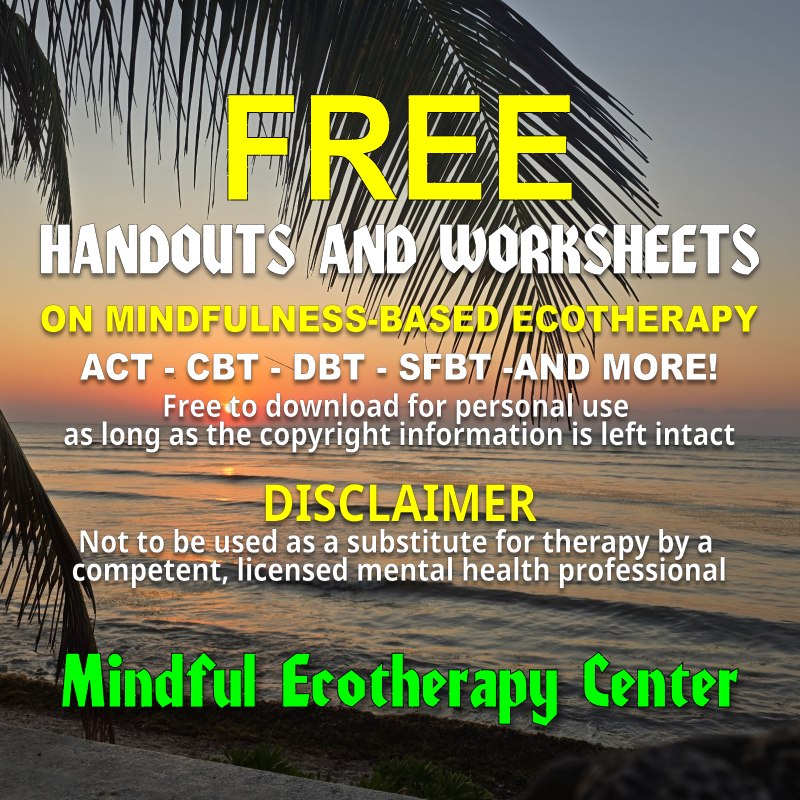
These Acceptance and Commitment Therapy (ACT) worksheets are designed to enhance psychological flexibility and support meaningful change. These resources help you to clarify personal values, defuse unhelpful thoughts, practice mindfulness, and take committed action toward a more fulfilling life.

These tools are ideal for therapists, coaches, or individuals seeking growth. Each worksheet is grounded in ACT’s core principles and easy to integrate into sessions or daily routines, and incorporates the principles of Mindfulness-Based Ecotherapy.

ACT Worksheets

These worksheets are provided for personal, educational, and clinical use. You are welcome to download, print, and share them with clients or students, provided that all copyright and attribution information remains intact and unaltered.

These materials may not be resold, redistributed for profit, or incorporated into commercial products, training, or publications without prior written permission from the copyright holder, Mindful Ecotherapy Center, PLLC.

All rights reserved. All ACT Worksheet materials ©2026 by the Mindful Ecotherapy Center, PLLC, and Charlton Hall, MMFT, PhD, unless otherwise noted.

Posted on

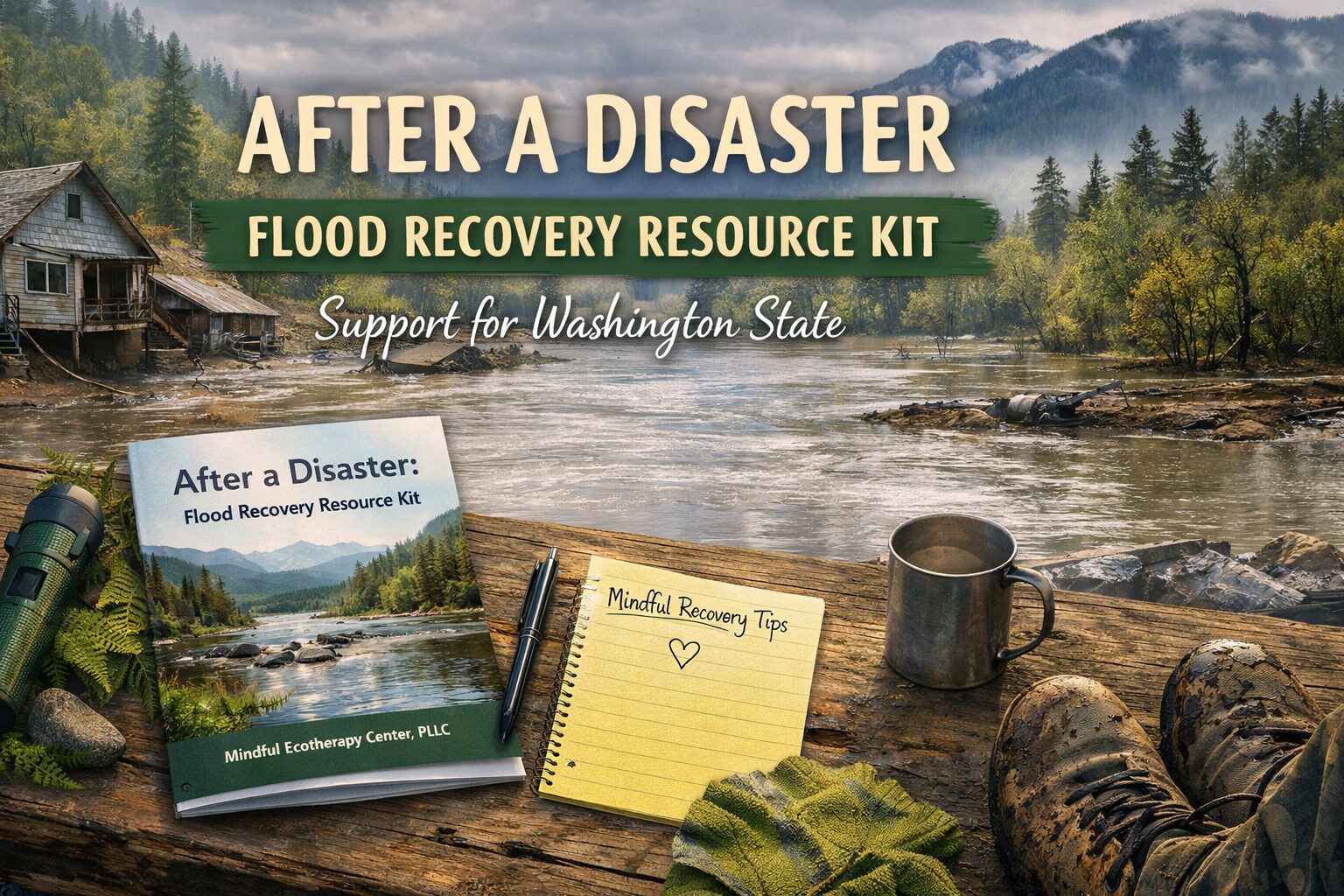
After a Disaster: Flood Recovery Resource Kit

after a disaster

When flooding hits, it doesn’t ask whether you were ready. It doesn’t check your calendar. It shows up, does damage, and leaves you to sort through what’s left. The recent flooding across Washington State has been exactly that kind of natural disaster—sudden, destabilizing, and deeply disruptive to entire communities.

At the Mindful Ecotherapy Center, PLLC, we work with people every day who are carrying an invisible weight. After a disaster, that weight multiplies. News coverage tends to focus on water levels, property losses, and infrastructure damage. What gets less attention is the emotional aftermath: shock, exhaustion, grief, anxiety, irritability, numbness, and the quiet fear that things may never feel stable again.

After a Disaster – Flood Recovery Resource Kit

We created the After a Disaster – Flood Recovery Resource Kit because telling people to “take care of themselves” after a flood is not sufficient support. It’s a vague suggestion offered when people are already overwhelmed. This kit is our way of offering something tangible, practical, and grounded to the local community during a time when clarity is in short supply.

The kit is completely free. That part is intentional. During a natural disaster, access matters. People are already dealing with insurance claims, temporary housing, disrupted work schedules, and the emotional toll of uncertainty. Support should not come with barriers or price tags attached. Making this resource freely available is one way we show up for our community beyond words.

Practical, Real-Life Help

The After a Disaster – Flood Recovery Resource Kit is designed for use in real-life situations. It meets people where they are. The worksheets and practices inside are meant to be used quickly, imperfectly, and revisited as needed. There is no expectation that you complete everything or do it “right.” Partial answers count. Skipping sections that feel overwhelming is not failure; it’s self-regulation.

This kit draws directly from mindfulness-based ecotherapy principles. That means it recognizes that healing after a natural disaster happens on multiple levels at once. The nervous system needs stabilization. The mind needs tools to manage intrusive thoughts and emotional swings. The body needs grounding. And connection, to the natural world and to other people, needs to be restored after it has been disrupted.

Recovery is Not Linear

Flooding can permanently alter someone’s relationship with their environment. Nature, which once may have felt neutral or even calming, can suddenly feel threatening. Land that once felt stable may feel unreliable. The kit gently supports rebuilding a sense of safety with the environment rather than avoiding it entirely. Mindful awareness of surroundings, sensory grounding, and nature-based practices are woven throughout because the environment can also be part of recovery.

The resource kit also acknowledges something that doesn’t get said out loud often enough: emotional reactions after a natural disaster are not linear, predictable, or tidy. People may feel “fine” one moment and completely depleted the next. Anger, guilt, grief, and relief can coexist in uncomfortable ways. The kit offers structured reflection and emotional check-ins that help people name what they’re experiencing without getting stuck in it.

Reconnecting to Community After a Disaster

Community connection is another core focus. Flooding often isolates people at the exact moment they need support most. Displacement, damaged roads, and disrupted routines can quietly erode social contact. The kit includes guidance for rebuilding connection, asking for help without shame, and engaging in collective healing efforts that honor both emotional experience and environmental impact.

This is not therapy in a box, and it’s not meant to replace professional care when that’s needed. It is a bridge. A stabilizing support offered during the window when people are most vulnerable and least resourced. It reflects the Mindful Ecotherapy Center’s belief that mental health support should be responsive, compassionate, and grounded in real-world conditions, especially during a natural disaster where help may be hard to access.

Supporting Our Community

Offering the After a Disaster – Flood Recovery Resource Kit is one way we extend care beyond our office walls and into the community. It’s our way of saying: you are not expected to hold this alone, and your emotional recovery matters just as much as the physical rebuilding.

The kit is available now as a free download through the Mindful Ecotherapy Center: https://www.mindfulecotherapy.org

If the flood has left you feeling unsteady, overwhelmed, or disconnected, this resource was created with you in mind.


Share Your Thoughts on the Washington Floods!

What do you think? Have you experienced difficulties due to the recent flooding? Do you have any resources for victims of this or other natural disasters? Share your thoughts in the comments below! And don’t forget to subscribe to our newsletter!

Posted on

Replacing Negative Coping Mechanisms with Nature-Based Mindfulness Practices

negative coping mechanisms

Coping with stress, trauma, or overwhelming emotions can sometimes lead people to adopt harmful habits, such as substance use, overeating, or other compulsive behaviors. While these negative coping mechanisms may provide temporary relief, they often create long-term physical, emotional, and psychological harm. Recovery and behavioral change require replacement strategies that are nurturing, restorative, and sustainable. Mindfulness-based ecotherapy (MBE) offers a powerful solution by integrating mindfulness practices with direct engagement in nature. This approach not only supports emotional regulation but also fosters resilience, self-awareness, and healthy coping skills to replace negative coping mechanisms.

Understanding Negative Coping Mechanisms

Negative coping mechanisms often emerge as a response to stress, grief, trauma, or chronic anxiety. For many people, these behaviors serve as a temporary escape from discomfort, providing immediate, but fleeting relief. Substance use, for example, may numb emotional pain or alleviate anxiety, yet it does not address underlying emotional issues. Over time, reliance on negative coping mechanisms and harmful coping strategies can exacerbate emotional instability, increase dependency, and reduce overall well-being.

Replacing negative coping mechanisms requires interventions that both soothe and empower. Mindfulness-based ecotherapy offers an integrative method for doing just that: it helps people pause, reflect, and engage with their emotions in healthy, constructive ways while reconnecting with the restorative qualities of nature.

Why Nature Matters in Healing

Nature has profound physiological and psychological benefits. Spending time in natural environments reduces stress hormones, lowers heart rate, and calms the nervous system. Sensory-rich experiences can include things like feeling the texture of tree bark, hearing birdsong, and observing sunlight through leaves. These sensory experiences anchor attention in the present moment. This grounding in the here and now is essential for disrupting automatic negative coping mechanisms and retraining the brain to respond in healthier ways.

Nature also provides symbolic guidance. Observing seasonal change, growth, decay, and renewal can inspire people to reflect on their own processes of transformation. Just as a tree sheds leaves in autumn to prepare for new growth, people can release harmful coping patterns and cultivate healthier alternatives.

Mindfulness-Based Ecotherapy Practices

Integrating mindfulness with nature provides practical strategies for replacing negative coping mechanisms:

  1. Mindful Walking – Walking slowly in a park, forest, or along a river encourages attention to the present moment. Focusing on the sensation of each step, breath, and surrounding sights helps people disrupt habitual responses and cultivate intentional behavior.
  2. Nature Observation Meditation – Sitting quietly and observing natural patterns, such as flowing water, rustling leaves, or cloud formations, enhances attention and emotional regulation. People learn to notice thoughts and urges without judgment, reducing the impulse to resort to negative coping strategies.
  3. Reflective Journaling Outdoors – Writing about stressors, cravings, or emotional triggers in a natural setting helps people externalize difficult emotions and process them constructively. Journaling strengthens self-awareness and reinforces positive coping alternatives.
  4. Sensory Grounding Exercises – Engaging touch, sight, hearing, and smell in nature anchors people in the present moment. Touching soil, feeling the wind, or listening to natural sounds can replace harmful behaviors with calming, grounding sensations.
  5. Rituals and Creative Expression – Activities like planting trees, creating natural art, or tending a garden provide symbolic and tangible acts of renewal. These rituals reinforce intention, provide a sense of accomplishment, and activate reward pathways in the brain in positive ways.

Benefits of Nature-Based Mindfulness in Recovery

Replacing negative coping mechanisms with nature-based mindfulness offers numerous benefits:

  • Stress Reduction – Nature engagement reduces physiological stress responses, lowering the likelihood of reverting to harmful habits.
  • Emotional Regulation – Mindfulness helps people observe cravings and emotions without reacting impulsively, fostering self-control and resilience.
  • Cognitive Rewiring – Repeated mindfulness practice in nature strengthens neural pathways associated with healthy coping and executive functioning.
  • Self-Compassion – Nature and mindfulness together cultivate nonjudgmental awareness, allowing people to treat themselves with care and patience during recovery.
  • Connection and Meaning – Spending time in nature nurtures a sense of belonging and interconnectedness, countering isolation and enhancing well-being.

Practical Steps for Incorporating Nature-Based Mindfulness

  1. Start Small – Even ten minutes of mindful nature observation daily can create meaningful changes in coping habits.
  2. Create a Routine – Consistency reinforces new habits and strengthens brain pathways associated with healthy coping.
  3. Engage the Senses – Fully immerse in the environment, paying attention to tactile, visual, auditory, and olfactory experiences.
  4. Reflect and Journal – Record observations, emotions, and progress to track patterns and insights over time.
  5. Combine with Support Systems – Pair MBE practices with therapy, support groups, or medical guidance for comprehensive recovery support.

Conclusion

Negative coping mechanisms may offer temporary relief, but they ultimately undermine long-term well-being. Mindfulness-based ecotherapy provides a sustainable, restorative alternative by combining the grounding, calming influence of nature with mindful awareness of thoughts, emotions, and behaviors. By engaging in practices such as mindful walking, nature observation, journaling, and ritualized activities, people can replace harmful habits with positive coping strategies that support emotional regulation, resilience, and holistic health.

At the Mindful Ecotherapy Center, we encourage people seeking to break free from negative coping patterns to explore nature-based mindfulness practices as a central component of their healing journey. By connecting deeply with the natural world and cultivating present-moment awareness, people can develop healthier responses to stress, navigate cravings, and foster a more balanced, empowered, and meaningful life. Nature is not only a sanctuary for reflection—it is a partner in transformation and recovery.


The Mindful Ecotherapy Center on YouTube

Subscribe to the Mindful Ecotherapy Center’s YouTube channel to bring peace, presence, and healing into your daily life. Our videos guide you through mindfulness-based ecotherapy practices, including forest bathing, tree planting rituals, nature meditations, and reflective exercises for grief, stress, and emotional well-being. Whether you’re seeking to reconnect with the natural world, cultivate inner calm, or find restorative tools for personal growth, our content offers practical guidance, inspiration, and community support. Join us to explore the transformative power of nature and mindfulness, and start your journey toward balance, resilience, and deeper connection today!


Share Your Thoughts!

What do you think? Share your thoughts in the comments below! And don’t forget to subscribe to our newsletter!
Posted on

How Nature Can Help Rewire the Brain During Addiction Recovery

upstairs brain nature rewires the brain

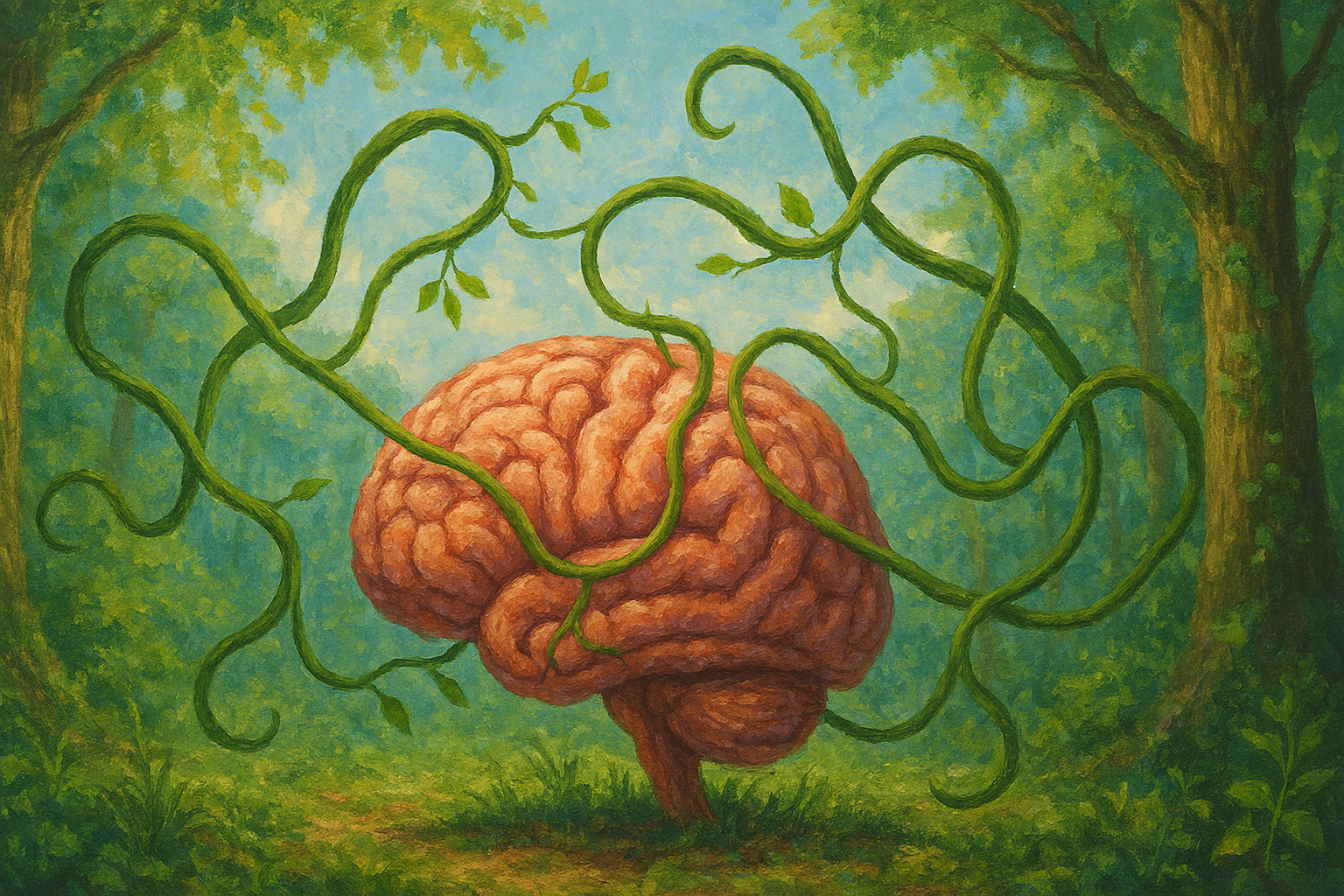
Rewiring the brain supports healthier habits, emotional regulation, and resilience. Recovery from addiction requires rewiring the brain to support new behaviors and new habits. Neuroscience shows that chronic substance use can alter brain pathways related to reward, stress, and decision-making. These changes often make cravings, impulsive behavior, and emotional dysregulation challenging to manage. While therapy, support groups, and medical interventions are essential, integrating mindfulness-based ecotherapy (MBE) provides a unique approach that harnesses the natural environment to support neuroplasticity, emotional healing, and long-term recovery.

Understanding Brain Changes in Addiction

Addiction hijacks the brain’s reward system. Substances or addictive behaviors overstimulate dopamine pathways, creating intense pleasure responses and reinforcing habitual use. Over time, these pathways become dominant, while the prefrontal cortex, the area responsible for decision-making, impulse control, and long-term planning, can lose connections. Stress, trauma, and environmental triggers further exacerbate these changes, making relapse a common risk. Recovery, therefore, involves retraining the brain to respond differently to stress, pleasure, and cravings, establishing new, healthy neural connections.

How Nature Supports Brain Rewiring

Nature has a plethora of neurobiological effects. Research indicates that exposure to green spaces, natural light, and sensory-rich environments reduces cortisol, lowers heart rate, and improves mood. These physiological benefits create the optimal conditions for brain plasticity, which is the brain’s ability to form new connections and strengthen healthier pathways.

When combined with mindfulness, ecotherapy encourages present-moment awareness and conscious engagement with the environment. This combination supports the regulation of emotions, attention, and impulses, key components for rewiring the brain in recovery. For example, observing a flowing river or the gentle sway of trees while practicing mindful breathing can reduce stress responses and enhance prefrontal cortex activity, promoting clarity, decision-making, and emotional balance.

Mindfulness-Based Ecotherapy Techniques for Recovery

MBE offers practical tools to help people in addiction recovery restructure brain function while engaging deeply with nature:

  1. Mindful Walking in Nature – Walking slowly in a forest, park, or along a river encourages body awareness, grounding, and attention to the present. Each step and breath strengthens attentional control, improving the brain’s ability to resist cravings and automatic responses.
  2. Sensory Engagement – Engaging the senses with natural elements by feeling moss under fingertips, listening to birdsong, smelling fresh pine, or other sensory experiences in nature enhances connectivity between sensory and emotional brain regions. This multisensory input fosters neuroplasticity, helping the brain form new, positive associations.
  3. Nature Meditation – Sitting quietly in a natural environment and focusing on sights, sounds, or tactile sensations promotes emotional regulation. Observing thoughts and cravings nonjudgmentally strengthens prefrontal cortex pathways, supporting impulse control and mindful decision-making.
  4. Reflective Journaling Outdoors – Writing about experiences, emotions, and insights while immersed in nature enhances cognitive processing and self-awareness. Journaling creates a feedback loop for reflection, emotional release, and the reinforcement of healthier thought patterns.
  5. Ritualized Nature Activities – Planting a tree, tending a garden, or creating natural art can serve as symbolic acts of transformation. These activities link intention with tangible outcomes, reinforcing positive neural pathways associated with goal-setting, reward, and accomplishment.

Emotional and Cognitive Benefits

Integrating mindfulness-based ecotherapy into recovery offers a range of benefits that support both brain rewiring and emotional healing:

  • Craving Management – Mindful attention in nature allows people to observe cravings without reacting, creating space for choice and self-regulation.
  • Stress Reduction – Nature exposure lowers cortisol and activates the parasympathetic nervous system, reducing the neurobiological triggers for relapse.
  • Emotional Awareness – Mindful engagement with natural environments enhances the ability to recognize, label, and process emotions, strengthening neural circuits for emotional regulation.
  • Reward System Recalibration – Positive experiences in nature stimulate dopamine in healthy ways, supporting the brain’s reward system without substance use.
  • Enhanced Focus and Cognition – Mindful activities in natural settings improve attention, executive function, and working memory, helping people make conscious, deliberate choices in recovery.

Integrating Nature into a Recovery Plan

For people in recovery, consistency is key. Regular engagement with nature, even for short daily or weekly sessions, helps reinforce neural pathways and supports sustained behavior change. Silent walks, journaling sessions, mindful meditations, and garden work can be structured as part of a comprehensive recovery plan, alongside therapy, peer support, and medical care.

Starting small, like with five minutes of mindful observation in a garden or a short walk in a park, can gradually be expanded into longer or more immersive nature experiences. Group retreats or guided programs offer additional support, combining social reinforcement with environmental engagement and mindfulness practices.

Conclusion

Addiction recovery requires rewiring the brain, strengthening emotional regulation, and cultivating resilience. Mindfulness-based ecotherapy provides a unique, scientifically supported approach to support these processes by harnessing the restorative, grounding, and neuroplasticity-promoting effects of nature. By engaging the senses, practicing mindful awareness, and participating in reflective or ritualized activities outdoors, people in recovery can retrain the brain, manage cravings, and foster healthier, adaptive neural pathways.

At the Mindful Ecotherapy Center, we encourage people to integrate nature-based mindfulness practices into their recovery journey. By connecting deeply with the natural world and cultivating mindful presence, people can support brain rewiring, enhance emotional resilience, and sustain long-term recovery. Nature not only heals the body and mind—it offers a living framework for transformation, renewal, and hope.


The Mindful Ecotherapy Center on YouTube

Subscribe to the Mindful Ecotherapy Center’s YouTube channel to bring peace, presence, and healing into your daily life. Our videos guide you through mindfulness-based ecotherapy practices, including forest bathing, tree planting rituals, nature meditations, and reflective exercises for grief, stress, and emotional well-being. Whether you’re seeking to reconnect with the natural world, cultivate inner calm, or find restorative tools for personal growth, our content offers practical guidance, inspiration, and community support. Join us to explore the transformative power of nature and mindfulness, and start your journey toward balance, resilience, and deeper connection today!


Share Your Thoughts!

What do you think? Share your thoughts in the comments below! And don’t forget to subscribe to our newsletter!