
Posted on Leave a comment

Understanding the Phases of Love Bombing

phases of love bombing

The phrase “love bombing” has become increasingly common in discussions about unhealthy relationships, emotional manipulation, and coercive control. At first, love bombing may seem exciting, romantic, or even magical. The attention can feel overwhelming in a positive way. Someone may shower you with compliments, gifts, constant messages, affection, and promises about the future very early in the relationship. They may describe you as their soulmate within days or weeks of meeting.

However, beneath the intensity, love bombing is often less about authentic connection and more about gaining emotional influence and control. Understanding the phases of love bombing can help people recognize unhealthy patterns before they become emotionally damaging.

At the Mindful Ecotherapy Center, we believe mindfulness and nature-based healing practices can help you recover from emotionally manipulative relationships by restoring clarity, self-awareness, and emotional balance.

What Are the Phases of Love Bombing?

Mental health professionals often describe the phases of love bombing as a repeating emotional cycle involving idealization, devaluation, and discard. These stages can create confusion and emotional dependency, especially when the person being targeted mistakes emotional intensity for genuine intimacy.

Phase One: Idealization

The first of the phases of love bombing is known as idealization. This is the “honeymoon” stage where the person doing the love bombing showers the other person with attention, admiration, and affection.

During this phase, everything may feel almost too good to be true. The individual may constantly text or call, insist that they have never met anyone like you, or talk about marriage and long-term commitment almost immediately. Lavish gifts, extravagant dates, and dramatic emotional declarations are common.

While affection itself is not unhealthy, the pace of love bombing is often unusually fast. Instead of allowing trust and intimacy to develop naturally over time, the relationship becomes emotionally intense almost overnight.

Many people describe feeling swept off their feet during this phase. Unfortunately, the emotional intensity can make it difficult to notice red flags such as boundary violations, possessiveness, or pressure for rapid commitment.

Phase Two: Devaluation

The second of the phases of love bombing is devaluation. This is where the emotional dynamic begins to shift.

The same person who once idealized you may suddenly become critical, emotionally distant, controlling, or unpredictable. Compliments may turn into criticism. Affection may become conditional. You may feel as though you are constantly trying to regain the warmth and approval that existed at the beginning of the relationship.

This stage often creates emotional confusion because the contrast between idealization and criticism can be dramatic. One day you may feel adored, while the next you feel ignored, blamed, or emotionally manipulated.

Devaluation frequently includes guilt-tripping, passive aggression, jealousy, emotional withdrawal, or attempts to control your time and attention. If you try to establish boundaries or ask for space, the person may react with anger, sadness, or accusations of betrayal.

Over time, many individuals begin doubting themselves during this phase. They may wonder if they are “too sensitive” or somehow responsible for the tension in the relationship.

Phase Three: Discard

The final of the phases of love bombing is discard. In this stage, the relationship may abruptly end once the person feels they have gained enough control or no longer benefits emotionally from the connection.

Some people may suddenly ghost the relationship, while others may alternate between leaving and returning to maintain emotional influence. This can leave the other person feeling devastated, confused, and emotionally destabilized.

Because the relationship began with such intense affection, the discard phase can feel psychologically shocking. Many people become trapped trying to understand how someone who once seemed deeply devoted could become so emotionally detached.

Healthy Interest Versus Love Bombing

One reason the phases of love bombing can be difficult to recognize is that healthy attraction can also involve excitement and emotional enthusiasm. The difference usually lies in pacing, boundaries, and consistency.

Healthy relationships develop gradually. Trust, affection, and commitment deepen over time through shared experiences and mutual respect. Healthy partners respect your need for space, friendships, personal identity, and emotional boundaries.

Love bombing, by contrast, often feels rushed and emotionally consuming. The affection may seem overwhelming rather than grounding. In healthy relationships, affection remains relatively stable. In manipulative relationships, affection is often withdrawn once emotional dependency develops.

How Mindfulness-Based Ecotherapy Can Help

Recovering from emotionally manipulative relationships often requires reconnecting with your own intuition, emotions, and bodily awareness. Mindfulness-based ecotherapy combines mindfulness practices with the healing effects of nature to support emotional recovery.

Nature can help calm the nervous system and reduce emotional overwhelm. Mindful walking, outdoor meditation, journaling in natural settings, gardening, and spending time near water or forests can help restore emotional clarity and inner stability.

Mindfulness also helps individuals become more aware of emotional patterns and red flags without immediately reacting out of fear or confusion. Over time, this awareness can strengthen healthy boundaries and self-trust.

Healing from the phases of love bombing involves learning that genuine love does not require emotional pressure, manipulation, or control. Healthy relationships allow space for authenticity, respect, emotional safety, and mutual growth.

For more information, visit the Mindful Ecotherapy Center at Mindful Ecotherapy Center


Share Your Thoughts About the Phases of Love Bombing!

What do you think? Share your thoughts in the comments below!


  And don’t forget to subscribe to our newsletter!

Posted on Leave a comment

The SMART Goal Worksheet: A Practical Tool for Creating Meaningful Change

SMART Goals

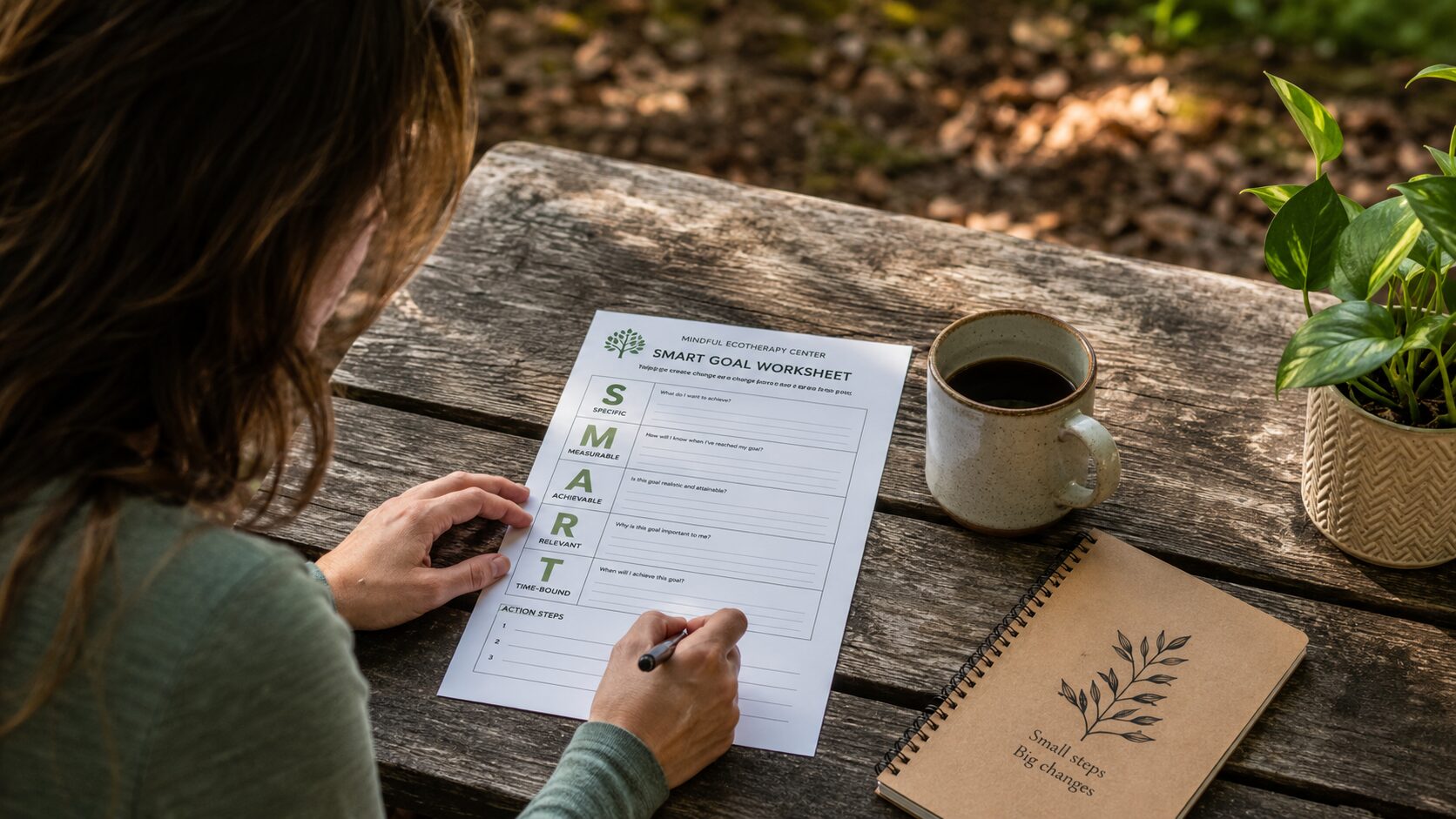
The SMART Goal worksheet can help you make positive changes in your life. Making positive changes often begins with good intentions. You may want to improve your health, reduce stress, strengthen relationships, spend more time in nature, develop a mindfulness practice, or overcome unhealthy habits. However, turning intentions into lasting change requires more than motivation alone. This is where a SMART Goal can make a significant difference.

The Mindful Ecotherapy Center’s SMART Goal Worksheet is a free resource designed to help you create a realistic and effective change plan. By following a structured process, you can transform broad aspirations into clear, achievable objectives that support personal growth and well-being.

What Is a SMART Goal?

A SMART Goal is a goal-setting method that helps you define exactly what you want to accomplish and how you plan to achieve it. The acronym SMART stands for:

  • Specific
  • Measurable
  • Achievable
  • Relevant
  • Time-Bound

This framework has been widely used in counseling, education, healthcare, coaching, and personal development because it provides a practical roadmap for change.

Instead of setting a vague goal such as “I want to feel better,” a SMART Goal encourages you to create a clear plan. For example, you might decide to spend thirty minutes walking in nature three times per week for the next month to reduce stress and improve your mood.

A well-defined SMART Goal makes success easier to visualize and measure.

How the SMART Goal Worksheet Works

The SMART Goal Worksheet guides you through each element of the SMART process. By completing each section thoughtfully, you can develop a realistic plan that increases your chances of success.

Specific

The first section asks you to identify exactly what you want to accomplish.

Specific goals answer questions such as:

  • What do I want to achieve?
  • What actions will I take?
  • Where will this occur?
  • Who is involved?

The more clearly you define your SMART Goal, the easier it becomes to take meaningful action.

Measurable

The next section focuses on tracking progress.

A measurable SMART Goal allows you to determine whether you are moving forward. You are encouraged to identify concrete ways to evaluate your success.

Examples might include:

  • Number of walks completed each week
  • Minutes spent practicing mindfulness
  • Days without using a substance
  • Journaling sessions completed

Measurement provides valuable feedback and helps maintain motivation throughout the change process.

Achievable

An effective SMART Goal should challenge you while remaining realistic.

This section encourages you to consider:

  • Available resources
  • Potential barriers
  • Personal strengths
  • Sources of support

Setting goals that are too ambitious can lead to frustration. Setting goals that are achievable helps build confidence and momentum.

Relevant

The worksheet also asks you to explore why your SMART Goal matters.

Goals that align with your values and priorities tend to be more meaningful and sustainable. Understanding your motivation can help you stay committed when obstacles arise.

You may ask yourself:

  • Why is this goal important?
  • How does it align with my values?
  • How will achieving this goal improve my life?

When your SMART Goal reflects what truly matters to you, it becomes easier to maintain focus and persistence.

Time-Bound

Every SMART Goal needs a timeline.

Without a target date, goals can easily become postponed indefinitely. Establishing deadlines and milestones creates accountability and helps you monitor your progress.

The worksheet includes space for:

  • A start date
  • A target completion date
  • Intermediate milestones

Breaking larger goals into smaller steps can make the process feel more manageable and rewarding.

Using the Action Steps Section

One of the most valuable features of the worksheet is the Action Steps table.

Research consistently shows that successful behavior change occurs when people focus on specific actions rather than outcomes alone. Instead of simply hoping for a result, you identify the behaviors that will help create that result.

For example, if your SMART Goal is to improve emotional well-being, your action steps might include:

  • Walking in nature three times each week
  • Practicing mindfulness meditation for ten minutes daily
  • Journaling each evening
  • Attending a support group or counseling session

Completing these actions regularly creates the foundation for long-term change.

Combining SMART Goals with Mindfulness-Based Ecotherapy

At the Mindful Ecotherapy Center, we believe that meaningful change occurs when goal setting is combined with mindful awareness.

The SMART Goal Worksheet includes a reflection question that asks:

“What small step can I take today that moves me closer to the life I want to create?”

This question encourages you to focus on the present moment and the next manageable action rather than becoming overwhelmed by the entire journey.

Many people find it helpful to complete the worksheet outdoors, reflect while walking in nature, or use journaling to deepen their understanding of their goals. Nature often provides a calming environment that supports clarity, creativity, and self-reflection.

Mindfulness-Based Ecotherapy recognizes the healing relationship between people and the natural world. When combined with a SMART Goal, mindfulness and nature connection can help support lasting behavioral and emotional change.

Free to Download and Share

The SMART Goal Worksheet is available as a free resource from the Mindful Ecotherapy Center. Individuals, therapists, educators, coaches, recovery programs, support groups, and community organizations are welcome to download, print, and use the worksheet.

You may share and distribute the SMART Goal Worksheet freely as long as all copyright notices, logos, author credits, and attribution information remain intact and unaltered.

Our mission is to make practical tools for personal growth, mental health, and wellness available to everyone who can benefit from them.

Whether you are pursuing a healthier lifestyle, managing stress, developing mindfulness skills, improving relationships, or working toward recovery, a SMART Goal can help turn intention into action and action into lasting change.

To learn more about Mindfulness-Based Ecotherapy and access additional free resources, visit the Mindful Ecotherapy Center.


The Mindful Ecotherapy Center on YouTube

Subscribe to the Mindful Ecotherapy Center’s YouTube channel to bring peace, presence, and healing into your daily life. Our videos guide you through mindfulness-based ecotherapy practices, including forest bathing, tree planting rituals, nature meditations, and reflective exercises for grief, stress, and emotional well-being. Whether you’re seeking to reconnect with the natural world, cultivate inner calm, or find restorative tools for personal growth, our content offers practical guidance, inspiration, and community support. Join us to explore the transformative power of nature and mindfulness, and start your journey toward balance, resilience, and deeper connection today!


Share Your Thoughts!

What do you think? Share your thoughts in the comments below! And don’t forget to subscribe to our newsletter!


Posted on Leave a comment

Love Bombing and Healing Through Mindfulness-Based Ecotherapy

love bombing

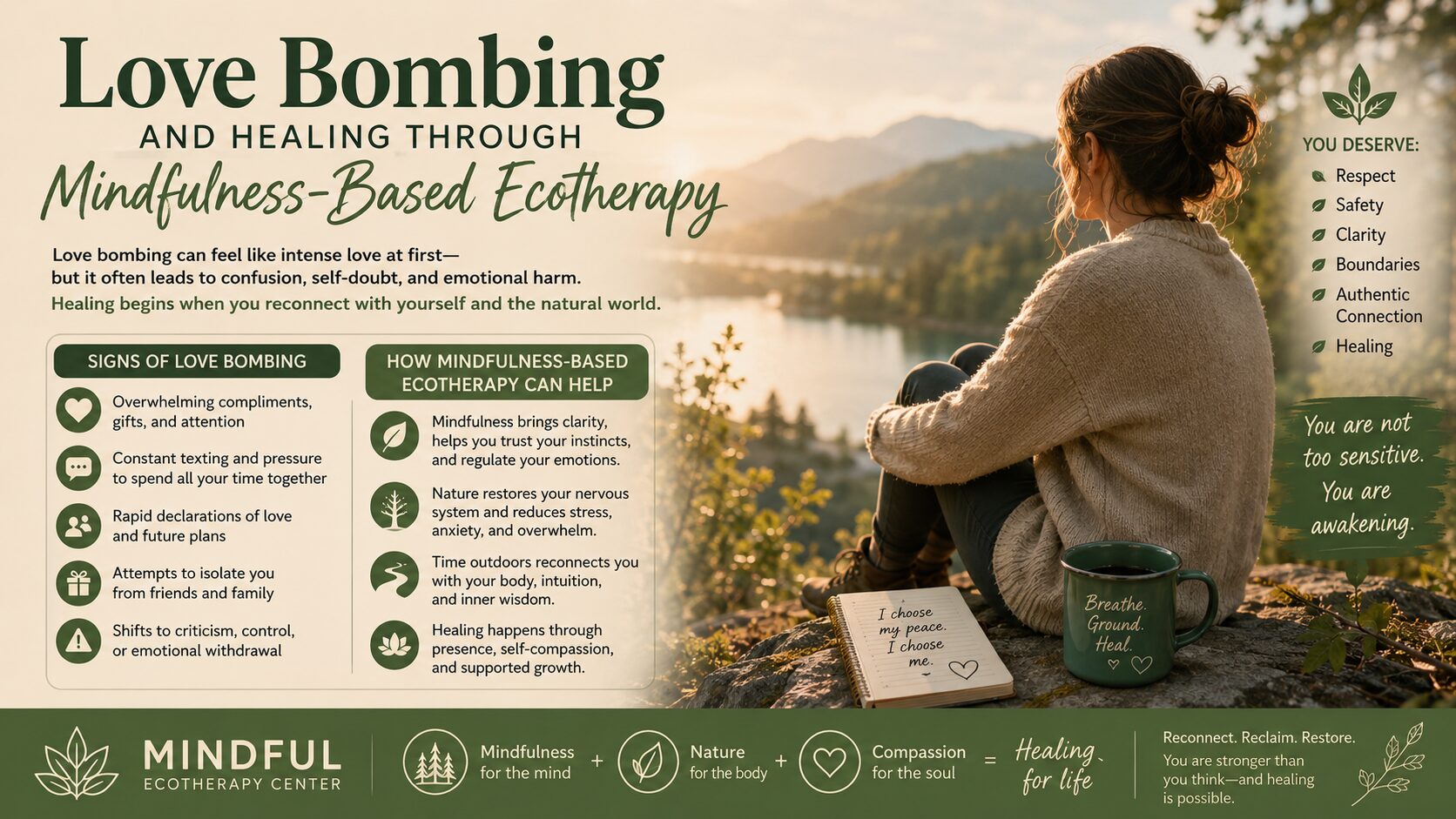
The term “love bombing” has become increasingly common in discussions about unhealthy relationships, emotional aggression, and manipulation. At first glance, love bombing may appear romantic, passionate, or even ideal. The attention can feel intoxicating. Someone may shower you with compliments, gifts, affection, constant texting, and promises about the future very early in a relationship. They may tell you that you are their soulmate within days or weeks. They may insist that they have “never felt this way before.”

In healthy relationships, affection develops gradually alongside trust, mutual respect, and emotional safety. Love bombing, however, often creates emotional intensity before true intimacy has had time to form. The goal may be conscious or unconscious, but the result is frequently the same: emotional dependency, confusion, and a weakening of personal boundaries.

At the Mindful Ecotherapy Center, we recognize that recovering from emotionally manipulative relationships requires more than intellectual understanding. Healing also involves reconnecting with your body, emotions, intuition, and relationship with the natural world. Mindfulness-based ecotherapy can provide grounding, clarity, and emotional restoration for individuals recovering from the effects of love bombing and other emotionally aggressive dynamics.

What Is Love Bombing?

Love bombing is a pattern of overwhelming affection and attention that can be used to gain influence or emotional control over another person quickly. While not every intense romance is unhealthy, love bombing tends to move at an unusually fast pace and often involves pressure to commit emotionally before trust has been established.

Some common signs of love bombing include excessive compliments, nonstop communication, pressure to spend all your time together, grand declarations of love very early on, expensive gifts, and attempts to isolate you from friends or family. In many cases, the attention feels so validating that it becomes difficult to notice red flags.

The problem often emerges when the intense affection begins to change. The same person who once idealized you may become critical, controlling, dismissive, jealous, or emotionally volatile. You may begin questioning yourself, minimizing your own needs, or trying desperately to “get back” the loving person you first encountered.

This cycle can create a trauma bond in which intermittent affection and emotional withdrawal become psychologically addictive. Many people recovering from love bombing describe feeling emotionally disoriented, anxious, ashamed, or disconnected from themselves.

The Emotional Impact of Love Bombing

Love bombing can deeply affect your sense of self-worth and emotional stability. Because the relationship often begins with idealization, the later stages of criticism or emotional manipulation can feel especially painful and confusing.

You may begin doubting your instincts. You may replay conversations repeatedly in your mind, wondering whether you are “too sensitive” or somehow responsible for the conflict. Over time, chronic emotional stress can affect sleep, concentration, nervous system regulation, and overall mental health.

Many survivors of emotionally manipulative relationships also experience a loss of connection with the present moment. Their awareness becomes consumed by anticipating emotional reactions, avoiding conflict, or seeking validation from the other person. This is where mindfulness-based approaches can become especially helpful.

How Mindfulness Helps Restore Clarity

Mindfulness involves paying attention to present-moment experience with openness and nonjudgmental awareness. In the aftermath of love bombing, mindfulness can help you reconnect with your own internal reality instead of becoming trapped in confusion, self-doubt, or emotional reactivity.

Mindfulness practices encourage you to observe thoughts and feelings without immediately believing or reacting to them. For example, you may begin noticing patterns such as anxiety when your phone vibrates, fear of disappointing others, or the urge to ignore your own boundaries to maintain connection.

Rather than criticizing yourself for these reactions, mindfulness invites compassionate awareness. This creates space between emotional triggers and automatic responses. Over time, you can begin rebuilding trust in your own perceptions and emotional experience.

Mindfulness also strengthens emotional regulation by calming the nervous system. Simple practices such as conscious breathing, body awareness, meditation, and mindful walking can reduce stress hormones and help restore a sense of safety within yourself.

Why Ecotherapy Can Be Especially Healing

Ecotherapy combines mindfulness and psychological healing with experiences in nature. The natural world offers a grounding presence that can help counteract the emotional chaos often associated with manipulative relationships.

Nature does not pressure, manipulate, flatter, or shame. Instead, it encourages stillness, observation, rhythm, and reconnection. Time spent in forests, parks, gardens, or near water can reduce anxiety and support nervous system recovery. Research has shown that exposure to natural environments can lower stress, improve mood, and enhance emotional resilience.

For individuals recovering from love bombing, ecotherapy may include mindful hiking, nature meditation, gardening, outdoor journaling, wildlife observation, or simply sitting quietly beneath trees while reconnecting with bodily sensations and emotional awareness.

These practices help restore a sense of grounded identity. Instead of defining yourself through another person’s approval or rejection, you begin reconnecting with your own values, intuition, and inner stability.

Relearning Healthy Relationship Patterns

One of the most important aspects of healing from love bombing is learning to recognize the difference between intensity and genuine intimacy. Healthy relationships respect pacing, boundaries, individuality, and emotional reciprocity.

Mindfulness-based ecotherapy encourages slower, more conscious relationship patterns. It helps you become more aware of how your body responds to certain interactions. You may begin noticing tension, anxiety, exhaustion, or emotional confusion earlier instead of dismissing these signals.

Healing also involves practicing self-compassion. Many people blame themselves for “falling for” manipulative behavior. In reality, love bombing often targets normal human needs for connection, affection, validation, and belonging. Recovery is not about becoming emotionally closed off. It is about developing awareness, discernment, and healthier boundaries.

At the Mindful Ecotherapy Center, we believe healing happens not only through insight, but through reconnection with your body, your emotions, your community, and the living world around you. Mindfulness-based ecotherapy offers a path toward emotional clarity, grounded self-awareness, and healthier relationships rooted in authenticity rather than emotional control.

For more information, visit the Mindful Ecotherapy Center at Mindful Ecotherapy Center

Share Your Thoughts About Love Bombing!

What do you think? Share your thoughts in the comments below!


  And don’t forget to subscribe to our newsletter!
Posted on

Radical Acceptance: A Positive Path Out of Emotional Struggle

radical acceptance

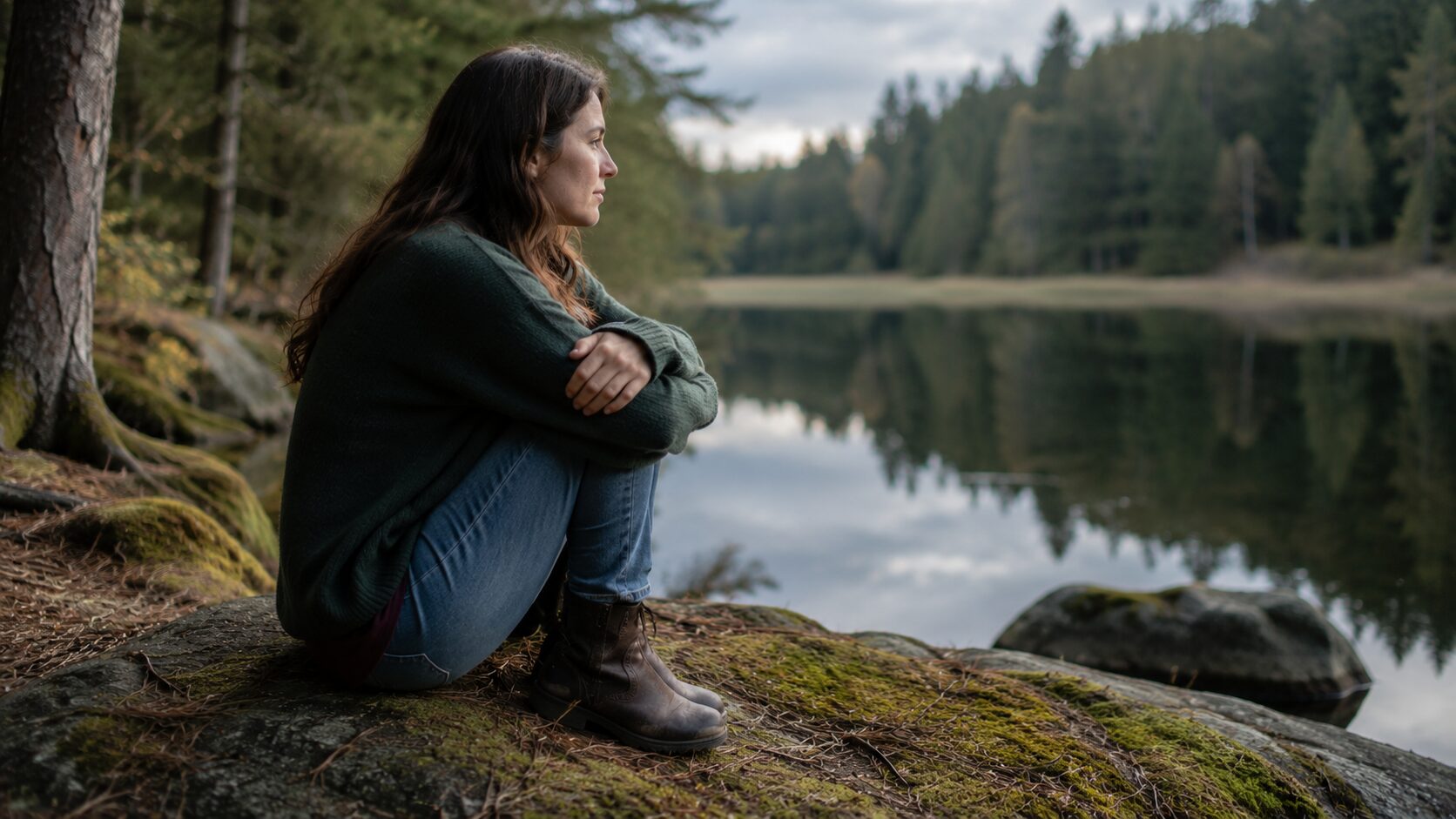
Radical acceptance is one of the most powerful and misunderstood skills in Mindfulness-Based Ecotherapy. You are often taught, implicitly or explicitly, that uncomfortable emotions must be fixed, suppressed, or eliminated. Radical acceptance offers a different and far more effective approach. It teaches you that you can experience emotions and thoughts fully without engaging in behavioral cycles that lead to negative consequences. You learn that pain is part of being human, but suffering is often optional.

The Mindfulness-Based Ecotherapy skill of radical acceptance teaches you that you are not your thoughts and you are not your emotions. Thoughts and feelings are not commands, identities, or truths. They are temporary processes of the brain, shaped by learning, memory, trauma, biology, and context. When you fuse with them, believing they define who you are or dictate what you must do, you lose flexibility. When you relate to them with awareness and acceptance, you regain choice.

Radical Acceptance and the Shift From Reaction to Response

Radical acceptance does not mean liking what is happening, approving of harm, or giving up on change. It means clearly acknowledging reality as it is in this moment, without adding layers of resistance. When you fight reality internally, your nervous system remains activated, keeping you locked in cycles of anxiety, anger, shame, or avoidance. Research consistently shows that experiential avoidance, the attempt to escape unwanted internal experiences, is strongly linked to psychological distress and maladaptive behavior (Hayes et al., 2020).

When you practice radical acceptance, you stop arguing with what already exists. You allow thoughts to arise and pass. You allow emotions to move through the body. This creates space between what you feel and what you do. Instead of reacting automatically, you respond intentionally. This skill is foundational in mindfulness-based and acceptance-based therapies, including Acceptance and Commitment Therapy and Dialectical Behavior Therapy, both of which emphasize acceptance as a pathway to psychological flexibility (Linehan, 2020; Hayes et al., 2020).

You Are Not Your Thoughts or Emotions

One of the most liberating aspects of radical acceptance is learning to defuse from internal experiences. A thought like “I am failing” is no longer treated as a fact. An emotion like fear is no longer treated as a threat that must be eliminated. Instead, thoughts are seen as mental events and emotions as physiological and psychological processes. Neuroscience research supports this perspective, showing that emotional experiences are dynamic brain-body states that change when they are observed with nonjudgmental awareness rather than suppressed or amplified (Dahl et al., 2020).

This shift matters because behavior follows relationship, not content. When you believe your thoughts unquestioningly, you act as if they are instructions. When you accept their presence without attachment, you gain the freedom to choose actions aligned with your values rather than your impulses.

Radical Acceptance in Mindfulness-Based Ecotherapy

In Mindfulness-Based Ecotherapy, radical acceptance is practiced not only internally but also in relationship with the natural world. Nature offers constant demonstrations of acceptance without resignation. A river does not resist obstacles; it moves around them. A forest does not judge decay; it integrates it into renewal. When you practice radical acceptance outdoors, your body often understands the lesson before your mind catches up.

Ecotherapy supports radical acceptance by engaging your senses and grounding you in the present moment. Sitting with discomfort while noticing birdsong or the rhythm of waves can regulate the nervous system, making acceptance more accessible. Research since 2020 shows that nature-based mindfulness practices reduce rumination and emotional reactivity while increasing psychological flexibility and self-regulation (Schutte & Malouff, 2021; Passmore & Howell, 2020).

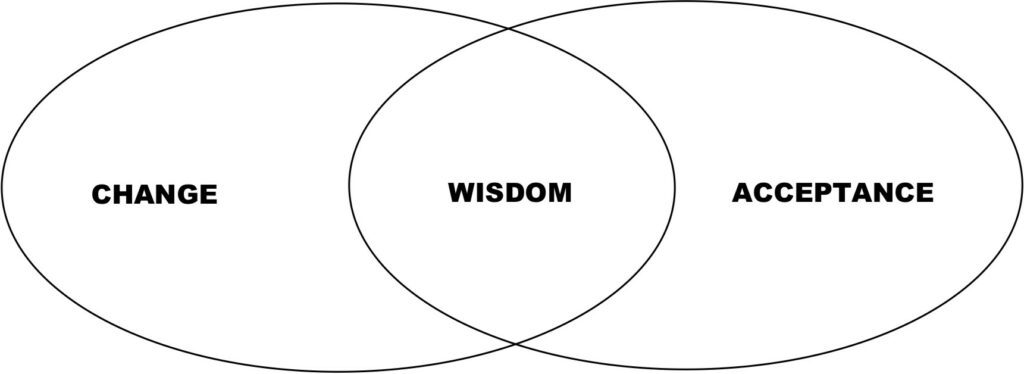
Acceptance Is the Doorway to Change

Paradoxically, radical acceptance is what allows meaningful change to occur. When you stop wasting energy fighting internal experiences, that energy becomes available for skillful action. You can feel anger without acting aggressively. You can feel anxiety without avoiding life. You can feel sadness without collapsing into hopelessness. Acceptance creates stability. Stability creates choice.

At the Mindful Ecotherapy Center, radical acceptance is taught as a lived practice,. You learn to notice when resistance shows up in your body, your thoughts, and your behaviors. You learn to soften your grip. Over time, you experience a quiet but profound shift. Life becomes less about controlling what you feel and more about living fully, even when feelings are difficult.

To explore how radical acceptance and other Mindfulness-Based Ecotherapy skills can support your well-being, visit www.mindfulecotherapycenter.com


References

Dahl, C. J., Wilson-Mendenhall, C. D., & Davidson, R. J. (2020). The plasticity of well-being: A training-based framework for the cultivation of human flourishing. Proceedings of the National Academy of Sciences, 117(51), 32197–32206. https://doi.org/10.1073/pnas.2014859117

Hayes, S. C., Strosahl, K. D., & Wilson, K. G. (2020). Acceptance and commitment therapy: The process and practice of mindful change (2nd ed.). Guilford Press.

Linehan, M. M. (2020). DBT skills training manual (2nd ed.). Guilford Press.

Passmore, H. A., & Howell, A. J. (2020). Nature involvement increases hedonic and eudaimonic well-being: A two-week experimental study. Ecopsychology, 12(1), 1–11. https://doi.org/10.1089/eco.2019.0025

Schutte, N. S., & Malouff, J. M. (2021). Mindfulness and connectedness to nature: A meta-analytic investigation. Personality and Individual Differences, 179, 110984. https://doi.org/10.1016/j.paid.2021.110984


Share Your Thoughts About Radical Acceptance!

What do you think? Share your thoughts in the comments below!


  And don’t forget to subscribe to our newsletter!

Posted on

Acceptance and Commitment Therapy (ACT) Worksheets

ACT Worksheets

About Acceptance and Commitment Therapy (ACT)

Acceptance and Commitment Therapy (ACT) is an evidence-based behavioral therapy that helps people develop psychological flexibility, the ability to stay present, open up to difficult thoughts and feelings, and take meaningful action guided by their values.

Rather than trying to eliminate distress, ACT teaches skills like mindfulness, acceptance, and cognitive defusion to change one’s relationship with inner experiences. The goal isn’t to feel better all the time. It’s to live better, even when life is uncomfortable.

About ACT Worksheets

These Acceptance and Commitment Therapy (ACT) worksheets are designed to enhance psychological flexibility and support meaningful change. These resources help you to clarify personal values, defuse unhelpful thoughts, practice mindfulness, and take committed action toward a more fulfilling life.

These tools are ideal for therapists, coaches, or individuals seeking growth. Each worksheet is grounded in ACT’s core principles and easy to integrate into sessions or daily routines, and incorporates the principles of Mindfulness-Based Ecotherapy.

ACT Worksheets

These worksheets are provided for personal, educational, and clinical use. You are welcome to download, print, and share them with clients or students, provided that all copyright and attribution information remains intact and unaltered.

These materials may not be resold, redistributed for profit, or incorporated into commercial products, training, or publications without prior written permission from the copyright holder, Mindful Ecotherapy Center, PLLC.

All rights reserved. All ACT Worksheet materials ©2026 by the Mindful Ecotherapy Center, PLLC, and Charlton Hall, MMFT, PhD, unless otherwise noted.

Posted on

Dialectical Behavior Therapy: 6 Essential Reasons It Works

Dialectical Behavior Therapy

Dialectical Behavior Therapy (DBT) has earned a reputation as one of the most effective forms of therapy for managing intense emotions, self-destructive behaviors, and interpersonal challenges. Developed by Dr. Marsha Linehan in the late 1980s, DBT is a structured, evidence-based approach that combines cognitive-behavioral strategies with mindfulness practices. At the Mindful Ecotherapy Center, we integrate mindfulness-based ecotherapy techniques into DBT to enhance emotional regulation and promote deeper self-awareness. Here are six essential reasons why Dialectical Behavior Therapy works so effectively.

1. Mindfulness Is at the Core of Dialectical Behavior Therapy

Dialectical Behavior Therapy (DBT) emphasizes mindfulness, the practice of paying deliberate attention to the present moment without judgment. By learning to observe thoughts and emotions without being overwhelmed by them, people can break cycles of reactivity that often lead to self-harm, anxiety, or relationship conflicts. In mindfulness-based ecotherapy, this practice is extended outdoors, connecting people with natural environments to enhance focus, reduce stress, and strengthen grounding. Nature becomes an ally in cultivating awareness, making DBT skills more accessible and tangible.

2. Skills Are Practical and Action-Oriented

Unlike traditional therapy that may focus primarily on insight, DBT equips you with practical skills for real-world situations. These skills are organized into four main modules: mindfulness, distress tolerance, emotional regulation, and interpersonal effectiveness. Patients learn to tolerate distress without resorting to harmful behaviors, manage intense emotions effectively, and communicate their needs assertively. Integrating these skills into daily life ensures that therapy is not just theoretical but transformative.

3. Validation and Acceptance Reduce Emotional Resistance

A hallmark of DBT is the balance between acceptance and change. Therapists validate clients’ experiences and emotions, acknowledging that their feelings are real and understandable. This validation reduces emotional resistance, fosters trust, and creates a safe therapeutic environment. Coupling this with nature-based experiences in ecotherapy allows clients to witness and accept the natural flow of life, enhancing the effectiveness of acceptance strategies in DBT.

Dialectical Behavior Therapy

4. Structured Approach Encourages Consistency

DBT follows a highly structured framework that includes individual therapy, skills training groups, phone coaching, and therapist consultation teams. This multi-layered approach provides consistent support and accountability, ensuring that clients have multiple avenues to practice and reinforce their skills. For those struggling with high-functioning anxiety or emotional dysregulation, the predictable structure of DBT can be profoundly stabilizing.

5. Focus on Building Emotional Resilience

DBT equips practitioners with tools to withstand life’s challenges. By learning to regulate emotions, tolerate distress, and navigate interpersonal dynamics, clients develop resilience that supports long-term well-being. Integrating ecotherapy amplifies this effect, as time in nature naturally reduces stress hormones, improves mood, and strengthens adaptive coping mechanisms. The combination of DBT and mindfulness-based ecotherapy creates a holistic pathway to emotional resilience.

6. Evidence-Based Success Across Diverse Populations

Research has repeatedly shown DBT’s effectiveness for people with borderline personality disorder, depression, anxiety, post-traumatic stress, and self-harming behaviors. Its adaptability makes it effective for a wide range of clients, including those who may not respond to traditional talk therapy. When combined with ecotherapy principles, DBT can be tailored to each person’s needs, providing individualized support that addresses both psychological and environmental factors.

Dialectical Behavior Therapy works because it blends mindfulness, practical skills, validation, structured support, emotional resilience, and evidence-based practices into a cohesive therapeutic model. At the Mindful Ecotherapy Center, we enhance DBT by integrating ecotherapy experiences, helping clients connect with both themselves and the natural world. This integration deepens mindfulness, strengthens coping skills, and supports long-term emotional well-being.

DBT is a roadmap for living with awareness, acceptance, and adaptability. By combining its proven techniques with the grounding benefits of nature, you too can find relief from emotional turbulence and discover a sense of calm, connection, and clarity.


Share Your Thoughts on Dialectical Behavior Therapy!

What do you think? Share your thoughts in the comments below! And don’t forget to subscribe to our newsletter!
Posted on

Replacing Negative Coping Mechanisms with Nature-Based Mindfulness Practices

negative coping mechanisms

Coping with stress, trauma, or overwhelming emotions can sometimes lead people to adopt harmful habits, such as substance use, overeating, or other compulsive behaviors. While these negative coping mechanisms may provide temporary relief, they often create long-term physical, emotional, and psychological harm. Recovery and behavioral change require replacement strategies that are nurturing, restorative, and sustainable. Mindfulness-based ecotherapy (MBE) offers a powerful solution by integrating mindfulness practices with direct engagement in nature. This approach not only supports emotional regulation but also fosters resilience, self-awareness, and healthy coping skills to replace negative coping mechanisms.

Understanding Negative Coping Mechanisms

Negative coping mechanisms often emerge as a response to stress, grief, trauma, or chronic anxiety. For many people, these behaviors serve as a temporary escape from discomfort, providing immediate, but fleeting relief. Substance use, for example, may numb emotional pain or alleviate anxiety, yet it does not address underlying emotional issues. Over time, reliance on negative coping mechanisms and harmful coping strategies can exacerbate emotional instability, increase dependency, and reduce overall well-being.

Replacing negative coping mechanisms requires interventions that both soothe and empower. Mindfulness-based ecotherapy offers an integrative method for doing just that: it helps people pause, reflect, and engage with their emotions in healthy, constructive ways while reconnecting with the restorative qualities of nature.

Why Nature Matters in Healing

Nature has profound physiological and psychological benefits. Spending time in natural environments reduces stress hormones, lowers heart rate, and calms the nervous system. Sensory-rich experiences can include things like feeling the texture of tree bark, hearing birdsong, and observing sunlight through leaves. These sensory experiences anchor attention in the present moment. This grounding in the here and now is essential for disrupting automatic negative coping mechanisms and retraining the brain to respond in healthier ways.

Nature also provides symbolic guidance. Observing seasonal change, growth, decay, and renewal can inspire people to reflect on their own processes of transformation. Just as a tree sheds leaves in autumn to prepare for new growth, people can release harmful coping patterns and cultivate healthier alternatives.

Mindfulness-Based Ecotherapy Practices

Integrating mindfulness with nature provides practical strategies for replacing negative coping mechanisms:

  1. Mindful Walking – Walking slowly in a park, forest, or along a river encourages attention to the present moment. Focusing on the sensation of each step, breath, and surrounding sights helps people disrupt habitual responses and cultivate intentional behavior.
  2. Nature Observation Meditation – Sitting quietly and observing natural patterns, such as flowing water, rustling leaves, or cloud formations, enhances attention and emotional regulation. People learn to notice thoughts and urges without judgment, reducing the impulse to resort to negative coping strategies.
  3. Reflective Journaling Outdoors – Writing about stressors, cravings, or emotional triggers in a natural setting helps people externalize difficult emotions and process them constructively. Journaling strengthens self-awareness and reinforces positive coping alternatives.
  4. Sensory Grounding Exercises – Engaging touch, sight, hearing, and smell in nature anchors people in the present moment. Touching soil, feeling the wind, or listening to natural sounds can replace harmful behaviors with calming, grounding sensations.
  5. Rituals and Creative Expression – Activities like planting trees, creating natural art, or tending a garden provide symbolic and tangible acts of renewal. These rituals reinforce intention, provide a sense of accomplishment, and activate reward pathways in the brain in positive ways.

Benefits of Nature-Based Mindfulness in Recovery

Replacing negative coping mechanisms with nature-based mindfulness offers numerous benefits:

  • Stress Reduction – Nature engagement reduces physiological stress responses, lowering the likelihood of reverting to harmful habits.
  • Emotional Regulation – Mindfulness helps people observe cravings and emotions without reacting impulsively, fostering self-control and resilience.
  • Cognitive Rewiring – Repeated mindfulness practice in nature strengthens neural pathways associated with healthy coping and executive functioning.
  • Self-Compassion – Nature and mindfulness together cultivate nonjudgmental awareness, allowing people to treat themselves with care and patience during recovery.
  • Connection and Meaning – Spending time in nature nurtures a sense of belonging and interconnectedness, countering isolation and enhancing well-being.

Practical Steps for Incorporating Nature-Based Mindfulness

  1. Start Small – Even ten minutes of mindful nature observation daily can create meaningful changes in coping habits.
  2. Create a Routine – Consistency reinforces new habits and strengthens brain pathways associated with healthy coping.
  3. Engage the Senses – Fully immerse in the environment, paying attention to tactile, visual, auditory, and olfactory experiences.
  4. Reflect and Journal – Record observations, emotions, and progress to track patterns and insights over time.
  5. Combine with Support Systems – Pair MBE practices with therapy, support groups, or medical guidance for comprehensive recovery support.

Conclusion

Negative coping mechanisms may offer temporary relief, but they ultimately undermine long-term well-being. Mindfulness-based ecotherapy provides a sustainable, restorative alternative by combining the grounding, calming influence of nature with mindful awareness of thoughts, emotions, and behaviors. By engaging in practices such as mindful walking, nature observation, journaling, and ritualized activities, people can replace harmful habits with positive coping strategies that support emotional regulation, resilience, and holistic health.

At the Mindful Ecotherapy Center, we encourage people seeking to break free from negative coping patterns to explore nature-based mindfulness practices as a central component of their healing journey. By connecting deeply with the natural world and cultivating present-moment awareness, people can develop healthier responses to stress, navigate cravings, and foster a more balanced, empowered, and meaningful life. Nature is not only a sanctuary for reflection—it is a partner in transformation and recovery.


The Mindful Ecotherapy Center on YouTube

Subscribe to the Mindful Ecotherapy Center’s YouTube channel to bring peace, presence, and healing into your daily life. Our videos guide you through mindfulness-based ecotherapy practices, including forest bathing, tree planting rituals, nature meditations, and reflective exercises for grief, stress, and emotional well-being. Whether you’re seeking to reconnect with the natural world, cultivate inner calm, or find restorative tools for personal growth, our content offers practical guidance, inspiration, and community support. Join us to explore the transformative power of nature and mindfulness, and start your journey toward balance, resilience, and deeper connection today!


Share Your Thoughts!

What do you think? Share your thoughts in the comments below! And don’t forget to subscribe to our newsletter!
Posted on

How Nature Can Help Rewire the Brain During Addiction Recovery

upstairs brain nature rewires the brain

Rewiring the brain supports healthier habits, emotional regulation, and resilience. Recovery from addiction requires rewiring the brain to support new behaviors and new habits. Neuroscience shows that chronic substance use can alter brain pathways related to reward, stress, and decision-making. These changes often make cravings, impulsive behavior, and emotional dysregulation challenging to manage. While therapy, support groups, and medical interventions are essential, integrating mindfulness-based ecotherapy (MBE) provides a unique approach that harnesses the natural environment to support neuroplasticity, emotional healing, and long-term recovery.

Understanding Brain Changes in Addiction

Addiction hijacks the brain’s reward system. Substances or addictive behaviors overstimulate dopamine pathways, creating intense pleasure responses and reinforcing habitual use. Over time, these pathways become dominant, while the prefrontal cortex, the area responsible for decision-making, impulse control, and long-term planning, can lose connections. Stress, trauma, and environmental triggers further exacerbate these changes, making relapse a common risk. Recovery, therefore, involves retraining the brain to respond differently to stress, pleasure, and cravings, establishing new, healthy neural connections.

How Nature Supports Brain Rewiring

Nature has a plethora of neurobiological effects. Research indicates that exposure to green spaces, natural light, and sensory-rich environments reduces cortisol, lowers heart rate, and improves mood. These physiological benefits create the optimal conditions for brain plasticity, which is the brain’s ability to form new connections and strengthen healthier pathways.

When combined with mindfulness, ecotherapy encourages present-moment awareness and conscious engagement with the environment. This combination supports the regulation of emotions, attention, and impulses, key components for rewiring the brain in recovery. For example, observing a flowing river or the gentle sway of trees while practicing mindful breathing can reduce stress responses and enhance prefrontal cortex activity, promoting clarity, decision-making, and emotional balance.

Mindfulness-Based Ecotherapy Techniques for Recovery

MBE offers practical tools to help people in addiction recovery restructure brain function while engaging deeply with nature:

  1. Mindful Walking in Nature – Walking slowly in a forest, park, or along a river encourages body awareness, grounding, and attention to the present. Each step and breath strengthens attentional control, improving the brain’s ability to resist cravings and automatic responses.
  2. Sensory Engagement – Engaging the senses with natural elements by feeling moss under fingertips, listening to birdsong, smelling fresh pine, or other sensory experiences in nature enhances connectivity between sensory and emotional brain regions. This multisensory input fosters neuroplasticity, helping the brain form new, positive associations.
  3. Nature Meditation – Sitting quietly in a natural environment and focusing on sights, sounds, or tactile sensations promotes emotional regulation. Observing thoughts and cravings nonjudgmentally strengthens prefrontal cortex pathways, supporting impulse control and mindful decision-making.
  4. Reflective Journaling Outdoors – Writing about experiences, emotions, and insights while immersed in nature enhances cognitive processing and self-awareness. Journaling creates a feedback loop for reflection, emotional release, and the reinforcement of healthier thought patterns.
  5. Ritualized Nature Activities – Planting a tree, tending a garden, or creating natural art can serve as symbolic acts of transformation. These activities link intention with tangible outcomes, reinforcing positive neural pathways associated with goal-setting, reward, and accomplishment.

Emotional and Cognitive Benefits

Integrating mindfulness-based ecotherapy into recovery offers a range of benefits that support both brain rewiring and emotional healing:

  • Craving Management – Mindful attention in nature allows people to observe cravings without reacting, creating space for choice and self-regulation.
  • Stress Reduction – Nature exposure lowers cortisol and activates the parasympathetic nervous system, reducing the neurobiological triggers for relapse.
  • Emotional Awareness – Mindful engagement with natural environments enhances the ability to recognize, label, and process emotions, strengthening neural circuits for emotional regulation.
  • Reward System Recalibration – Positive experiences in nature stimulate dopamine in healthy ways, supporting the brain’s reward system without substance use.
  • Enhanced Focus and Cognition – Mindful activities in natural settings improve attention, executive function, and working memory, helping people make conscious, deliberate choices in recovery.

Integrating Nature into a Recovery Plan

For people in recovery, consistency is key. Regular engagement with nature, even for short daily or weekly sessions, helps reinforce neural pathways and supports sustained behavior change. Silent walks, journaling sessions, mindful meditations, and garden work can be structured as part of a comprehensive recovery plan, alongside therapy, peer support, and medical care.

Starting small, like with five minutes of mindful observation in a garden or a short walk in a park, can gradually be expanded into longer or more immersive nature experiences. Group retreats or guided programs offer additional support, combining social reinforcement with environmental engagement and mindfulness practices.

Conclusion

Addiction recovery requires rewiring the brain, strengthening emotional regulation, and cultivating resilience. Mindfulness-based ecotherapy provides a unique, scientifically supported approach to support these processes by harnessing the restorative, grounding, and neuroplasticity-promoting effects of nature. By engaging the senses, practicing mindful awareness, and participating in reflective or ritualized activities outdoors, people in recovery can retrain the brain, manage cravings, and foster healthier, adaptive neural pathways.

At the Mindful Ecotherapy Center, we encourage people to integrate nature-based mindfulness practices into their recovery journey. By connecting deeply with the natural world and cultivating mindful presence, people can support brain rewiring, enhance emotional resilience, and sustain long-term recovery. Nature not only heals the body and mind—it offers a living framework for transformation, renewal, and hope.


The Mindful Ecotherapy Center on YouTube

Subscribe to the Mindful Ecotherapy Center’s YouTube channel to bring peace, presence, and healing into your daily life. Our videos guide you through mindfulness-based ecotherapy practices, including forest bathing, tree planting rituals, nature meditations, and reflective exercises for grief, stress, and emotional well-being. Whether you’re seeking to reconnect with the natural world, cultivate inner calm, or find restorative tools for personal growth, our content offers practical guidance, inspiration, and community support. Join us to explore the transformative power of nature and mindfulness, and start your journey toward balance, resilience, and deeper connection today!


Share Your Thoughts!

What do you think? Share your thoughts in the comments below! And don’t forget to subscribe to our newsletter!
Posted on

Addiction and Recovery: How Mindfulness-Based Ecotherapy Supports Healing

Addiction Recovery

Addiction can feel like a relentless storm: powerful, consuming, and difficult to navigate. For people struggling with substance use or behavioral dependencies, the path to recovery often requires more than willpower alone. Traditional therapy, support groups, and medical interventions are crucial components of recovery, yet integrating mindfulness-based ecotherapy (MBE) offers a complementary approach that nurtures both mind and body. By connecting with nature while practicing mindfulness, people can develop self-awareness, emotional regulation, and resilience. These are all critical tools for sustaining recovery and building a meaningful, balanced life.

Understanding Addiction Through a Mindful Lens

Addiction is not a lack of self-control; it often stems from complex interactions between biology, environment, and psychological factors. People may use substances or behaviors to cope with stress, trauma, or emotional pain. Mindfulness helps interrupt automatic patterns by encouraging present-moment awareness and nonjudgmental observation of thoughts, cravings, and emotions. When combined with ecotherapy, mindfulness becomes embodied, allowing people to experience the healing power of the natural world while exploring their internal landscapes.

How Nature Enhances Recovery

Nature has a profound capacity to restore, calm, and regulate the nervous system. Research consistently shows that spending time in natural environments reduces stress, lowers cortisol levels, and improves mood. For people in recovery from addiction, these effects are especially valuable. Nature provides a safe, nonjudgmental space to reflect, release tension, and gain perspective on life’s challenges.

Being in natural settings encourages slower breathing, deeper relaxation, and heightened sensory awareness. Listening to rustling leaves, feeling the texture of soil, or observing the movement of water can anchor attention and create a sense of calm. This grounding in the present moment reduces the urge to escape into addictive behaviors and strengthens the ability to cope with cravings or emotional triggers.

Mindfulness-Based Ecotherapy Practices for Addiction Recovery

Mindfulness-based ecotherapy integrates traditional mindfulness practices with direct engagement in natural environments. Some effective MBE techniques for supporting recovery include:

  1. Nature Meditation – Sitting quietly outdoors, focusing on the sensations of the environment, and observing thoughts without judgment helps people develop emotional regulation and clarity. Nature acts as both anchor and mirror, encouraging acceptance of internal experiences.
  2. Mindful Walking – Slow, intentional walking in a forest, park, or along a beach encourages embodied awareness. People can focus on each step, the rhythm of their breath, and the sights and sounds around them, strengthening present-moment attention and reducing compulsive thought patterns.
  3. Grounding Exercises – Touching soil, feeling tree bark, or placing bare feet on grass can reconnect people to their bodies and the Earth, promoting stability, calm, and embodied mindfulness. These exercises help reduce anxiety and cravings.
  4. Reflective Journaling – Writing in nature about cravings, triggers, emotions, and progress allows people to externalize feelings in a safe, supportive environment. Journaling enhances self-awareness, insight, and emotional release, supporting long-term recovery.
  5. Rituals of Renewal – Simple acts, such as planting a tree, tending a garden, or arranging natural objects, can serve as symbolic gestures of growth and renewal. These practices help people honor progress, celebrate milestones, and reinforce their commitment to recovery.

Emotional and Cognitive Benefits

Mindfulness-based ecotherapy offers multidimensional benefits for people in addiction recovery:

  • Stress Reduction – Engaging the senses in natural environments and practicing mindfulness decreases physiological and emotional stress, which is a common trigger for relapse.
  • Craving Management – Present-moment awareness allows people to observe cravings without reacting automatically, creating space for intentional choice.
  • Emotional Regulation – Mindful observation of thoughts and feelings in a safe natural setting strengthens the ability to tolerate discomfort and navigate intense emotions.
  • Self-Compassion – Nature and mindfulness together promote nonjudgmental acceptance, reducing shame and guilt that often accompany addiction.
  • Connection and Belonging – Being in nature fosters a sense of interconnectedness—with the Earth, with others, and with oneself—supporting holistic recovery and social well-being.

Integrating MBE into a Recovery Plan

For people seeking to incorporate mindfulness-based ecotherapy into their recovery, consistency is key. Daily or weekly nature-based practices can reinforce coping skills, emotional awareness, and resilience. Group retreats or guided programs offer additional support, combining peer encouragement with structured mindfulness exercises in natural settings.

It’s also important to integrate MBE with professional support, such as counseling, medical care, or addiction support groups. Mindfulness-based ecotherapy is complementary, enhancing traditional approaches rather than replacing them. Together, these strategies create a robust, holistic framework for long-term recovery.

Practical Tips for Getting Started

  1. Find a Natural Setting – Parks, gardens, trails, or even a backyard can serve as restorative environments. Choose a location that feels safe, comfortable, and conducive to reflection.
  2. Set Intentions – Begin each session by clarifying what you hope to achieve, whether it’s processing cravings, reducing stress, or reflecting on recovery progress.
  3. Engage the Senses – Focus on sights, sounds, smells, and textures to fully inhabit the present moment.
  4. Start Small – Even 10–15 minutes of mindful engagement in nature can provide noticeable benefits. Gradually extend your practice as comfort grows.
  5. Keep a Journal – Record thoughts, feelings, and observations after each session. Journaling helps track patterns, progress, and insights.

Conclusion

Recovery from addiction is a lifelong process that requires courage, patience, and support. Mindfulness-based ecotherapy offers a powerful, complementary approach by integrating the restorative qualities of nature with present-moment awareness. Through meditation, mindful walking, journaling, and ritualized connection with the natural world, people can develop emotional regulation, reduce stress, and strengthen resilience.

At the Mindful Ecotherapy Center, we encourage people in recovery to explore mindfulness-based ecotherapy as a supportive tool on their healing journey. By connecting with nature and cultivating mindful presence, people can process cravings, manage emotions, and foster a deeper sense of self-compassion. Ultimately, MBE not only supports recovery but also nurtures a more balanced, connected, and meaningful life—one step at a time, in harmony with the natural world.


The Mindful Ecotherapy Center on YouTube

Subscribe to the Mindful Ecotherapy Center’s YouTube channel to bring peace, presence, and healing into your daily life. Our videos guide you through mindfulness-based ecotherapy practices, including forest bathing, tree planting rituals, nature meditations, and reflective exercises for grief, stress, and emotional well-being. Whether you’re seeking to reconnect with the natural world, cultivate inner calm, or find restorative tools for personal growth, our content offers practical guidance, inspiration, and community support. Join us to explore the transformative power of nature and mindfulness, and start your journey toward balance, resilience, and deeper connection today!


Share Your Thoughts!

What do you think? Share your thoughts in the comments below! And don’t forget to subscribe to our newsletter!

Posted on

Silent Retreats in Nature for Mourning and Reflection

Silent Retreats

Grief is a profound and often disorienting human experience. When mourning a loss, people may feel overwhelmed by thoughts, emotions, and memories that seem impossible to contain. While traditional support systems such as therapy, support groups, or conversations with friends and family are valuable, silence and solitude in nature offer a unique avenue for processing grief. Silent retreats provide space to pause, reflect, and reconnect with both the natural world and one’s inner life. At the Mindful Ecotherapy Center, we recognize the transformative potential of these retreats for mourning, healing, and self-discovery.

The Concept of Silent Retreats

A silent retreat is a dedicated period during which people abstain from speaking and minimize external distractions to focus inward. The practice is not about isolation for its own sake, but about creating a container for deep reflection, emotional processing, and mindful awareness. When conducted in natural settings—forests, mountains, riversides, or gardens—the benefits of silence are amplified by the restorative qualities of nature. These retreats allow people to experience grief in a focused, contemplative environment, offering both structure and freedom for emotional exploration.

Why Silence Matters in Mourning

Silence holds a unique power in grief work. Many people experiencing loss find that grief manifests as mental noise: a swirl of memories, regrets, “what ifs,” and emotional turbulence. The act of stepping into silence through silent retreats provides relief from this internal chatter. It creates a pause in which feelings can surface naturally, without being rushed or suppressed.

In silence, people can notice the subtle shifts in their body, breath, and thoughts. This embodied awareness allows grief to be experienced more fully and compassionately. Often, the simple act of being still and present with oneself in a natural setting offers clarity and insight that verbal expression alone cannot provide.

Nature as a Healing Context

The setting of a silent retreat plays a critical role in its effectiveness. Nature inherently soothes the nervous system, reduces stress, and fosters emotional regulation. Sunlight filtering through leaves, the sound of birdsong, or the gentle flow of a stream can ground attention and create a sense of calm. Being in nature reminds people of the broader cycles of life—growth, decay, dormancy, and renewal—mirroring the rhythm of grief itself.

Natural environments also provide symbolic mirrors for mourning. A fallen leaf on a forest path, a river continuing to flow, or the steady rise and fall of tree branches in the wind can reflect the impermanence of life, the inevitability of change, and the potential for renewal. Observing these patterns mindfully can help people reconcile the reality of loss with the enduring continuity of life.

Mindfulness Practices During Silent Retreats

Silent retreats in nature are enriched by mindfulness practices that guide people through grief and reflection. Some effective techniques include:

  1. Mindful Breathing – Focusing on the rhythm of the breath anchors attention in the present moment, offering relief from racing thoughts or emotional overwhelm.
  2. Body Awareness – Paying attention to bodily sensations helps people notice where grief manifests physically, such as tension, heaviness, or tightness, and fosters emotional release.
  3. Nature Observation – Engaging fully with the environment encourages present-moment awareness. Notice colors, textures, sounds, and movements around you. Observing seasonal changes or subtle patterns in nature can deepen reflection and perspective.
  4. Walking Meditation – Slow, deliberate movement through natural spaces allows people to integrate body and mind, grounding attention in each step and fostering a contemplative rhythm.
  5. Reflective Journaling – Even in silent retreats, writing can be a private, nonverbal outlet for processing grief. People may record thoughts, emotions, memories, or insights as they arise, creating a tangible reflection of their inner experience.

Benefits of Silent Nature Retreats for Grief

Silent retreats in nature offer a wide range of emotional, psychological, and spiritual benefits for people coping with loss:

  • Deep Emotional Processing – Silence allows grief to surface fully, enabling healing rather than avoidance.
  • Clarity and Insight – Removing verbal distractions helps people recognize patterns, emotions, and thoughts with greater clarity.
  • Connection to Nature – Immersion in natural environments fosters a sense of belonging and perspective, reminding people that life continues beyond personal loss.
  • Mind-Body Integration – Mindfulness practices help align emotional, cognitive, and physical experiences, creating a holistic sense of well-being.
  • Ritual and Reflection – Retreats create a structured opportunity for intentional mourning, offering symbolic and practical ways to honor loved ones.
  • Resilience and Renewal – Time spent in reflection and observation promotes acceptance, patience, and the capacity to move forward without erasing memory or emotion.

Practical Considerations

People interested in silent retreats should consider the following guidelines:

  1. Choose a Safe Natural Setting – Select a location that feels comfortable, accessible, and supportive of solitude. Parks, forests, or private gardens can be excellent choices.
  2. Set Intentions – Clarify the purpose of the retreat, such as processing grief, honoring a loved one, or cultivating mindfulness.
  3. Start Small – For first-time participants, even a few hours of silence in nature can be beneficial. Gradually extend the duration as comfort and experience grow.
  4. Minimize Distractions – Silence is most effective when combined with reduced electronic or social interruptions. Leave devices behind or use them minimally for safety or navigation.
  5. Incorporate Gentle Practices – Include mindful walking, breathing, or journaling to guide attention and structure the retreat.

Conclusion

Silent retreats in nature offer a transformative approach to grief and reflection. By combining solitude, mindfulness, and the restorative qualities of the natural world, people can create a safe container for mourning, emotional processing, and insight. Nature provides both a mirror and a guide, illustrating the cycles of life and offering a sense of perspective, continuity, and hope.

At the Mindful Ecotherapy Center, we encourage people navigating loss to explore silent retreats as a complementary tool for grief work. Whether sitting by a flowing river, observing the patterns of the forest, or simply walking through a quiet garden, the combination of silence, mindfulness, and nature supports profound emotional healing. By immersing oneself in these restorative spaces, people can honor grief, reflect deeply, and cultivate resilience, ultimately finding solace, connection, and renewal in the enduring rhythms of the natural world.


The Mindful Ecotherapy Center on YouTube

Subscribe to the Mindful Ecotherapy Center’s YouTube channel to bring peace, presence, and healing into your daily life. Our videos guide you through mindfulness-based ecotherapy practices, including forest bathing, tree planting rituals, nature meditations, and reflective exercises for grief, stress, and emotional well-being. Whether you’re seeking to reconnect with the natural world, cultivate inner calm, or find restorative tools for personal growth, our content offers practical guidance, inspiration, and community support. Join us to explore the transformative power of nature and mindfulness, and start your journey toward balance, resilience, and deeper connection today!


Share Your Thoughts!

What do you think? Share your thoughts in the comments below! And don’t forget to subscribe to our newsletter!