
Posted on Leave a comment

Love Bombing and Healing Through Mindfulness-Based Ecotherapy

love bombing

The term “love bombing” has become increasingly common in discussions about unhealthy relationships, emotional aggression, and manipulation. At first glance, love bombing may appear romantic, passionate, or even ideal. The attention can feel intoxicating. Someone may shower you with compliments, gifts, affection, constant texting, and promises about the future very early in a relationship. They may tell you that you are their soulmate within days or weeks. They may insist that they have “never felt this way before.”

In healthy relationships, affection develops gradually alongside trust, mutual respect, and emotional safety. Love bombing, however, often creates emotional intensity before true intimacy has had time to form. The goal may be conscious or unconscious, but the result is frequently the same: emotional dependency, confusion, and a weakening of personal boundaries.

At the Mindful Ecotherapy Center, we recognize that recovering from emotionally manipulative relationships requires more than intellectual understanding. Healing also involves reconnecting with your body, emotions, intuition, and relationship with the natural world. Mindfulness-based ecotherapy can provide grounding, clarity, and emotional restoration for individuals recovering from the effects of love bombing and other emotionally aggressive dynamics.

What Is Love Bombing?

Love bombing is a pattern of overwhelming affection and attention that can be used to gain influence or emotional control over another person quickly. While not every intense romance is unhealthy, love bombing tends to move at an unusually fast pace and often involves pressure to commit emotionally before trust has been established.

Some common signs of love bombing include excessive compliments, nonstop communication, pressure to spend all your time together, grand declarations of love very early on, expensive gifts, and attempts to isolate you from friends or family. In many cases, the attention feels so validating that it becomes difficult to notice red flags.

The problem often emerges when the intense affection begins to change. The same person who once idealized you may become critical, controlling, dismissive, jealous, or emotionally volatile. You may begin questioning yourself, minimizing your own needs, or trying desperately to “get back” the loving person you first encountered.

This cycle can create a trauma bond in which intermittent affection and emotional withdrawal become psychologically addictive. Many people recovering from love bombing describe feeling emotionally disoriented, anxious, ashamed, or disconnected from themselves.

The Emotional Impact of Love Bombing

Love bombing can deeply affect your sense of self-worth and emotional stability. Because the relationship often begins with idealization, the later stages of criticism or emotional manipulation can feel especially painful and confusing.

You may begin doubting your instincts. You may replay conversations repeatedly in your mind, wondering whether you are “too sensitive” or somehow responsible for the conflict. Over time, chronic emotional stress can affect sleep, concentration, nervous system regulation, and overall mental health.

Many survivors of emotionally manipulative relationships also experience a loss of connection with the present moment. Their awareness becomes consumed by anticipating emotional reactions, avoiding conflict, or seeking validation from the other person. This is where mindfulness-based approaches can become especially helpful.

How Mindfulness Helps Restore Clarity

Mindfulness involves paying attention to present-moment experience with openness and nonjudgmental awareness. In the aftermath of love bombing, mindfulness can help you reconnect with your own internal reality instead of becoming trapped in confusion, self-doubt, or emotional reactivity.

Mindfulness practices encourage you to observe thoughts and feelings without immediately believing or reacting to them. For example, you may begin noticing patterns such as anxiety when your phone vibrates, fear of disappointing others, or the urge to ignore your own boundaries to maintain connection.

Rather than criticizing yourself for these reactions, mindfulness invites compassionate awareness. This creates space between emotional triggers and automatic responses. Over time, you can begin rebuilding trust in your own perceptions and emotional experience.

Mindfulness also strengthens emotional regulation by calming the nervous system. Simple practices such as conscious breathing, body awareness, meditation, and mindful walking can reduce stress hormones and help restore a sense of safety within yourself.

Why Ecotherapy Can Be Especially Healing

Ecotherapy combines mindfulness and psychological healing with experiences in nature. The natural world offers a grounding presence that can help counteract the emotional chaos often associated with manipulative relationships.

Nature does not pressure, manipulate, flatter, or shame. Instead, it encourages stillness, observation, rhythm, and reconnection. Time spent in forests, parks, gardens, or near water can reduce anxiety and support nervous system recovery. Research has shown that exposure to natural environments can lower stress, improve mood, and enhance emotional resilience.

For individuals recovering from love bombing, ecotherapy may include mindful hiking, nature meditation, gardening, outdoor journaling, wildlife observation, or simply sitting quietly beneath trees while reconnecting with bodily sensations and emotional awareness.

These practices help restore a sense of grounded identity. Instead of defining yourself through another person’s approval or rejection, you begin reconnecting with your own values, intuition, and inner stability.

Relearning Healthy Relationship Patterns

One of the most important aspects of healing from love bombing is learning to recognize the difference between intensity and genuine intimacy. Healthy relationships respect pacing, boundaries, individuality, and emotional reciprocity.

Mindfulness-based ecotherapy encourages slower, more conscious relationship patterns. It helps you become more aware of how your body responds to certain interactions. You may begin noticing tension, anxiety, exhaustion, or emotional confusion earlier instead of dismissing these signals.

Healing also involves practicing self-compassion. Many people blame themselves for “falling for” manipulative behavior. In reality, love bombing often targets normal human needs for connection, affection, validation, and belonging. Recovery is not about becoming emotionally closed off. It is about developing awareness, discernment, and healthier boundaries.

At the Mindful Ecotherapy Center, we believe healing happens not only through insight, but through reconnection with your body, your emotions, your community, and the living world around you. Mindfulness-based ecotherapy offers a path toward emotional clarity, grounded self-awareness, and healthier relationships rooted in authenticity rather than emotional control.

For more information, visit the Mindful Ecotherapy Center at Mindful Ecotherapy Center

Share Your Thoughts About Love Bombing!

What do you think? Share your thoughts in the comments below!


  And don’t forget to subscribe to our newsletter!
Posted on

Journaling in Nature: A Healing Tool for Coping with Loss

journaling in nature

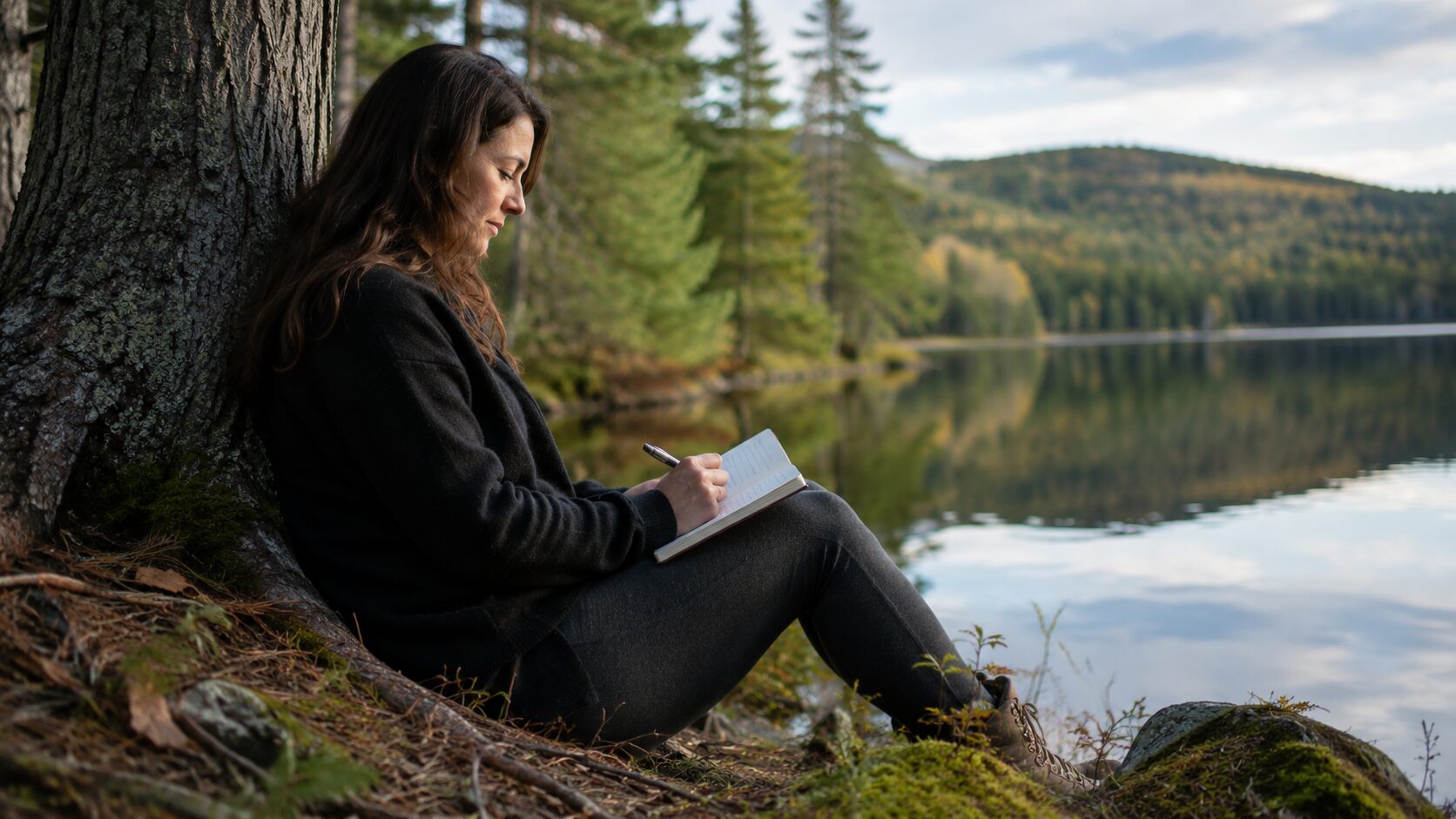
Grief is a journey unlike any other. It arrives unexpectedly, unfolds in unpredictable ways, and leaves a lasting imprint on our hearts and minds. When coping with the loss of a loved one, traditional therapeutic approaches can provide valuable support, yet many find that integrating nature and reflective practices deepens the healing process. One such practice is journaling in nature, a mindful, ecotherapy-informed approach that combines the restorative power of natural environments with the emotional clarity that comes from writing. At the Mindful Ecotherapy Center, we encourage people navigating grief to explore journaling in nature as a way to process emotions, honor memories, and cultivate resilience.

The Power of Writing Through Grief

Journaling has long been recognized as a therapeutic tool for coping with loss. Writing allows us to externalize emotions that may otherwise feel overwhelming or inexpressible. When grief is raw, thoughts can spiral, and emotions may feel unmanageable. Journaling provides a safe space to explore these feelings, articulate memories, and make sense of the complex landscape of mourning.

Research shows that expressive writing can reduce stress, improve mood, and promote overall emotional well-being. Writing about grief helps organize thoughts, clarify emotions, and foster a sense of control during a time when life may feel chaotic and unpredictable. Beyond cognitive processing, journaling also nurtures self-compassion, encouraging people to honor their own responses without judgment.

Why Nature Enhances the Journaling Experience

While journaling indoors has benefits, combining it with nature amplifies its healing potential. The natural environment inherently calms the nervous system, reduces stress hormones, and invites a sense of groundedness. Sunlight, fresh air, and sensory engagement with plants, soil, and water help regulate emotions and provide a stable, nurturing context for reflection.

Nature also offers symbolic mirrors for the grieving process. Observing seasonal changes like buds blooming, leaves falling, and trees standing resilient through storms can help mourners recognize that grief, like nature, is cyclical. The external world reminds us that while life involves loss, renewal and growth are always possible. Writing in the presence of these natural rhythms supports both emotional acceptance and hope.

Mindful Journaling Practices in Nature

Incorporating mindfulness into journaling deepens its effectiveness. Mindfulness encourages full attention to the present moment, allowing people to observe emotions without judgment and respond with awareness rather than impulsivity. When journaling in nature, mindfulness can guide each stage of the practice:

  1. Choosing a Setting – Select a natural space where you feel safe and uninterrupted. This might be a quiet park, a forest clearing, a riverbank, or even a garden. The environment should invite reflection and comfort.
  2. Grounding Before Writing – Begin with a brief mindfulness exercise. Close your eyes, take several deep breaths, and observe sensations in your body and surroundings. Notice the rustle of leaves, the warmth of sunlight, or the sound of flowing water. Grounding in this way helps center attention and eases anxiety before writing.
  3. Free Writing – Allow thoughts and emotions to flow onto the page without censoring or organizing them. This practice encourages authenticity and catharsis. You might start by acknowledging your grief directly, writing letters to the loved one you lost, or recording memories and emotions that arise spontaneously.
  4. Sensory Integration – Engage all five senses as you write. Describe what you see, hear, smell, touch, and even taste. Sensory journaling strengthens the connection between mind and body, helping the grieving process feel embodied rather than abstract.
  5. Reflective Questions – After free writing, consider guiding prompts such as: “What am I feeling right now?” “What memories bring me comfort?” “What small steps toward healing can I take today?” Thoughtful prompts help structure the journaling session while still honoring spontaneity.
  6. Closing Ritual – Conclude your session with a moment of reflection or gratitude. You might fold the journal and place it somewhere safe, offer a silent prayer, or simply sit in quiet observation. This closure signals the end of the session and integrates the emotional work completed.

Therapeutic Benefits

Journaling in nature offers multidimensional benefits for coping with loss:

  • Emotional Release – Writing allows grief, sadness, anger, and longing to surface in a contained and safe way.
  • Perspective and Clarity – Observing nature while journaling helps mourners contextualize their loss within the broader cycles of life and change.
  • Mind-Body Integration – Sensory awareness in natural environments fosters embodied processing of grief, reducing tension and promoting calm.
  • Ritual and Routine – Establishing regular journaling sessions creates a sense of predictability and structure, which can be stabilizing during emotional upheaval.
  • Legacy and Connection – Writing about a loved one preserves memories, celebrates life, and strengthens the sense of ongoing connection.

Practical Tips for Starting

  1. Keep a dedicated journal for your outdoor writing sessions.
  2. Schedule regular time for journaling in nature, even if brief.
  3. Dress comfortably and bring any supplies you may need, such as water, a blanket, or writing tools.
  4. Allow flexibility—some days may invite deep emotional expression, others gentle observation or gratitude.
  5. Consider pairing journaling with mindful movement, such as slow walking, yoga stretches, or forest bathing, to integrate body and mind.

Conclusion

Grieving is a deeply personal, often nonlinear process. While no single method can erase loss, mindfulness-based journaling in nature provides a supportive, restorative pathway. By combining reflective writing with the healing rhythms of the natural world, people can process emotions, cultivate self-compassion, and find symbolic and literal space to honor what has been lost.

Through this practice, grief becomes not only a journey of mourning but also an opportunity for connection to oneself, to loved ones, and to the world around us. Nature’s presence, combined with the introspection of journaling, creates a sanctuary for emotional healing and growth. At the Mindful Ecotherapy Center, we encourage people coping with loss to explore journaling in nature as a daily or weekly practice, offering both solace and insight on the path toward resilience and renewal.


The Mindful Ecotherapy Center on YouTube

Subscribe to the Mindful Ecotherapy Center’s YouTube channel to bring peace, presence, and healing into your daily life. Our videos guide you through mindfulness-based ecotherapy practices, including forest bathing, tree planting rituals, nature meditations, and reflective exercises for grief, stress, and emotional well-being. Whether you’re seeking to reconnect with the natural world, cultivate inner calm, or find restorative tools for personal growth, our content offers practical guidance, inspiration, and community support. Join us to explore the transformative power of nature and mindfulness, and start your journey toward balance, resilience, and deeper connection today!


Share Your Thoughts!

What do you think? Share your thoughts in the comments below! And don’t forget to subscribe to our newsletter!
Posted on

Mindfulness-Based Ecotherapy for Grief and Loss

grief and loss

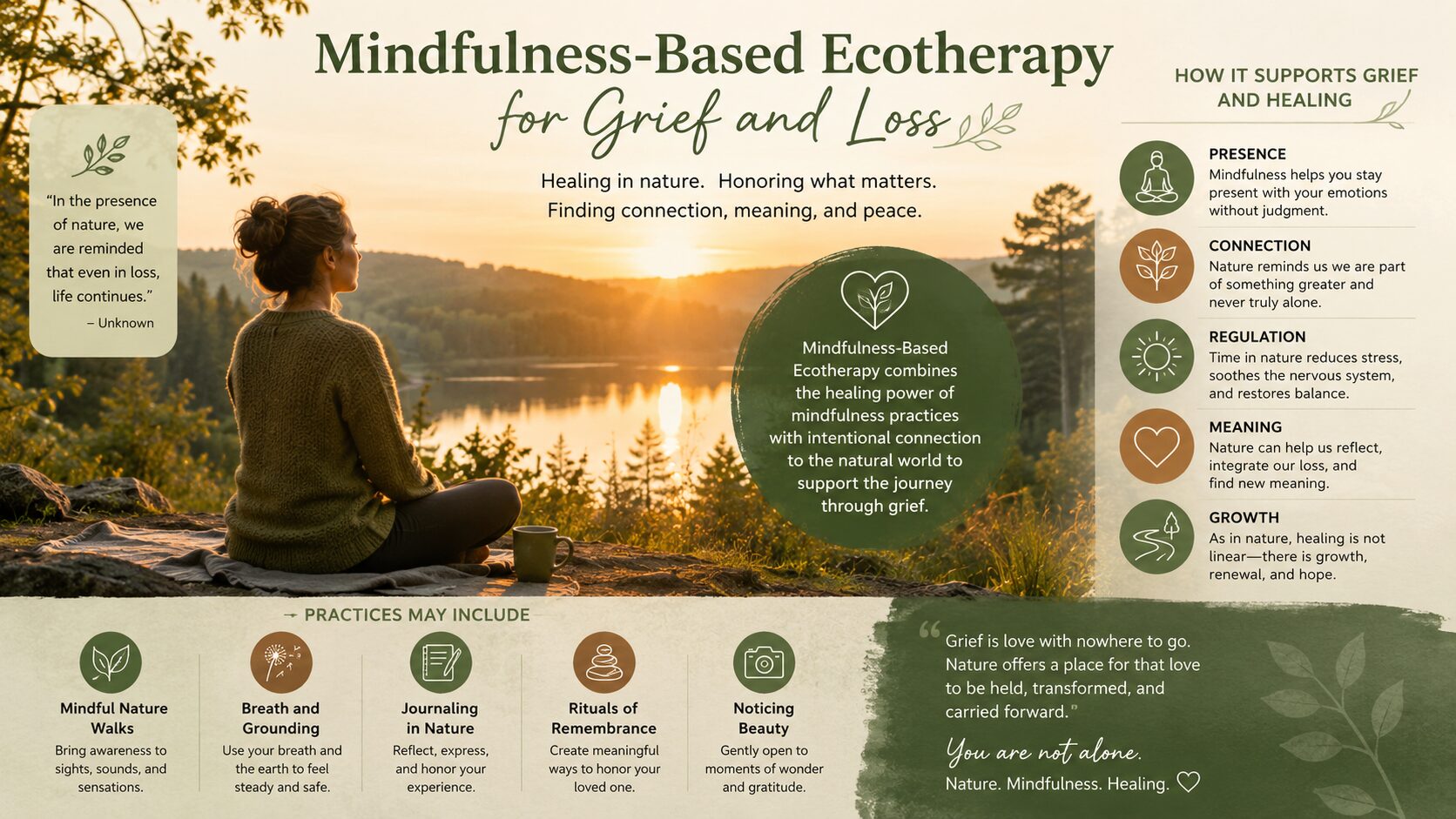
Grief is one of the most profound human experiences. It is a natural response to loss, yet it can feel overwhelming, isolating, and sometimes impossible to navigate. Whether grieving the death of a loved one, the end of a significant relationship, or a major life transition, the emotional and physical toll can be immense. Traditional therapy offers valuable tools, but incorporating nature into the healing process through mindfulness-based ecotherapy can provide a unique, restorative pathway. At the Mindful Ecotherapy Center, we recognize the profound ways that combining mindfulness with connection to the natural world can help people process grief, find emotional balance, and discover meaning in loss.

Understanding Mindfulness-Based Ecotherapy

Mindfulness-based ecotherapy (MBE) is a therapeutic approach that integrates the principles of mindfulness with direct engagement in natural environments. Mindfulness encourages nonjudgmental awareness of the present moment, helping people acknowledge and process emotions without becoming overwhelmed. Ecotherapy emphasizes the restorative benefits of interacting with nature, like the calming presence of trees, the sound of flowing water, and the tactile experience of soil, leaves, and plants. When combined, MBE creates a holistic approach that nurtures both mind and body, supporting people as they work through grief and loss.

How Nature Supports the Grieving Process

Nature has an innate capacity to soothe and restore. Scientific studies consistently show that spending time in green spaces can reduce stress, lower blood pressure, and improve mood. For those experiencing grief, natural environments offer a safe and nurturing backdrop for emotional processing. The cycles of nature — growth, decay, and renewal — mirror the human experience of grief, providing symbolic reinforcement that life continues even after loss. Observing a sapling emerge from the soil, watching leaves change with the seasons, or simply listening to birdsong can remind us that healing is a gradual process, and that it is natural to experience both sorrow and hope simultaneously.

Mindfulness Techniques for Grief

Mindfulness provides practical tools for navigating the intensity of grief. Through mindful practices, people can learn to observe their emotions without being consumed by them. For example:

  1. Breath Awareness – Focusing on the breath can help anchor the mind during moments of intense sadness or anxiety. A simple exercise involves inhaling deeply for four counts, holding for four, exhaling for four, and pausing for four, repeating several cycles while observing any accompanying emotions.
  2. Body Scan – A body scan brings attention to physical sensations, which can be heightened during grief. By gently noting tension, pain, or heaviness in different body areas, people develop awareness of how grief manifests physically and can practice releasing stress.
  3. Nature Observation – Engaging the senses in nature encourages mindful attention. Notice the colors of leaves, the texture of bark, the movement of water, or the sounds of birds. This sensory focus can provide relief from ruminative thoughts and allow grief to surface in a manageable way.
  4. Mindful Journaling – Reflecting on emotions while immersed in nature supports self-expression and insight. Writing about memories, feelings, and observations can foster understanding, acceptance, and emotional release.

Integrating Ecotherapy Practices

Mindfulness-based ecotherapy extends beyond sitting in a park or forest. It can include structured activities that connect grief work with environmental engagement:

  • Tree Planting Rituals – Planting a tree in memory of a loved one embodies the principles of both mindfulness and ecotherapy. The act of nurturing a living being serves as a metaphor for honoring life and cultivating growth amidst loss.
  • Forest Bathing (Shinrin-Yoku) – Walking slowly through a forest with mindful attention to the environment encourages deep relaxation, reflection, and emotional regulation. Forest bathing allows people to feel enveloped by the rhythm of the natural world, promoting a sense of peace and connection.
  • Gardening and Soil Work – Tending to plants and working with soil engages the senses and fosters a sense of accomplishment. This hands-on practice reinforces the idea that life persists and can be nurtured even after profound loss.
  • Water-Based Meditation – Sitting by a stream, river, or lake while practicing mindful breathing can provide soothing auditory and visual stimuli that help release emotional tension and invite introspection.

Creating a Mindful Grief Practice

For those seeking to integrate mindfulness-based ecotherapy into their grieving process, consistency is key. Establishing a regular schedule for nature walks, meditation sessions, or ecotherapy activities helps reinforce the mind-body connection and provides predictable opportunities for emotional processing. It can also be helpful to create intentional rituals, such as visiting a meaningful natural site on anniversaries, practicing mindful reflection at sunrise or sunset, or combining journaling with outdoor experiences.

Equally important is self-compassion. Grief is not linear, and some days will be harder than others. Mindfulness encourages acknowledgment of all feelings without judgment, fostering resilience and patience during the healing process.

The Benefits of Mindfulness-Based Ecotherapy for Grief

Research and clinical experience suggest that MBE offers numerous benefits for those experiencing grief:

  • Reduces symptoms of depression, anxiety, and stress.
  • Enhances emotional regulation and resilience.
  • Provides a sense of grounding, calm, and safety.
  • Fosters connection to the larger natural world, promoting meaning and perspective.
  • Encourages reflective and symbolic engagement with loss.
  • Offers opportunities for ritual, remembrance, and legacy-building.

By merging mindfulness with ecotherapy, people are not only addressing grief cognitively or emotionally but also physically, spiritually, and environmentally. This holistic approach acknowledges the interconnectedness of mind, body, and ecosystem, providing a richer, more restorative pathway through loss.

Conclusion

Grief is an inevitable part of the human experience, yet it need not be endured alone or without support. Mindfulness-based ecotherapy provides a compassionate, evidence-informed approach that nurtures healing while connecting people to the grounding, restorative qualities of nature. Whether through tree planting, forest walks, sensory observation, or mindful journaling, these practices invite reflection, presence, and renewal. In honoring our grief through mindful engagement with the natural world, we allow space for both sorrow and hope, embracing the ongoing cycle of life and finding solace in the continuity of existence.

By cultivating awareness, embracing nature, and practicing self-compassion, mindfulness-based ecotherapy transforms grief from a purely painful experience into an opportunity for healing, connection, and remembrance. Through these practices, the loss of a loved one can become a catalyst for deeper awareness, emotional resilience, and profound ecological and spiritual connection.


The Mindful Ecotherapy Center on YouTube

Subscribe to the Mindful Ecotherapy Center’s YouTube channel to bring peace, presence, and healing into your daily life. Our videos guide you through mindfulness-based ecotherapy practices, including forest bathing, tree planting rituals, nature meditations, and reflective exercises for grief, stress, and emotional well-being. Whether you’re seeking to reconnect with the natural world, cultivate inner calm, or find restorative tools for personal growth, our content offers practical guidance, inspiration, and community support. Join us to explore the transformative power of nature and mindfulness, and start your journey toward balance, resilience, and deeper connection today!


Share Your Thoughts!

What do you think? Share your thoughts in the comments below!


  And don’t forget to subscribe to our newsletter!
Posted on

The Skill of Mindfulness: Learning a New Way of LivingThe Skill of Mindfulness

skill of mindfulness

The skill of mindfulness is much like learning any other ability in life. At first, it may feel awkward, unfamiliar, or even frustrating. That’s because mindfulness often asks you to do the exact opposite of what you have been conditioned to do for years. Instead of reacting automatically, mindfulness encourages you to pause. Instead of avoiding difficult emotions, mindfulness teaches you to notice them with awareness and compassion. Instead of living on autopilot, mindfulness invites you to become fully present in your life.

Because of this, practicing the skill of mindfulness can initially feel uncomfortable. Many mindfulness exercises may seem strange simply because they are different from the fast-paced, distracted, and reactive habits most people develop over time. But “different” does not mean bad. It simply means new. Every meaningful change in life begins with stepping outside familiar patterns.

Practicing the Skill of Mindfulness

One of the most important things to remember about the skill of mindfulness is that it takes practice. You probably will not feel completely calm, centered, or enlightened after trying mindfulness once or twice. In fact, many people become discouraged because they expect immediate results. Mindfulness is not a quick fix or magic solution. It is a gradual process of retraining the mind and learning healthier ways of relating to thoughts, emotions, and experiences.

Patience is essential. Growth often happens slowly and quietly. Just because you do not notice a dramatic change right away does not mean mindfulness is not working. Like planting a seed, the benefits develop over time with consistent care and attention.

There is an old saying often attributed to Albert Einstein: “Insanity is doing the same thing over and over and expecting different results.” Whether Einstein actually said it or not, the idea contains an important truth. If your current habits repeatedly lead to stress, anxiety, emotional pain, conflict, or dissatisfaction, then continuing those same habits will likely produce the same outcomes. Familiar behaviors feel comfortable because they are known, even when they are unhealthy.

The skill of mindfulness offers another path.

Observing with the Skill of Mindfulness

Mindfulness teaches you how to step back from automatic reactions and become more intentional in the way you live. Rather than immediately reacting with anger, fear, judgment, or avoidance, you learn to observe what is happening internally before responding. This simple shift can create profound changes in relationships, emotional health, and overall well-being.

For example, many people spend much of their lives worrying about the future or replaying painful memories from the past. The mind becomes trapped in cycles of regret, fear, shame, or anticipation. Mindfulness gently guides attention back to the present moment. The present moment is where life is actually happening. When you become grounded in the present, you may notice that many worries lose some of their power.

The Skill of Mindfulness: More than Meditation

Although meditation is often associated with mindfulness, the skill of mindfulness is much more than sitting quietly with your eyes closed. Mindfulness is a way of approaching everyday life. You can practice mindfulness while walking, eating, listening to music, washing dishes, driving, or having a conversation. Any moment can become an opportunity to practice awareness.

Mindfulness also encourages greater self-compassion. Many people criticize themselves harshly whenever they struggle or make mistakes. Mindfulness teaches you to notice those self-critical thoughts without becoming consumed by them. Instead of attacking yourself for being imperfect, you learn to approach yourself with patience and understanding. This shift alone can be deeply healing.

Learning the skill of mindfulness is similar to learning music, painting, sports, or any other craft. Nobody becomes an expert overnight. Leonardo da Vinci did not paint the Mona Lisa the first time he picked up a paintbrush. Great skill develops through repeated practice, persistence, and willingness to learn from mistakes.

Permission to Practice Imperfectly

The same is true for mindfulness. Some days you may feel calm and focused. On other days, your mind may wander constantly. That is normal. The goal of mindfulness is not perfection. The goal is awareness. Each time you gently bring your attention back to the present moment, you are strengthening the skill of mindfulness little by little.

Over time, mindfulness can help you become more emotionally balanced, less reactive, and more connected to your experiences. It can improve relationships, reduce stress, and help you cultivate a deeper sense of peace and acceptance. Most importantly, mindfulness helps you live your life more fully instead of merely rushing through it on autopilot.

Permit yourself to practice imperfectly. You do not need to master mindfulness immediately. Simply begin where you are. With time, patience, and repetition, the skill of mindfulness can become a natural and meaningful part of your daily life. It is a skill that requires practice. Leonardo da Vinci didn’t paint the Mona Lisa the first time he picked up a paintbrush. Leonardo Da Vinci didn’t paint the Mona Lisa the first time he picked up a paintbrush. Likewise, you probably won’t be able to jump right into a ‘mindful awareness’ mode of being without a lot of practice. That’s okay. Permit yourself to practice once in a while. The more you do so, the more mindful you’ll become!


Share Your Thoughts About the Skill of Mindfulness!

What do you think? Share your thoughts in the comments below!


  And don’t forget to subscribe to our newsletter!