Posted on Leave a comment

Grief Disorders? Rethinking Prolonged Grief Through Mindfulness

grief disorder

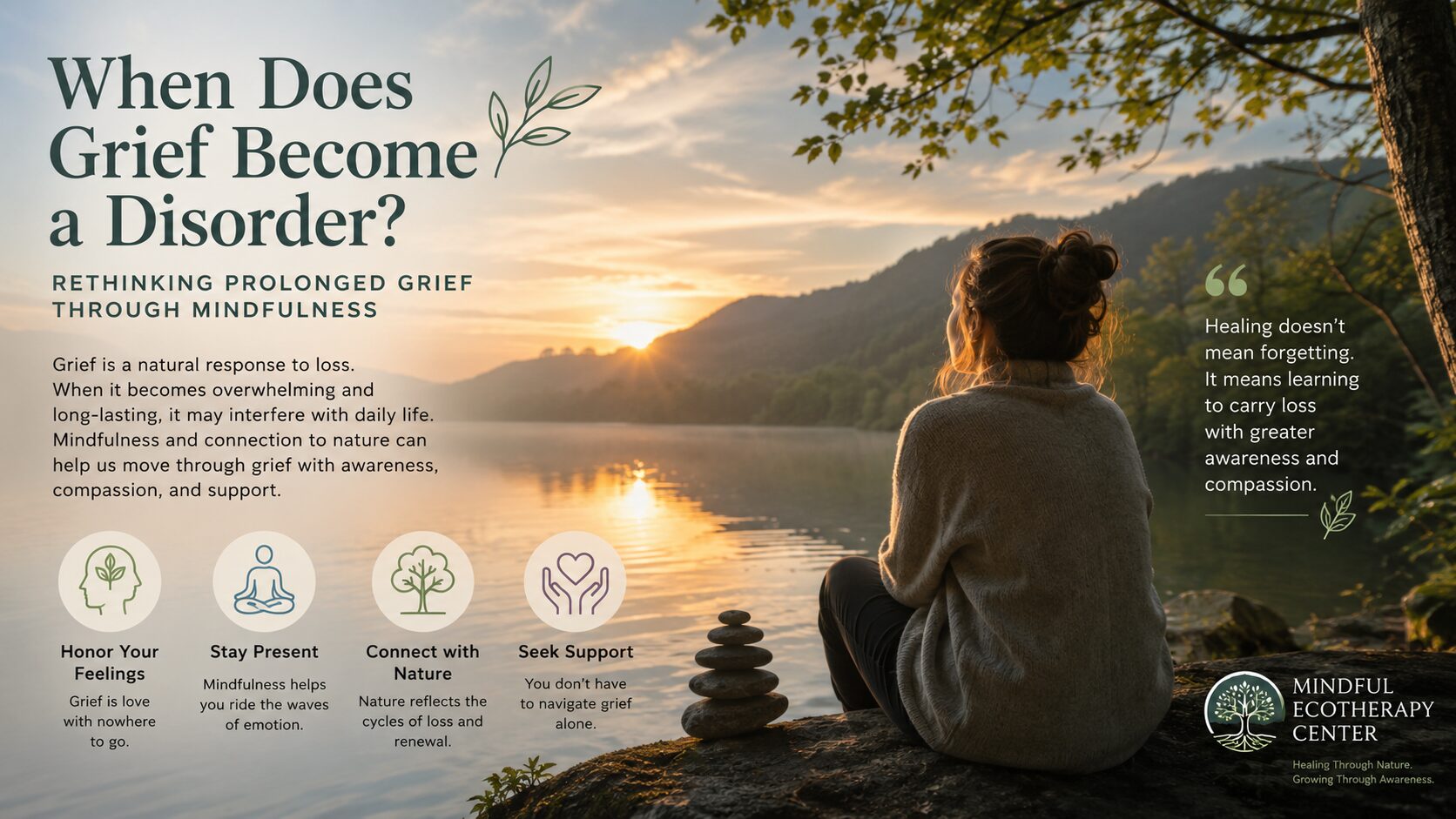
Grief is one of the most universal human experiences, yet it remains one of the most deeply personal. When a person experiences loss, there is no fixed timeline for healing, no standardized emotional progression, and no “correct” way to mourn. Still, in clinical settings, increasing attention has been given to the point at which grief may shift from a natural response to loss into what is sometimes labeled a grief disorder.

From the perspective of Mindfulness-Based Ecotherapy (MBE), this distinction must be approached with great care. While it is important to recognize when someone is suffering in a way that significantly impairs functioning, it is equally important not to medicalize a fundamentally human experience too quickly or too broadly. Grief is not an illness in itself; it is a response to attachment, love, and loss.

You can learn more about our work at the Mindful Ecotherapy Center: https://www.mindfulecotherapycenter.com

Prolonged Grief Disorder
grief disorder

Grief typically involves a wide range of emotional, cognitive, and physical experiences. People may feel deep sadness, yearning for the person who has died, fatigue, changes in appetite, disrupted sleep, or waves of anger, guilt, or emotional numbness. These reactions are not inherently signs of pathology. Instead, they reflect the natural way the human nervous system responds when a significant attachment is broken. From an MBE perspective, grief is not something to eliminate, but something to move through with awareness, patience, and support.

However, there are situations in which grief becomes more clinically concerning. The term grief disorder, often used interchangeably with Prolonged Grief Disorder in clinical literature, is generally applied when intense grief persists in a way that significantly interferes with daily functioning over an extended period of time. This may include ongoing, overwhelming longing for the deceased, persistent emotional pain that does not soften, a sense of being “stuck” in the moment of loss, or a diminished ability to engage with life long after the expected period of acute mourning. In these cases, the issue is not the presence of grief itself, but its chronic intensity and its impact on the person’s ability to reengage with life.

Over-Pathologizing Grief Disorders

At the same time, there is an ongoing concern in mental health care about the risk of over-pathologizing grief. When grief is too quickly categorized as a grief disorder, normal variations in mourning can be mistaken for illness. This can lead to individuals feeling as though there is something wrong with them simply because they are grieving deeply or for an extended period. It can also result in the loss of cultural context, where mourning practices that differ across communities are misinterpreted through a narrow clinical lens. Grief is shaped not only by biology but also by culture, relationships, personal history, and the environment in which a person lives.

Grief Disorders and Mindfulness-Based Ecotherapy

Mindfulness-Based Ecotherapy offers a broader framework for understanding grief that moves beyond diagnosis alone. In MBE, grief is viewed as an ecological and relational process rather than solely an internal disorder. Emotional suffering is seen in context: within relationships, within systems of support or isolation, and within a person’s connection (or disconnection) to the natural world. Rather than immediately trying to eliminate grief, MBE encourages individuals to develop mindful awareness of their experience, allowing emotions to arise and shift without suppression or avoidance.

Nature-based practices are central to this approach. Time in natural environments can help regulate the nervous system and provide powerful metaphors for the grieving process. Just as ecosystems undergo cycles of death, decay, and renewal, human emotional life also moves through cycles of loss and transformation. This perspective does not minimize grief but situates it within a larger context of ongoing change and continuity.

Reframing the question of when grief becomes a grief disorder may ultimately be more helpful than focusing strictly on diagnostic thresholds. Instead of asking only whether grief meets criteria for a disorder, it can be more meaningful to ask whether grief is still moving in some way, whether the person has access to support, whether meaning-making is still possible, and whether unresolved trauma or life circumstances are complicating the healing process. These questions shift the focus from labeling to understanding.

Healthy Grieving

Supporting healthy grieving often requires a combination of approaches. Psychotherapy can help individuals process loss and integrate meaning. Support groups and community rituals can provide shared space for mourning. Mindfulness practices can help individuals stay present with emotional waves without becoming overwhelmed by them. Time in nature can support regulation and reflection. In some cases, medical or psychiatric care may also be appropriate when symptoms are severe and persistent. The goal is not to eliminate grief, but to help it integrate into the fabric of a continuing life.

Ultimately, grief does not need to be quickly classified as a grief disorder to be taken seriously. Most grief is not pathological; it is a reflection of deep human attachment and love. However, when grief becomes immobilizing and persistent to the point of significantly impairing life functioning, additional support may be necessary. The challenge lies in distinguishing between natural mourning and entrenched suffering without losing respect for the profound emotional reality of loss.

Through Mindfulness-Based Ecotherapy, grief is understood not as a problem to be fixed, but as an experience to be witnessed, held, and gradually transformed. Healing does not mean forgetting or “moving on” in a simplistic sense. Instead, it means learning how to carry loss with greater awareness, compassion, and connection to life itself.


Share Your Thoughts!

What do you think? Share your thoughts in the comments below!


  And don’t forget to subscribe to our newsletter!
Posted on

Mindfulness-Based Ecotherapy for Grief and Loss

grief and loss

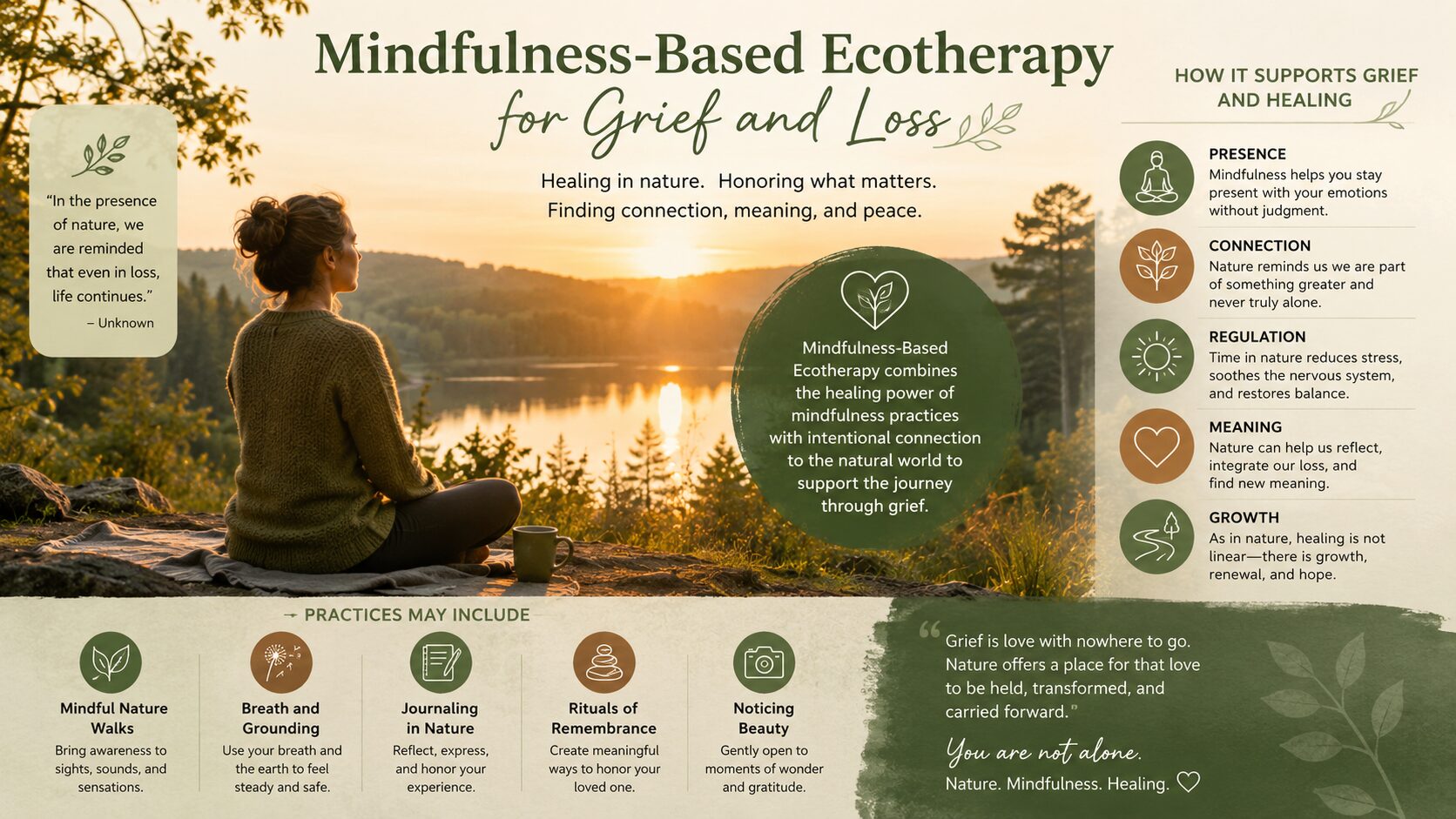
Grief is one of the most profound human experiences. It is a natural response to loss, yet it can feel overwhelming, isolating, and sometimes impossible to navigate. Whether grieving the death of a loved one, the end of a significant relationship, or a major life transition, the emotional and physical toll can be immense. Traditional therapy offers valuable tools, but incorporating nature into the healing process through mindfulness-based ecotherapy can provide a unique, restorative pathway. At the Mindful Ecotherapy Center, we recognize the profound ways that combining mindfulness with connection to the natural world can help people process grief, find emotional balance, and discover meaning in loss.

Understanding Mindfulness-Based Ecotherapy

Mindfulness-based ecotherapy (MBE) is a therapeutic approach that integrates the principles of mindfulness with direct engagement in natural environments. Mindfulness encourages nonjudgmental awareness of the present moment, helping people acknowledge and process emotions without becoming overwhelmed. Ecotherapy emphasizes the restorative benefits of interacting with nature, like the calming presence of trees, the sound of flowing water, and the tactile experience of soil, leaves, and plants. When combined, MBE creates a holistic approach that nurtures both mind and body, supporting people as they work through grief and loss.

How Nature Supports the Grieving Process

Nature has an innate capacity to soothe and restore. Scientific studies consistently show that spending time in green spaces can reduce stress, lower blood pressure, and improve mood. For those experiencing grief, natural environments offer a safe and nurturing backdrop for emotional processing. The cycles of nature — growth, decay, and renewal — mirror the human experience of grief, providing symbolic reinforcement that life continues even after loss. Observing a sapling emerge from the soil, watching leaves change with the seasons, or simply listening to birdsong can remind us that healing is a gradual process, and that it is natural to experience both sorrow and hope simultaneously.

Mindfulness Techniques for Grief

Mindfulness provides practical tools for navigating the intensity of grief. Through mindful practices, people can learn to observe their emotions without being consumed by them. For example:

  1. Breath Awareness – Focusing on the breath can help anchor the mind during moments of intense sadness or anxiety. A simple exercise involves inhaling deeply for four counts, holding for four, exhaling for four, and pausing for four, repeating several cycles while observing any accompanying emotions.
  2. Body Scan – A body scan brings attention to physical sensations, which can be heightened during grief. By gently noting tension, pain, or heaviness in different body areas, people develop awareness of how grief manifests physically and can practice releasing stress.
  3. Nature Observation – Engaging the senses in nature encourages mindful attention. Notice the colors of leaves, the texture of bark, the movement of water, or the sounds of birds. This sensory focus can provide relief from ruminative thoughts and allow grief to surface in a manageable way.
  4. Mindful Journaling – Reflecting on emotions while immersed in nature supports self-expression and insight. Writing about memories, feelings, and observations can foster understanding, acceptance, and emotional release.

Integrating Ecotherapy Practices

Mindfulness-based ecotherapy extends beyond sitting in a park or forest. It can include structured activities that connect grief work with environmental engagement:

  • Tree Planting Rituals – Planting a tree in memory of a loved one embodies the principles of both mindfulness and ecotherapy. The act of nurturing a living being serves as a metaphor for honoring life and cultivating growth amidst loss.
  • Forest Bathing (Shinrin-Yoku) – Walking slowly through a forest with mindful attention to the environment encourages deep relaxation, reflection, and emotional regulation. Forest bathing allows people to feel enveloped by the rhythm of the natural world, promoting a sense of peace and connection.
  • Gardening and Soil Work – Tending to plants and working with soil engages the senses and fosters a sense of accomplishment. This hands-on practice reinforces the idea that life persists and can be nurtured even after profound loss.
  • Water-Based Meditation – Sitting by a stream, river, or lake while practicing mindful breathing can provide soothing auditory and visual stimuli that help release emotional tension and invite introspection.

Creating a Mindful Grief Practice

For those seeking to integrate mindfulness-based ecotherapy into their grieving process, consistency is key. Establishing a regular schedule for nature walks, meditation sessions, or ecotherapy activities helps reinforce the mind-body connection and provides predictable opportunities for emotional processing. It can also be helpful to create intentional rituals, such as visiting a meaningful natural site on anniversaries, practicing mindful reflection at sunrise or sunset, or combining journaling with outdoor experiences.

Equally important is self-compassion. Grief is not linear, and some days will be harder than others. Mindfulness encourages acknowledgment of all feelings without judgment, fostering resilience and patience during the healing process.

The Benefits of Mindfulness-Based Ecotherapy for Grief

Research and clinical experience suggest that MBE offers numerous benefits for those experiencing grief:

  • Reduces symptoms of depression, anxiety, and stress.
  • Enhances emotional regulation and resilience.
  • Provides a sense of grounding, calm, and safety.
  • Fosters connection to the larger natural world, promoting meaning and perspective.
  • Encourages reflective and symbolic engagement with loss.
  • Offers opportunities for ritual, remembrance, and legacy-building.

By merging mindfulness with ecotherapy, people are not only addressing grief cognitively or emotionally but also physically, spiritually, and environmentally. This holistic approach acknowledges the interconnectedness of mind, body, and ecosystem, providing a richer, more restorative pathway through loss.

Conclusion

Grief is an inevitable part of the human experience, yet it need not be endured alone or without support. Mindfulness-based ecotherapy provides a compassionate, evidence-informed approach that nurtures healing while connecting people to the grounding, restorative qualities of nature. Whether through tree planting, forest walks, sensory observation, or mindful journaling, these practices invite reflection, presence, and renewal. In honoring our grief through mindful engagement with the natural world, we allow space for both sorrow and hope, embracing the ongoing cycle of life and finding solace in the continuity of existence.

By cultivating awareness, embracing nature, and practicing self-compassion, mindfulness-based ecotherapy transforms grief from a purely painful experience into an opportunity for healing, connection, and remembrance. Through these practices, the loss of a loved one can become a catalyst for deeper awareness, emotional resilience, and profound ecological and spiritual connection.


The Mindful Ecotherapy Center on YouTube

Subscribe to the Mindful Ecotherapy Center’s YouTube channel to bring peace, presence, and healing into your daily life. Our videos guide you through mindfulness-based ecotherapy practices, including forest bathing, tree planting rituals, nature meditations, and reflective exercises for grief, stress, and emotional well-being. Whether you’re seeking to reconnect with the natural world, cultivate inner calm, or find restorative tools for personal growth, our content offers practical guidance, inspiration, and community support. Join us to explore the transformative power of nature and mindfulness, and start your journey toward balance, resilience, and deeper connection today!


Share Your Thoughts!

What do you think? Share your thoughts in the comments below!


  And don’t forget to subscribe to our newsletter!