
Posted on Leave a comment

Trauma vs Normal Stress: Are We Expanding PTSD Too Far?

trauma vs normal stress

How do we tell the difference between trauma vs normal stress? Conversations about trauma have become increasingly common in modern society. Terms like “triggered,” “traumatized,” and “PTSD” now appear frequently in social media discussions, news stories, workplaces, and everyday conversations. Greater awareness of mental health has undoubtedly helped many people recognize and seek treatment for genuine psychological suffering. However, some clinicians and researchers have raised an important question: Are we beginning to blur the distinction between serious trauma and ordinary life stress?

Understanding the difference between trauma vs normal stress is essential. While both can be emotionally painful, they are not necessarily the same thing, and recognizing the distinction can help people better understand their experiences and seek appropriate support.

Understanding What Trauma Actually Means

Trauma is more than simply experiencing something unpleasant, upsetting, or stressful. In clinical psychology, trauma generally refers to exposure to actual or threatened death, serious injury, sexual violence, or other events that overwhelm a person’s ability to cope.

Examples of potentially traumatic experiences may include:

  • Military combat
  • Serious accidents
  • Physical or sexual assault
  • Natural disasters
  • Terrorist attacks
  • Witnessing severe injury or death

Not everyone who experiences trauma develops post-traumatic stress disorder (PTSD). However, PTSD involves specific symptoms that persist long after the event and significantly interfere with daily functioning.

These symptoms may include:

  • Intrusive memories or flashbacks
  • Nightmares
  • Hypervigilance
  • Emotional numbing
  • Avoidance of trauma reminders
  • Intense physiological reactions to triggers

PTSD is a serious mental health condition that deserves accurate recognition and treatment.

The Rise of Trauma Language

As public awareness of mental health has increased, trauma-related language has expanded as well. Today, people may describe a difficult breakup, a harsh criticism, an uncomfortable conversation, or a stressful workplace situation as “traumatizing.”

While these experiences can certainly be painful, not every difficult event meets the clinical definition of trauma.

This does not mean people’s suffering is unimportant. Emotional pain is real regardless of whether it qualifies as trauma. However, when every unpleasant experience is labeled as trauma, it can become harder to distinguish between severe psychological injury and the normal challenges that are part of human life.

The discussion about trauma vs normal stress is about preserving meaningful distinctions that help people understand what they are experiencing.

Stress Is a Normal Part of Life

Stress is an unavoidable aspect of being human. Most people encounter stress through work responsibilities, financial pressures, relationship conflicts, parenting challenges, health concerns, and major life transitions.

Stress can feel overwhelming at times. It may cause anxiety, frustration, irritability, fatigue, and temporary emotional distress. Yet stress itself is not necessarily pathological.

In fact, moderate levels of stress often help people adapt, learn, and grow. Successfully navigating challenges can strengthen resilience, confidence, and coping skills.

When discussing trauma vs normal stress, it is important to recognize that emotional discomfort is not always evidence of psychological injury. Sometimes discomfort reflects the natural process of adapting to life’s inevitable difficulties.

Why the Distinction Matters

Some mental health professionals worry that overextending trauma terminology may have unintended consequences.

When ordinary stress is consistently framed as trauma, people may begin to view themselves as damaged rather than challenged. They may underestimate their capacity for resilience and recovery.

Additionally, expanding trauma definitions too broadly can risk minimizing the experiences of those who have endured severe traumatic events. Someone coping with workplace criticism faces a very different psychological reality than someone recovering from combat, assault, or catastrophic loss.

Maintaining clear distinctions does not invalidate anyone’s struggles. Rather, it allows for more accurate understanding and more appropriate interventions.

Trauma and Stress Exist on a Spectrum

Although distinctions matter, reality is rarely black and white. Human experiences exist along a continuum.

Some events may not meet strict PTSD criteria yet still leave lasting emotional wounds. Chronic bullying, emotional abuse, neglect, discrimination, or prolonged exposure to adversity can have profound psychological effects.

This is why discussions of trauma vs normal stress should avoid oversimplification. The goal is not to create rigid categories but to understand the varying degrees of impact that different experiences can have on people.

Every person’s history, temperament, support system, and coping resources influence how stressful events are experienced and processed.

How Mindfulness-Based Ecotherapy Can Help

Whether someone is dealing with trauma or ordinary life stress, Mindfulness-Based Ecotherapy offers practical tools for healing and resilience.

Mindfulness encourages awareness of thoughts, emotions, and bodily sensations without judgment. Rather than becoming overwhelmed by difficult experiences, people learn to observe them with greater clarity and compassion.

Nature-based practices can be especially helpful for regulating stress responses. Spending time in natural settings has been associated with reduced stress, improved mood, enhanced emotional regulation, and greater feelings of connection.

Mindfulness-Based Ecotherapy may include:

  • Mindful nature walks
  • Forest bathing
  • Outdoor meditation
  • Nature journaling
  • Gardening activities
  • Reflective experiences in natural environments

These practices can help people reconnect with their inner resources while fostering a deeper sense of calm and balance.

Building Resilience Without Pathologizing Life

One of the challenges of modern mental health conversations is finding the balance between validating suffering and over-pathologizing normal human experiences.

People deserve compassion when they struggle. Difficult emotions are real and worthy of attention. At the same time, not every painful experience represents trauma, and not every stressful event requires a psychiatric label.

By understanding the difference between trauma vs normal stress, people can develop a more balanced perspective on emotional well-being. They can recognize when professional support may be needed while also cultivating confidence in their ability to navigate life’s inevitable challenges.

Mindfulness-Based Ecotherapy encourages this balanced approach. It honors genuine suffering while helping people reconnect with resilience, self-awareness, and the healing power of the natural world.

To learn more about Mindfulness-Based Ecotherapy, visit the Mindful Ecotherapy Center at https://mindfulecotherapycenter.com


The Mindful Ecotherapy Center on YouTube

Subscribe to the Mindful Ecotherapy Center’s YouTube channel to bring peace, presence, and healing into your daily life. Our videos guide you through mindfulness-based ecotherapy practices, including forest bathing, tree planting rituals, nature meditations, and reflective exercises for grief, stress, and emotional well-being. Whether you’re seeking to reconnect with the natural world, cultivate inner calm, or find restorative tools for personal growth, our content offers practical guidance, inspiration, and community support. Join us to explore the transformative power of nature and mindfulness, and start your journey toward balance, resilience, and deeper connection today!


Share Your Thoughts!

What do you think? Share your thoughts in the comments below! And don’t forget to subscribe to our newsletter!


Posted on Leave a comment

Clinical Depression: Where is the Line?

clinical depression

Feeling sad is part of being human. Everyone experiences disappointment, grief, loneliness, frustration, and emotional pain at different points in life. Sadness often arises in response to difficult events such as the loss of a loved one, the end of a relationship, financial hardship, health challenges, or major life transitions. While sadness can be uncomfortable, it is also a normal and healthy emotional response that helps people process life’s challenges. However, there are times when sadness goes beyond a temporary emotional state and becomes something more serious. Understanding the difference between normal sadness and clinical depression is an important step toward recognizing when support may be needed.

Understanding Normal Sadness

Sadness is a natural emotional response to loss, disappointment, or adversity. It typically has a recognizable cause and tends to fluctuate over time. Even when people are sad, they can usually still experience moments of pleasure, connection, or hope. They may enjoy spending time with friends, find comfort in nature, laugh at a joke, or look forward to future events despite feeling emotionally burdened.

Normal sadness often lessens as circumstances improve or as people gradually adapt to difficult situations. While the emotional pain may feel intense at times, it does not usually interfere significantly with daily functioning over an extended period.

In many cases, sadness serves a valuable purpose. It encourages reflection, helps people process important experiences, and can deepen empathy and understanding. Rather than something that must always be eliminated, sadness is often an essential part of emotional growth and healing.

What Makes Clinical Depression Different?

Clinical depression involves more than simply feeling sad. It is a mental health condition characterized by persistent emotional, cognitive, and physical symptoms that significantly affect a person’s daily life.

People experiencing clinical depression may feel sad, empty, hopeless, numb, or emotionally disconnected for much of the day, nearly every day, for at least two weeks or longer. Unlike ordinary sadness, these feelings often persist even when circumstances improve or when positive events occur.

Common symptoms of clinical depression may include:

  • Persistent sadness or low mood
  • Loss of interest in activities once enjoyed
  • Fatigue or low energy
  • Changes in sleep patterns
  • Changes in appetite or weight
  • Difficulty concentrating
  • Feelings of worthlessness or excessive guilt
  • Restlessness or slowed movement
  • Thoughts of death or suicide

Not everyone experiences depression in the same way. Some people feel overwhelming sadness, while others report feeling emotionally numb or disconnected from life altogether.

The Role of Functioning

One of the most important distinctions between normal sadness and clinical depression is the impact on daily functioning.

A person experiencing normal sadness may still be able to work, maintain relationships, complete household responsibilities, and engage in meaningful activities, even if doing so feels more difficult than usual.

In contrast, clinical depression often interferes significantly with everyday life. Tasks that once seemed routine may become overwhelming. Getting out of bed, maintaining personal hygiene, focusing at work, or interacting with loved ones may require tremendous effort.

When emotional symptoms consistently impair a person’s ability to function across multiple areas of life, it may indicate that professional evaluation is warranted.

Grief and Clinical Depression

Grief can sometimes resemble depression because both involve sadness, crying, sleep disturbances, and emotional pain. However, grief and clinical depression are not necessarily the same thing.

overmedicalized clinical depression

During grief, emotions often come in waves. A grieving person may experience intense sorrow one moment and moments of warmth, gratitude, or connection the next. Their thoughts are often focused on the specific loss they have experienced.

With clinical depression, the emotional suffering tends to be more pervasive and generalized. Feelings of hopelessness, worthlessness, and self-criticism are often more prominent. The person may struggle to experience positive emotions even briefly.

That said, grief and depression can occur together, and prolonged or complicated grief may sometimes develop into a depressive disorder.

How Mindfulness-Based Ecotherapy Can Help

Whether someone is experiencing normal sadness or clinical depression, Mindfulness-Based Ecotherapy offers valuable tools for emotional healing and resilience.

Mindfulness encourages people to observe their thoughts and emotions without judgment. Instead of fighting sadness or becoming overwhelmed by it, people learn to acknowledge their emotional experiences with curiosity and compassion.

Nature-based practices can also provide powerful support. Research suggests that spending time in natural environments may help reduce stress, improve mood, and promote emotional well-being. Activities such as mindful walking, nature meditation, gardening, forest bathing, and outdoor reflection can help people reconnect with themselves and the world around them.

For those struggling with clinical depression, Mindfulness-Based Ecotherapy should not replace appropriate medical or psychological treatment when needed. However, it can serve as a valuable complementary approach to support recovery and nurture greater emotional balance.

When to Seek Professional Help

It may be time to seek professional support if:

  • Symptoms persist for more than two weeks
  • Daily functioning is significantly impaired
  • Feelings of hopelessness are increasing
  • Sleep or appetite changes are severe
  • Social withdrawal becomes pronounced
  • Thoughts of self-harm or suicide occur

Seeking help is not a sign of weakness. It is a proactive step toward healing and well-being.

Finding Compassion for Human Emotions

In a culture that often prioritizes constant happiness, it can be tempting to view every experience of sadness as a problem to be fixed. Yet sadness is a normal part of life and an important aspect of being human. At the same time, it is equally important to recognize when emotional suffering has crossed the line into clinical depression and requires additional support.

The goal is not to eliminate sadness but to develop a healthy relationship with all emotions. Through mindfulness, connection with nature, supportive relationships, and professional care when needed, people can navigate emotional challenges with greater resilience, self-awareness, and hope.

To learn more about Mindfulness-Based Ecotherapy, visit the Mindful Ecotherapy Center at https://mindfulecotherapycenter.com


The Mindful Ecotherapy Center on YouTube

Subscribe to the Mindful Ecotherapy Center’s YouTube channel to bring peace, presence, and healing into your daily life. Our videos guide you through mindfulness-based ecotherapy practices, including forest bathing, tree planting rituals, nature meditations, and reflective exercises for grief, stress, and emotional well-being. Whether you’re seeking to reconnect with the natural world, cultivate inner calm, or find restorative tools for personal growth, our content offers practical guidance, inspiration, and community support. Join us to explore the transformative power of nature and mindfulness, and start your journey toward balance, resilience, and deeper connection today!


Share Your Thoughts!

What do you think? Share your thoughts in the comments below! And don’t forget to subscribe to our newsletter!
Posted on

Are We Overpathologizing Everyday Human Emotion in Modern Society?

overpathologizing

In recent years, conversations about mental health have become more common and more accepted than ever before. This shift has brought many positive changes, including reduced stigma, increased access to treatment, and greater awareness of emotional well-being. Yet alongside these advances, some clinicians, researchers, and mental health advocates have begun to ask an important question: Are we overpathologizing everyday human emotions?

The concept of overpathologizing refers to the tendency to interpret normal emotional experiences as signs of mental illness. While recognizing and treating genuine mental health conditions remains critically important, there is growing concern that ordinary reactions to life’s challenges are increasingly being viewed through a clinical lens. At the Mindful Ecotherapy Center, we believe it is worth examining this issue carefully and compassionately.

Understanding Overpathologizing in Modern Culture

The term overpathologizing describes a process in which normal human thoughts, feelings, and behaviors are labeled as symptoms of psychological disorders. Human beings naturally experience sadness, anxiety, grief, loneliness, anger, disappointment, and uncertainty. These emotions are not necessarily signs that something is wrong. In many cases, they are healthy responses to difficult circumstances.

For example, losing a loved one often brings intense grief. Losing a job may create anxiety and uncertainty. Experiencing rejection can trigger sadness or self-doubt. These reactions are part of the human condition and often serve important psychological functions.

However, in a culture increasingly focused on diagnosis and symptom identification, it can be tempting to view every uncomfortable feeling as evidence of a disorder requiring treatment.

The Rise of Mental Health Awareness and Overpathologizing

Greater mental health awareness has undoubtedly benefited millions of people. Conditions such as depression, anxiety disorders, post-traumatic stress disorder, and substance use disorders are now more widely recognized and treated than in previous generations.

At the same time, increased awareness can sometimes contribute to overpathologizing when educational messages are oversimplified. Social media platforms, self-help influencers, and online mental health content frequently encourage people to self-identify symptoms within themselves. While this can promote self-awareness, it can also blur the distinction between normal emotional experiences and clinical conditions.

Not every period of sadness is depression. Not every worry is an anxiety disorder. Not every disagreement indicates trauma or toxicity. Human emotions exist on a spectrum, and context matters. To ignore the context runs the risk of trivializing those who actually suffer from disorders.

Why Emotional Discomfort Is Not Always a Problem

One consequence of overpathologizing is the assumption that emotional discomfort should be eliminated as quickly as possible. Yet emotional pain often carries valuable information.

Grief reflects love and attachment. Anxiety can signal uncertainty or potential danger. Guilt may encourage accountability and personal growth. Sadness can prompt reflection and healing.

When people begin viewing every uncomfortable feeling as pathological, they may become less willing to tolerate the natural ups and downs of life. This can create a cycle in which normal emotions feel increasingly threatening, leading people to believe they are unwell simply because they are experiencing ordinary human struggles.

Mindfulness-Based Ecotherapy teaches that emotions are not inherently good or bad. Instead, emotions are experiences to be observed, understood, and accepted with curiosity and compassion.

How Overpathologizing Can Affect Personal Growth

Another concern surrounding overpathologizing is that it may unintentionally undermine resilience.

Throughout history, people have developed coping skills by navigating challenges, learning from adversity, and adapting to changing circumstances. While severe psychological distress certainly warrants professional support, many life challenges also offer growth opportunities.

When every difficult emotion is viewed as a symptom, people may become more likely to see themselves as broken rather than as people navigating normal life experiences. In extreme cases, this can lead to what psychotherapists call “learned helplessness.” It becomes a way of avoiding challenges instead of learning to deal with them.

Mindfulness practices encourage a different perspective. Instead of asking, “How do I get rid of this feeling?” mindfulness invites us to ask, “What is this feeling trying to teach me?”

This shift in perspective can lead to greater emotional flexibility, self-awareness, and resilience.

Overpathologizing and the Loss of Connection to Nature

One factor often overlooked in discussions about emotional well-being is our relationship with the natural world. Human beings evolved in close connection with nature, yet many people now spend most of their time indoors, disconnected from natural environments.

As a result, experiences that may once have been processed through community, physical activity, and connection to nature are increasingly interpreted solely through medical or psychological frameworks.

Mindfulness-Based Ecotherapy suggests that some emotional struggles may be eased not only through clinical intervention but also through reconnecting with nature. Time spent outdoors can promote perspective, reduce stress, support emotional regulation, and remind us that change, growth, loss, and renewal are natural parts of life.

Nature does not judge human emotions. It simply provides a space where emotions can be experienced without immediate pressure to diagnose or eliminate them.

Finding Balance Without Overpathologizing

Acknowledging the risks of overpathologizing does not mean dismissing legitimate mental health concerns. Mental illness is real, and professional treatment can be life-changing or even life-saving for many.

The challenge is finding balance.

A healthy approach recognizes that some emotional experiences require clinical attention, while others represent normal responses to life’s challenges. Rather than assuming every difficult feeling is a disorder, we can learn to approach our emotions with curiosity, patience, and self-compassion.

Mindfulness-Based Ecotherapy offers a framework for this balanced perspective. Through mindfulness, nature connection, and reflective practices, people can learn to distinguish between ordinary emotional experiences and symptoms that may require additional support.

Human beings are not meant to feel happy all the time. We are meant to experience the full range of emotions that accompany a meaningful life. Sadness, grief, anxiety, joy, hope, frustration, and love are all part of the human journey. Like the weather, they are part of the human condition. Rainy days are just as natural as sunny days.

As mental health awareness continues to grow throughout the world, it is important to remember that emotional discomfort is not always a sign of pathology. Sometimes it is simply evidence that we are human.

For more information about Mindfulness-Based Ecotherapy and emotional well-being, visit the Mindful Ecotherapy Center at https://www.mindfulecotherapycenter.com.


The Mindful Ecotherapy Center on YouTube

Subscribe to the Mindful Ecotherapy Center’s YouTube channel to bring peace, presence, and healing into your daily life. Our videos guide you through mindfulness-based ecotherapy practices, including forest bathing, tree planting rituals, nature meditations, and reflective exercises for grief, stress, and emotional well-being. Whether you’re seeking to reconnect with the natural world, cultivate inner calm, or find restorative tools for personal growth, our content offers practical guidance, inspiration, and community support. Join us to explore the transformative power of nature and mindfulness, and start your journey toward balance, resilience, and deeper connection today!


Share Your Thoughts!

What do you think? Share your thoughts in the comments below! And don’t forget to subscribe to our newsletter!
Posted on

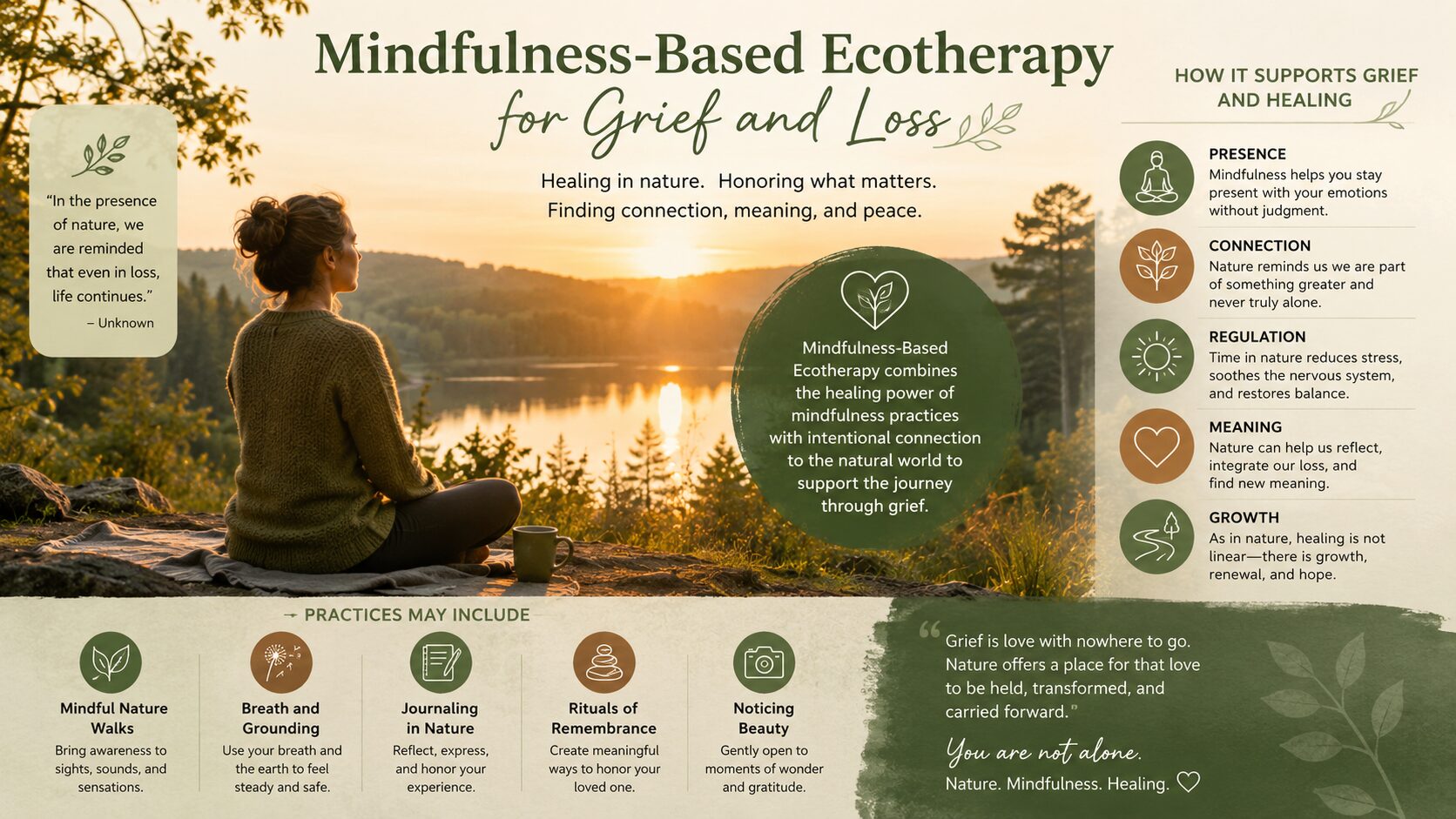
Mindfulness-Based Ecotherapy for Grief and Loss

grief and loss

Grief is one of the most profound human experiences. It is a natural response to loss, yet it can feel overwhelming, isolating, and sometimes impossible to navigate. Whether grieving the death of a loved one, the end of a significant relationship, or a major life transition, the emotional and physical toll can be immense. Traditional therapy offers valuable tools, but incorporating nature into the healing process through mindfulness-based ecotherapy can provide a unique, restorative pathway. At the Mindful Ecotherapy Center, we recognize the profound ways that combining mindfulness with connection to the natural world can help people process grief, find emotional balance, and discover meaning in loss.

Understanding Mindfulness-Based Ecotherapy

Mindfulness-based ecotherapy (MBE) is a therapeutic approach that integrates the principles of mindfulness with direct engagement in natural environments. Mindfulness encourages nonjudgmental awareness of the present moment, helping people acknowledge and process emotions without becoming overwhelmed. Ecotherapy emphasizes the restorative benefits of interacting with nature, like the calming presence of trees, the sound of flowing water, and the tactile experience of soil, leaves, and plants. When combined, MBE creates a holistic approach that nurtures both mind and body, supporting people as they work through grief and loss.

How Nature Supports the Grieving Process

Nature has an innate capacity to soothe and restore. Scientific studies consistently show that spending time in green spaces can reduce stress, lower blood pressure, and improve mood. For those experiencing grief, natural environments offer a safe and nurturing backdrop for emotional processing. The cycles of nature — growth, decay, and renewal — mirror the human experience of grief, providing symbolic reinforcement that life continues even after loss. Observing a sapling emerge from the soil, watching leaves change with the seasons, or simply listening to birdsong can remind us that healing is a gradual process, and that it is natural to experience both sorrow and hope simultaneously.

Mindfulness Techniques for Grief

Mindfulness provides practical tools for navigating the intensity of grief. Through mindful practices, people can learn to observe their emotions without being consumed by them. For example:

  1. Breath Awareness – Focusing on the breath can help anchor the mind during moments of intense sadness or anxiety. A simple exercise involves inhaling deeply for four counts, holding for four, exhaling for four, and pausing for four, repeating several cycles while observing any accompanying emotions.
  2. Body Scan – A body scan brings attention to physical sensations, which can be heightened during grief. By gently noting tension, pain, or heaviness in different body areas, people develop awareness of how grief manifests physically and can practice releasing stress.
  3. Nature Observation – Engaging the senses in nature encourages mindful attention. Notice the colors of leaves, the texture of bark, the movement of water, or the sounds of birds. This sensory focus can provide relief from ruminative thoughts and allow grief to surface in a manageable way.
  4. Mindful Journaling – Reflecting on emotions while immersed in nature supports self-expression and insight. Writing about memories, feelings, and observations can foster understanding, acceptance, and emotional release.

Integrating Ecotherapy Practices

Mindfulness-based ecotherapy extends beyond sitting in a park or forest. It can include structured activities that connect grief work with environmental engagement:

  • Tree Planting Rituals – Planting a tree in memory of a loved one embodies the principles of both mindfulness and ecotherapy. The act of nurturing a living being serves as a metaphor for honoring life and cultivating growth amidst loss.
  • Forest Bathing (Shinrin-Yoku) – Walking slowly through a forest with mindful attention to the environment encourages deep relaxation, reflection, and emotional regulation. Forest bathing allows people to feel enveloped by the rhythm of the natural world, promoting a sense of peace and connection.
  • Gardening and Soil Work – Tending to plants and working with soil engages the senses and fosters a sense of accomplishment. This hands-on practice reinforces the idea that life persists and can be nurtured even after profound loss.
  • Water-Based Meditation – Sitting by a stream, river, or lake while practicing mindful breathing can provide soothing auditory and visual stimuli that help release emotional tension and invite introspection.

Creating a Mindful Grief Practice

For those seeking to integrate mindfulness-based ecotherapy into their grieving process, consistency is key. Establishing a regular schedule for nature walks, meditation sessions, or ecotherapy activities helps reinforce the mind-body connection and provides predictable opportunities for emotional processing. It can also be helpful to create intentional rituals, such as visiting a meaningful natural site on anniversaries, practicing mindful reflection at sunrise or sunset, or combining journaling with outdoor experiences.

Equally important is self-compassion. Grief is not linear, and some days will be harder than others. Mindfulness encourages acknowledgment of all feelings without judgment, fostering resilience and patience during the healing process.

The Benefits of Mindfulness-Based Ecotherapy for Grief

Research and clinical experience suggest that MBE offers numerous benefits for those experiencing grief:

  • Reduces symptoms of depression, anxiety, and stress.
  • Enhances emotional regulation and resilience.
  • Provides a sense of grounding, calm, and safety.
  • Fosters connection to the larger natural world, promoting meaning and perspective.
  • Encourages reflective and symbolic engagement with loss.
  • Offers opportunities for ritual, remembrance, and legacy-building.

By merging mindfulness with ecotherapy, people are not only addressing grief cognitively or emotionally but also physically, spiritually, and environmentally. This holistic approach acknowledges the interconnectedness of mind, body, and ecosystem, providing a richer, more restorative pathway through loss.

Conclusion

Grief is an inevitable part of the human experience, yet it need not be endured alone or without support. Mindfulness-based ecotherapy provides a compassionate, evidence-informed approach that nurtures healing while connecting people to the grounding, restorative qualities of nature. Whether through tree planting, forest walks, sensory observation, or mindful journaling, these practices invite reflection, presence, and renewal. In honoring our grief through mindful engagement with the natural world, we allow space for both sorrow and hope, embracing the ongoing cycle of life and finding solace in the continuity of existence.

By cultivating awareness, embracing nature, and practicing self-compassion, mindfulness-based ecotherapy transforms grief from a purely painful experience into an opportunity for healing, connection, and remembrance. Through these practices, the loss of a loved one can become a catalyst for deeper awareness, emotional resilience, and profound ecological and spiritual connection.


The Mindful Ecotherapy Center on YouTube

Subscribe to the Mindful Ecotherapy Center’s YouTube channel to bring peace, presence, and healing into your daily life. Our videos guide you through mindfulness-based ecotherapy practices, including forest bathing, tree planting rituals, nature meditations, and reflective exercises for grief, stress, and emotional well-being. Whether you’re seeking to reconnect with the natural world, cultivate inner calm, or find restorative tools for personal growth, our content offers practical guidance, inspiration, and community support. Join us to explore the transformative power of nature and mindfulness, and start your journey toward balance, resilience, and deeper connection today!


Share Your Thoughts!

What do you think? Share your thoughts in the comments below!


  And don’t forget to subscribe to our newsletter!

Posted on

Guidelines for Gender-Affirming Care for Minors

gender-affirming care

The Importance of Gender-Affirming Care for Minors: Empowering Authenticity

Gender-affirming care for minors is about fostering a sense of safety and belonging for those navigating questions of identity in a world that can sometimes feel unwelcoming. While much attention has been placed on the medical aspects of gender-affirming care, its impact reaches far beyond physical health. It’s a pathway to empowerment, self-discovery, and the development of a solid foundation of self-worth during formative years.

This blog explores the less-discussed dimensions of gender-affirming care for minors: the psychosocial impact, the importance of family and community support, and how accessible, compassionate care can nurture resilience.

Building Confidence in Identity

For minors grappling with gender incongruence, having their identity affirmed is a crucial step in building confidence. Gender-affirming care creates an environment where young people feel seen, heard, and validated. Beyond the practical interventions, this care encourages young individuals to embrace their true selves without fear of judgment.

This confidence lays the groundwork for healthy self-expression and social interaction. A young person who feels secure in their identity is better equipped to form meaningful relationships, pursue their aspirations, and develop coping strategies for life’s challenges.

The Role of Family and Community

Gender-affirming care doesn’t happen in isolation; it involves the active participation of families and communities. A supportive family environment is one of the strongest predictors of positive outcomes for gender-diverse youth. Parents and guardians who educate themselves about gender identity and affirm their child’s journey create a stable and loving foundation.

Communities also play a vital role. Schools, peer groups, and local organizations can provide affirming spaces where minors feel safe to express themselves. Educational initiatives within these spaces can help dismantle stigma, fostering understanding and inclusion.

Psychosocial Growth and Emotional Well-Being

The teenage years are pivotal for identity formation, and for gender-diverse youth, this process is often more complex. Gender-affirming care addresses not only the physical aspects of transition but also the emotional and psychological growth of the individual.

Counseling and mental health support are integral parts of the journey, offering a safe space for minors to navigate their emotions, fears, and aspirations. These therapeutic engagements help young people build resilience, develop self-awareness, and learn strategies to handle societal challenges with confidence and grace.

Affirmation as Preventative Care

Studies consistently show that access to gender-affirming care reduces risks of anxiety, depression, and suicide among transgender and gender-diverse youth. What’s often less discussed is that gender-affirming care acts as a form of preventative healthcare. By affirming a minor’s gender identity early and providing the necessary resources and support, healthcare providers and families can prevent the development of long-term mental health challenges stemming from rejection or suppression.

When minors feel supported in their gender identity, they are far less likely to internalize societal stigma, leading to better outcomes in education, social settings, and overall well-being.

Education and Advocacy: Paving the Way for the Future

Ensuring access to gender-affirming care for minors is a societal responsibility. Beyond individual families and healthcare providers, there is a need for broad educational and advocacy efforts to create an environment where this care is normalized and accessible.

This includes training healthcare providers to approach gender diversity with sensitivity, implementing inclusive policies in schools, and advocating for the protection of transgender rights at the legislative level. These collective efforts ensure that no young person has to face their journey alone or unsupported.

Guidelines for gender-affirming care for minors are designed to provide age-appropriate, individualized, and supportive care. Here are some key points based on established practices:

  1. Social Affirmation:
    • For younger children, gender-affirming care often begins with social affirmation. This includes using the child’s chosen name, and pronouns, and allowing them to express their gender identity through clothing and hairstyles.
    • Social affirmation is reversible and does not involve medical interventions.
  2. Puberty Blockers:
    • Puberty blockers may be prescribed for adolescents experiencing gender dysphoria. These medications temporarily pause puberty, giving the individual time to explore their gender identity without the added stress of irreversible physical changes.
    • This intervention is considered reversible, as puberty resumes once the medication is stopped.
  3. Hormone Therapy:
    • For older adolescents, hormone therapy (e.g., estrogen or testosterone) may be considered to align physical characteristics with gender identity.
    • This step is typically undertaken after thorough assessments and with informed consent from both the minor and their guardians.
  4. Mental Health Support:
    • Mental health care is a critical component of gender-affirming care. It involves counseling to address gender dysphoria, build resilience, and navigate societal challenges.
    • Mental health professionals also play a role in assessing readiness for medical interventions.
  5. Surgical Interventions:
    • Gender-affirming surgeries are generally not recommended for minors. These procedures are typically reserved for adults or older adolescents in exceptional cases, following extensive evaluation and consent.
  6. Multidisciplinary Approach:
    • Care is provided by a team of professionals, including endocrinologists, mental health providers, and primary care physicians, to ensure comprehensive support.
  7. Informed Consent:
    • Informed consent is a cornerstone of gender-affirming care. Minors and their guardians are educated about the benefits, risks, and implications of each intervention before proceeding.

Standards of Medical Practice

These guidelines emphasize a patient-centered approach, ensuring that care is tailored to the individual’s needs and developmental stage. For more detailed information, you can explore resources like the Endocrine Society’s guidelines or the American Medical Association’s overview.

Conclusion: A Journey of Empowerment and Hope

Gender-affirming care for minors is not just about aligning external characteristics with internal identity—it’s about empowering young people to live authentically and with dignity. It’s about offering them the tools and support to navigate a complex world with confidence and self-assurance.

By fostering affirming spaces, involving families and communities, and prioritizing mental and emotional well-being, gender-affirming care has the power to transform lives. As advocates, caregivers, and allies, we have a shared responsibility to ensure that every young person has the chance to embrace their true self and thrive.


Share Your Thoughts!

Please feel free to share your thoughts in the comments below!

Don’t forget to check out our YouTube channel for more information and content!


Schedule a Teletherapy Appointment with Charlton Hall, MMFT, PhD, LMFT

For those seeking personalized guidance in incorporating Mindfulness-Based Ecotherapy into their lives, Charlton Hall, MMFT, PhD, LMFT, offers professional teletherapy sessions. With extensive expertise in MBE, Dr. Hall provides tailored strategies to help individuals overcome insomnia and achieve restorative sleep.

How to Schedule an Appointment

  1. Visit the Mindful Ecotherapy Center Website to find more information about Dr. Hall’s approach to sleep wellness and mindfulness-based therapies.
  2. Book a Consultation – Easily schedule a teletherapy session that fits your availability.
  3. Receive Expert Guidance – Work one-on-one with Dr. Hall to develop a personalized sleep-improvement plan using MBE techniques.

By integrating Mindfulness-Based Ecotherapy into your daily routine, you can naturally enhance your sleep quality, reduce stress, and achieve long-term wellness.


Schedule an Appointment Today!

Ready to take the next step? Schedule a session with Charlton Hall today and start your journey to better sleep through the healing power of nature.


Share Your Thoughts!

What do you think? Share your thoughts in the comments below! And don’t forget to subscribe to our newsletter!

Posted on

Why Social Media is Impacting Your Mental Health and How MBE Can Help

social media instagram cell phone

Social media has revolutionized how we connect, communicate, and consume information. Platforms like Facebook, Instagram, TikTok, and Twitter provide instant access to news, entertainment, and personal updates. However, this constant connectivity comes with a cost: social media can significantly impact mental health. The good news is that Mindfulness-Based Ecotherapy (MBE) offers a holistic solution to counteract these effects, helping users regain balance and emotional well-being.

The Mental Health Effects of Social Media

1. Increased Anxiety and Depression

Scrolling through carefully curated feeds can lead to unrealistic comparisons. People often share only their best moments, creating a distorted perception of reality. This “highlight reel” phenomenon fosters feelings of inadequacy, low self-esteem, and, in many cases, anxiety or depression.

2. Addiction to Validation

Likes, comments, and shares activate the brain’s reward system, releasing dopamine and creating a cycle of dependency. Over time, this craving for validation can lead to compulsive behavior, negatively affecting self-worth when the desired engagement isn’t achieved.

3. Sleep Disruption

Endless scrolling, particularly before bedtime, interferes with sleep patterns. The blue light emitted by screens suppresses melatonin production, making it harder to fall asleep and stay asleep. Poor sleep quality further exacerbates mental health issues.

4. Fear of Missing Out (FOMO)

Constant exposure to others’ activities and achievements can trigger FOMO. This fear can lead to excessive social media use, reinforcing feelings of inadequacy and isolation.

5. Cyberbullying and Harassment

Online interactions are not always positive. Cyberbullying, negative comments, and online harassment can significantly impact self-esteem, leading to anxiety, depression, and even PTSD in severe cases.

Enter Mindfulness-Based Ecotherapy (MBE)

Mindfulness-Based Ecotherapy combines traditional mindfulness practices with the healing power of nature. This innovative approach is uniquely suited to address the mental health challenges exacerbated by social media.

How MBE Counteracts Social Media’s Negative Effects

1. Promotes Presence and Awareness

Mindfulness encourages individuals to focus on the present moment rather than being consumed by past regrets or future anxieties. Techniques such as mindful breathing or grounding exercises help reduce the compulsive urge to check social media and shift attention to more meaningful experiences.

2. Encourages a Healthy Dopamine Reset

Spending time in nature—a core component of MBE—stimulates the brain’s reward system in a healthier way. Activities like forest bathing, nature walks, or eco-art therapy naturally boost dopamine levels without the negative side effects of social media dependency.

3. Improves Sleep Hygiene

Engaging in outdoor activities as part of MBE enhances physical tiredness and helps regulate the circadian rhythm. Exposure to natural light during the day and a mindful bedtime routine can improve sleep quality, alleviating mental health issues linked to sleep deprivation.

4. Rebuilds Genuine Connections

Social media often fosters shallow interactions, but MBE emphasizes genuine human and environmental connections. Group mindfulness sessions or eco-therapy workshops encourage face-to-face interactions, fostering a sense of belonging and community.

5. Enhances Self-Acceptance

Through mindfulness practices, individuals learn to accept themselves without judgment. Instead of comparing their lives to others on social media, they can focus on their own journey, fostering self-compassion and resilience.

Practical Steps to Integrate MBE into Your Life

1. Digital Detox in Nature

Designate time to unplug from social media and immerse yourself in nature. Whether it’s a hike, a visit to a local park, or simply sitting in your backyard, the key is to be fully present in the moment.

2. Mindful Nature Walks

During a nature walk, pay attention to your surroundings. Observe the colors, textures, and sounds of nature. This practice helps ground your thoughts and reduces the anxiety often triggered by social media.

3. Eco-Art Therapy

Use natural materials like leaves, stones, or flowers to create art. This creative expression not only fosters mindfulness but also provides a tangible way to reconnect with the environment.

4. Gratitude Journaling

After spending time outdoors, write down three things you’re grateful for. This practice shifts focus from external validation to internal fulfillment, reducing the emotional reliance on social media.

5. Join an MBE Program

Many therapists now offer MBE sessions that combine mindfulness practices with nature-based activities. These programs provide structured support for integrating mindfulness into daily life.

social media detox go sailing in Canada

Conclusion

Social media is a double-edged sword: while it offers unparalleled connectivity, it also poses significant risks to mental health. By recognizing these challenges and adopting mindfulness-based ecotherapy, individuals can mitigate the negative effects of social media and cultivate a healthier, more balanced life.

Through mindful practices and time spent in nature, MBE empowers individuals to reclaim their mental well-being, fostering resilience, self-acceptance, and authentic connections. So, the next time you feel overwhelmed by social media, step outside, breathe deeply, and let nature guide you back to the present moment.


Share Your Thoughts on Social Media and Mental Health!

What do you think? Does social media damage our mental health? Share your thoughts in the comments below!

Don’t forget to check out our YouTube Channel!


Posted on

Setting Boundaries: 7 Key Phrases to Use

boundaries connecting

You may download the worksheet using the button below.

The way to deal with conflict in positive ways is to realize that you are not responsible for anyone’s feelings but your own. If you avoid conflict out of a fear of upsetting others, first ask yourself why you think they would be upset.

boundaries - how to set healthy ones

Worrying about the emotional reactions others might have in a given situation is usually a sign of poor boundaries with the other person. Either they routinely cross your boundaries, or you routinely cross theirs, and when this happens, the result is usually conflict. Conflict is the root of most emotional aggression. The way to solve this problem is to establish good boundaries in all of your relationships. A sign of poor boundaries is the belief that another can be responsible for your emotional well-being, or that you can be responsible for another’s emotional well-being.

Do You Have Poor Boundaries?

A good rule of thumb when establishing boundaries is to ask yourself, “Am I being asked to do something that I wouldn’t ask (the other person) to do?” If the answer is ‘yes,’ then there’s probably an issue of poor boundaries in the relationship. Here are some signs that you may have poor boundaries with others:

  • Conversations on emotional topics result in anxiety and discomfort
  • You avoid conflict until things build up, then you explode
  • You feel responsible for other people’s feelings
  • You’re afraid to say ‘no’
  • You feel guilty when you do say ‘no’
  • You rarely speak up for yourself because you fear it may lead to conflict
  • You sometimes feel disrespected if you do stand up for yourself
  • You feel that you’re constantly giving and never getting back
  • Others ask you to do things for them that you would never ask them to do for you

If you answered “yes” to more than half of the items above, then you probably have poor boundaries.

Why It’s Important

Why is it important to set boundaries? If we have poor boundaries, we begin to feel responsible for the emotional well-being of others. We may also expect others to be responsible for our emotional well-being. By learning to set healthy boundaries, we minimize frustration, guilt, and anxiety for both ourselves and others. Healthy boundaries keep others from manipulating us, and help us to avoid the temptation to manipulate others.

7 Key Boundary-Setting Phrases

Here are some statements that you may use in your relationship with others to help you practice setting good and healthy boundaries. Use these statements when you feel that one of your boundaries has been crossed, or is about to be crossed:

  • “I care about you, but I cannot be responsible for your problems.”
  • “I care about you, but right now I need time to be alone.”
  • “I will not be the object of your hostility.”
  • “Just because I disagree with you, that doesn’t mean I don’t still care about you.”
  • “I enjoy spending time with you, but today I have other plans.”
  • “I don’t allow others to make me feel guilty about myself.”
  • “Even though I disagree with you, I still respect your right to feel the way you feel.”

Core Issues and Compromise Issues

In any relationship, there are core issues, and there are issues that can be compromised upon. A core issue is one in which there can be no compromise. Refusing to accept physical or verbal abuse would be an example of a core issue. It would be ridiculous for an abuser to offer a compromise of, “I’ll only physically abuse you on Tuesdays.” Physical abuse is an issue that is not open to compromise. It is therefore a core issue. Other examples of core issues might include drug abuse, marital infidelity, and verbal or emotional abuse.

A compromise issue, on the other hand, is an issue that you are willing to compromise on. An example of a compromise issue might be the question of where to have lunch with a friend or family member. You might have a lunch preference, but the choice is something that you would be willing to compromise on to some extent.

The way to distinguish a core issue from a compromise issue is that in order to compromise on a core issue, you would have to give up who you are. In other words, you would have to change your core identity. You can set a healthy boundary by refusing to compromise on your core values and your core identity. In mindfulness, we call this core identity your True Self.

Healthy Boundaries

People who lack clear limits often feel used, disrespected, and walked on. It’s easier to establish firm limits at the start of a relationship and then relax them over time than it is to strengthen weak ones. If you catch yourself saying, “I’ll do this just this one time…,” it’s a sign you need to reinforce your personal limits.

You cannot force anyone else to take responsibility for your happiness, and you cannot take responsibility for someone else’s emotional well-being. By setting and maintaining healthy limits, you make life easier for both yourself and those around you.


Share Your Thoughts!

What do you think about setting healthy boundaries? Share your thoughts in the comments below! And don’t forget to subscribe to our newsletter!