Table of Contents
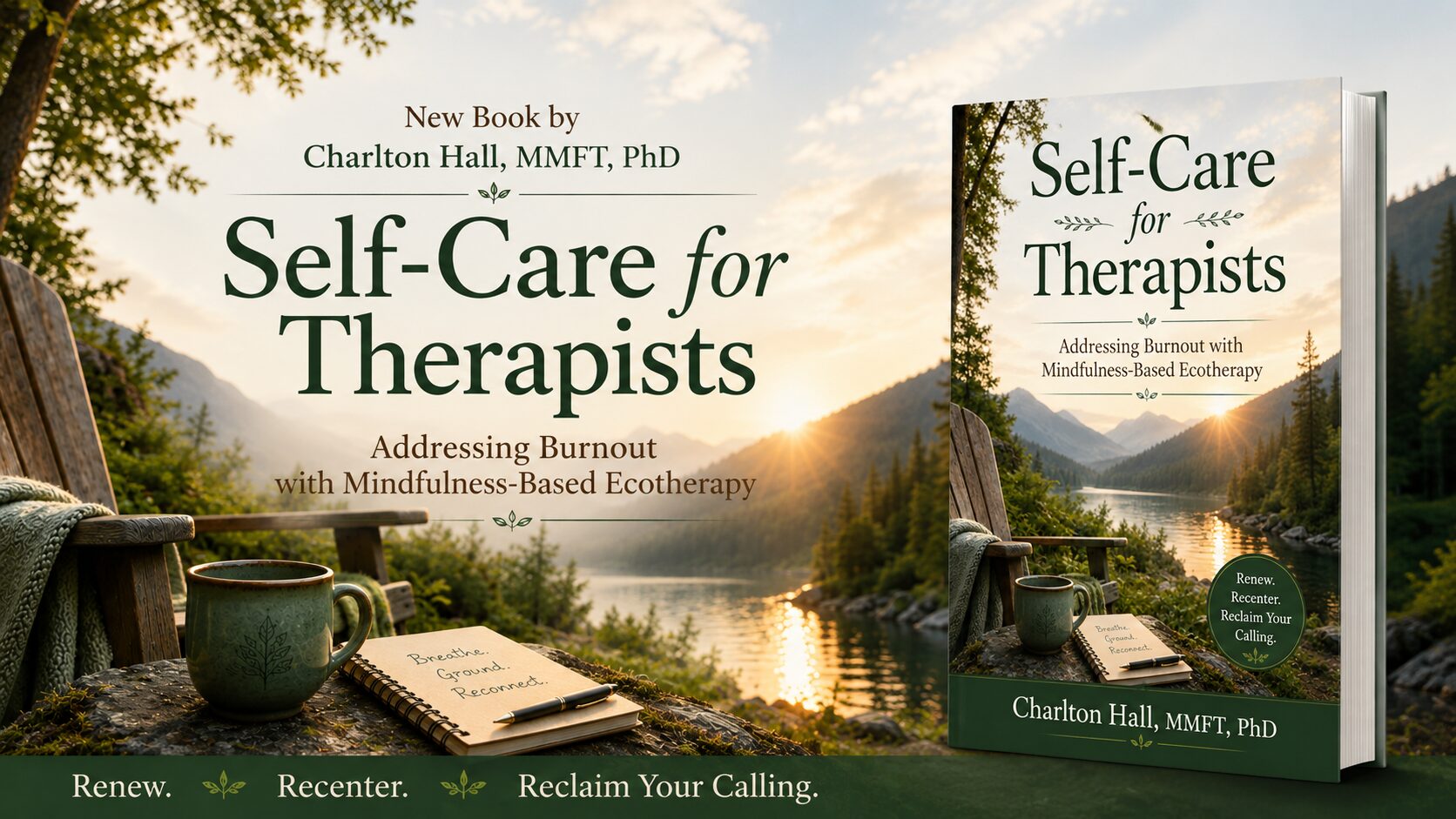
Therapists devote their professional lives to helping others navigate trauma, anxiety, depression, grief, relationship challenges, and life’s many transitions. Yet in the process of caring for others, many clinicians quietly neglect their own well-being. Compassion fatigue, emotional exhaustion, vicarious trauma, and professional burnout have become increasingly common across the mental health professions. Charlton Hall, MMFT, PhD’s newest book, Self-Care for Therapists: Addressing Burnout with Mindfulness-Based Ecotherapy, was written to help change that reality by providing therapists with practical, evidence-informed strategies for restoring balance, resilience, and professional fulfillment.
Rather than treating self-care as an occasional luxury, the book presents it as an ethical responsibility and an essential component of competent clinical practice. Drawing upon the principles of Mindfulness-Based Ecotherapy, Hall offers an integrative approach that combines mindfulness, psychology, systems thinking, and nature connection to help therapists recognize burnout early and respond with intentional, restorative care.
Why Addressing Burnout Matters
Burnout has become one of the greatest challenges facing today’s mental health professionals. Heavy caseloads, increasing documentation requirements, insurance pressures, secondary exposure to trauma, administrative demands, and the emotional weight of caring for clients can gradually deplete even the most dedicated clinician.
Burnout rarely develops overnight. It often begins with subtle warning signs such as emotional fatigue, irritability, difficulty concentrating, reduced empathy, sleep disturbances, or the growing feeling that one’s work has lost its sense of meaning. Because therapists are trained to prioritize the needs of others, many continue working through these early symptoms until exhaustion becomes overwhelming.
Self-Care for Therapists emphasizes that addressing burnout begins with awareness. Therapists cannot care for themselves if they fail to recognize that their own well-being has begun to deteriorate.
A Different Way of Understanding Self-Care
Many discussions of therapist self-care focus primarily on work-life balance, vacations, exercise, or stress management techniques. While each of these practices can be beneficial, Hall argues that sustainable self-care requires something deeper.
Mindfulness-Based Ecotherapy views therapists as whole people whose psychological health is influenced by their relationships with themselves, other people, and the natural world. Rather than encouraging clinicians simply to “push through” difficult periods, the book teaches readers how to cultivate mindful awareness, reconnect with their emotional needs, regulate their nervous systems, and rediscover the sense of purpose that first inspired them to enter the helping professions.
This broader perspective transforms self-care from a checklist of activities into an ongoing way of living.
What Readers Will Learn
Throughout the book, therapists are guided through practical exercises designed to increase self-awareness while building long-term resilience. Readers learn to identify early indicators of compassion fatigue, emotional exhaustion, and burnout before these patterns become entrenched.
The book introduces mindfulness practices that strengthen present-moment awareness while reducing habitual rumination and self-criticism. Nature-based exercises encourage therapists to experience forests, parks, gardens, rivers, and other natural settings as restorative environments that support emotional regulation and reflective practice.
Readers also examine professional boundaries, perfectionistic expectations, workload patterns, and internal beliefs that often contribute to chronic stress. Rather than offering quick fixes, the book helps therapists develop sustainable habits that support both personal well-being and clinical effectiveness.
The Role of Mindfulness-Based Ecotherapy
At the heart of the book is the understanding that mindfulness and nature complement one another in powerful ways. Hall describes mindfulness as the “what” and ecotherapy as the “how.” Mindfulness cultivates awareness without judgment, while nature provides the living environment in which that awareness can deepen through direct experience.
Whether sitting quietly beneath an old-growth tree, walking mindfully beside a flowing stream, observing changing seasons, or practicing ecological grounding in a neighborhood park, therapists discover practical ways to calm the nervous system and reconnect with the present moment.
Nature becomes more than a pleasant setting. It functions as an active therapeutic partner that reinforces many of the psychological processes associated with resilience, reflection, and healing.
Burnout Is Not a Personal Failure
One of the book’s central messages is that burnout should not be viewed as a sign of weakness or professional inadequacy. Therapists often enter the profession because they genuinely care about helping others, and that very compassion can make them vulnerable to overextending themselves while neglecting their own needs.
Hall encourages readers to approach burnout with the same compassion they routinely offer their clients. Instead of asking, “What’s wrong with me?” therapists learn to ask, “What conditions have contributed to my exhaustion, and what changes would support my healing?”
This shift from self-judgment to mindful curiosity opens the door to meaningful, lasting change.
Practical Tools for Everyday Clinical Life
The book includes numerous reflective exercises, mindfulness practices, self-assessment tools, and journaling prompts that readers can immediately integrate into their daily routines. Rather than requiring dramatic lifestyle changes, many of these practices can be completed in just a few minutes between sessions or incorporated into regular outdoor activities.
By focusing on small, consistent changes, therapists gradually build habits that strengthen resilience over time. This practical emphasis makes the book accessible to both experienced clinicians and graduate students preparing to enter the profession.
An Ethical Commitment to Self-Care
Professional ethical codes consistently recognize that therapist impairment can negatively affect client care. Maintaining personal wellness is therefore not simply a matter of individual preference but an important aspect of ethical clinical practice.
Self-Care for Therapists reframes self-care as a professional responsibility. Caring for oneself allows therapists to remain emotionally available, clinically effective, and personally fulfilled throughout long careers devoted to helping others. Addressing burnout ultimately benefits not only therapists themselves but also the clients, families, and communities they serve.
About Charlton Hall
Charlton Hall, MMFT, PhD, is the developer of Mindfulness-Based Ecotherapy and has spent decades integrating mindfulness, systems thinking, ecopsychology, and evidence-based psychotherapy into an innovative approach that emphasizes healing through connection with nature. His work has focused on helping therapists, counselors, and other helping professionals develop practical skills that foster resilience, self-awareness, and sustainable clinical practice.
Therapists are often taught how to care for others but receive far less guidance on caring for themselves. Self-Care for Therapists: Addressing Burnout with Mindfulness-Based Ecotherapy helps fill that gap by combining mindfulness, ecological awareness, reflective practice, and evidence-informed psychology into a practical guide for professional well-being.
In a profession where emotional demands continue to grow, addressing burnout is no longer optional. It is an essential investment in both personal health and ethical clinical care. Hall’s latest book offers therapists a thoughtful, compassionate roadmap for restoring balance, preventing burnout, and rediscovering the meaning that first called them to the helping professions.
References
Barnett, J. E., & Cooper, N. (2009). Creating a culture of self-care. Clinical Psychology: Science and Practice, 16(1), 16–20.
Norcross, J. C., & Phillips, C. M. (2023). Self-care for mental health professionals: A guide to maintaining wellness. Guilford Press.
Richardson, M., Hamlin, I., Butler, C. W., Thomas, R., & Hunt, A. (2022). Actively noticing nature and well-being: A systematic review. People and Nature, 4(2), 405–421.
The Mindful Ecotherapy Center on YouTube
Subscribe to the Mindful Ecotherapy Center’s YouTube channel to bring peace, presence, and healing into your daily life. Our videos guide you through mindfulness-based ecotherapy practices, including forest bathing, tree planting rituals, nature meditations, and reflective exercises for grief, stress, and emotional well-being.
Whether you’re seeking to reconnect with the natural world, cultivate inner calm, or find restorative tools for personal growth, our content offers practical guidance, inspiration, and community support. Join us to explore the transformative power of nature and mindfulness, and start your journey toward balance, resilience, and deeper connection today!
Share Your Thoughts!
What do you think? Share your thoughts in the comments below! And don’t forget to subscribe to our newsletter!