Posted on — Leave a comment

The Therapist Shortage in the United States

therapist shortage

The therapist shortage in the United States is becoming more visible each year, not because fewer people want to become therapists, but because the system they enter is increasingly difficult to sustain. From insurance barriers to chronic burnout, the pipeline is leaking at multiple stages, leaving communities with fewer available mental health professionals just as demand continues to rise.

Therapist shortage and the insurance system bottleneck

One of the most persistent drivers of the therapist shortage is the administrative burden created by insurance companies. Many therapists report spending hours each week on billing codes, prior authorizations, claim denials, and documentation requirements that have little to do with clinical care. I know that when I was doing my own insurance billing, I spent an average of two hours on the phone with insurance companies for every one hour of client contact. And this was trying to collect payment on claims for clients that the insurance companies had referred to me in the first place. This type of administrative burden reduces the number of clients therapists can realistically see and increases unpaid labor.

You also see many therapists opting out of insurance panels entirely, choosing private-pay models just to stay afloat. While this can improve sustainability for clinicians, it unintentionally limits access for people who rely on insurance coverage, widening the care gap. In many cases, this means that the patient has to try to seek reimbursement directly from the insurance company, adding to the emotional burdens that our clients may already be bearing.

Research has long noted that administrative complexity contributes to provider burnout and workforce attrition in behavioral health fields (Mechanic et al., 2019, https://doi.org/10.1377/hlthaff.2018.05425).

Therapist shortage driven by burnout and emotional load

The therapist shortage is also deeply tied to burnout. Even before the COVID-19 pandemic, mental health professionals reported high levels of emotional exhaustion. Today, caseloads are often heavier, crises more acute, and clients more complex due to long delays in accessing care.

As a therapist, you are not just managing schedules. You are holding trauma, grief, addiction, and systemic stress daily. When that emotional load is combined with productivity quotas, low reimbursement rates, and limited organizational support, many clinicians reduce hours or leave the field entirely.

Although the cost of operating a private practice has steadily increased due to rising overhead expenses such as rent, liability insurance, electronic health record systems, and administrative staffing, reimbursement rates for mental health therapists have remained largely stagnant across many insurance panels, creating a widening financial squeeze for clinicians.

Recent analyses of private practice economics indicate that insurers often reimburse psychotherapy at rates significantly below private-pay fees, with many clinicians reporting little meaningful increase in reimbursement over several years despite inflation and growing demand for services. At the same time, insurers frequently benchmark behavioral health payments to Medicare fee schedules and internal cost-containment targets, which results in psychotherapy codes being undervalued relative to comparable medical services.

This imbalance means that while therapists absorb higher costs to maintain their practices, their income per session often remains flat or even effectively decreases in real terms, contributing to reduced participation in insurance networks and exacerbating access issues for clients seeking care.

Burnout in healthcare providers has been widely documented as a leading cause of workforce exit (Shanafelt et al., 2017, https://doi.org/10.1001/jamainternmed.2017.1883), and behavioral health providers are no exception.

Therapist shortage and training pipeline limitations

Another layer of the therapist shortage comes from the training pipeline itself. Graduate programs are producing new clinicians, but not at a rate sufficient to replace those leaving the field. In addition, early-career therapists often face low pay in community mental health settings, heavy caseloads, and limited supervision support.

You also see geographic imbalances. Rural and underserved areas struggle most because clinicians tend to cluster in urban centers where private practice opportunities and financial stability are more viable.

This creates a paradox: more people are seeking mental health care than ever, but fewer clinicians are available in the places where need is highest.

Therapist shortage and systemic workload pressure

The therapist shortage cannot be understood without looking at how the broader healthcare system structures the work itself. Many clinicians are expected to meet productivity benchmarks that prioritize quantity over quality of care. This often means shorter sessions, higher caseloads, and less time for documentation or consultation.

Over time, this kind of structure pushes therapists into impossible choices: maintain ethical, high-quality care or meet institutional productivity expectations. Many simply leave instead.

How mindfulness-based ecotherapy relates to the therapist shortage

From a Mindfulness-Based Ecotherapy perspective, part of the response to the therapist shortage involves rethinking not just individual resilience, but the environment in which healing occurs. Nature-based interventions and ecotherapy practices can reduce clinician burnout by shifting some therapeutic work outside of high-demand clinical settings and into restorative environments that support both client and therapist well-being.

When you incorporate mindfulness-based ecotherapy approaches, you are expanding your toolkit. You are also acknowledging that healing environments matter and that therapist sustainability is directly tied to how regulated and supported we feel in our work context.

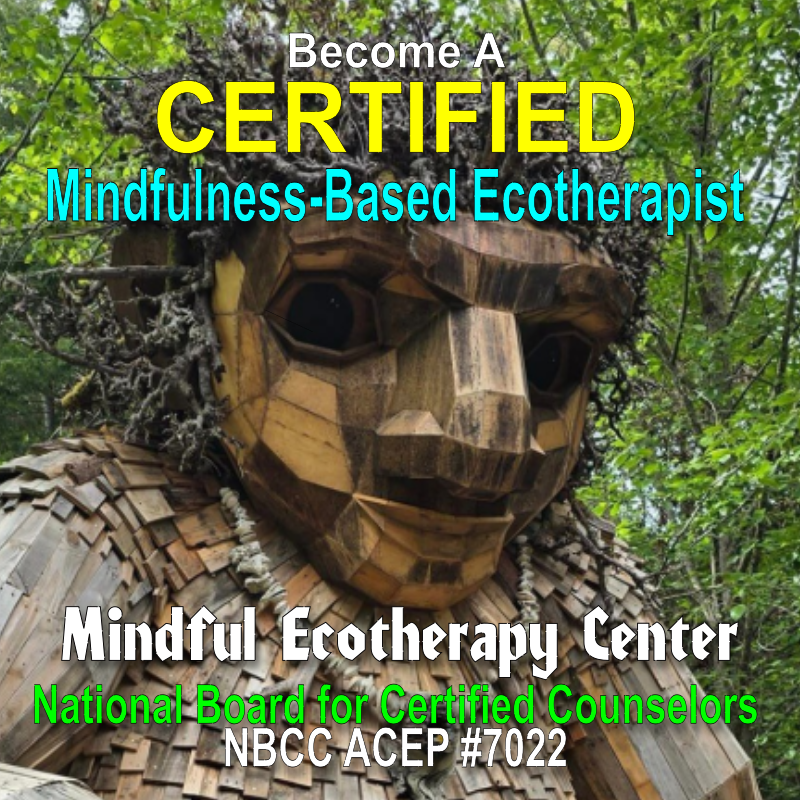
More information on Mindfulness-Based Ecotherapist Program Certification can be found here.

Self-Care for Therapists

The Mindful Ecotherapy Center will be launching an online course in January 2027 focused on Self-Care for Therapists using Mindfulness-Based Ecotherapy, designed specifically to help you sustain your emotional, physical, and professional well-being while working in demanding clinical environments. In this course, you will explore practical, nature-informed mindfulness strategies that support regulation, reduce burnout risk, and strengthen your capacity to stay grounded and present with the people you serve.

This approach integrates mindfulness practices with ecotherapy principles, helping you reconnect with restorative processes that are often missing in traditional clinical training. If you want to stay informed about enrollment details, early access, and course updates, you can subscribe to the Mindful Ecotherapy Center newsletter to receive the official announcement as soon as registration opens.

Addressing the therapist shortage going forward

Solving the therapist shortage will require systemic changes rather than individual adaptation alone. This includes simplifying insurance systems, increasing reimbursement rates, expanding training support, and investing in burnout prevention strategies that are structural rather than purely self-care focused. The burden can no longer rest solely on the shoulders of mental health therapy providers. It is the responsibility of the entire health care system to create change.

If you are working in the field, you already know that passion alone is not enough to sustain long-term practice. Without changes to workload expectations and administrative demands, the shortage is likely to persist. At the same time, integrating restorative approaches like mindfulness-based ecotherapy can help stabilize clinicians in the short term while broader reforms continue to develop.

The shortage is about sustainability, dignity of work, and whether the system supports the people who provide care.

References

Mechanic, D., McAlpine, D. D., & Rosenthal, M. (2019). Are patients’ office visits with physicians getting shorter? Health Affairs, 38(5). https://doi.org/10.1377/hlthaff.2018.05425

Shanafelt, T. D., Hasan, O., Dyrbye, L. N., et al. (2017). Changes in burnout and satisfaction with work-life balance in physicians. JAMA Internal Medicine, 177(12). https://doi.org/10.1001/jamainternmed.2017.1883


The Mindful Ecotherapy Center on YouTube

Subscribe to the Mindful Ecotherapy Center’s YouTube channel to bring peace, presence, and healing into your daily life. Our videos guide you through mindfulness-based ecotherapy practices, including forest bathing, tree planting rituals, nature meditations, and reflective exercises for grief, stress, and emotional well-being.

Whether you’re seeking to reconnect with the natural world, cultivate inner calm, or find restorative tools for personal growth, our content offers practical guidance, inspiration, and community support. Join us to explore the transformative power of nature and mindfulness, and start your journey toward balance, resilience, and deeper connection today!


Share Your Thoughts!

What do you think? Share your thoughts in the comments below! And don’t forget to subscribe to our newsletter!
Posted on

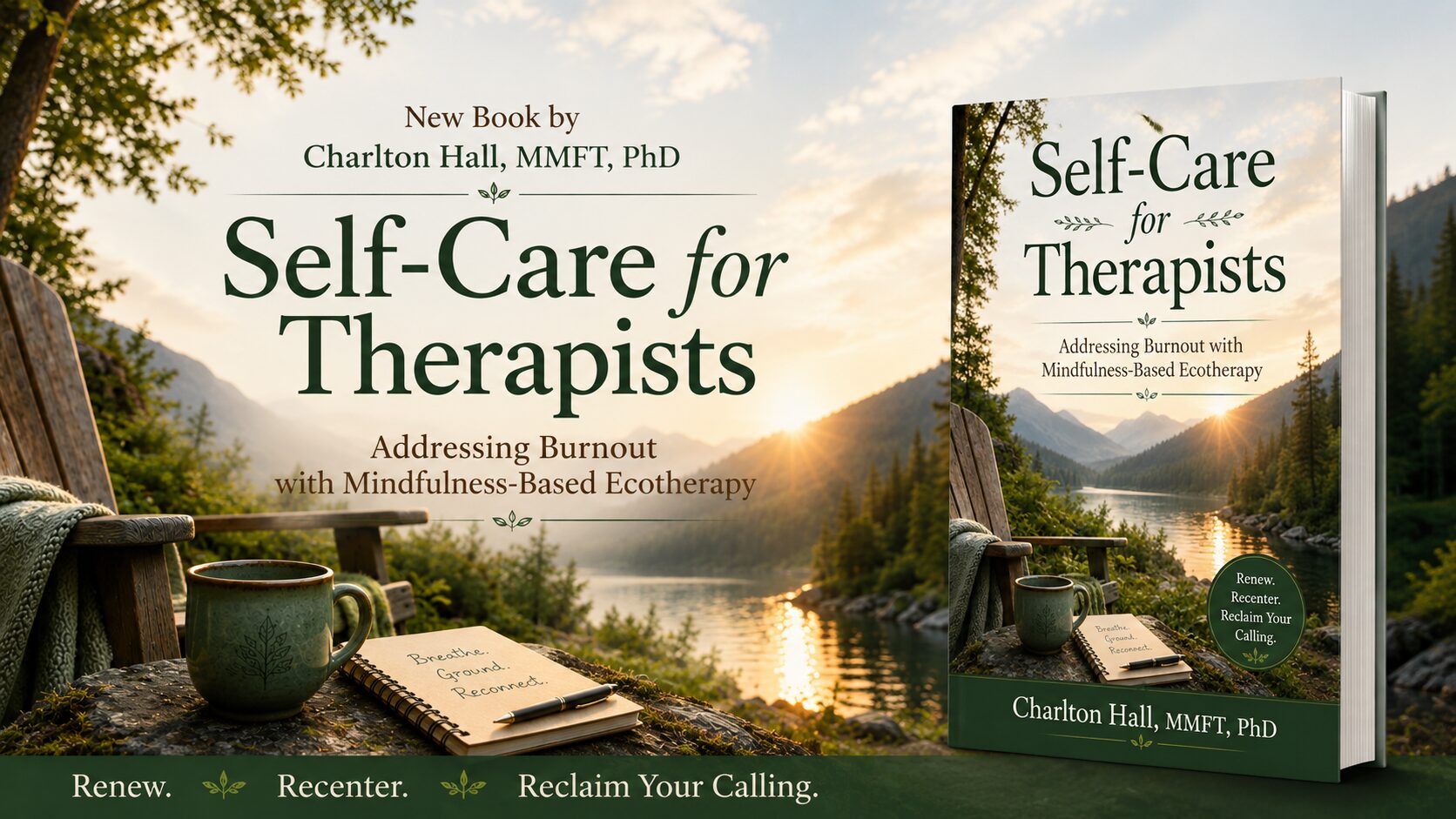
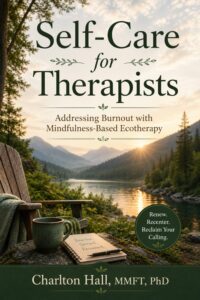
NEW BOOK! Addressing Burnout: Self-Care for Therapists

addressing burnout self care for therapists
addressing burnout self-care for therapists with mindfulness-based ecotherapy
CLICK TO PURCHASE

Therapists devote their professional lives to helping others navigate trauma, anxiety, depression, grief, relationship challenges, and life’s many transitions. Yet in the process of caring for others, many clinicians quietly neglect their own well-being. Compassion fatigue, emotional exhaustion, vicarious trauma, and professional burnout have become increasingly common across the mental health professions. Charlton Hall, MMFT, PhD’s newest book, Self-Care for Therapists: Addressing Burnout with Mindfulness-Based Ecotherapy, was written to help change that reality by providing therapists with practical, evidence-informed strategies for restoring balance, resilience, and professional fulfillment.

Rather than treating self-care as an occasional luxury, the book presents it as an ethical responsibility and an essential component of competent clinical practice. Drawing upon the principles of Mindfulness-Based Ecotherapy, Hall offers an integrative approach that combines mindfulness, psychology, systems thinking, and nature connection to help therapists recognize burnout early and respond with intentional, restorative care.

Why Addressing Burnout Matters

Burnout has become one of the greatest challenges facing today’s mental health professionals. Heavy caseloads, increasing documentation requirements, insurance pressures, secondary exposure to trauma, administrative demands, and the emotional weight of caring for clients can gradually deplete even the most dedicated clinician.

Burnout rarely develops overnight. It often begins with subtle warning signs such as emotional fatigue, irritability, difficulty concentrating, reduced empathy, sleep disturbances, or the growing feeling that one’s work has lost its sense of meaning. Because therapists are trained to prioritize the needs of others, many continue working through these early symptoms until exhaustion becomes overwhelming.

Self-Care for Therapists emphasizes that addressing burnout begins with awareness. Therapists cannot care for themselves if they fail to recognize that their own well-being has begun to deteriorate.

A Different Way of Understanding Self-Care

Many discussions of therapist self-care focus primarily on work-life balance, vacations, exercise, or stress management techniques. While each of these practices can be beneficial, Hall argues that sustainable self-care requires something deeper.

Mindfulness-Based Ecotherapy views therapists as whole people whose psychological health is influenced by their relationships with themselves, other people, and the natural world. Rather than encouraging clinicians simply to “push through” difficult periods, the book teaches readers how to cultivate mindful awareness, reconnect with their emotional needs, regulate their nervous systems, and rediscover the sense of purpose that first inspired them to enter the helping professions.

This broader perspective transforms self-care from a checklist of activities into an ongoing way of living.

What Readers Will Learn

Throughout the book, therapists are guided through practical exercises designed to increase self-awareness while building long-term resilience. Readers learn to identify early indicators of compassion fatigue, emotional exhaustion, and burnout before these patterns become entrenched.

The book introduces mindfulness practices that strengthen present-moment awareness while reducing habitual rumination and self-criticism. Nature-based exercises encourage therapists to experience forests, parks, gardens, rivers, and other natural settings as restorative environments that support emotional regulation and reflective practice.

Readers also examine professional boundaries, perfectionistic expectations, workload patterns, and internal beliefs that often contribute to chronic stress. Rather than offering quick fixes, the book helps therapists develop sustainable habits that support both personal well-being and clinical effectiveness.

The Role of Mindfulness-Based Ecotherapy

At the heart of the book is the understanding that mindfulness and nature complement one another in powerful ways. Hall describes mindfulness as the “what” and ecotherapy as the “how.” Mindfulness cultivates awareness without judgment, while nature provides the living environment in which that awareness can deepen through direct experience.

Whether sitting quietly beneath an old-growth tree, walking mindfully beside a flowing stream, observing changing seasons, or practicing ecological grounding in a neighborhood park, therapists discover practical ways to calm the nervous system and reconnect with the present moment.

Nature becomes more than a pleasant setting. It functions as an active therapeutic partner that reinforces many of the psychological processes associated with resilience, reflection, and healing.

Burnout Is Not a Personal Failure

One of the book’s central messages is that burnout should not be viewed as a sign of weakness or professional inadequacy. Therapists often enter the profession because they genuinely care about helping others, and that very compassion can make them vulnerable to overextending themselves while neglecting their own needs.

Hall encourages readers to approach burnout with the same compassion they routinely offer their clients. Instead of asking, “What’s wrong with me?” therapists learn to ask, “What conditions have contributed to my exhaustion, and what changes would support my healing?”

This shift from self-judgment to mindful curiosity opens the door to meaningful, lasting change.

Practical Tools for Everyday Clinical Life

The book includes numerous reflective exercises, mindfulness practices, self-assessment tools, and journaling prompts that readers can immediately integrate into their daily routines. Rather than requiring dramatic lifestyle changes, many of these practices can be completed in just a few minutes between sessions or incorporated into regular outdoor activities.

By focusing on small, consistent changes, therapists gradually build habits that strengthen resilience over time. This practical emphasis makes the book accessible to both experienced clinicians and graduate students preparing to enter the profession.

An Ethical Commitment to Self-Care

Professional ethical codes consistently recognize that therapist impairment can negatively affect client care. Maintaining personal wellness is therefore not simply a matter of individual preference but an important aspect of ethical clinical practice.

Self-Care for Therapists reframes self-care as a professional responsibility. Caring for oneself allows therapists to remain emotionally available, clinically effective, and personally fulfilled throughout long careers devoted to helping others. Addressing burnout ultimately benefits not only therapists themselves but also the clients, families, and communities they serve.

About Charlton Hall

Charlton Hall, MMFT, PhD, is the developer of Mindfulness-Based Ecotherapy and has spent decades integrating mindfulness, systems thinking, ecopsychology, and evidence-based psychotherapy into an innovative approach that emphasizes healing through connection with nature. His work has focused on helping therapists, counselors, and other helping professionals develop practical skills that foster resilience, self-awareness, and sustainable clinical practice.

Therapists are often taught how to care for others but receive far less guidance on caring for themselves. Self-Care for Therapists: Addressing Burnout with Mindfulness-Based Ecotherapy helps fill that gap by combining mindfulness, ecological awareness, reflective practice, and evidence-informed psychology into a practical guide for professional well-being.

In a profession where emotional demands continue to grow, addressing burnout is no longer optional. It is an essential investment in both personal health and ethical clinical care. Hall’s latest book offers therapists a thoughtful, compassionate roadmap for restoring balance, preventing burnout, and rediscovering the meaning that first called them to the helping professions.


References

Barnett, J. E., & Cooper, N. (2009). Creating a culture of self-care. Clinical Psychology: Science and Practice, 16(1), 16–20.

Norcross, J. C., & Phillips, C. M. (2023). Self-care for mental health professionals: A guide to maintaining wellness. Guilford Press.

Richardson, M., Hamlin, I., Butler, C. W., Thomas, R., & Hunt, A. (2022). Actively noticing nature and well-being: A systematic review. People and Nature, 4(2), 405–421.


The Mindful Ecotherapy Center on YouTube

Subscribe to the Mindful Ecotherapy Center’s YouTube channel to bring peace, presence, and healing into your daily life. Our videos guide you through mindfulness-based ecotherapy practices, including forest bathing, tree planting rituals, nature meditations, and reflective exercises for grief, stress, and emotional well-being.

Whether you’re seeking to reconnect with the natural world, cultivate inner calm, or find restorative tools for personal growth, our content offers practical guidance, inspiration, and community support. Join us to explore the transformative power of nature and mindfulness, and start your journey toward balance, resilience, and deeper connection today!


Share Your Thoughts!

What do you think? Share your thoughts in the comments below! And don’t forget to subscribe to our newsletter!

Posted on

NEW COURSE! Self-Care for Therapists

self-care for therapists

The Mindful Ecotherapy Center is pleased to announce the official release of a new continuing education offering designed specifically for mental health professionals experiencing stress, compassion fatigue, and occupational burnout. The course, Self-Care for Therapists: Addressing Burnout with Mindfulness-Based Ecotherapy, is a five-hour online home study program created to support clinicians in strengthening emotional resilience through nature-based mindfulness practices.

As an approved continuing education provider with the National Board for Certified Counselors (NBCC ACEP #7022), the Mindful Ecotherapy Center is committed to delivering high-quality, evidence-informed training that meets professional development standards while also addressing the lived realities of clinical work. This course reflects that mission by integrating mindfulness, ecological awareness, and practical self-care strategies tailored to therapists and other helping professionals.

Self-Care for Therapists: Addressing Burnout in Clinical Practice

Burnout among therapists is a well-documented concern, particularly in the wake of increasing caseload demands, administrative burden, and emotional labor. Many clinicians find themselves supporting clients through trauma while having limited space to process their own stress responses. Over time, this imbalance can lead to emotional exhaustion, reduced empathy, and diminished professional satisfaction.

Self-Care for Therapists: Addressing Burnout with Mindfulness-Based Ecotherapy was developed to directly address these challenges. The course explores burnout not as a personal failure, but as a systemic and occupational phenomenon that requires intentional, structured self-care practices. Through the lens of mindfulness-based ecotherapy, participants learn how nature engagement and present-moment awareness can serve as restorative interventions for nervous system regulation and emotional replenishment.

Self-Care for Therapists: Mindfulness-Based Ecotherapy Foundations

At the core of this training is the Mindfulness-Based Ecotherapy (MBE) framework, which integrates mindfulness practices with ecological connection. Participants are introduced to the concept of nature as a co-regulator, where the natural environment is used intentionally to support grounding, reflection, and cognitive-emotional balance.

Rather than treating self-care as an optional add-on, this course positions it as an ethical responsibility for clinicians. When therapists are better regulated and emotionally resourced, they are more capable of providing attuned and effective care to clients. The course includes experiential exercises that can be adapted for outdoor practice, including mindful walking, sensory grounding in natural environments, and reflective journaling using nature-based metaphors.

Self-Care for Therapists: Course Structure and Learning Objectives

This five-hour home study course is self-paced and designed for flexibility, making it accessible to busy professionals. Participants can engage with the material in segments or complete it in one sitting, depending on their learning style and schedule.

Key learning objectives include understanding the psychological and physiological components of burnout, identifying early warning signs of compassion fatigue, and developing personalized self-care strategies grounded in mindfulness-based ecotherapy principles. The course also explores how ecological awareness can enhance emotional resilience and support long-term sustainability in clinical practice.

Special attention is given to helping therapists recognize the difference between restorative self-care and avoidance-based coping. By developing greater awareness of internal states and stress responses, clinicians can begin to respond to burnout signals earlier and more effectively.

Self-Care for Therapists: Pricing, Enrollment, and Continuing Education Credit

The “Self-Care for Therapists: Addressing Burnout with Mindfulness-Based Ecotherapy” course is normally priced at $129.99. However, to support greater access during a time when clinician burnout remains especially high, the course will be offered at a discounted rate of $109.99 throughout the month of June 2026.

Upon successful completion of the course requirements, participants will receive a certificate of completion in PDF format. As an NBCC Approved Continuing Education Provider (ACEP #7022), the Mindful Ecotherapy Center ensures that this course meets established continuing education standards for professional counselors seeking CE credit.

Enrollment is available online, and participants will have immediate access to course materials upon registration. The home study format allows clinicians to complete the training at their own pace while integrating learning into their personal and professional schedules.

Supporting Therapist Well-Being Through Self-Care for Therapists

The development of this course reflects a growing recognition within the mental health field: therapist well-being is not separate from client care, but fundamentally intertwined with it. When clinicians are supported in their own regulation and resilience, the entire therapeutic system benefits.

Mindfulness-based ecotherapy offers a unique and accessible pathway for restoring balance. By reconnecting with the natural world and cultivating present-moment awareness, therapists can begin to counteract the cumulative effects of burnout and emotional depletion.

This course is intended not only as an educational experience but as an invitation to reframe self-care as an ongoing, embodied practice rather than an occasional intervention. Through consistent engagement with these principles, therapists may find renewed clarity, presence, and sustainability in their work.

The Mindful Ecotherapy Center is honored to offer this program to the clinical community and remains committed to supporting therapists through accessible, nature-based continuing education opportunities.


Mindful Ecotherapy Center on YouTube

Subscribe to the Mindful Ecotherapy Center’s YouTube channel to bring peace, presence, and healing into your daily life. Our videos guide you through mindfulness-based ecotherapy practices, including forest bathing, tree planting rituals, nature meditations, and reflective exercises for grief, stress, and emotional well-being.

Whether you’re seeking to reconnect with the natural world, cultivate inner calm, or find restorative tools for personal growth, our content offers practical guidance, inspiration, and community support. Join us to explore the transformative power of nature and mindfulness, and start your journey toward balance, resilience, and deeper connection today!


Share Your Thoughts!

What do you think? Share your thoughts in the comments below! And don’t forget to subscribe to our newsletter!