Posted on Leave a comment

Are Diagnosis Labels Helpful or Harmful to Human Healing?

diagnosis diagnostic

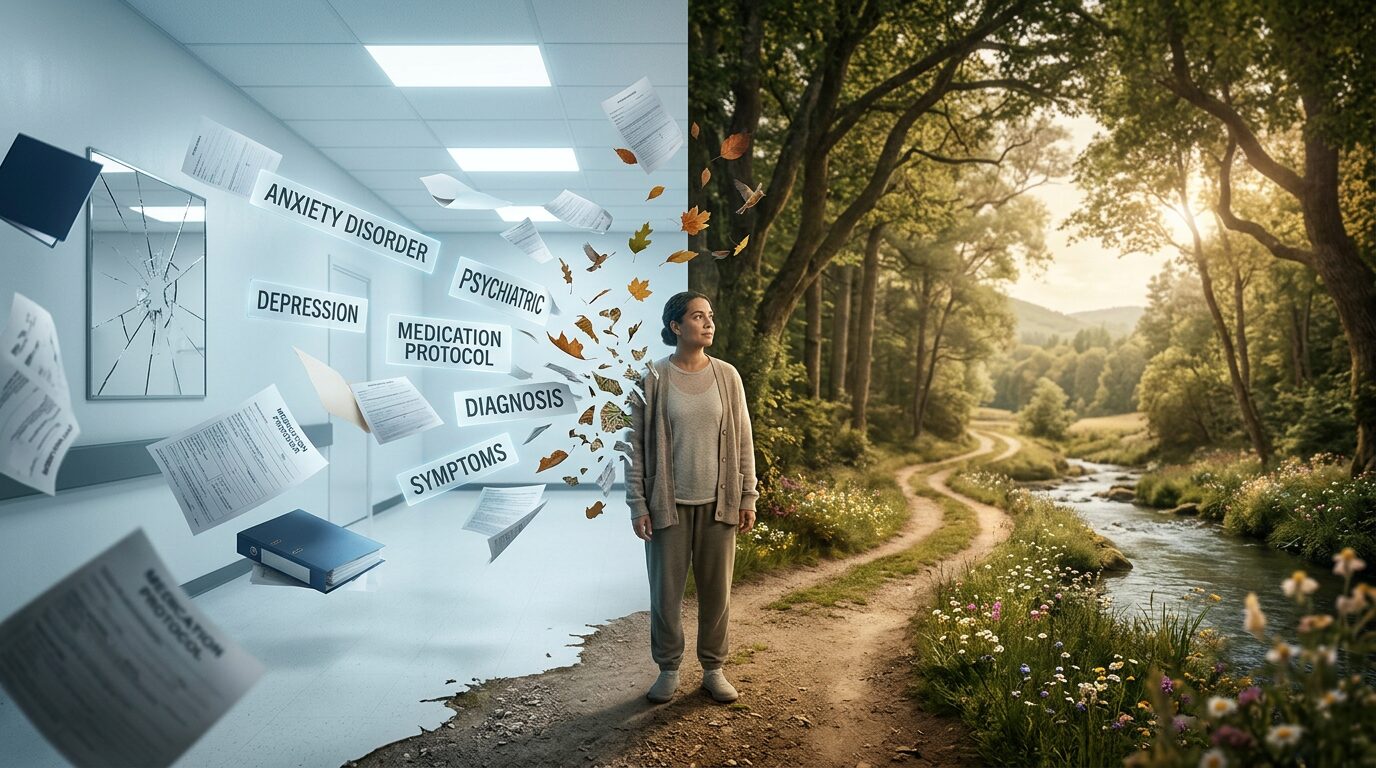
In modern mental health care, diagnosis plays a powerful and often controversial role in how emotional suffering is understood and treated. For some people, receiving an assessment can feel like a profound relief, offering clarity and validation after years of confusion, shame, or self-blame. For others, diagnostic labels can feel limiting, stigmatizing, or overly simplistic, reducing the complexity of human experience into a clinical category. The debate surrounding diagnosis reflects a larger question about healing itself: are human beings best understood through symptom-based labels, or through a more holistic understanding that includes environment, relationships, trauma history, spirituality, culture, and connection to the natural world? From a mindful ecotherapy perspective, diagnosis can be both helpful and harmful depending on how it is used.

The Benefits of Diagnostic Evaluation

diagnosis

Diagnosis is intended to identify patterns of symptoms and behaviors that help mental health professionals communicate, guide treatment, and provide access to care. For many individuals, receiving an evaluation can be life-changing in a positive way. Someone struggling with anxiety, depression, ADHD, PTSD, or another mental health condition may finally realize that their experiences are shared by others and are not signs of personal failure. Diagnosis can replace shame with understanding and provide a framework for healing. It can also guide treatment by helping clinicians choose therapeutic approaches, mindfulness practices, medication options, and support systems tailored to the individual’s needs. In many cases, diagnosis is necessary for accessing insurance coverage, accommodations, disability support, educational services, or workplace protections. Without diagnosis, some people would not receive the help or recognition they need. Another important benefit of diagnosis is the sense of community it can create. Many people feel less isolated when they discover support groups or online communities made up of individuals with similar experiences. Feeling understood and emotionally validated can be deeply healing.

The Risks of Diagnostic Evaluation

Despite these benefits, symptom analysis also carries significant risks. One of the greatest dangers is that diagnosis can become identity. Instead of viewing diagnosis as one aspect of experience, people may begin to define themselves entirely through a clinical label. When this happens, growth and self-perception can become restricted. You are not your diagnosis. You are a complex human being shaped by experiences, relationships, strengths, dreams, wounds, and environmental influences that extend far beyond any psychological category. Diagnostic labels can also contribute to stigma. Despite increasing awareness around mental health, many diagnoses still carry social judgment and misunderstanding. People may fear being viewed as unstable, weak, dangerous, or incapable, which can discourage them from seeking help or openly discussing their struggles.

When Diagnosis Oversimplifies Human Experience

Another concern is that diagnosis can oversimplify human suffering. From a mindful ecotherapy perspective, emotional distress is often connected to broader ecological and social conditions that are frequently overlooked in conventional models of care. Chronic anxiety may be intensified by digital overload, overstimulation, financial stress, and disconnection from restorative natural environments. Depression may emerge not only from internal biology, but from isolation, loss of meaning, loneliness, and alienation from community and nature. Attention difficulties may reflect nervous system exhaustion within a culture that demands constant productivity and nonstop stimulation. In these cases, professional evaluation may describe symptoms without fully addressing the environmental conditions contributing to them.

The Problem of Misdiagnosis

Misdiagnosis can also create harm. Mental health symptoms often overlap, and trauma, grief, chronic stress, sleep deprivation, neurodiversity, and medical conditions can sometimes resemble psychiatric disorders. An inaccurate mental health assessment may lead to ineffective treatment, unnecessary medication, or emotional confusion. This is why thoughtful, compassionate assessment matters.

A Mindful Ecotherapy Perspective on Healing

Mindful ecotherapy offers a broader lens for understanding diagnosis and healing. Rather than asking only, “What disorder does this person have?” mindful ecotherapy also asks: What has this person experienced? What environments are shaping their nervous system? How connected are they to nature, meaning, embodiment, and supportive relationships? Nature-based mindfulness practices can help people reconnect with themselves beyond labels. Walking quietly through forests, sitting beside rivers, gardening, observing wildlife, and practicing mindful breathing outdoors can calm the nervous system and restore a sense of perspective. Nature reminds you that healing is not about fitting perfectly into categories. In the natural world, change, adaptation, struggle, and renewal are normal parts of existence.

Finding a Balanced Perspective

A balanced perspective on the interpretation of symptoms recognizes that it can be useful without becoming absolute. Diagnosis can provide validation, treatment direction, and access to care while still acknowledging the complexity of human experience. Healing often involves much more than symptom reduction. It includes reconnecting with the body, restoring emotional safety, cultivating mindfulness, building meaningful relationships, and rediscovering connection with the living world. From a mindful ecotherapy perspective, diagnosis should support empowerment rather than limitation. It should be used as a compassionate tool for understanding, not as a rigid definition of identity.

Conclusion

Ultimately, a psychological evaluation may describe part of your experience, but it does not define the entirety of who you are. Human beings are more than symptoms or categories. True healing often emerges through connection, awareness, compassion, and restoration of balance within both the self and the natural world.


Share Your Thoughts About Diagnosis and Mental Health!

What do you think? Share your thoughts in the comments below!


  And don’t forget to subscribe to our newsletter!

Posted on Leave a comment

Is ADHD Being Overdiagnosed in Modern Life? A Mindful Ecotherapy Perspective

ADHD Overdiagnosis

ADHD overdiagnosis is a hot topic in mental health these days, but is it really a thing? Attention-Deficit/Hyperactivity Disorder (ADHD) has become one of the most widely discussed neurodevelopmental conditions in modern mental health conversations. As awareness has grown, so too have diagnosis rates, leading many clinicians, educators, and families to ask an important question: Is ADHD overdiagnosis becoming a feature of modern life, or are we finally getting better at recognizing what was previously missed?

From a mindful ecotherapy perspective, the answer is not simple. It involves balancing legitimate clinical recognition with cultural, environmental, and lifestyle factors that may be shaping how attention and behavior are interpreted today.

Understanding ADHD Overdiagnosis in Context

ADHD is typically characterized by patterns of inattention, hyperactivity, and impulsivity that interfere with functioning or development. However, these behaviors exist on a spectrum in all human beings. The challenge begins when normal variations in attention and energy are interpreted through a medical lens without sufficient context.

Modern life complicates this picture. You live in an environment saturated with constant stimulation like phones, notifications, multitasking demands, and reduced exposure to restorative natural settings. From a neuroecological standpoint, it becomes harder to distinguish between a clinical disorder and a nervous system overwhelmed by chronic overstimulation.

The Case for ADHD Overdiagnosis

Those who argue that ADHD overdiagnosis is occurring point to several trends:

1. Expanded diagnostic criteria and awareness

Greater awareness has made ADHD more recognizable in children and adults who were previously undiagnosed. However, broader awareness can sometimes lead to over-attribution of symptoms, especially when normal developmental behaviors are pathologized.

2. Educational and performance pressures

In school and workplace environments that demand constant focus and productivity, individuals who struggle with these expectations may be quickly labeled. In some cases, diagnosis becomes a pathway to accommodations rather than a full exploration of environmental mismatch.

3. Pharmaceutical influence and treatment pathways

Critics also note that medication is often presented early in the diagnostic process. While medication can be life-changing for many, it may also contribute to a tendency to diagnose rather than first explore lifestyle, trauma, sleep, diet, and ecological stressors.

4. Overlapping symptoms with modern stress

Anxiety, trauma responses, sleep deprivation, and digital overload can mimic ADHD symptoms. Without careful differential assessment, these conditions may be misclassified.

The Case Against Overdiagnosis Claims

At the same time, it is important not to dismiss ADHD as merely a modern misinterpretation of attention struggles.

1. Underdiagnosis still exists

Many people were historically overlooked. What looks like an increase in diagnosis may partly reflect the correction of past underdiagnosis as awareness and education on symptoms and diagnosis increased.

2. ADHD is neurodevelopmental and persistent

For many people, ADHD symptoms are consistent across environments and life stages, suggesting a stable neurological pattern rather than situational stress alone.

3. Improved diagnostic tools and awareness

Clinicians today are better trained to identify ADHD across diverse populations, including those without hyperactivity but with significant internal attention difficulties.

A Mindful Ecotherapy Perspective

Mindful ecotherapy offers a different lens: rather than asking only “Is this ADHD or not?”, it asks, “What is this nervous system responding to?”

From this perspective, attention is an ecological interaction between the human mind and its environment.

Nature deprivation and attention fatigue

Research increasingly suggests that time in natural environments restores attention and reduces cognitive fatigue. When individuals are deprived of these restorative environments, symptoms resembling ADHD can intensify.

Nervous system regulation

Mindful ecotherapy emphasizes grounding practices in nature to regulate the nervous system. This includes forest bathing, sensory awareness in outdoor settings, and rhythmic movement in natural spaces, all of which support attention stability.

Trauma and adaptive attention patterns

What appears as inattention may sometimes be a protective response to past overwhelm. The mind learns to scan, shift, or disconnect as a survival adaptation. Ecotherapy helps gently reestablish safety in the present moment.

Finding Balance: Diagnosis and Environment

The most responsible approach to ADHD overdiagnosis concerns is not rejection of the diagnosis, but integration. ADHD can be real and valid while also being influenced by environmental and cultural conditions.

A balanced perspective includes:

  • Careful clinical assessment
  • Consideration of trauma and stress history
  • Evaluation of sleep, diet, and digital exposure
  • Inclusion of nature-based and mindfulness interventions
  • Recognition that attention is shaped by the environment, not just biology

The question of ADHD overdiagnosis reflects a deeper cultural tension: how do we distinguish between neurological difference and environmental overload in a world that rarely allows stillness?

From a mindful ecotherapy perspective, healing begins not only in diagnosis or medication, but in restoring the human relationship with nature, rhythm, and presence. When attention is supported by ecological balance, many symptoms can be understood with greater clarity and compassion.

ADHD Differential Diagnosis Course

We offer an ADHD differential diagnosis course that looks at some of the more common misdiagnoses of ADHD. You can learn more here.


Mindful Ecotherapy Center on YouTube

Subscribe to the Mindful Ecotherapy Center’s YouTube channel to bring peace, presence, and healing into your daily life. Our videos guide you through mindfulness-based ecotherapy practices, including forest bathing, tree planting rituals, nature meditations, and reflective exercises for grief, stress, and emotional well-being.

Whether you’re seeking to reconnect with the natural world, cultivate inner calm, or find restorative tools for personal growth, our content offers practical guidance, inspiration, and community support. Join us to explore the transformative power of nature and mindfulness, and start your journey toward balance, resilience, and deeper connection today!


Share Your Thoughts!

What do you think? Share your thoughts in the comments below! And don’t forget to subscribe to our newsletter!

Posted on

Masculinity, Disconnection, and the Modern Emotional Landscape

masculinity for a new age

Masculinity is a living, evolving experience shaped by culture, family systems, personal history, and the environments you move through. In this time of rapid social and ecological change, many of the older narratives about manhood no longer fit the complexity of modern life. For some people, this creates confusion, tension, or emotional strain. For others, it opens a meaningful opportunity to reconsider what manliness can become when it is grounded in awareness, embodiment, and connection to the natural world. Mindfulness-based ecotherapy offers a way to support that shift by helping you experience male identity not as a performance or role, but as something that naturally emerges through presence and relationship with life itself.

Many of the challenges associated with masculinity today are less about masculine identity itself and more about disconnection. When emotional expression is discouraged, and inner experience is pushed aside in favor of performance or self-reliance, you can gradually become separated from your own emotional signals, from others, and from the natural world. Over time, this disconnection can show up as emotional shutdown, difficulty in relationships, chronic stress, or a sense of isolation that is hard to name. From a mindfulness-based ecotherapy perspective, these patterns are adaptive responses to environments that often fail to support emotional integration and embodied awareness. What is often labeled as a “problem with masculinity” is more accurately a reflection of unmet relational and ecological needs.

Nature and Masculinity

masculinity can be nurturing
Masculinity can be nurturing

Nature provides a direct and nonjudgmental context for rethinking masculine expression in healthier ways. When you spend time in natural environments with mindful attention, you begin to notice that strength and softness are not opposites in the natural world. A river can be both powerful and yielding, a tree can be both rooted and flexible, and a mountain can be both enduring and shaped by time. These qualities are not in conflict; they coexist. Through this lived experience, masculinity begins to shift away from rigidity and toward integration. Strength becomes steadiness rather than control, emotional awareness becomes clarity rather than weakness, and vulnerability becomes a form of openness rather than threat. In this way, nature does not teach through concepts, but through direct experience of balance and interconnection.

Mindfulness-based ecotherapy also supports emotional reconnection by helping you slow down enough to notice what is actually happening within your body and mind without judgment. In natural settings, attention naturally returns to breath, sensation, and the present moment. Emotional states can be experienced as passing patterns rather than fixed identities, which allows for greater flexibility and self-understanding. This process is especially important in redefining masculine presence because it shifts identity away from performance and toward awareness. As you continue this practice, you may begin to notice that emotional regulation becomes more accessible, not through suppression, but through acceptance and grounded presence in the body.

Re-Imagining Male Identity

Over time, masculine energy can also be reimagined as something that exists in relationships rather than in isolation. Traditional cultural models of masculinity often emphasize independence and self-reliance in ways that can unintentionally limit connection. Ecotherapy expands this framework by helping you experience yourself in ongoing relationships with your body, with other people, and with the natural world. When these relationships are restored, masculinity becomes less about defending identity and more about participating fully in life with awareness and responsiveness. You are no longer separate from your environment, but an active part of a larger living system.

Masculinity and Healing

Healing in this context is not only psychological but also embodied. Many of the emotional patterns associated with masculine nature are held in the body as tension, stress, or habitual guarding. Mindfulness-based ecotherapy helps bring awareness back into the body through sensory engagement with natural environments. Walking on uneven ground, noticing wind against skin, listening to water, or simply observing light shifting through trees all help reestablish a sense of grounding. As the body relaxes and reorients to natural rhythms, emotional rigidity often softens, making space for a more flexible and integrated experience of masculinity.

In this way, masculinity can be redefined for a new ecological age as something that includes strength without suppression, awareness without detachment, and connection without dependency. It becomes less about performing a role and more about inhabiting a way of being that is responsive, grounded, and alive to the present moment. Mindfulness-based ecotherapy does not ask you to abandon masculine qualities, but to deepen them by restoring connection to yourself, to others, and to the living world around you.


Share Your Thoughts About Modern Masculinity!

What do you think? Share your thoughts in the comments below!


  And don’t forget to subscribe to our newsletter!

Posted on

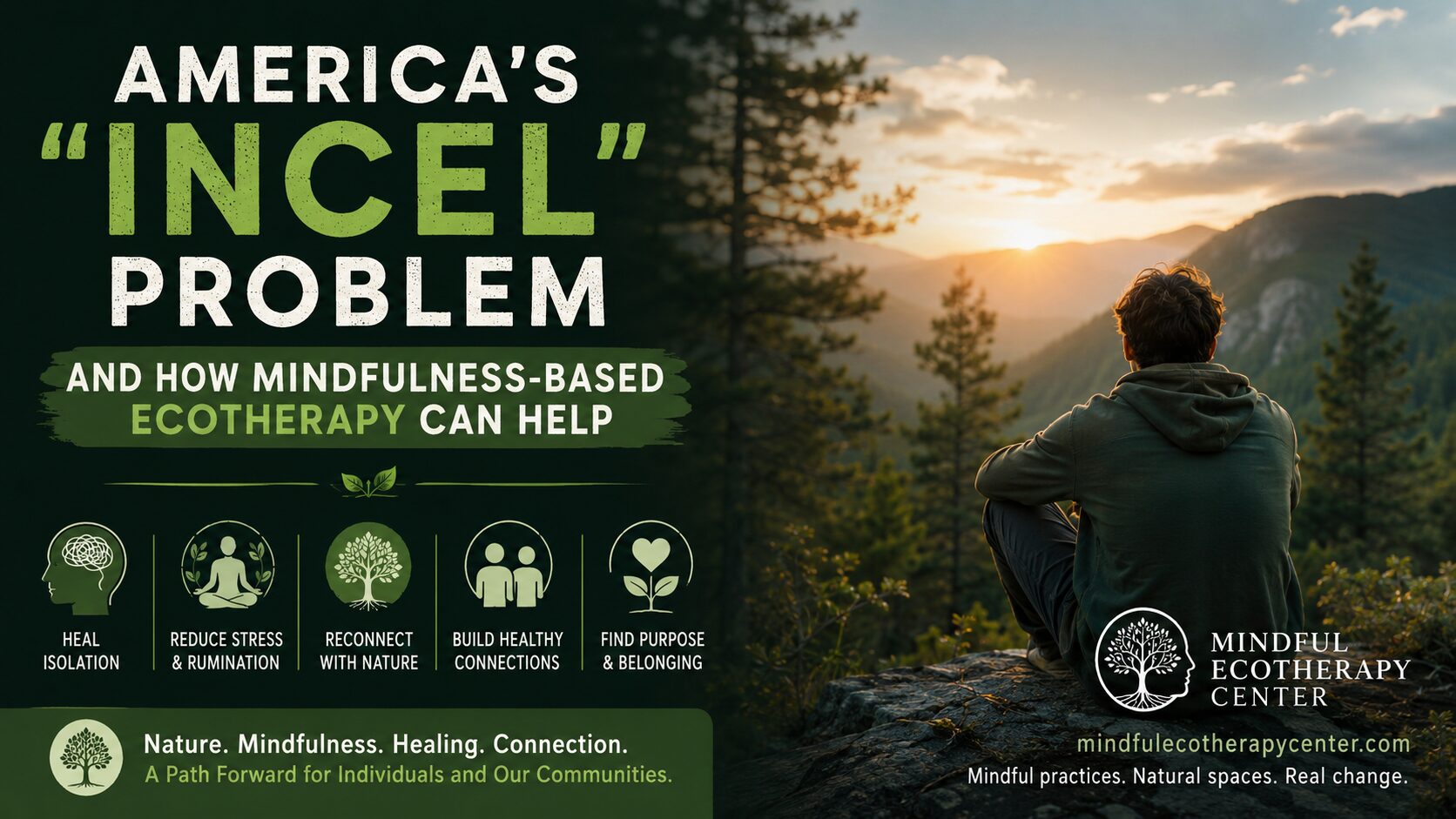
America’s “Incel” Problem and How Mindfulness-Based Ecotherapy Can Help

incel problem

Across the United States, there has been growing concern about social isolation among young men and the rise of what is commonly referred to as the “incel” (involuntary celibate) subculture. While the term has been sensationalized in media and internet discourse, it often reflects a deeper human struggle: loneliness, disconnection, rejection, and a lack of healthy emotional tools for processing pain.

Rather than framing this issue as a fixed identity or a hopeless condition, it is more useful and more humane to view it as a signal of unmet psychological, social, and ecological needs. This is where mindfulness-based ecotherapy can offer meaningful pathways toward healing and reconnection.

Understanding the Roots of Isolation and Disconnection

Many young men who become immersed in online “incel” communities are not initially driven by ideology, but by emotional pain. Repeated experiences of rejection, difficulty forming relationships, low self-esteem, and social anxiety can create a feedback loop of withdrawal.

Over time, digital spaces may replace real-world interaction, reinforcing distorted beliefs about oneself and others. In this context, the internet can amplify resentment and hopelessness, especially when there are few offline supports available. It doesn’t help that America’s current political and cultural zeitgeist frames cruelty and bullying as signs of ‘alpha male’ strength instead of what it truly is: fear and pain masquerading as dominance.

It is important to understand that isolation is not just a personal issue. It is also environmental and cultural. Modern life often reduces opportunities for community bonding, shared ritual, time in nature, and intergenerational mentorship. The mentors young men seek out often turn out to be podcasters and influencers who have a hidden agenda. This can have a long-lasting impact on the socialization of our young men.

The Nervous System, Stress, and Emotional Survival

When someone experiences prolonged social rejection or loneliness, the nervous system adapts to stress. Hypervigilance, distrust, emotional numbing, and anger can become protective responses. These responses are not moral failures. They are survival adaptations.

However, without intervention, these patterns can become rigid. The longer they go uncorrected, the more permanent and difficult to change they become. The young male may begin interpreting the world through a narrow emotional lens shaped by pain rather than possibility. In extreme cases, it can become a way to avoid personal responsibility by blaming society, or politicians, or even women for the alleged victim’s own failures.

Mindfulness-based practices help interrupt this cycle by restoring awareness of the present moment and softening automatic reactive patterns.

What Mindfulness-Based Ecotherapy Offers

Mindfulness-based ecotherapy integrates traditional mindfulness practices with nature-based therapeutic approaches. Instead of treating healing as something that happens only in a clinical setting, it recognizes the natural world as a co-therapist.

When young men engage with forests, rivers, soil, plants, and seasonal cycles, something important happens neurologically and emotionally: the nervous system begins to regulate more naturally.

Nature does not demand performance, status, or social comparison. It offers presence, rhythm, and nonjudgmental awareness.

In this context, individuals struggling with deep loneliness can begin to experience:

  • A reduction in rumination and obsessive thought cycles
  • Increased emotional regulation through grounding in sensory experience
  • A sense of belonging to something larger than themselves
  • Reconnection to embodied presence rather than digital identity

Rebuilding Connection Through Embodied Experience

One of the core challenges in chronic isolation is disembodiment. In disembodiment, the person ends up living primarily in thought, fantasy, or online interaction with the incel community rather than in direct sensory engagement with the real world.

Ecotherapy practices such as walking meditations in natural settings, gardening, forest bathing, and mindful observation of ecological systems help restore this embodied awareness and reduce incel tendencies.

These experiences also gently reintroduce relational safety. For young men who feel disconnected from people, nature provides a transitional relational field that is consistent, nonjudgmental, and stabilizing.

Over time, this can make human connection feel less threatening and more accessible.

Incel: From Alienation to Integration

Healing does not mean forcing social conformity or suppressing emotional pain. Instead, it involves integration by learning to hold difficult emotions without being controlled by them. This is ultimately the path away from incel culture, incel thoughts, and behaviors.

Mindfulness-based ecotherapy supports this process by encouraging young men to observe thoughts and feelings as temporary phenomena, much like weather patterns in nature. Anger, sadness, shame, and grief can be witnessed rather than acted upon impulsively or internalized destructively. This eliminates the need for incel ideology and returns personal responsibility to its rightful place.

This shift away from incel culture creates psychological space. And within that space, new choices become possible.

A Path Toward Reconnection

Addressing America’s broader challenges of loneliness and disconnection requires more than online discourse or ideological debates. It requires grounded, embodied practices that rebuild the human capacity for presence, empathy, and relational trust. This embodied presence in nature is the quickest way out of the incel mindset.

Mindfulness-based ecotherapy offers one such pathway. It does not erase pain, but it helps transform isolation into awareness, and awareness into connection. Over time, connections established in this way can help reduce or eliminate emotional pain. Even if it does not totally eliminate the reliance on incel thinking, it can still help young men to recognize such thoughts as just thoughts, and not reality.

Over time, young men who once felt disconnected may begin to rediscover not only their relationship with nature but also their capacity for healthy human relationships. And that reduces or eliminates the incel mindset.


Mindful Ecotherapy Center on YouTube

Subscribe to the Mindful Ecotherapy Center’s YouTube channel to bring peace, presence, and healing into your daily life. Our videos guide you through mindfulness-based ecotherapy practices, including forest bathing, tree planting rituals, nature meditations, and reflective exercises for grief, stress, and emotional well-being.

Whether you’re seeking to reconnect with the natural world, cultivate inner calm, or find restorative tools for personal growth, our content offers practical guidance, inspiration, and community support. Join us to explore the transformative power of nature and mindfulness, and start your journey toward balance, resilience, and deeper connection today!


Share Your Thoughts!

What do you think? Share your thoughts in the comments below! And don’t forget to subscribe to our newsletter!
Posted on

Embodied Mindfulness: 4 Essential Ways Wise Mind and Wise Body Help

embodied mindfulness

Embodies mindfulness is crucial to good physical and mental health. At the Mindful Ecotherapy Center, we understand that mindfulness is not just something that happens in the mind. True, lasting change occurs when awareness moves out of abstract thought and into lived, physical experience. This is where the mindfulness-based ecotherapy skill of Wise Mind and Wise Body becomes central to cultivating embodied mindfulness, a state of awareness in which thoughts, emotions, bodily sensations, and the natural environment are experienced as an integrated whole.

What Is Embodied Mindfulness?

Embodied mindfulness refers to the capacity to be fully present in one’s body, moment by moment, with openness and curiosity. Rather than observing experience from a distance, embodied mindfulness invites individuals to inhabit their physical selves. Breathing, posture, muscle tension, heart rate, and sensory input all become sources of information rather than background noise.

For many people, especially those with chronic stress, trauma histories, or anxiety, embodiment does not come easily. The mind may be active and reflective while the body remains tense, numb, or disconnected. This split undermines emotional regulation, self-trust, and overall well-being. Embodied mindfulness closes this gap.

Embodied mindfulness aligns closely with Bessel van der Kolk’s central insight in The Body Keeps the Score: that the body remembers what the mind would rather forget. Van der Kolk demonstrates that trauma, stress, and emotional learning are stored not just as memories but as patterns of muscle tension, breath restriction, posture, and autonomic reactivity.

From this perspective, mindfulness that stays purely cognitive is incomplete at best and actively unhelpful at worst. Embodied mindfulness brings awareness to these somatic patterns in real time, allowing you to notice how the past shows up in the present body and to intervene gently before old survival responses take over. Mindfulness-based ecotherapy extends this work by engaging the body within a regulating natural environment, making it safer and more intuitive to reconnect with bodily sensations. Rather than forcing awareness inward, nature helps the nervous system settle enough for the body’s story to be felt, understood, and gradually rewritten through Sensing Mode.

Wise Mind and Wise Body: An Integrated Skill

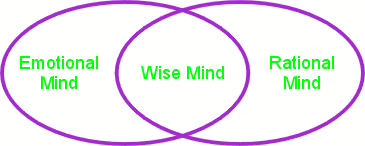
The concept of Wise Mind originates in dialectical approaches, describing the integration of rational mind and emotional mind. Mindfulness-based ecotherapy expands this framework by explicitly including the body and the natural world, giving rise to the combined skill of Wise Mind and Wise Body.

Wise Mind represents discernment, values-based awareness, and a balanced perspective. Wise Body represents the body’s innate intelligence: interoception, intuition, and the physiological signals that guide safety, connection, and rest. Together, they form a feedback loop. Wise Mind listens to Wise Body, and Wise Body grounds Wise Mind in lived reality.

This integration is essential for embodied mindfulness. Without Wise Body, mindfulness risks becoming intellectualized. Without Wise Mind, bodily sensations may feel overwhelming or confusing. Mindfulness-based ecotherapy trains you to move fluidly between the two.

embodied mindfulness

Why Embodied Mindfulness Matters

Embodied mindfulness is foundational for psychological health.

First, it improves emotional regulation. Emotions arise in the body before they are labeled by the mind. When individuals are embodied, they can notice early signals of emotional activation and respond skillfully rather than reactively.

Second, embodied mindfulness supports trauma recovery. Trauma often disrupts the relationship between mind and body, leading to dissociation or hyperarousal. By gently reconnecting awareness to bodily experience within a supportive ecological context, mindfulness-based ecotherapy restores a sense of safety and agency.

Third, embodied mindfulness enhances decision-making. Wise choices are rarely made through logic alone. The body often signals alignment or misalignment long before the mind catches up. Learning to trust Wise Body allows decisions to emerge from coherence rather than pressure.

The Unique Contribution of Mindfulness-Based Ecotherapy

Mindfulness-based ecotherapy offers a distinctive approach to Wise Mind and Wise Body by situating this skill within a relationship to the natural environment. In mindfulness-based ecotherapy, nature is not treated as a backdrop or metaphor alone, but as an active co-regulator.

Natural settings provide rhythmic, nonjudgmental sensory input that supports embodiment. The sound of wind, the feeling of ground underfoot, and the steady presence of trees or water all help anchor awareness in the present moment. This makes embodied mindfulness more accessible, especially for individuals who struggle with traditional seated practices.

In mindfulness-based ecotherapy, Wise Body is understood as part of a larger ecological system. Clients are invited to notice how their breath syncs with outdoor air, how muscle tension responds to natural textures, and how emotional states shift in different environments. Wise Mind then reflects on these experiences, integrating insight with sensation.

This ecological framing reduces self-blame and isolation. Dysregulation is seen as a signal of disconnection that can be addressed through reconnection with both body and environment.

Practicing Wise Mind and Wise Body for Embodied Mindfulness

Cultivating embodied mindfulness through Wise Mind and Wise Body involves intentional practice. This may include mindful walking in nature, body scans conducted outdoors, or grounding exercises that explicitly reference environmental cues. Reflection is encouraged, but never at the expense of sensory experience.

Over time, we learn to recognize bodily wisdom as a reliable source of guidance. Embodied mindfulness becomes less of a technique and more of a way of being.

Embodied Mindfulness and Healing

Embodied mindfulness is essential for genuine presence, resilience, and healing. The mindfulness-based ecotherapy skill of Wise Mind and Wise Body offers a powerful pathway to this state by honoring the intelligence of both cognition and sensation within an ecological context. By integrating mind, body, and nature, mindfulness-based ecotherapy provides a uniquely effective framework for living with awareness, balance, and authenticity.


Share Your Thoughts on Embodied Mindfulness!

What do you think? Have you experienced embodied mindfulness? Did mindfulness-based ecotherapy help? Share your thoughts in the comments below! And don’t forget to subscribe to our newsletter!