Posted on Leave a comment

Free Mindfulness-Based Ecotherapy Worksheets: Connect with Nature and Your True Self

mindfulness-based ecotherapy worksheets

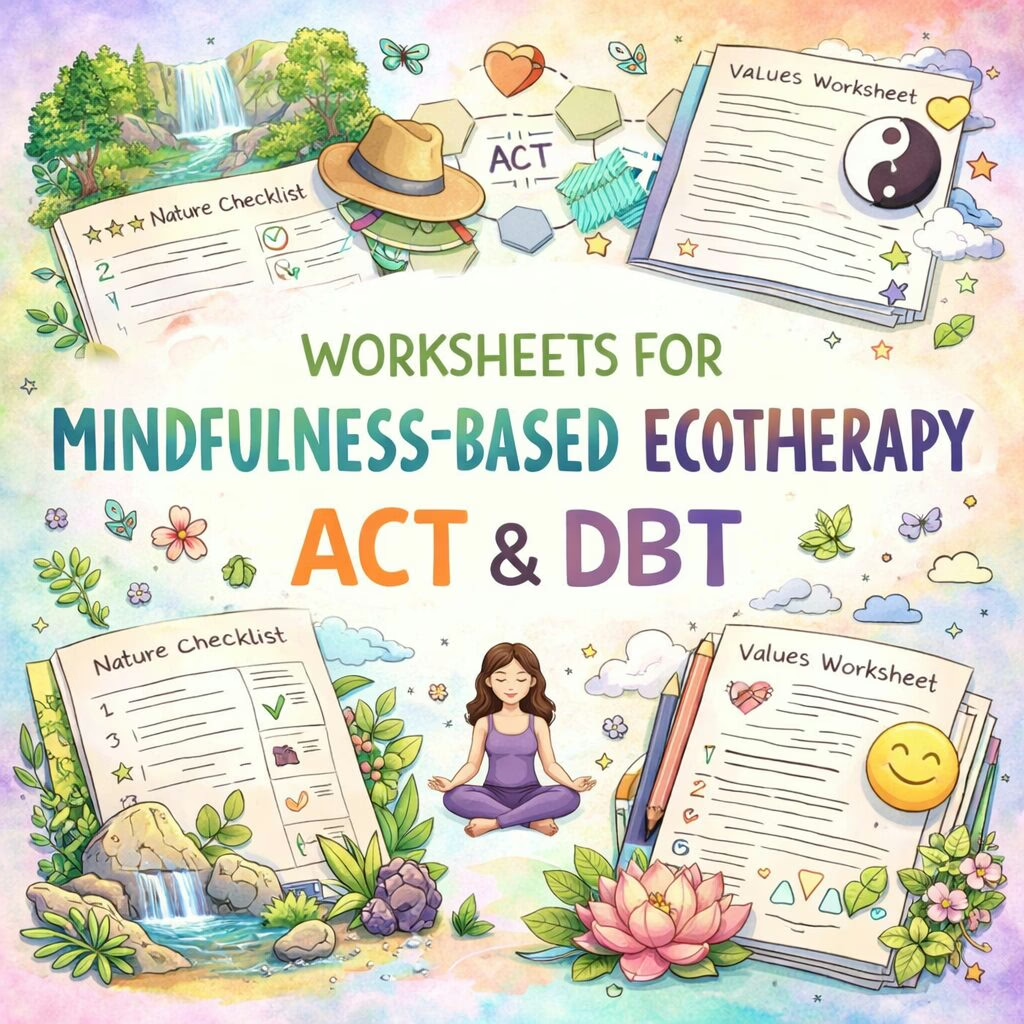
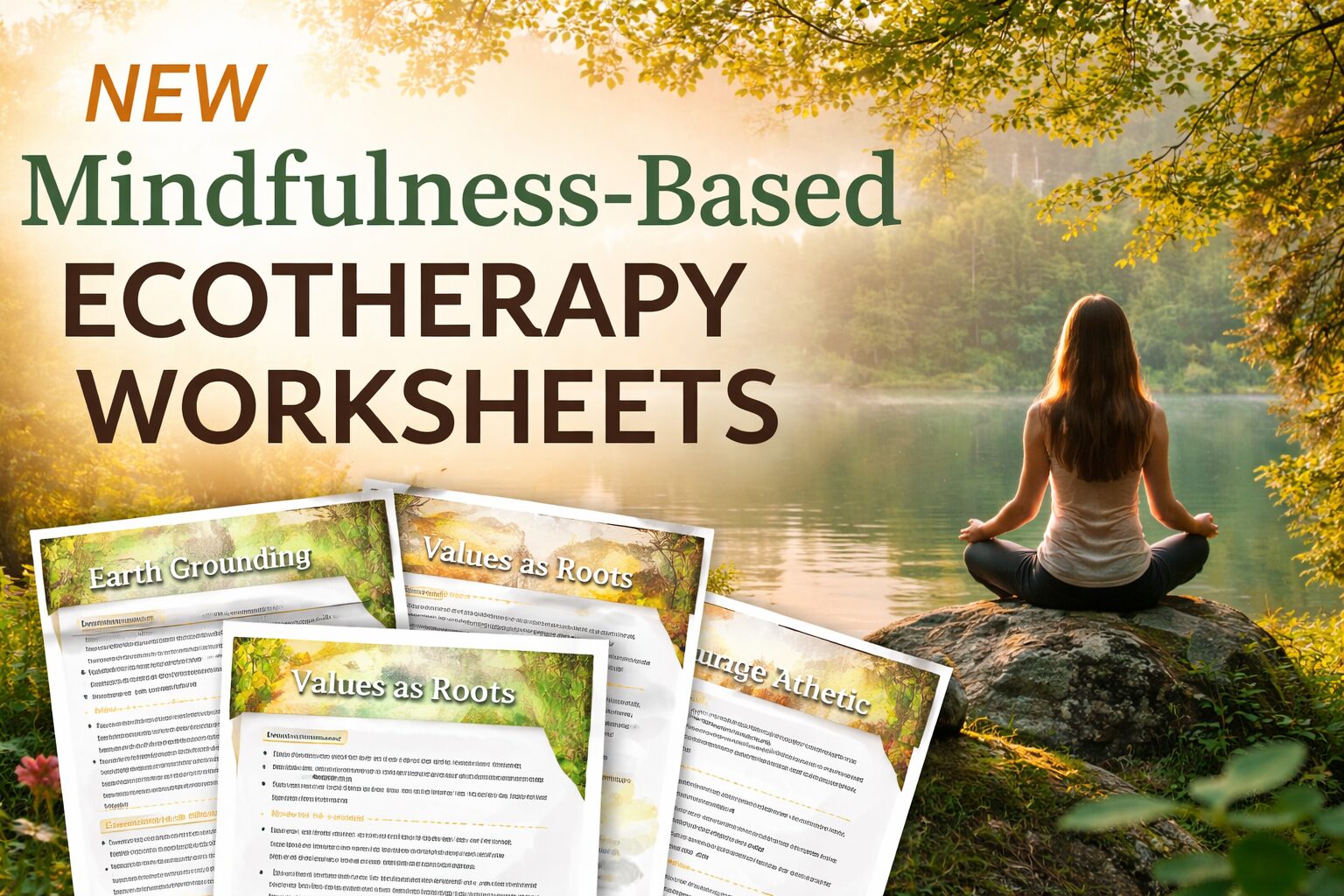
Mindfulness-Based Ecotherapy is a growing practice that combines mindfulness techniques with nature-based experiences to promote emotional balance, self-awareness, and stress relief. For those looking to explore this approach at their own pace, there’s exciting news: Mindfulness-Based Ecotherapy Worksheets are now available for free, offering structured exercises, journaling prompts, and micro-practices that you can use anywhere, anytime.

Disclaimer: These worksheets are not a substitute for professional therapy. If you are experiencing significant mental health challenges, consult a qualified therapist or healthcare professional.


What Are Mindfulness-Based Ecotherapy Worksheets?

Mindfulness-Based Ecotherapy Worksheets are guided tools designed to help you reflect, practice mindfulness, and engage with nature intentionally. Each worksheet focuses on three key areas:

  1. Understanding the Topic – Learn about a mindfulness or nature-based concept.
  2. Ecotherapy Exercise – Engage in a guided nature-focused practice.
  3. Integration – Apply insights to daily life with journaling prompts and micro-practices.

Worksheets also include optional challenges for users who want to deepen their practice. Each worksheet contains four journaling prompts, keeping reflection manageable while encouraging meaningful insight.

Why Use These Worksheets?

Nature has a unique way of teaching us about balance, patience, and presence. The worksheets use natural metaphors from nature, like forests, rivers, gardens, animals, and the seasons, to help you:

  • Reduce stress and regulate the nervous system.
  • Observe thoughts and emotions without over-identifying with them.
  • Cultivate self-compassion and resilience.
  • Explore authenticity and the courage to live in alignment with your True Self.

Even brief interactions with nature, guided by these worksheets, can help reset your mind, improve emotional clarity, and foster a sense of grounded well-being.

Examples of Worksheets You Can Explore

Some of the worksheets available include:

  • Forest Bathing for Restoration – Reduce stress through mindful immersion in trees and natural surroundings.
  • Animal Companionship and Observation – Foster empathy and emotional connection through mindful observation of animals.
  • Earth Grounding – Connect physically with soil, grass, or sand to feel stabilized and rejuvenated.
  • The Authentic Self and the Mask – Recognize conditioned roles and reconnect with your true identity.
  • Self-Compassion as Foundation – Treat yourself with the same kindness you notice in nature.

Each worksheet includes a micro-practice that can be completed in three minutes or less, perfect for daily life, along with guided journaling prompts to deepen reflection.

How to Access the Worksheets

All Mindfulness-Based Ecotherapy Worksheets are free to use as long as copyright and contact information remain intact. You can download them directly from:

These worksheets can be used for personal practice, educational settings, or therapeutic groups, providing accessible tools to cultivate mindfulness, self-awareness, and emotional healing.


Integrating Mindfulness and Nature Into Daily Life

Using these worksheets doesn’t require hours in the forest. Even short, mindful engagements with nature can help:

  • Pause and observe your surroundings.
  • Notice your thoughts and emotions as passing experiences.
  • Ground yourself by connecting with the earth beneath your feet.
  • Reflect on your values, strengths, and vulnerabilities.

Over time, these practices build a foundation for living in True Self, becoming fully present, authentic, and connected to both yourself and the natural world.


Final Thoughts

The new Mindfulness-Based Ecotherapy Worksheets are a versatile, free resource for anyone seeking to enhance mindfulness, reduce stress, and deepen their relationship with nature. While they are not a replacement for therapy, they offer practical tools for reflection, emotional regulation, and personal growth. Explore these worksheets today and discover how a mindful connection with nature can support your journey toward balance, presence, and True Self.


Share Your Thoughts!

What do you think? Share your thoughts in the comments below!


  And don’t forget to subscribe to our newsletter!
Posted on

Mindful Awareness: The Transformative Power of Unlocking Clarity

mindful awareness

Mindful awareness is the foundational skill in Mindfulness-Based Ecotherapy, providing a gateway to living fully in the present moment. Unlike our habitual Doing Mode, where thoughts, tasks, and future planning dominate our attention, mindfulness represents a deliberate shift into Being Mode. In Being Mode, we are fully present, observing our internal and external worlds without distraction or judgment. This practice is a profound way of engaging with life as it unfolds in the now.

About Mindful Awareness: The “What” Skills

Mindful awareness is composed of several core capacities that guide practitioners toward deeper presence. The “what” skills are what you do to be mindful. Observing allows individuals to notice thoughts, feelings, bodily sensations, and environmental cues without immediately reacting. This skill helps cultivate self-awareness and clarifies patterns that may contribute to stress or maladaptive behavior. Describing encourages the labeling of experiences with words, which enhances understanding and cognitive processing of emotional and sensory information. Participating involves fully engaging in activities without detachment or avoidance, nurturing an embodied connection to the present.

About Mindful Awareness: The “How” Skills

The “how” skills of mindfulness involve how to be mindful. Being non-judgmental, another essential element of mindful awareness, allows people to witness experiences without categorizing them as good or bad. This non-reactive stance diminishes self-criticism and promotes psychological flexibility. One-mindfulness refers to focusing on a single task or experience at a time, preventing the mind from scattering across multiple distractions. Finally, being effective emphasizes skillful engagement with life, encouraging actions that align with personal values and goals rather than automatic impulses.

Mindful Awareness and Ecotherapy

The skill of mindful awareness is particularly powerful when paired with ecotherapy techniques, which provide tangible avenues for grounding attention in the natural world. For example, observing the rhythm of waves, the texture of leaves, or the sounds of birds allows individuals to anchor their attention in sensory experience. This integration of mindfulness and nature enhances present-moment awareness, promotes stress reduction, and strengthens the connection between inner states and the external environment.

Mindfulness deepens when you step into nature because the natural world gives you fewer places to hide from the present moment. When you are outside, your senses are gently but persistently engaged. The sound of wind in trees, the uneven texture of a trail under your feet, and the shifting light on water all pull your attention out of Doing Mode and into Being Mode. You are not trying to be mindful.

Trying is doing, and mindful awareness is about being, not doing. You are responding to what is actually happening around you. This sensory richness makes it easier to observe without judgment, to notice thoughts as they arise, and to return again and again to direct experience instead of mental commentary and ruminating thoughts.

Nature also supports the specific skills that make up mindful awareness. When you watch clouds move or leaves sway, you practice observing without needing to intervene. When you silently name what you notice, cool air, birdsong, tightness in your chest, you strengthen the skill of describing. Walking slowly through a forest or along a shoreline invites one-mindfulness, because multitasking stops working out there in nature.

Even emotional experiences become clearer in the natural world. If frustration or sadness arises while sitting near a river, you can practice non-judgment by allowing those feelings to exist alongside the steady flow of water. In this way, nature becomes a living practice space where mindfully living in the moment feels less forced, more embodied, and easier to access. You are not striving for presence. You are already inside it, surrounded by cues that continually bring you back to now.

At the Mindful Ecotherapy Center, we guide clients through the practice of mindful awareness, helping you recognize the difference between Doing Mode and Being Mode, and teaching you how to embody this skill in daily life. By developing mindful awareness, you not only increase self-knowledge and emotional regulation but also lay the groundwork for engaging fully with the subsequent skills of Mindfulness-Based Ecotherapy.


Share Your Thoughts About Mindful Awareness!

What do you think? Share your thoughts in the comments below!


  And don’t forget to subscribe to our newsletter!