Table of Contents
Nature as Nurture is one of the core ecotherapy skills in Mindfulness-Based Ecotherapy, and it addresses something your nervous system already knows: you are not designed to live in constant stimulation, artificial light, and the chronic urgency imposed by modern life. Nature as Nurture emphasizes the healing and supportive qualities of natural environments and recognizes nature as a reliable source of comfort, restoration, and emotional regulation. This skill is a practical, evidence-informed way of helping you recover from stress, overwhelm, and emotional depletion.
In Mindfulness-Based Ecotherapy, nurturing does not mean avoiding difficulty or pretending life is gentle. It means creating conditions where healing becomes possible. When you intentionally immerse yourself in natural settings, your body often responds before your mind catches up. Your breathing slows. Muscle tension eases. Your attention widens. This is not because you are trying harder, but because nature reduces the cognitive and sensory load that keeps you locked in Doing Mode. Nature gives your system permission to rest.
Mindfulness and Nature as Nurture
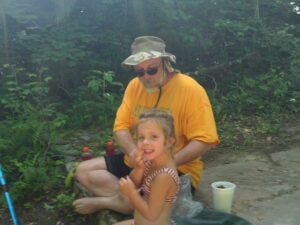
Mindfulness is what allows you to receive this nurturing effect instead of rushing past it. When you practice mindful awareness in nature, you engage your senses more fully. You notice the temperature of the air, the texture of the ground beneath your feet, and the soundscape around you. These sensory experiences anchor you in the present moment and gently guide your nervous system toward regulation.
Exploring nature with your senses naturally brings you into the present moment because it’s impossible to see, touch, taste, smell, or hear anything in the past or in the future. You can only experience nature through your senses in the present moment. Nature does not demand productivity. It offers presence. That alone can feel deeply nurturing in a culture that treats relaxation like a moral failure instead of an imperative for good health.
Nature as Nurture: The Restorative Power of the Environment
Nature as Nurture is especially powerful during times of grief, burnout, anxiety, or emotional exhaustion. When you are depleted, insight and problem-solving often make things worse. What you need first is restoration. Sitting near water, walking beneath trees, or even tending a small garden can provide a sense of being held by something larger than your thoughts. This sense of being supported, rather than needing to perform, helps rebuild emotional resilience from the ground up.
This skill also reframes self-care. Instead of asking what you should be doing to fix yourself, Nature as Nurture asks what kind of environment supports your well-being. In nature, nourishment happens through exposure, not effort. You do not have to earn the shade of a tree or the calm of a shoreline. You simply have to allow yourself to be there. That experience can soften harsh self-judgment and remind you that care does not always require struggle.
We are One
From an ecotherapy perspective, Nature as Nurture helps repair the false separation between you and the natural world. When you feel supported by nature, you begin to experience belonging rather than isolation. This sense of connection can be profoundly regulating, particularly if you struggle with chronic stress or trauma. Nature offers consistency without conditions. It shows up whether you feel worthy or not.

At the Mindful Ecotherapy Center, Nature as Nurture is practiced intentionally, not passively. You are guided to notice how different environments affect your mood, energy, and sense of safety. Over time, you learn which natural settings help you settle, which help you process emotion, and which help you recharge. This turns nature from an occasional escape into a reliable resource for healing and resilience.
Ultimately, Nature as Nurture reminds you that healing does not always come from insight or effort. Sometimes it comes from being somewhere that allows your body and mind to remember how to settle. In a world that constantly pulls you outward, nature invites you back to yourself, quietly and without judgment.
To learn more about Mindfulness-Based Ecotherapy and how nature-based practices can support your healing and resilience, visit www.mindfulecotherapycenter.com
References
Bratman, G. N., Anderson, C. B., Berman, M. G., Cochran, B., de Vries, S., Flanders, J., Folke, C., Frumkin, H., Gross, J. J., Hartig, T., Kahn, P. H., Kuo, M., Lawler, J. J., Levin, P. S., Lindahl, T., Meyer-Lindenberg, A., Mitchell, R., Ouyang, Z., Roe, J., … Daily, G. C. (2021). Nature and mental health: An ecosystem service perspective. Science Advances, 7(20), eaba113. https://doi.org/10.1126/sciadv.aba113
Kuo, M. (2021). How might contact with nature promote human health? Promising mechanisms and a research agenda. Frontiers in Psychology, 12, 691399. https://doi.org/10.3389/fpsyg.2021.691399
Passmore, H. A., & Howell, A. J. (2020). Nature involvement increases hedonic and eudaimonic well-being: A two-week experimental study. Ecopsychology, 12(1), 1–11. https://doi.org/10.1089/eco.2019.0025
Schutte, N. S., & Malouff, J. M. (2021). Mindfulness and connectedness to nature: A meta-analytic investigation. Personality and Individual Differences, 179, 110984. https://doi.org/10.1016/j.paid.2021.110984
Twohig-Bennett, C., & Jones, A. (2020). The health benefits of the great outdoors: A systematic review and meta-analysis of greenspace exposure and health outcomes. Environmental Research, 166, 628–637. https://doi.org/10.1016/j.envres.2018.06.030
van den Bosch, M., & Ode Sang, Å. (2021). Urban natural environments as nature-based solutions for improved public health – A systematic review of reviews. Environmental Research, 158, 373–384. https://doi.org/10.1016/j.envres.2017.05.040
Share Your Thoughts About Nature as Nurture!
What do you think? Share your thoughts in the comments below!
And don’t forget to subscribe to our newsletter!