Table of Contents
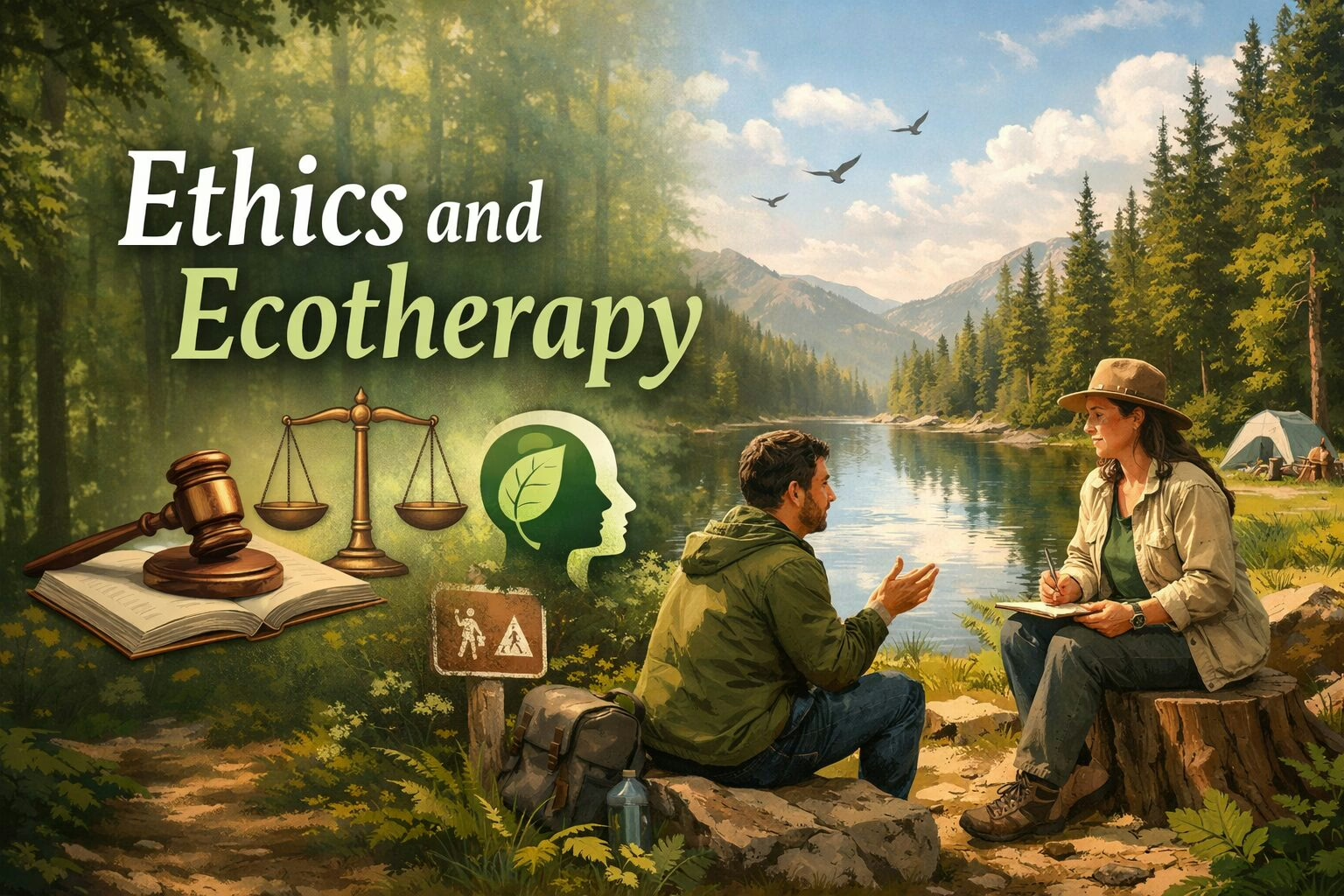
Ethical practice is an ongoing discipline that evolves as your work evolves. As more counselors and helping professionals step outside traditional office settings and incorporate nature-based approaches, the need for specialized ethical training becomes unavoidable. The Ethics and Ecotherapy online home study course from the Mindful Ecotherapy Center, PLLC, a National Board for Certified Counselors-approved continuing education provider (NBCC ACEP #7022), was created to meet that exact need.
This course goes beyond standard ethics instruction. It addresses the real-world complexities that arise when mindfulness, ecology, and professional responsibility intersect.
Why Ethics and Ecotherapy?
Ecotherapy recognizes that people are not separate from their environments. Your work unfolds within ecosystems shaped by culture, power, access, and history. Traditional ethics courses often assume a controlled indoor setting and clearly defined roles. Ethics and Ecotherapy challenges that assumption and asks deeper questions, such as:
- How do ethical boundaries shift when sessions take place outdoors?
- What does informed consent look like in nature-based work?
- How do confidentiality and privacy change in public or semi-public spaces?
- What ethical responsibilities do you hold toward land, place, and non-human life?
This course treats these questions as central to competent, responsible practice.
What You Will Learn in Ethics and Ecotherapy
The Ethics and Ecotherapy course provides a structured yet reflective exploration of ethical decision-making within mindfulness-based and nature-informed practice. Key areas of learning include:
- Core ethical principles across counseling and helping professions
- Ethical foundations of ecotherapy
- Boundary management and dual relationships in outdoor settings
- Risk management, safety, and professional liability
- Cultural humility, power dynamics, and environmental justice
- Ethical decision-making models applied to ecotherapy with case examples
Rather than presenting ethics as rigid rules, the course emphasizes ethical discernment. You learn how to pause, assess context, and respond with integrity when clear answers are not immediately available.
The Role of Mindfulness-Based Ecotherapy
A defining feature of Ethics and Ecotherapy is its grounding in mindfulness-based ecotherapy. Ethical challenges are rarely just intellectual problems. They are influenced by stress, emotional reactivity, values, and blind spots. This course integrates mindfulness practices to help you notice your internal responses and stay aligned with your professional ethics.
Mindfulness-based ecotherapy supports:
- Greater self-awareness during ethical dilemmas
- Reduced reactivity and clearer judgment
- Alignment between values, actions, and professional standards
- Ethical resilience in complex or ambiguous situations
Ethics, in this framework, becomes a lived practice rather than a theoretical obligation.
Flexible Online Homestudy Format
The Ethics and Ecotherapy course is offered as an online homestudy, allowing you to complete the training at your own pace. This format is ideal if you balance a full caseload, administrative responsibilities, or personal commitments.
The course includes:
- Engaging video instruction
- Practical examples drawn from real-world ecotherapy contexts
- Opportunities for reflection and integration
- A final assessment that reinforces learning objectives
Upon completion, you earn continuing education credit through NBCC ACEP #7022, supporting licensure and professional development requirements.
Who Should Take Ethics and Ecotherapy
This course is designed for counselors, therapists, coaches, educators, and other helping professionals who want to practice ethically in a changing world. Ethics and Ecotherapy is especially relevant if you:
- Use or plan to use ecotherapy or outdoor interventions
- Want clearer ethical guidance for nontraditional settings
- Care about environmental responsibility and social justice
- Value mindfulness-informed professional growth
No prior training in ecotherapy is required. The course is accessible while still offering depth for experienced practitioners.
Why Ethics and Ecotherapy Matter Now
As climate-related stress, burnout, and disconnection from nature increase, more people are seeking healing through ecotherapy. With this growth comes greater ethical responsibility. Ethics and Ecotherapy ensures that your work remains grounded, respectful, and accountable to both professional standards and the living systems that support wellbeing.
Ethical practice protects not only the people you serve but also you, your profession, and the ecosystems you engage with.
Enroll Today
Learn more about Ethics and Ecotherapy and enroll through the Mindful Ecotherapy Center:
www.mindfulecotherapycenter.com
For ongoing writing and insights on mindfulness-based ecotherapy, subscribe here:
https://mindfulecotherapy.substack.com/subscribe
Ethics is not about perfection. It is about awareness, responsibility, and care. Ethics and Ecotherapy helps you practice all three with clarity and confidence.
Suggest a Course!
Do you have a course you’d like to have the Mindful Ecotherapy Center consider developing? Use the form below to make a suggestion or share your thoughts in the comments below!