
|
|||||||||||||
|
Terms and Conditions
Privacy Policy | Terms and Conditions | Refunds and Returns Policy
Last updated December 22, 2025
Table of Contents
THESE TERMS
These terms and conditions govern the way in which we supply products to you, including any courses created by the Mindful Ecotherapy Center, its partners, or its representatives. Please read these terms carefully before you submit your order to us. These terms tell you who we are, how we will provide products to you, how you and we may change or end the contract, what to do if there is a problem, and other important information. All rights not expressly granted in these terms are hereby reserved. You agree to review this agreement periodically to ensure that you are aware of any amendments to this agreement, which may be made at any time.
INFORMATION ABOUT US AND HOW TO CONTACT US
We are the Mindful Ecotherapy Center, PLLC, a company registered in Tacoma, Washington. You may contact us at chuck@mindfulecotherapy.com or by writing to us at:
Mindful Ecotherapy Center, PLLC
9524 E E St.
Tacoma WA 98445
1. GRANT OF LICENSE
In consideration of your payment, we hereby grant you a license to use the purchased eLearning courses (“the Products”). This license is limited, revocable, non-exclusive, non-sublicensable and non-transferable, and is subject to the rights and obligations granted under these Terms. This license is personal to you and cannot be shared or exchanged with others.
2. GENERAL
We develop, distribute, and maintain the Products, and will also provide you with login details. We will also manage your access to the Products and provide support to you, where necessary. You shall not copy, modify, transmit, distribute, or in any way exploit the Products or any other copyrighted materials provided, other than for your individual training.
Any other purpose is expressly prohibited under these terms. You shall also not permit anyone else to copy, use, modify, transmit, distribute, or in any way exploit the Products or any other copyrighted materials. We provide the materials ‘as is’ and without any warranties, whether express or implied, except those that cannot be excluded under statute. We also do not warrant that the materials will be error-free, including technical inaccuracies.
3. ACCESS TO MATERIALS
The starting date of your access to the Products is deemed to be the date that you first have access. We will attempt to contact you when your access period has ended. Where this is the case, we cannot guarantee that certification or completion (as appropriate) will be possible. As such, it is your responsibility to ensure that you complete the content within the allocated time period. If you do not think this will be possible, then extensions of time are available for purchase at an additional cost. We will take all commercially reasonable steps to provide you with uninterrupted access to the Products.
However, your access may be restricted from time to time for reasons beyond our control. Such reasons include force majeure events, power outages, and actions from computer hackers and others acting outside the law. Your access may also be interrupted due to software issues, server downtime, increased Internet traffic, programming errors, regular maintenance, and other related reasons. Where this is the case, we will take commercially reasonable steps to restore your full access within a reasonable period of time. ‘Commercially reasonable’ in these terms shall mean reasonable efforts taken in good faith, without an unduly burdensome use or expenditure of time, resources, personnel, or money.
Our joint aim is to provide courses and materials of the highest quality. As such, improvements or changes to the Products or any other materials may occur at any time without prior notification to ensure that they are up to date and accurate. Where your access to the Products is restricted for any of the above reasons, we may provide you with a free extension of time at our sole discretion.
4. PRICING AND PAYMENT
We use third-party payment providers, depending on the way in which you make payments – Stripe and PayPal. Payment for the Products must be made at the point of purchase. You agree to provide payment for the Products in the stipulated currency, and you will be liable to pay any relevant conversion charges, as well as applicable sales tax in your region.
Please note that we must receive your payment in full before providing you with access to the Products. Your payment includes the licensing of the Products for a limited period of time that is appropriate for the eLearning content. We are unable to provide a refund if you fail to complete the content within the allocated time, except at our absolute and sole discretion. We reserve our right to review and change the pricing of any of our products. This will not affect products that have already been purchased.
5. CANCELLATION AND RESTRICTION POLICY
Where Products are delivered to you immediately, you will not have the right to change your mind. In other cases, you may change your mind within fourteen (14) days of purchase, so long as materials have not been provided to you, downloaded, streamed, or otherwise accessed. If you do wish to cancel, please contact us via email. It is your responsibility to ensure that you meet the system requirements, including compatible hardware, software, telecommunications equipment, and Internet service, prior to purchasing any content. We are unable to provide refunds where your access to the Products is inhibited due to insufficient system requirements. We may restrict your access to the Products if you breach these terms, including, without limitation:
a) A failure to make any payment due to us; or
b) Failure to provide accurate information that is necessary for us to provide the Products to you.
In these circumstances, we will inform you in writing with seven (7) days’ notice that your access to the Products will be restricted.
6. YOUR RIGHTS
This is a summary of your key legal rights. If you are based outside the United States, we recommend you review your local statutory rights. Under the laws of the United States, the Products must be as described, fit for purpose, and of a satisfactory quality.
If the Products are faulty, then you are entitled to ask for a repair or a replacement, and if the fault cannot be fixed, or it has not been fixed within a reasonable time and without significant inconvenience, then you can get some or all of your money refunded. If you can show that the fault has damaged your device and that we have not used reasonable care and skill, then you may be entitled to compensation.
7. EXAM VOUCHERS
Where you have purchased exam vouchers in addition to the Products, these vouchers will be subject to the terms and conditions of the relevant exam provider. Exam vouchers are non-refundable once they have been used for booking an exam.
8. INTELLECTUAL PROPERTY
All rights, title and interest in intellectual property rights relating to the Products including copyright, patents, trademarks, trade secrets, improvements, developments, proprietary information, know-how, processes, methods, business plans or models (including computer software and preparatory and design materials thereof) and all other intellectual property (whether registered or not) developed or created from time to time shall exclusively be owned by the Mindful Ecotherapy Center.
While you may utilize the intellectual property, you understand that there shall be no transfer of ownership of the same. Nothing that you see or read in the Products may be copied, reproduced, modified, distributed, transmitted, republished, displayed, or performed for commercial use. All other trademarks, service marks, and trade names in this material are the marks of the respective owners, and any unauthorized use is prohibited.
9. OUR RESPONSIBILITY FOR LOSS OR DAMAGE SUFFERED BY YOU
We are responsible to you for foreseeable loss and damage caused by us. If we fail to comply with these terms, we are responsible for loss or damage you suffer that is a foreseeable result of our breaking this contract or our failing to use reasonable care and skill. Loss or damage is foreseeable if it is either obvious that it will happen or if we are both aware it might happen, such as where you have discussed the possibility with us during the sales process. We are not liable to you in any way for any indirect, special, incidental, punitive, or consequential damages of any character, including without limitation damages for loss of goodwill, work stoppage, computer failure or malfunction, loss of data, loss of productivity or contract, or any other commercial damages or losses.
We do not exclude or limit our liability to you in any case where it would be unlawful to do so. This includes liability for death or personal injury caused by our negligence or the negligence of our employees, agents, or subcontractors; for fraud or fraudulent misrepresentation; for breach of your legal rights in relation to the products (summarized above at 6). If the Products damage your device or digital content belonging to you, and this is caused by our failure to use reasonable care and skill, we will either repair the damage or pay you compensation. However, we will not be liable for damage which you could have avoided by following our advice, following installation/download instructions, or having in place the minimum system requirements as advised by us. Our liability to you for any damage to your computer system or loss of data resulting from the downloading of content is limited to the amount you have paid for the Products. In no event shall we be liable for damages in excess of this sum.
10. OTHER IMPORTANT TERMS
You need our consent to transfer your rights under these terms to someone else. We may not agree to this, as these terms grant a license for your benefit only. Nobody else has any rights under these terms – they are between you and us. No other person shall have any rights to enforce any of its terms.
If a court finds part of these terms illegal, then the rest will continue in force. Even if we delay in enforcing this contract, we can still enforce it later. If we do not insist immediately that you do anything you are required to do under these terms, or if we delay in taking steps against you in respect of your breaking this contract, that will not mean that you do not have to do those things, and it will not prevent us from taking steps against you at a later date.
11. GOVERNING LAW
These terms are governed by and construed in accordance with the laws of Tacoma, Washington, and the United States, and you can bring legal proceedings in the United States courts in Pierce County, Washington.
UPDATES
June 26, 2023
Clarified refund and return policy.
December 22, 2025
In 2025, we moved from an LLC to a PLLC under Washington state law when we started providing teletherapy services. Page was upgraded to reflect this change. Language around this change was also clarified and updated.
What is Ecotherapy?

Table of Contents

For most of its existence, homo sapiens has lived in harmony with nature as hunter/gatherers. Such a lifestyle requires a vast knowledge of the seasons, and of the patterns and habits of wildlife, and of plants and herbs and their healing powers. Industrialization and urbanization are fairly recent phenomena on an evolutionary scale. We still carry the genetic memory of our ancestors who lived in untamed nature. Our brains are wired for the outdoors and nature. A growing body of research demonstrates that not only do we feel better when we make time for nature, but it is also actually a requirement for good physical and mental health!
Ecopsychology and Ecotherapy
The field of ecopsychology studies how humans interact with nature. Ecopsychology is a philosophy combining elements of psychology and ecology. It is the philosophy that mental health is contingent upon the health of the environment. Humankind and the environment are part of an interrelated system. We are not separate from nature. We are a part of nature.

Ecopsychology suggests that there is a synergistic relation between planetary and personal well-being; that the needs of the one are relevant to the needs of the other. In short, what we do to the environment, we do to ourselves. Ecotherapy is the practical application of this knowledge. In ecotherapy, nature is the “therapist.” In practicing the techniques of ecotherapy, we allow the healing power of nature to work its magic on us. Hölzel et al (2011) demonstrated that meditative states of mindfulness stimulate neural growth in the cerebral cortex in the areas of the brain responsible for emotional regulation, good judgment, insight, and impulse control. Nature experiences have been demonstrated in several studies to produce meditative states (fascination, relaxation, and mindfulness).
Ecotherapy: Natural Experiences with Nature
Experiences in and with nature, or natural experiences, are ways in which we consciously choose to allow nature to work its healing magic on us. Some types of natural experiences include:
Facilitated Wilderness Experiences
In these types of experiences, a trained facilitator takes you into the woods for an adventure. These events can be anything from a wilderness experience in ecotherapy led by a therapist or counselor to a hunting trip led by a wilderness guide. Kuo & Taylor (2004) demonstrated that therapy and other activities conducted in outdoor settings reduced symptoms of Attention-Deficit Hyperactivity Disorder. Whittington (2006) found that wilderness skills training gave adolescent girls increased self-esteem and self-confidence and helped to shatter gender stereotypes.
Animal-Assisted Therapy
Animal therapy in the form of contact with pets and/or wild or domesticated animals enhances self-actualization and can lessen symptoms of depression. Antonioli & Reveley (2005) found that simply swimming with dolphins can greatly reduce symptoms of depression. Other studies have shown that owning pets, or even just watching fish in an aquarium, can greatly reduce stress. Equine Therapy uses horses to facilitate mental and physical well-being. There are many other ways that animals can help us lead happier lives, as any pet owner can tell you!
Therapeutic Gardens
Sempik & Spurgeon (2006) demonstrated that therapeutic gardening reduces stress and lessens symptoms of depression. Blair (2009) discovered that gardening can be used as a means of helping school children to enhance self-sufficiency, social identity, meaning, and self-integration. There’s just something very healing about planting something and nurturing it as you watch it grow.
Vacations
Berto (2014) discovered that outdoor activities reduce stress and restore energy. If you’ve ever had to miss a vacation, you’re probably painfully aware of the regenerative power of taking a week or so off to spend time in nature. Cole (2012) found that you don’t need a facilitator or guide to enjoy health and well-being benefits from the use of wilderness areas. There’s a reason we’re attracted to beaches and national parks!
Architecture Incorporating Natural Spaces
Nature can be incorporated into the home environment through the use of plants, an aquarium, or even recorded nature sounds. Alvarsson et al (2010) studied the positive mental health effects of listening to nature sounds.
Outdoor Classrooms
Dennis, Wells & Bishop (2014) revealed that outdoor classrooms enhanced many critical factors of the educational experience, including: Enhanced retention, better focus, more attention to detail, less hyperactivity, more relaxation, increased confidence and self-esteem, and better cognitive functioning
Why Mindfulness-Based Ecotherapy?
Mindfulness-based ecotherapy (MBE) enhances traditional ecotherapy by combining the restorative benefits of nature with the self-regulation and awareness skills cultivated through mindfulness practices. Ecotherapy alone has been shown to reduce stress, improve mood, and increase feelings of connectedness to the natural environment (Berto, 2014).
By integrating mindfulness, participants are encouraged to attend fully to present-moment sensory experiences within natural settings, which can deepen emotional processing, reduce rumination, and amplify psychological restoration (Kabat-Zinn, 2003). This combination strengthens the therapeutic impact, particularly for individuals prone to anxiety or depression, by not only providing exposure to nature but also fostering intentional engagement with it. Mindfulness enhances attentional control, allowing participants to notice subtle natural cues, reflect without judgment, and cultivate a sense of grounded presence, thereby making ecotherapy sessions more effective and transformative (Berto, 2014; Kabat-Zinn, 2003).
References
Alvarsson JJ, Wiens S, Nilsson ME. Stress recovery during exposure to nature sound and environmental noise. Int J Environ Res Public Health. 2010 Mar;7(3):1036-46. doi: 10.3390/ijerph7031036. Epub 2010 Mar 11. PMID: 20617017; PMCID: PMC2872309.
Antonioli C, Reveley MA. Randomised controlled trial of animal facilitated therapy with dolphins in the treatment of depression. BMJ. 2005 Nov 26;331(7527):1231. doi: 10.1136/bmj.331.7527.1231. PMID: 16308382; PMCID: PMC1289317.
Berto, R. (2014). The role of nature in coping with psycho-physiological stress: A literature review on restorativeness. Behavioral Sciences, 4(4), 394–409. https://doi.org/10.3390/bs4040394
Blair, D. (2009). The child in the garden: An evaluative review of the benefits of school gardening. Journal of Environmental Education, 40(2), 15–38.
Cole, D. N. (2012). Wilderness visitor experiences: A selective review of 50 years of research. Park Science, 28(3), Winter 2011‑2012. https://www.fs.usda.gov/rm/pubs_other/rmrs_2012_cole_d001.pdf
Dennis, S. F., Wells, A., & Bishop, C. (2014). A post-occupancy study of nature-based outdoor classrooms in early childhood education. Children, Youth and Environments, 24(2). https://doi.org/10.7721/chilyoutenvi.24.2.0035
Fieldhouse J, Sempik J. ‘Gardening without Borders’: Reflections on the Results of a Survey of Practitioners of an ‘Unstructured’ Profession. British Journal of Occupational Therapy. 2007;70(10):449-453. doi:10.1177/030802260707001006
Hölzel BK, Carmody J, Vangel M, Congleton C, Yerramsetti SM, Gard T, Lazar SW. Mindfulness practice leads to increases in regional brain gray matter density. Psychiatry Res. 2011 Jan 30;191(1):36-43. doi: 10.1016/j.pscychresns.2010.08.006. Epub 2010 Nov 10. PMID: 21071182; PMCID: PMC3004979.
Kabat-Zinn, J. (2003). Mindfulness-based interventions in context: Past, present, and future. Clinical Psychology: Science and Practice, 10(2), 144–156. https://doi.org/10.1093/clipsy/bpg016
Taylor AF, Kuo FE. Children with attention deficits concentrate better after walk in the park. J Atten Disord. 2009 Mar;12(5):402-9. doi: 10.1177/1087054708323000. Epub 2008 Aug 25. PMID: 18725656.
Share Your Thoughts!
What do you think? What courses would you like the Mindful Ecotherapy Center to add in the future? Share your thoughts in the comments below! And don’t forget to subscribe to our newsletter!
Sensing Wolf and Thinking Wolf: An Empowering Tale of 2 Wolves
Table of Contents

An old Grandfather said to his grandson, who came to him with anger at a friend who had done him an injustice, “Let me tell you a story. I, too, at times, have felt a great hate for those who have taken so much, with no sorrow for what they do. But hate wears you down, and does not hurt your enemy. It is like drinking poison and wishing your enemy would die. I have struggled with these feelings myself many times.”
He continued, “It is as if there are two wolves inside me. One is good and does not harm. He lives in harmony with all around him, and does not take offense when no offense was intended. He will only fight when it is right to do so, and in the right way. But the other wolf is full of anger. The littlest thing will set him into a fit of temper. He fights everyone, all the time, for no reason. He cannot think because his anger and hate are so great. It is helpless anger, for his anger will change nothing.”
“Sometimes, it is hard to live with these two wolves inside me, for both of them try to dominate my spirit.”
The boy looked intently into his Grandfather’s eyes and asked, “Which one wins, Grandfather?”
The Grandfather smiled and quietly said, “The one I feed.”
A Tale of Two Wolves, from a Cherokee legend as re-told in The Mindful Mood Management Workbook by Charlton Hall
Thinking Wolf and Sensing Wolf
The more energy we spend on sensing, the less energy we have to spend on thinking. Based on the tale of two wolves above, we could see the two wolves as “thinking wolf” and “sensing wolf.” The more energy you give to the sensing wolf, the less energy you give to the thinking wolf. The less energy the thinking wolf receives, the weaker the thinking wolf becomes. Conversely, the more energy the sensing wolf receives, the stronger the sensing wolf becomes. By shifting from thinking to sensing, you’re not trying to ‘kill’ the thinking wolf. You’re not engaging in doing by trying to make the thinking wolf go away. You’re simply depriving it of energy so that it may eventually go away on its own. Even if it doesn’t go away on its own, you’re not focusing your attention on it. Since your attention isn’t on it, thinking wolf can’t grab you by the throat, refusing to let go.
The Wolf You Feed
It could be said that focusing on what your senses are telling you is a type of thinking as well, and that is partially true; however, the difference is that focusing on what your senses are telling you is a type of thinking devoid of emotional content. If you’re in a thinking cycle that is causing you anxiety or depression, then anxiety and depression are emotions. But unless you hate trees for some reason, simply sitting quietly in a forest and observing a tree as if you are an artist about to draw that tree is an exercise devoid of emotional content. By focusing on the emotionally neutral stimuli found in nature, we allow ourselves to feed the sensing wolf.
How Mindfulness-Based Ecotherapy Helps Nurture the Sensing Wolf Over the Thinking Wolf
The metaphor of the two wolves offers a useful way to understand the tension between present-moment awareness and the mental habits that fuel anxiety, stress, and depression. The “sensing wolf” represents the part of us that experiences life directly through the five senses, grounded in what is happening here and now. The “thinking wolf,” on the other hand, is the part of the mind that ruminates, analyzes, spirals into what-ifs, and fixates on problems. Both wolves have value, but in many people, the thinking wolf grows overfed, dominating the internal landscape with worry and mental noise. Mindfulness-Based Ecotherapy creates conditions that allow the sensing wolf to regain strength, balance, and presence, shifting the center of gravity away from constant mental churn.
Natural Environments Favor the Sensing Wolf
One reason this works so well is that natural environments naturally favor the sensing wolf. When someone steps outdoors into a wooded area, a park, a shoreline, or even a garden, the sensory field becomes richer and more inviting than the world of internal rumination. Leaves move in the breeze, sunlight flickers, birds call, water flows, and colors shift. The brain is gently nudged toward sensory engagement, which quiets the internal monologue that the thinking wolf thrives on. In this state, attention moves from the world of thoughts to the world of direct experience. This transition alone can reduce stress and interrupt the cycles that reinforce anxiety and depression.
Mindfulness-Based Ecotherapy builds on this natural shift by offering structured practices that actively engage the sensing wolf. Techniques like mindful walking, breath awareness in natural settings, sensory-focused grounding, and observation of ecological patterns encourage participants to connect deeply with what is happening in the moment. When the senses are occupied and awake, the thinking wolf loses some of its grip. Rumination is harder to maintain while noticing the texture of a stone, the temperature of the air, or the scent of pine needles. Over time, this repeated redirection strengthens neural pathways associated with presence rather than worry.
Chilling Out with the Sensing Wolf
Another benefit of nurturing the sensing wolf is the way ecotherapy interacts with the body’s stress physiology. Rumination activates the sympathetic nervous system, keeping the body stuck in low-grade fight-or-flight. Sensory engagement, particularly in nature, stimulates the parasympathetic system, which promotes calm, digestion, and restoration. As the body calms, the mind follows. When the nervous system shifts into balance, the sensing wolf becomes easier to access, and the thinking wolf becomes less dominant. This physiological support is one of the reasons nature-based mindfulness is such a potent intervention for chronic stress and mood challenges.
Mindfulness-Based Ecotherapy also provides a corrective to the thinking wolf’s habit of interpreting thoughts as facts. When individuals practice noticing sensations without judgment, they simultaneously learn to observe thoughts with the same attitude. Thoughts become passing mental events rather than urgent demands for action or attention. This distances the self from the thinking wolf’s tendency to catastrophize or rehearse negative narratives. Instead of wrestling with thoughts, participants learn to acknowledge them and return to sensory experience, strengthening the sensing wolf through repetition and compassion.
Sensing Wolf and Connection
Finally, ecotherapy nurtures the sensing wolf by cultivating connection—connection to nature, to the present moment, and ultimately to one’s own internal experience. The thinking wolf often thrives in isolation, spinning stories without grounding in the wider world. The sensing wolf grows stronger when individuals feel part of a larger ecosystem, rooted and supported by the living environment around them. This sense of belonging reduces the vulnerability that fuels rumination and helps reinforce emotional resilience.
By feeding the sensing wolf through mindfulness-based experiences in nature, individuals create healthier internal balance. The thinking wolf does not disappear, but it no longer runs the entire show. Over time, present-moment awareness becomes more accessible, anxiety decreases, and emotional well-being improves. This is the core strength of Mindfulness-Based Ecotherapy: teaching people how to live more fully in the present while gently quieting the mental habits that keep them trapped in stress.
Share Your Thoughts!
What do you think? Share your thoughts in the comments below! And don’t forget to subscribe to our newsletter!

School Shootings – Charlton Hall on WSPA Channel 7
Table of Contents
Understanding School Shootings: Focusing on Probability Over Possibility
When Charlton Hall, MMFT, PhD, served as Chair of Behavioral Health for ReGenesis Health Care in Spartanburg, South Carolina, he became a trusted voice on issues affecting children’s mental health and safety. Among the many topics he addressed, one particularly sensitive subject was that of school shootings. As tragic and terrifying as these events are, they present unique challenges for both parents and educators in how they discuss safety with children without instilling excessive fear. In interviews with local reporters, Dr. Hall emphasized a subtle but crucial distinction: when children ask about the likelihood of a school shooting, it is often more helpful to focus on probability rather than mere possibility.
The Normalization of School Shootings
In our current cultural climate, news of shootings appears frequently and often with intense coverage, giving the impression that such events are a constant, ever-present threat. For children and adults, this can trigger heightened anxiety and a sense of impending danger. Dr. Hall recognized that children’s natural curiosity and concerns about safety needed to be addressed with honesty, but also with perspective. His guidance was clear: while it is technically always possible that a school shooting could happen at any given school, the probability that it will occur at their particular school is relatively low. By framing the conversation around probability, children can develop a realistic understanding of risk without being paralyzed by fear.
Probability vs. Possibility
Dr. Hall’s approach utilizes behavioral health principles and child development research to help children understand risk and probability. Children may misinterpret rare events as common due to media coverage, but adults can assist by contextualizing these events and comparing them to more frequent risks. For instance, despite media reports of multiple school shootings, the actual probability of a child experiencing such an event at their own school is very low. Understanding the difference between possibility and probability can help children feel safer while acknowledging real dangers.
Pay Attention to the Emotional Component
Importantly, Dr. Hall also highlighted the emotional component of these conversations. Children often ask about school shootings not only to understand the facts but also to seek reassurance. By emphasizing probability, adults validate children’s concerns while simultaneously reinforcing that most schools remain safe environments. This balanced approach reduces anxiety without resorting to false assurances, which can undermine trust if children later encounter distressing news.
Beyond individual conversations, Dr. Hall advocated for proactive safety measures in schools, such as well-trained staff, emergency preparedness drills, and clear communication strategies. While these measures cannot eliminate the possibility of a school shooting, they do reduce risk and empower children and educators to respond effectively if an incident were ever to occur. By coupling probability-focused discussions with tangible safety practices, children gain both cognitive and practical tools for navigating their environment confidently.
Informed, Compassionate Conversations
In a society where sensationalized news and social media coverage amplify fears, Dr. Hall’s perspective is particularly relevant. Focusing on probability rather than possibility is not a matter of ignoring danger but of teaching children to weigh realistic risks against anxiety-inducing scenarios. This approach fosters resilience, critical thinking, and a grounded sense of personal safety, all of which are essential components of behavioral health.
Charlton Hall’s guidance on this delicate topic demonstrates the importance of informed, compassionate communication when addressing children’s fears. By explaining that while a school shooting is always possible, the probability of it occurring at their particular school is low, he provided parents, educators, and children alike with a framework for understanding risk, reducing anxiety, and maintaining emotional balance in the face of alarming news. His work continues to serve as a model for behavioral health professionals navigating the complexities of child safety, perception of risk, and media influence in contemporary society.
Transcript of the WSPA Interview
Charlton Hall chairs the behavioral health department at ReGenesis Health Care, and said the school shooting in Parkland, Florida, made it to the minds of his patients who’ve dealt with trauma.
“Because it’s just another reminder that the world isn’t always a safe place,” said Hall.
It’s a conversation, he said, parents need to have in their homes, too.
“[Help children] understand that unfortunately, this is the world we live in now and these things do happen,” he said. “The longer you [parents] sweep it under the rug, the more you’re going to have to deal with it at some point in the future.”
Hall advised limiting how much children are exposed to news of these shootings and leaving out the graphic details for younger children, while avoiding information they don’t ask for.
“Too much information for a small child would be something like going into graphic detail about what happened, about how many people were killed. Just let them know that something bad happened, and let the child be your guide,” he said. “But, in the same way, be realistic. Don’t try to minimize the danger, either.”
He says to remind children that school shootings are possible, but not always probable.
“Assure them that they’re safe. Review the procedures with the school,” said Hall, “And it’s important that they are looking to you as a role model as well, so if they feel stressed out, they’re looking to you as to how to respond to that.”
And, while at their own schools, he says kids need to know that making threats is never funny.
“If I hear a child making what they think is a joke, saying that they’re going to shoot up a school, or if a teacher hears that, or any kind of professional who’s a mandated reporter hears that, they’re required by law to report that,” said Hall. “It’s a very serious thing and can impact the rest of your life – it can keep you from getting into college, getting a job.”
Share Your Thoughts!
What do you think? Share your thoughts in the comments below! And don’t forget to subscribe to our newsletter!
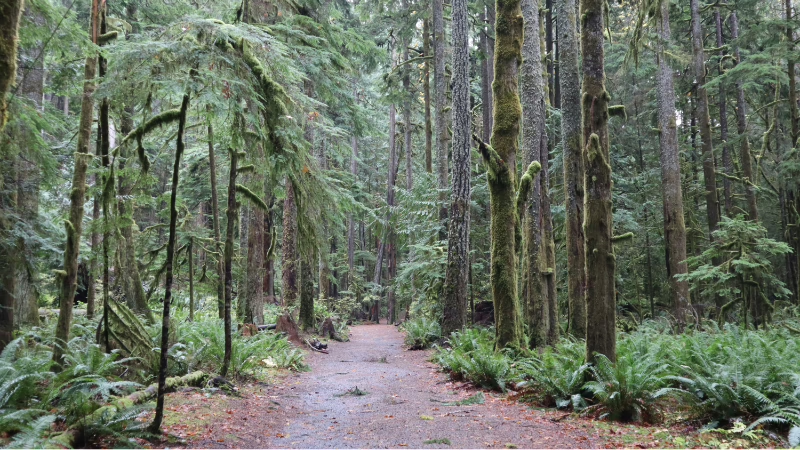
MBE Trifold Brochure
The brochure above contains additional information about the Mindfulness-Based Ecotherapy Program. If you are a certified facilitator of the Mindfulness-Based Ecotherapy program or are interested in becoming one, you may download and print the brochure below to promote your own program. It contains to blank areas for you to include information about your own local program.
New Online Continuing Education Courses
Table of Contents
The courses below are currently being developed. Have a course you’d like to see added? Use the contact form below to make a course suggestion! Subscribe to our newsletter if you’d like to be notified of new courses as they’re added.
Proposed New Courses
ACT: Acceptance and Commitment Therapy and Mindfulness-Based Ecotherapy
ADHD: Non-Medical Approaches to Treatment using Nature
ADHD Differential Diagnosis
DBT-Informed Therapy
Eco-Hypnotherapy Certification
Ecoplay
Ecoplay for Trauma in Children
Ecotherapy for Anxiety
Ecotherapy for Depression
Evaluating Research: A Scientific Approach
Mindful Self-Care for Therapists
Mindfulness & Addiction
Mindfulness & Depression
Mindfulness & LGBT-Q Issues
Mindfulness-Based Ecotherapy: An Introduction
Narrative Therapy and Mindfulness-Based Ecotherapy
Person-Centered Therapy and Mindfulness-Based Ecotherapy
Sand Tray Eco-Art Therapy
Solution-Focused Treatment and Mindfulness
Suicide Risk Assessment and Prevention
Trauma-Informed Treatment with Ecotherapy
Discover Our New Courses and Shape the Future of Mindful Ecotherapy
At the Mindful Ecotherapy Center, we continually strive to expand the ways our clients can engage with nature, mindfulness, and personal growth. This year, we are excited to announce the development of several new courses designed to deepen your connection with the natural world, enhance your mindfulness practice, and foster lasting emotional and psychological well-being for you and your clients.
Our mission has always been to integrate mindfulness with ecotherapy, allowing you to experience the healing power of nature while cultivating present-moment awareness. By offering new courses that cater to a range of interests and needs, we aim to make this transformative approach accessible to everyone, whether you are new to mindfulness or a seasoned practitioner.
What’s Coming in Our New Courses
The upcoming new courses at the Mindful Ecotherapy Center will cover a wide range of topics, including:
Forest Mindfulness Immersion
Learn techniques to quiet the mind and cultivate awareness while walking through forest landscapes. This technique emphasizes sensory observation, grounding exercises, and mindful movement to strengthen your connection with the environment.
Mindful Journaling in Nature
Combine the therapeutic practice of journaling with the restorative effects of being outdoors. Participants will explore guided prompts, reflective exercises, and nature-inspired writing techniques to enhance self-awareness.
Nature-Based Stress Resilience
Build skills to manage anxiety, stress, and emotional dysregulation by taking advantage of the calming power of natural settings. Techniques include breathwork, sensory grounding, and guided meditation practices designed for outdoor environments.
Seasonal Mindfulness Practices
Discover how the rhythms of the seasons can inform your mindfulness practice. This tool will focus on observing seasonal changes, connecting with cyclical patterns, and cultivating gratitude and presence throughout the year.
Mindfulness-Based Ecotherapy for Emotional Regulation
Tailored exercises that use natural environments to help participants regulate emotions, improve mood, and foster healthier interpersonal relationships.
How You Can Shape the Direction of Our New Courses
We believe that the best learning experiences are co-created with our community. That’s why we are inviting clients, supporters, and nature enthusiasts to share their ideas and suggestions for future new courses. Your input helps us tailor programs that meet your needs and interests, ensuring that each course provides meaningful, practical, and inspiring experiences.
Submit Your Ideas!
To submit your ideas, simply fill out our “Course Suggestion” form at the bottom of this page. Consider sharing:
- Topics or themes you’re most interested in exploring
- Specific challenges you’d like guidance on (e.g., anxiety management, mindful movement, or connecting with nature)
- Ideas for unique formats, such as weekend retreats, weekly sessions, or hybrid online/outdoor experiences
Every suggestion is reviewed carefully by our team. The most popular and feasible ideas may become part of our official new courses lineup, giving you a direct role in shaping the future of our programming.
Why Your Input Matters
Mindfulness-based ecotherapy works best when it aligns with the lived experiences of those participating. By offering your suggestions, you help ensure that our new courses address real-world challenges, inspire personal growth, and support lasting transformation. This collaborative approach allows the Mindful Ecotherapy Center to remain responsive to the needs of our clients while maintaining the highest standards of mindfulness practice and ecotherapy research.
Join Us on This Exciting Journey
As we develop these new courses, we invite you to stay connected with the Mindful Ecotherapy Center. Follow us on social media, subscribe to our newsletter, and engage with our community online and in person. Together, we can continue to create experiences that nurture well-being, deepen awareness, and strengthen our connection to the natural world.
Your voice matters! Help us craft new courses that empower you to live more mindfully, intentionally, and harmoniously with the environment. The journey begins with your ideas, and we can’t wait to explore the possibilities with you!
Share Your Thoughts!
What do you think? Share your thoughts in the comments below! And don’t forget to subscribe to our newsletter!

What is Ecotherapy?
Table of Contents
What is Ecotherapy?

For most of its existence, homo sapiens has lived in harmony with nature as hunter/gatherers. Such a lifestyle requires a vast knowledge of the seasons, and of the patterns and habits of wildlife, and of plants and herbs and their healing powers. Industrialization and urbanization are fairly recent phenomena on an evolutionary scale. We still carry the genetic memory of our ancestors who lived in untamed nature. Our brains are wired for the outdoors and nature. A growing body of research demonstrates that not only do we feel better when we make time for nature, but it is also a requirement for good physical and mental health!
Ecopsychology and Ecotherapy
The field of ecopsychology studies how humans interact with nature. Ecopsychology is a philosophy combining elements of psychology and ecology. It is the philosophy that mental health is contingent upon the health of the environment. Humankind and the environment are part of an interrelated system. We are not separate from nature. We are a part of nature.
At its core, ecopsychology suggests that there is a synergistic relation between planetary and personal well-being; that the needs of the one are relevant to the needs of the other. In short, what we do to the environment, we do to ourselves. Ecotherapy is the practical application of this knowledge. In ecotherapy, nature is the “therapist.” In practicing the techniques of ecotherapy, we allow the healing power of nature to work its magic on us. Hölzel et al (2011) demonstrated that meditative states of mindfulness stimulate neural growth in the cerebral cortex in the areas of the brain responsible for emotional regulation, good judgment, insight, and impulse control. Nature experiences have been demonstrated in several studies to produce meditative states (fascination, relaxation, and mindfulness).
Ecotherapy Techniques
Experiences in and with nature, or natural experiences, are ways in which we consciously choose to allow nature to work its healing magic on us. Some types of natural experiences include:
Facilitated Wilderness Experiences

In these types of experiences, a trained facilitator takes you into the woods for an adventure. These events can be anything from a wilderness experience in ecotherapy led by a therapist or counselor, to a hunting trip led by a wilderness guide. Kuo & Taylor (2004) demonstrated that therapy and other activities conducted in outdoor settings reduced symptoms of Attention-Deficit Hyperactivity Disorder. Whittington (2006) found that wilderness skills training gave adolescent girls increased self-esteem and self-confidence and helped to shatter gender stereotypes.
Animal Assisted Therapy
Animal therapy in the form of contact with pets and/or wild or domesticated animals enhances self-actualization and can lessen symptoms of depression. Antonioli & Reveley (2005) found that simply swimming with dolphins can greatly reduce symptoms of depression. Other studies have shown that owning pets, or even just watching fish in an aquarium, can greatly reduce stress. Equine Therapy uses horses to facilitate mental and physical wellbeing. There are many other ways that animals can help us lead happier lives, as any pet owner can tell you!
Therapeutic Gardens
Sempik & Spurgeon (2006) demonstrated that therapeutic gardening reduces stress and lessens symptoms of depression. Blair (2009) discovered that gardening can be used as a means of helping school children to enhance self-sufficiency, social identity, meaning, and self-integration. There’s just something very healing about planting something and nurturing it as you watch it grow.

Vacations
Sponselee, et al (2004) discovered that outdoor activities reduce stress and restore energy. If you’ve ever had to miss a vacation, you’re probably painfully aware of the regenerative power of taking a week or so off to spend time in nature. Roggenbuck & Driver (2000) found that you don’t need a facilitator or guide to enjoy health and well-being benefits from the use of wilderness areas. There’s a reason we’re attracted to beaches and national parks!
Architecture Incorporating Natural Spaces
Nature can be incorporated into the home environment through the use of plants, an aquarium, or even recorded nature sounds. Alvarsson et al (2010) studied the positive mental health effects of listening to nature sounds.
Outdoor Classrooms
Purcell, et all in 2007 revealed that outdoor classrooms enhanced many critical factors of the educational experience, including: Enhanced retention, better focus, more attention to detail, less hyperactivity, more relaxation, increased confidence and self-esteem, and better cognitive functioning.
Ecotherapy for Mental Health
Numerous studies affirm that ecotherapy (also called nature‑based interventions) supports mental well‑being by reducing anxiety and depression and enhancing mood and cognitive function. A systematic meta‑analysis of randomized controlled trials found that outdoor nature‑based interventions were effective in improving depressive mood and lowering anxiety scores. Even brief nature exposure matters—one meta‑analytic review reports that as little as 10 minutes in natural settings can provide measurable short‑term mental health benefits for adults. Beyond individual experiences, cost‑effectiveness studies show that ecotherapy programs for mild to moderate mental health issues can be delivered more affordably than traditional treatments and may reduce healthcare usage. Collectively, this body of evidence underscores ecotherapy as a powerful, accessible complement to conventional mental health care.
Share Your Thoughts!
What do you think? Share your thoughts in the comments below! And don’t forget to subscribe to our newsletter!

Being Mode, Doing Mode and Two Powerful Wolves
Table of Contents
Being Mode is where we make a change in our lives. A key aspect of mindfulness is stepping outside of doing mode and entering into being mode.

When we’re caught up in thought and feeling cycles that lead to depression and anxiety, we usually feel that we should be doing something to fix it. The problem with this is that sometimes there is nothing you can do to fix a problem. Mindfulness is a way to escape this cycle of trying to fix things by simply focusing on our moment-to-moment experience. When we are doing this, we are in being mode. In being mode, we are not trying to fix anything. We are not trying to go anywhere. We are not trying to do anything. We are not trying, period. Trying is doing, and being mode isn’t about doing.
Being Mode and the Downstairs Brain
In being mode, we are free to enjoy our experiences from moment to moment by focusing on what our senses are telling us, rather than focusing on trying to find a way out of a problem. When the downstairs brain is engaged, and the upstairs brain is temporarily disconnected, moving into being mode allows us a little breathing room.
The way to move from doing mode to being mode is to shift our mental energy from thinking mode to sensing mode. Our brains only have a finite amount of energy to spend on any given task at any given time. If we have a stressful or depressing thought cycle going on, we can shift energy from what our thoughts are telling us by engaging our internal observer to start focusing on what our senses are telling us. As you read this paragraph, can you feel your breath going in and out of your lungs? Were you even aware you were breathing before you read the previous sentence? When caught up in thinking cycles, we’re focusing on the boomerang. But by shifting our attention to our direct experiences and focusing on what our senses are telling us, we’re able to move into sensing mode.
Sensing Mode: The Way to Being Mode
When in sensing mode, we are no longer giving energy to ruminating cycles that are leading us to states that we do not want to experience. We are able to move to sensing mode by focusing first on our breathing, then on our direct experiences of the current situation. We do this by using all of our senses, in the moment, to explore the environment around us. What do we hear? What do we see? What do we smell? What do we taste? What do we feel? By asking ourselves these questions, we are able to move into sensing mode.
Two Wolves: The Being Wolf

The more energy we spend on sensing, the less energy we have to spend on thinking. Based on the tale of two wolves, we could see the two wolves as “thinking wolf” and “sensing wolf.” The more energy you give to the sensing wolf, the less energy you give to the thinking wolf. The less energy the thinking wolf receives, the weaker the thinking wolf becomes. Conversely, the more energy the sensing wolf receives, the stronger the sensing wolf becomes. By shifting from thinking to sensing, you’re not trying to ‘kill’ the thinking wolf. You’re not engaging in doing by trying to make the thinking wolf go away. You’re simply depriving it of energy so that it may eventually go away on its own. Even if it doesn’t go away on its own, you’re not focusing your attention on it. Since your attention isn’t on it, thinking wolf can’t grab you by the throat, refusing to let go.
It could be said that focusing on what your senses are telling you is a type of thinking as well, and that is partially true; however, the difference is that focusing on what your senses are telling you is a type of thinking devoid of emotional content. If you’re in a thinking cycle that is causing you anxiety or depression, then anxiety and depression are emotions. But unless you hate trees for some reason, simply sitting quietly in a forest and observing a tree as if you are an artist about to draw that tree is an exercise devoid of emotional content. By focusing on the emotionally neutral stimuli found in nature, we give ourselves the opportunity to feed the sensing wolf.
Mindfulness-Based Ecotherapy and Being Mode
Mindfulness-based ecotherapy can be a powerful tool for facilitating being mode. By combining mindful awareness with direct engagement in natural environments, this approach gently redirects attention away from the habitual “doing mode,” which is dominated by planning, problem-solving, and ruminating.
Nature’s rhythms, such as the sound of leaves rustling, water flowing, or birds singing, provide sensory anchors that draw the mind into immediate experience. Through guided practices like mindful walking, focused breathing outdoors, or reflective observation of natural phenomena, we learn to notice thoughts and emotions without automatically reacting, creating space for a deeper sense of presence. Over time, repeated experiences of this mindful immersion in the environment can quiet your sympathetic nervous system, lower stress, and cultivate an enduring capacity to remain in being mode even outside of therapeutic sessions.
References
Ilomäki M, Lindblom J, Salmela V, Flykt M, Vänskä M, Salmi J, Tolonen T, Alho K, Punamäki RL, Wikman P. Early life stress is associated with the default mode and fronto-limbic network connectivity among young adults. Front Behav Neurosci. 2022 Sep 23;16:958580. doi: 10.3389/fnbeh.2022.958580. PMID: 36212193; PMCID: PMC9537946.
Share Your Thoughts!
What do you think? Share your thoughts in the comments below! And don’t forget to subscribe to our newsletter!

Upstairs Brain vs. Downstairs Brain

Table of Contents

Feelings of depression, anxiety, sadness, and other emotions are generated in a part of the brain called the limbic system. This ‘downstairs’ portion of the brain is only interested in three things: Fighting, fleeing, or freezing. In ‘fight’ mode, the downstairs brain wants to protect you from harm by fighting against the threat. When it is triggered, your heart may race, your palms may get sweaty, and you may have a sharp increase in irritability and anger. In ‘flee’ mode, you may experience a similar adrenaline rush, but in this instance, your brain is preparing your body to run away from the danger. In ‘freeze’ mode, we tend to retreat inside ourselves. This is the deer-in-the-headlights feeling of “If I’m very quiet and still, the bad thing won’t see me.”
How the Upstairs Brain Interacts with the Downstairs Brain
Whether you’re in fight, flee, or freeze mode, your downstairs brain is preparing you to deal with a real or perceived threat in the only way it knows how. When your downstairs brain is engaged, the upstairs part of your brain tends to get overwhelmed. The upstairs brain, which consists of the neocortex of the brain, is the part responsible for thinking things through, figuring things out, and solving problems. When the downstairs brain takes over, the upstairs brain is out to lunch. That’s why when you’re emotionally overwhelmed, it is nearly impossible to figure out a way to deal with it. The upstairs brain is all about finding solutions to problems, but the downstairs brain is all about fighting, fleeing, or freezing. When your upstairs brain is overwhelmed, thinking things over isn’t going to work. That’s because at that point, your downstairs brain is in charge. For those times when your downstairs brain is running the show, mindfulness is a way of disengaging from the thinking cycle for a while so that you can re-center yourself and reconnect with yourself and the world around you.
How Mindfulness-Based Ecotherapy Supports the Upstairs Brain, the Downstairs Brain, and a Calmer Nervous System
The “upstairs brain vs. downstairs brain” model offers a simple way to understand how our minds react to stress. The “downstairs brain” refers to evolutionarily older structures such as the amygdala, brain stem, and limbic regions. These areas handle survival instincts, fight-or-flight responses, and quick emotional reactions. The “upstairs brain” includes the prefrontal cortex and other regions responsible for reasoning, emotional regulation, empathy, and long-term decision-making. In moments of stress, the sympathetic nervous system activates the downstairs brain, often overwhelming the upstairs brain’s ability to respond calmly. This imbalance can lead to impulsive reactions, emotional flooding, or a sense of being perpetually on edge.
Mindfulness-Based Ecotherapy: A Practical Solution
Mindfulness-Based Ecotherapy offers a practical, grounded way to restore balance between these two systems. By integrating mindfulness practices with nature-based experiences, it supports regulation of the sympathetic nervous system while strengthening the upstairs brain’s capacity to stay engaged even during difficult moments.
One of the most powerful aspects of nature-based mindfulness is how quickly it downshifts the nervous system. Being outdoors, or even visualizing natural environments, has been shown to reduce sympathetic arousal and increase activity in the parasympathetic system. This shift creates the physiological conditions necessary for the upstairs brain to come back online. When the body stops signaling danger, the prefrontal cortex is freed to resume its role in planning, reflection, and problem-solving. Mindfulness in nature makes this transition smoother by encouraging sensory awareness, present-moment attention, and slower breathing, each of which directly supports parasympathetic activation.
How Mindfulness Trains Attention
Another key component is how mindfulness trains attention. The downstairs brain often hijacks the mind by pulling attention toward perceived threats. Mindfulness practice teaches individuals to notice this pull without automatically following it. In ecotherapy, this awareness is supported by grounding elements: the texture of tree bark, the rhythm of waves, and the sound of wind through leaves. These sensory anchors provide a natural counterweight to the internal storm generated by the sympathetic nervous system. Over time, this helps strengthen neural pathways associated with emotional regulation, making it easier for the upstairs brain to remain active even when the downstairs brain fires up.
Interoceptive Literacy and the Upstairs Brain
Mindfulness-Based Ecotherapy also promotes what some therapists refer to as “interoceptive literacy,” the ability to recognize and interpret internal body signals. A dysregulated sympathetic system often produces sensations such as a tight chest, rapid heartbeat, or restlessness. When people learn to identify these early cues without judgment, they gain a moment of choice. This pause allows the upstairs brain to intervene before the downstairs brain drives behavior. Practices like mindful walking, breath-based grounding, or observing natural cycles help individuals connect more deeply with these signals in a supportive, non-threatening environment.
Emotional Processing and the Upstairs Brain
Nature-based mindfulness also supports emotional processing. The downstairs brain often stores unresolved emotional material that surfaces during stress. Natural environments provide a calming backdrop for working through these experiences without becoming overwhelmed. The sense of spaciousness and the absence of artificial stimuli reduce cognitive load, giving the upstairs brain more bandwidth to integrate emotional information. This creates a more flexible, resilient nervous system that can adapt to challenges rather than reacting automatically.
Connectedness and the Upstairs Brain
Finally, Mindfulness-Based Ecotherapy strengthens the sense of connectedness that is crucial for nervous system regulation. Feelings of isolation can intensify sympathetic activation, while experiences of belonging and connection activate systems of safety and social engagement. Ecotherapy offers a double form of connection: with nature and with one’s own internal experience. This sense of being part of something larger reduces the perception of threat and supports long-term regulation of both the upstairs and downstairs brain.
In this way, Mindfulness-Based Ecotherapy provides a holistic path to balancing instinctive emotional responses with thoughtful, grounded awareness. By soothing the sympathetic nervous system and strengthening the upstairs brain, it helps people respond to life’s challenges with clarity, resilience, and a greater sense of peace.
References
Jo H, Song C, Miyazaki Y. Physiological Benefits of Viewing Nature: A Systematic Review of Indoor Experiments. Int J Environ Res Public Health. 2019 Nov 27;16(23):4739. doi: 10.3390/ijerph16234739. PMID: 31783531; PMCID: PMC6926748.
Share Your Thoughts!
What do you think? Share your thoughts in the comments below! And don’t forget to subscribe to our newsletter!