Posted on Leave a comment

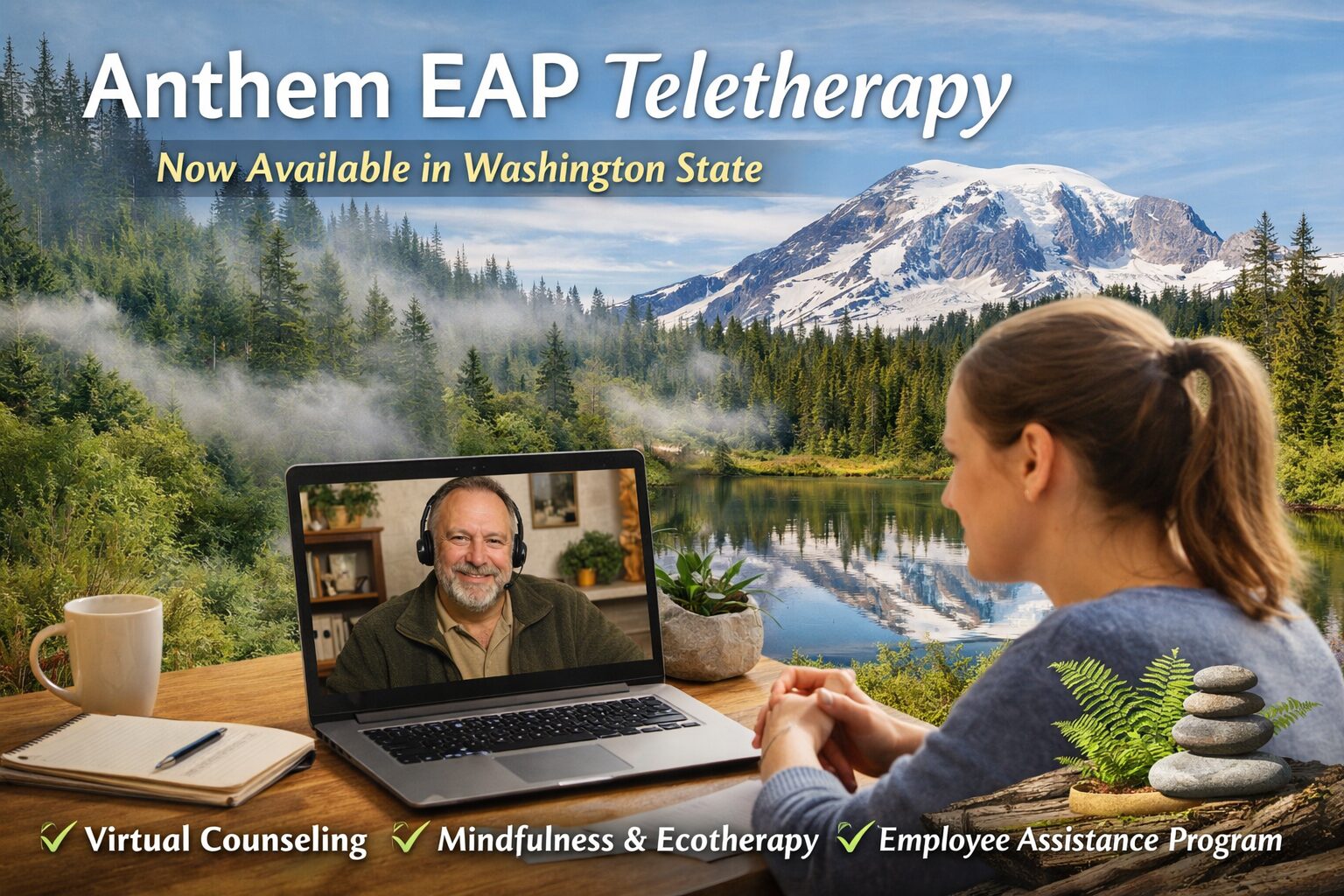
Now Accepting Anthem EAP for Teletherapy in Washington State

Anthem EAP

Access to mental health care should be simple, affordable, and responsive to the realities of modern life. At the Mindful Ecotherapy Center, we are pleased to announce that Charlton Hall, MMFT, PhD, is now accepting Anthem EAP – Standard in Washington State for convenient and confidential teletherapy sessions. This expansion makes it easier than ever for you to use your EAP benefits to access high-quality, holistic mental health care.

What Is Anthem EAP?

Anthem EAP (Employee Assistance Program) is a workplace benefit designed to provide short-term counseling and support services to employees and their families. You can access a limited number of therapy sessions at no cost, making it an excellent option for those seeking immediate support without financial barriers.

Common concerns addressed through EAPs include:

  • Stress and burnout
  • Anxiety and depression
  • Relationship issues
  • Substance use concerns
  • Grief and life transitions

Because Anthem EAP is employer-sponsored, it offers a confidential and accessible way to begin therapy quickly and effectively.

Understanding Anthem EAP – Standard

The Anthem EAP – Standard model typically includes a set number of sessions, usually between 6 and 12, focused on short-term, solution-oriented care. These sessions are designed to help clients stabilize, gain insight, and develop practical coping strategies.

If additional support is needed beyond your EAP benefits, you can often transition into ongoing therapy using your primary insurance benefits, ensuring continuity of care.

Teletherapy with Anthem EAP in Washington State

Dr. Hall provides teletherapy services across Washington State, allowing clients to use their EAP benefits from the comfort of their own home. Teletherapy offers flexibility, privacy, and accessibility, especially for those balancing work, family, and other commitments.

Teletherapy eliminates many common barriers to care, such as commuting time, geographic limitations, and scheduling challenges. Secure video sessions make it possible to engage in meaningful therapeutic work wherever you are. Dr. Hall also offers later sessions on Mondays and Wednesdays until 7 p.m. Pacific Time for those who work 9 to 5.

A Holistic Approach to Anthem EAP Therapy

At the Mindful Ecotherapy Center, therapy is about cultivating deeper connection and resilience. Dr. Hall integrates:

  • Acceptance and Commitment Therapy (ACT)
  • Cognitive Behavioral Therapy (CBT)
  • Dialectical Behavior Therapy (DBT)
  • Mindfulness-Based Ecotherapy (MBE)
  • Mindfulness-based practices
  • Ecotherapy principles

This unique approach recognizes that humans are deeply connected to the natural world. Even in teletherapy sessions, clients are encouraged to engage with nature as part of the healing process.

Examples include:

  • Nature-based mindfulness exercises
  • Guided imagery grounded in natural environments
  • Outdoor reflection practices between sessions

This integrative model enhances the effectiveness of counseling and therapy, particularly for stress, anxiety, and burnout.

Why Choose Anthem EAP for Therapy?

Using your EAP for mental health support offers several key benefits:

  • No out-of-pocket cost for eligible sessions
  • Quick access to care without long wait times
  • Confidential support separate from your employer
  • A low-risk way to explore therapy

The Mindful Ecotherapy Center, PLLC is ideal for those seeking immediate help or those unsure about committing to long-term therapy. It provides a valuable starting point for personal growth and emotional well-being.

What to Expect When Using Your EAP Benefits

Getting started is simple:

  1. Contact your employer or EAP provider to request authorization
  2. Confirm your eligibility
  3. Schedule a teletherapy session with Dr. Hall
  4. Begin focused, goal-oriented sessions

Each session is tailored to your unique needs, combining clinical expertise with a compassionate, nature-informed perspective.

Start Therapy with Anthem EAP Today

Mental health care should meet you where you are both emotionally and practically. By accepting Anthem EAP – Standard in Washington State, Dr. Charlton Hall and the Mindful Ecotherapy Center are expanding access to meaningful, effective care.

If you are experiencing stress, navigating life transitions, or simply seeking greater balance, teletherapy with the Mindful Ecotherapy Center offers a powerful and accessible path forward.

Take the first step today. Use your EAP benefits to begin your journey toward healing, growth, and connection.

Start Today!

Use the button below to book your appointment with Charlton Hall, MMFT, PhD, or use the contact form below for any questions you might have.

Posted on

Edinburgh: Ethics and Ecospirituality-Ethical Practice at the Intersection of Mental Health and Nature

Edinburgh

At the Mindful Ecotherapy Center, PLLC, we spend a lot of time talking about healing, presence, and the quiet intelligence of the natural world. What we don’t do is pretend that moving therapy outdoors magically removes the need for ethical rigor. If anything, it raises the stakes.

Ecotherapy and nature-based counseling are gaining momentum as mental health professionals rediscover what should have been obvious all along: human beings are not separate from nature, and psychological healing often deepens when people reconnect with the living world. From forest walks to outdoor mindfulness practices, nature offers regulation, perspective, and a sense of belonging that no office décor can replicate.

But stepping outside the therapy room doesn’t mean stepping outside ethical responsibility. It means expanding it.

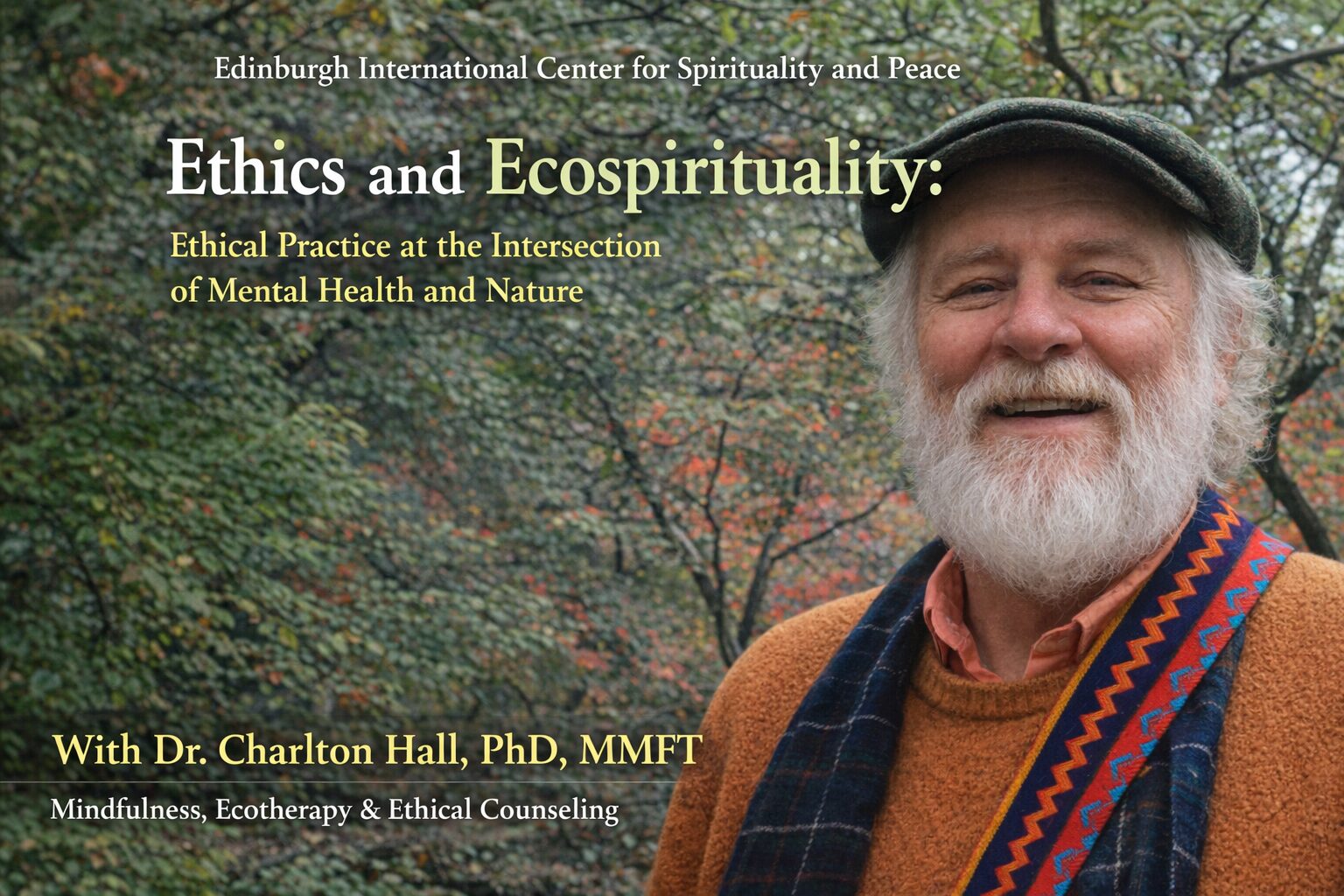
Dr. Charlton Hall, MMFT, PhD, founder of the Mindful Ecotherapy Center, addresses this directly in his presentation, Ethics and Ecospirituality: Ethical Practice at the Intersection of Mental Health and Nature. His work reflects a simple but inconvenient truth: good intentions are not enough. Ethical practice requires foresight, structure, and accountability, especially when the setting becomes less controlled and more dynamic.

Edinburgh Conference: Confidentiality

One of the most immediate concerns in ecotherapy is confidentiality. In a traditional office, privacy is engineered. Doors close, white noise hums, and interruptions are minimized. In a park, forest, or shoreline, none of that is guaranteed. Other people exist. Sound carries. The world refuses to cooperate with your treatment plan.

This means therapists must proactively address privacy risks with clients before sessions ever begin. Informed consent becomes more than a formality. Clients need to understand what can and cannot be controlled, and together, therapist and client must decide what level of exposure is acceptable. Ethical ecotherapy doesn’t ignore these risks. It names them clearly and plans around them.

Edinburgh Conference: Boundaries and Dual Relationships

Then there’s the issue of boundaries and dual relationships, which become far less theoretical once you leave the office. Community spaces blur roles. You might run into a client at a trailhead, a farmer’s market, or a meditation group. Suddenly, the clean lines between “therapist” and “person who also exists in the world” start to dissolve.

Dr. Hall emphasizes that maintaining professional boundaries in these contexts requires intentionality. Therapists must establish clear agreements about public interactions, social overlap, and expectations. Without that clarity, what feels like a casual encounter can quickly become ethically murky.

Edinburgh Conference: Risk Management

Risk management is another area where ecotherapy demands maturity. Nature is not a controlled environment, no matter how poetic people get about it. Weather shifts. Terrain changes. People trip, get lost, or underestimate their physical limits.

Ethical practice means anticipating these risks and preparing accordingly. This includes assessing client suitability for outdoor work, having emergency protocols, understanding the environment, and maintaining appropriate insurance and documentation. The goal is not to eliminate risk entirely. That would require locking everyone back indoors. The goal is to manage it responsibly.

Edinburgh Conference: Cultural Humility

Dr. Hall also highlights the importance of cultural humility, especially when working with ecospirituality. Nature-based practices often intersect with Indigenous traditions, spiritual worldviews, and cultural relationships to land that are not interchangeable or up for casual borrowing.

Ethical ecotherapy requires practitioners to examine their own assumptions and avoid appropriating practices without understanding their origins and significance. Respecting the land also means respecting the people and traditions connected to it. This is where ecotherapy moves beyond technique and into responsibility.

Edinburgh Conference: Integration

Finally, there is the question of integration. Just because nature is beneficial doesn’t mean every intervention is appropriate for every client. Ethical clinicians must ground their work in evidence-based practice while thoughtfully incorporating nature-based elements. This isn’t about replacing clinical skill with scenic views. It’s about enhancing therapeutic work in ways that remain accountable, measurable, and client-centered.

Dr. Charlton Hall brings decades of experience as a Marriage and Family Therapist, educator, and developer of mindfulness-based ecotherapy approaches. His work spans counseling, recovery programs, and international teaching, all grounded in the integration of mindfulness, evidence-based psychotherapy, and nature connection. At the Mindful Ecotherapy Center, that integration is not treated as a trend. It’s treated as a discipline.

Edinburgh Conference: The Takeaway

The takeaway is straightforward, even if people prefer to romanticize it: nature can deepen healing, but it doesn’t excuse sloppy practice. Ethical ecotherapy asks more of clinicians, not less. It requires awareness, preparation, and a willingness to hold complexity instead of pretending it isn’t there.

If you’re practicing, or planning to practice, ecotherapy in places like Edinburgh or anywhere else where people and landscapes intersect, the question isn’t whether nature helps. It’s whether you’re prepared to do the work responsibly.

Because the forest doesn’t care about your intentions. Your clients, however, should be able to trust them.


Share Your Thoughts About the Edinburgh Conference!

What do you think? Share your thoughts in the comments below!


  And don’t forget to subscribe to our newsletter!
Posted on

Now Accepting Medicare Advantage!

Medicare Advantage

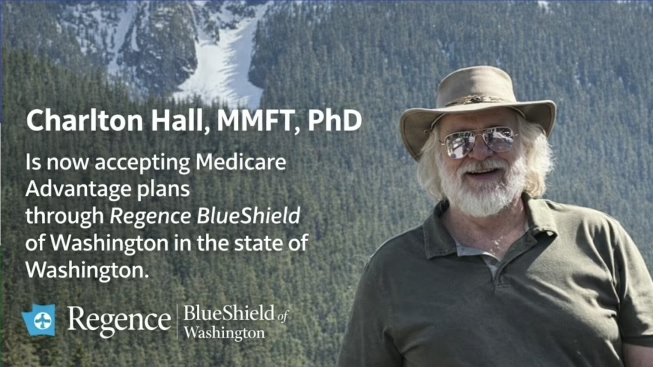
The Mindful Ecotherapy Center is now accepting clients covered by Medicare Advantage plans through Regence BlueShield of Washington in the state of Washington. This expansion makes our integrative, nature-based, and mindfulness-focused therapeutic services more accessible to a wider range of individuals seeking support for mental health and emotional well-being.

Expanding Access to Mindful Ecotherapy

For many adults navigating mental health challenges, insurance coverage can be a significant barrier to receiving consistent, high-quality care. By now accepting Medicare Advantage, Charlton Hall ensures that seniors and other Medicare-eligible clients can access ecotherapy, mindfulness practices, and individualized mental health support without worrying about coverage limitations. This development reflects our ongoing commitment to making evidence-based, nature-centered therapy accessible, sustainable, and practical for diverse communities.

Medicare Advantage plans, sometimes referred to as Part C, are an alternative to Original Medicare (Part A and Part B) that often offer additional benefits, including coverage for mental health services. By confirming sessions for Regence BlueShield of Washington Medicare Advantage clients through Headway, the process of scheduling, billing, and claim submission is streamlined, ensuring that clients receive seamless support while therapists are reimbursed efficiently.

What This Means for Clients

If you are a Medicare Advantage client in Washington covered by Regence BlueShield, you can now easily schedule therapy with Charlton Hall, MMFT, PhD, through the Headway platform. Once your coverage is verified and the claim is submitted, you can attend sessions without the administrative hassle of navigating complex insurance procedures on your own.

Our approach at the Mindful Ecotherapy Center blends traditional therapeutic modalities with ecotherapy practices, including guided mindfulness exercises, nature-based interventions, and somatic awareness techniques. These practices have been shown to improve emotional regulation, reduce stress, and enhance overall well-being, making them an ideal complement to the support offered under Medicare Advantage plans.

How Billing and Claims Work

To make the process as straightforward as possible for clients, Headway coordinates directly with Regence BlueShield of Washington. Once Charlton Hall is fully integrated into their systems, claims are submitted automatically, and payment is handled on your behalf. This integration ensures transparency, minimizes delays, and allows clients to focus fully on their therapeutic work.

Clients can also review session rates and coverage details through their Headway account, providing clarity and avoiding unexpected charges. By simplifying administrative processes, we prioritize the client experience and make therapy accessible without unnecessary stress.

Why Choose Mindful Ecotherapy

Mindful ecotherapy is an evidence-informed approach that integrates principles of mindfulness, psychology, and connection with the natural world. Sessions with Charlton Hall focus on fostering self-awareness, emotional resilience, and adaptive coping strategies in real-world contexts. Incorporating ecotherapy principles, clients are encouraged to engage with natural environments like gardens, forests, or other outdoor spaces to enhance their therapeutic experience and build sustainable mental wellness practices.

Accepting Medicare Advantage ensures that more individuals can experience these benefits without being limited by coverage restrictions. Seniors and other Medicare-eligible clients now have access to specialized, trauma-informed, and ecologically grounded therapy in Washington state.

How to Get Started

Scheduling your first session is simple: visit the Mindful Ecotherapy Center website or the Headway platform to confirm your eligibility, check coverage, and book a session with Charlton Hall. Our team is available to answer questions and provide guidance on the enrollment process for Regence BlueShield of Washington Medicare Advantage clients.

By expanding coverage options, the Mindful Ecotherapy Center reinforces its mission to make mental health care inclusive, flexible, and deeply restorative. With the addition of Medicare Advantage coverage, Charlton Hall continues to provide high-quality, accessible therapy for individuals seeking mindful, nature-centered support.

Take the first step toward emotional well-being and explore how mindful ecotherapy can enhance your life today.


Posted on

3 Important Updates to Our Terms and Conditions at the Mindful Ecotherapy Center

terms and conditions

At the Mindful Ecotherapy Center, PLLC, clarity matters. That is why, in December of 2025, we updated our terms and conditions to reflect both a structural change in our organization and a thoughtful refinement of the language used throughout the document.

This post explains what changed, why it changed, and why it ultimately benefits you.

Why We Updated Our Terms and Conditions

In 2025, the Mindful Ecotherapy Center formally transitioned from an LLC to a PLLC (Professional Limited Liability Company) in the State of Washington. This change reflects the professional and clinical nature of the services we provide and aligns our legal structure with Washington State requirements for licensed healthcare and mental health professionals.

In 2025, we started offering teletherapy services to patients in Washington, and our terms and conditions were updated to accurately reflect this shift, clarify responsibilities, and remove ambiguity that could lead to misunderstanding.

Change One: Transition from LLC to PLLC

The most concrete update to our terms and conditions is the change in legal designation. As of 2025, the Mindful Ecotherapy Center operates as a PLLC in Washington State.

Why does this matter?

A PLLC is specifically designed for licensed professionals such as therapists and counselors. This structure emphasizes professional accountability, ethical obligations, and regulatory compliance. Updating our terms and conditions to reflect our PLLC status ensures that:

  • The legal entity named in the agreement is accurate
  • Professional standards are clearly implied and upheld
  • Clients understand they are working with a licensed professional practice

This change does not alter the heart of our work, but it does strengthen the framework supporting it. Mindfulness teaches that form matters. Containers matter. A PLLC is a more appropriate container for the type of clinical and educational services we provide.

Change Two: Language Updated to Reflect Current Conditions

The second major update involved revising the language in our terms and conditions to reflect our current operational and legal reality.

Some of the previous language was written when the organization was smaller and structured differently. While technically functional, it no longer accurately represented how services are delivered, governed, or protected.

The updated terms and conditions now:

  • Reflect our current professional status and scope of practice
  • Use clearer, more direct language
  • Reduce outdated references and assumptions

Change Three: Clarification for Better Understanding

The third update is the quiet but important one. We clarified portions of the terms and conditions that were previously open to interpretation.

Legal documents often suffer from one of two problems. They are either so dense that no one reads them, or so vague that they fail to protect anyone. We aimed for a middle path.

Clarifications were made to help clients better understand:

  • The nature and limits of services provided
  • Responsibilities of both the Center and the client
  • How policies are applied in real-world situations

This aligns with both ethical best practices and mindfulness principles. In mindfulness-based ecotherapy, we slow down, name what is happening, and bring things into conscious awareness. Clear terms and conditions do exactly that at an organizational level.

How This Change Reflects Our Values

At the Mindful Ecotherapy Center, mindfulness extends to how we structure agreements, communicate expectations, and take responsibility for our role as professionals.

Updating our terms and conditions is an act of institutional mindfulness. It acknowledges change, responds intentionally, and reduces unnecessary suffering caused by confusion or misalignment.

Ecotherapy reminds us that healthy systems, whether ecosystems or organizations, depend on clear boundaries and mutual respect. These updates reinforce those boundaries in a way that supports trust and safety.

What Clients Need to Do

There is no call to action here. We simply encourage all clients and participants to review the updated terms and conditions so you are informed and confident about the framework within which services are offered.

Transparency at the Mindful Ecotherapy Center is an ongoing practice. These updates reflect our commitment to that practice.

In Closing

The 2025 update to our terms and conditions reflects three things: a transition to a PLLC in Washington State, updated language to match current conditions, and clearer communication overall.

If you have any questions or concerns about these changes, you may contact us here.

Posted on

We’re Moving YouTube Content to Substack

Youtube gender-affirming care

Dear friends of the Mindful Ecotherapy Center,

Our YouTube content is moving to Substack! We are announcing that, effective November 1, 2025, we will transition our primary online platform from YouTube to Substack. This decision is about integrity, equity, and ensuring our content is shared in a space aligned with our values of inclusion, ecological healing, and relational community.

What prompted this move

While YouTube has been immensely useful for building our community and sharing guided ecotherapy content, there is growing evidence that the platform systematically treats LGBTQ+ voices and related content in ways that conflict with our mission. Below are some of the key issues we find incompatible with our commitment to inclusive healing.

Demonetization and algorithmic suppression of LGBTQ+ content

no youtube

A significant investigation found that videos with LGBTQ‑related vocabulary in titles such as “gay”, “lesbian”, or “transgender” were disproportionately flagged for advertiser‑unfriendly status even when they contained non‑sexual, educational material. For instance, one study noted that 33% of a small sample of queer‑titled videos were demonetized by YouTube’s automated system. The Independent | The Verge
Such suppression means that LGBTQ+ – friendly creators and educational voices can lose revenue or reach not because of content quality, but because of identity or subject matter.

Restricted discoverability and youth access limitations

YouTube’s “Restricted Mode” has been shown to hide even benign LGBTQ+ videos from younger audiences precisely when access to affirming representation matters most. One analysis noted that educational LGBTQ‐themed videos were being flagged or hidden under age or content restrictions even when they lacked explicit sexual content. Gnovis Journal | mastersofmedia.hum.uva.nl
For the work of the Mindful Ecotherapy Center, which often reaches people seeking connection, healing, and authenticity, such limitations create a barrier to access and undermine our inclusive community goals.

Unequal enforcement of harassment and viewpoint bias

Though YouTube’s public hate‑speech policy lists “sexual orientation” and “gender identity or expression” as protected classes, in practice, creators and commentators have raised concerns that harassment directed at LGBTQ+ people is not consistently or effectively challenged, while automated systems penalize non‑harassing queer content. A class‑action style lawsuit alleged that YouTube “systemically” discriminated against LGBTQ+ creators by suppressing their content while allowing hostile materials to persist. Google Help | classaction.org
For an organization like ours, committed to relational community and mindful ecological healing, this dynamic is simply unacceptable.

Lack of transparency and accountability

Because many decisions around monetization, filtering, and recommendations on YouTube are driven by opaque algorithms, creators often cannot even understand why their videos are restricted or suppressed. Research warns that such algorithmic discrimination is real and structural. PubMed
We believe the platforms that host our work should be transparent and aligned with the ethics of inclusivity, not opaque gatekeepers.

What Substack offers us

Moving to Substack allows us to reclaim more control over distribution, monetization, and community access. Specifically, we will:

  • Ensure that content related to queer ecology, inclusive healing, and relational practice is treated equitably, without hidden restrictions tied to identity or keywords.
  • Provide direct access to our community without relying on hidden algorithms that decide who sees what.
  • Offer a platform where creators and members can engage safely, with fewer intermediary commercial constraints and clearer transparency.
  • Build a relational, intentional space rather than relying on broad‑reach broadcast models that may de-prioritize marginalized voices.

What this means for you

  • Starting Nov 1, 2025, all new guided sessions, interviews, reflections, and video content that were formerly posted on YouTube will be hosted on our Substack channel.
  • Existing YouTube content will remain accessible for the transition period; however, we encourage you to subscribe to our new Substack channel to ensure you don’t miss anything.
  • You’ll receive email notifications and be able to access posts, videos, and community dialogue in one place on our Substack feed. This means you won’t have to log in to a separate YouTube account to view our video content.

We invite you to join us!

Thank you for being part of this community grounded in mindful ecotherapy, relational healing, and inclusive belonging. This platform shift is a commitment to you, to our creators, and to the Mindful Ecotherapy Center’s values of equity and access.

Please subscribe here:

With gratitude,
The Mindful Ecotherapy Center Team


Share Your Thoughts!

What do you think? Share your thoughts in the comments below! And don’t forget to subscribe to our newsletter!
Posted on

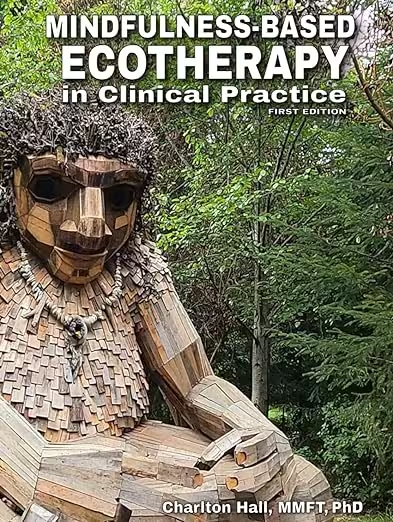
NOW AVAILABLE: MBE in Clinical Practice Textbook!

Case Presnetation Mindfulness-Based Ecotherapy (MBE) in Clinical Practice Online Home Study Course

This is the long-awaited textbook for the upcoming NEW Mindfulness-Based Ecotherapy Certification Program!

CLICK ON THE IMAGE TO PURCHASE

This textbook provides a comprehensive guide to Mindfulness-Based Ecotherapy that integrates mindfulness practices with nature-based therapy techniques, offering insights and practical tools for mental health professionals looking to enrich their therapeutic approaches with mindfulness and ecotherapy. Here is a step-by-step guide on how to effectively use this resource in your clinical practice.

Mindfulness-Based Ecotherapy (MBE) is a therapeutic approach that combines traditional mindfulness practices with ecotherapy, which involves interacting with nature to promote mental well-being. MBE is rooted in the principles of mindfulness, which is the practice of being fully present and aware of the moment without judgment, and ecotherapy, which is the therapeutic use of nature and outdoor settings as a context for healing and personal growth.

Each chapter contains information on the foundational concepts and theoretical underpinnings of MBE. Understanding the rationale behind combining mindfulness and ecotherapy will provide a solid base for integrating these practices into your own sessions.

Key topics covered in this text include the historical background of mindfulness and ecotherapy, and the historical background and theoretical framework for many of the techniques used in Mindfulness-Based Ecotherapy (MBE). We will also discuss the core principles of MBE and what the latest research says about the benefits of MBE.

Many of the chapters will look at the science behind nature’s impact on mental health, using evidence-based principles and citations to recent studies on the tools and techniques introduced in each chapter.

The textbook offers a variety of mindfulness and ecotherapy exercises that can be adapted for both individual and group therapy settings, and there is a chapter covering most of the major interventions and activities used in MBE.

The practice of MBE brings its own unique challenges and opportunities. There are detailed session plans and structures provided in the textbook to organize your therapy sessions. The book outlines various stages of MBE, from introductory sessions to advanced practices, ensuring a comprehensive approach. We will also review how to address some of the challenges unique to the practice of MBE.

MBE also has distinct ethical and practical considerations. This textbook will review and help you understand the ethical and practical considerations involved in incorporating MBE into clinical practice. This includes maintaining professional boundaries, ensuring client safety during outdoor activities, and respecting the natural environment. We will also review some of the challenges to be overcome to maintain confidentiality even in outdoor settings, being mindful of potential interruptions or onlookers.

This text will also teach you how to conduct thorough risk assessments for outdoor activities and have contingency plans for adverse weather or other issues.

You will also learn how to promote environmental stewardship and encourage clients to engage with nature in a respectful and sustainable manner.


The NEW Mindfulness-Based Ecotherapy Certification Program will be available July 1, 2024! Watch here and in the newsletter for details when the program is announced!


Posted on

MBE Program Reset Scheduled March 20, 2024

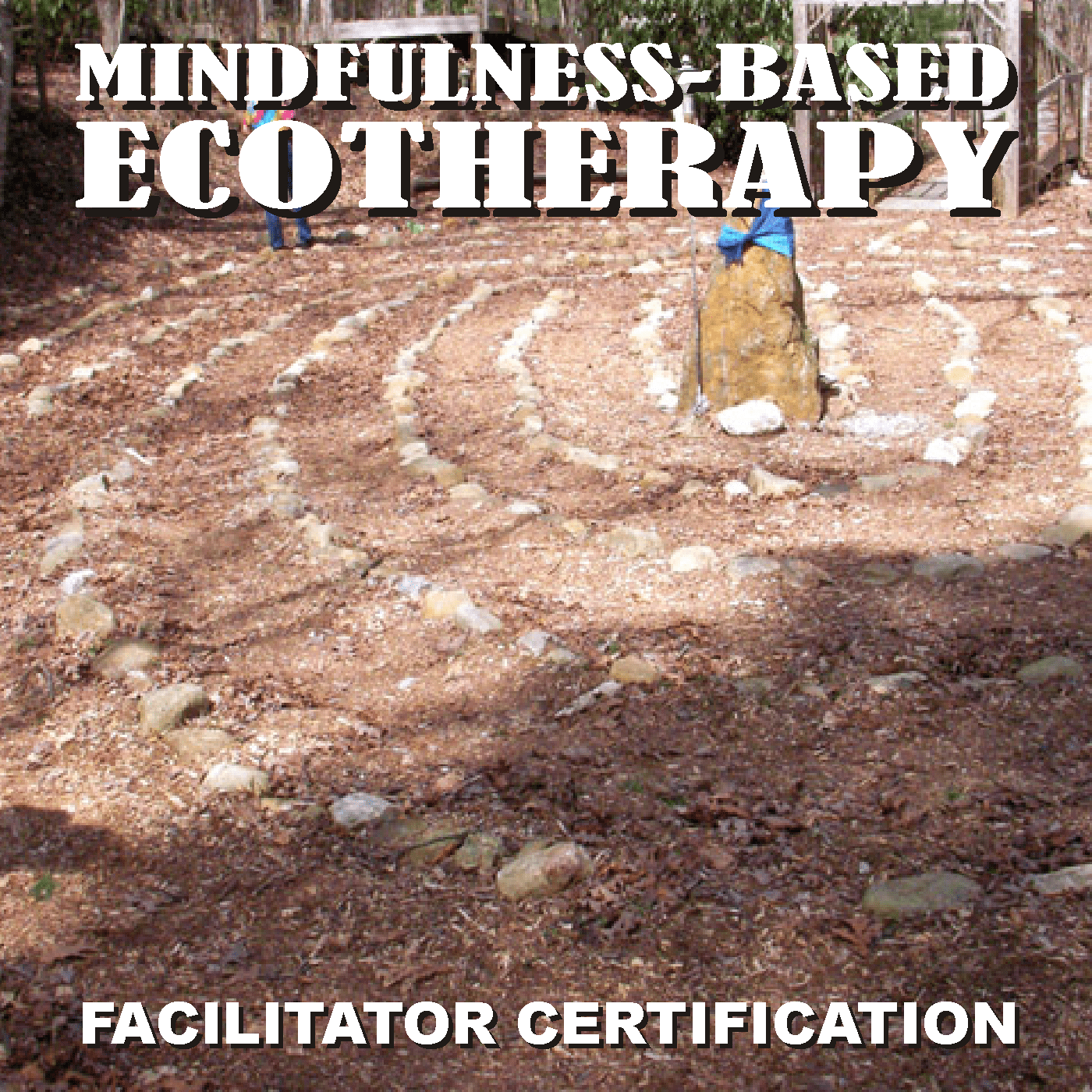
Mindfulness-Based Ecotherapy Facilitator Certification Course

This is a notice for everyone who enrolled in the Mindfulness-Based Ecotherapy Facilitator Certification Program.

To comply with new standards set by the National Board for Certified Counselors (NBCC), we will be performing a re-set of the course program for the Mindfulness-Based Ecotherapy Facilitator Certification Training. The old standards allowed us to include all of the three courses required for certification in one program. The new standards require the three courses to be separated, with individual certificates for each course.

Some of you may have enrolled when this change was being made, and are therefore enrolled in both the old and the new programs. This has caused some confusion for students, therefore on March 20, 2024 we will be re-setting the course programs for all enrolled.

This means that we will be deleting the old program entirely and enrolling everyone in the new program. What this means for those enrolled in the old program is that there will now be three courses in your account instead of just the one. The content of the courses have not changed. They have merely been split up into three courses instead of one larger course. The number of hours and the materials will remain the same.

This will only temporarily affect your enrollment in the Mindfulness-Based Ecotherapy Facilitator Certification Program. You may have difficulties logging in on March 20 as we make the change, but after that you should be able to login with no problems. If you are still having difficulties after March 20, please contact me using the form below.

In some cases the re-set may cause you to lose your course progress, so please save any progress prior to the re-set date of March 20. Make a note of where you are in your course(s) prior to March 20 so that should you lose your progress you will still be able to find your place in the new course materials.

I apologize for any inconvenience. This change was required by the National Board for Certified Counselors to keep our standards aligned with their requirements.

If you have any questions please use the form below.


Posted on

Why We Don’t Support Facebook or X-Twitter

Boycott Facebook and X-Twitter

You may have noticed that the Mindful Ecotherapy Center, LLC does not have a Facebook or a Twitter presence. There are multiple reasons for this, but the main reason is that both of those platforms are discriminatory against the LGBTQ+ community, women, and other minorities.

The American Civil Liberties Union (ACLU) had this to say about Facebook:

When we spoke on social media about our experience, other LGBTQ people shared similar stories of being censored by Facebook. These are not isolated incidents. In fact, we learned that Facebook has a history of censoring LGBTQ advertisers. And Facebook’s problems are not limited to the LGBTQ community, Black creators documenting police violence have recently seen their pages temporarily taken down completely. Facebook calls these “mistakes” but isn’t doing enough to stop them from happening again.

Facebook is a platform that claims to connect people, so why does their platform silence LGBTQ voices and prevent them from connecting with their communities? Facebook has a responsibility to represent everyone in a fair and just manner. That means addressing how the LGBTQ community can feel at home on Facebook when the platform appears to discriminate against members of our community for showing who we are.

Twitter, now known as “X”, or as I like to call it, X-Twitter, is no better.

According to a story from PBS, Twitter is the LEAST SAFE for the LGBTQ+ community:

GLAAD’s scorecard called it “the most dangerous platform for LGBTQ people” and the only one that saw its scores decline from last year.

Twitter ‘s communications staff was eradicated after Musk took over the company and for months inquiries to the press office have been answered only an automated reply of a poop emoji, as was the case when The Associated Press reached out to the company for comment.

LGBTQ+ advocates have long warned that online hate and harassment can lead to violence offline. But even when it does not, online abuse can take a toll on a person’s mental health.

“There isn’t a week that goes by that we don’t have a doxxing situation for somebody in our community that we have to come in and help them stop it and stop the hate, stop the vitriol and stop the attacks,” said GLAAD CEO and President Sarah Kate Ellis referring to the malicious practice that involves gathering private or identifying information and releasing it online without the person’s permission, usually in an attempt to harass, threaten, shame or exact revenge. “It’s really been amped up to a level that we’ve never seen before.”

On Twitter, attacks on LGBTQ+ users have increased substantially since Elon Musk took over the company last fall, according to multiple advocacy groups.

For this reason, the Mindful Ecotherapy Center, LLC does not now have, nor will we ever have, either a Facebook or a Twitter profile. We support our LGBTQ+ community as well as all minority communities, and will always advocate for LGBTQ+ and other minority rights.

If you would like to join us by boycotting either or both platforms, please feel free to tell us about it in the comments below!

You might also wish to contact Facebook and Twitter and let them know how you feel about their policies. The contact information is below for both platforms.

Facebook Complaints

Dial the Facebook Customer Service Phone Number (844)-457-0351 to reach Facebook directly.

Using +1-(844)-457-0351, you can complain to Facebook directly. This number is available 24 hours a day and seven days a week.

Ways to Contact Facebook Support

Select Report a problem
If you face platform problems, you can report it directly to the Facebook team. This can be done by choosing “Report a Problem” under the Help menu.

Facebook Support Phone Number
The Facebook Customer Support Number is 844-457-0351, and users can use this number to speak directly to a live person.

Facebook Support Email
Use support@fb.com to get general support from Facebook.
Send an email to press@fb.com if you need press-related inquiries.
Users can use appeals@fb.com to appeal against blocked content.
You can report content against Facebook’s guidelines via abuse@fb.com.
Write an email to ip@fb.com to resolve intellectual property-related queries.

Offline Facebook support
If you cannot file a complaint through the above methods, you can write a letter and send it to the following address:

Facebook Headquarters
1 Hacker Way
Menlo Park, CA 94025
United States of America

1-844-457-0351


Can you email Facebook about a complaint?
Yes, you can email the Facebook team regarding a complaint. Use the platformcs@support.facebook.com address to reach them regarding any financial issues related to your account. You can also use abuse@fb.com to report anything on Facebook against the Facebook Community Standards.

Dial the Facebook Support Number 1-844-457-0351 to contact Facebook customer service directly. This number will let you speak directly to a live person on Facebook.

X-Twitter

Unfortunately, Twitter doesn’t care enough about its users to offer a direct way to file a complaint. The best you can do is follow the information below, but be aware that you probably won’t get a response.

There is no way to contact X by phone, email, or DM directly, but you can create a support ticket at

https://help.twitter.com/en/forms

You might try contacting their advertising department should you decide to boycott X-Twitter.

To reach X’s advertising support team, fill out a form at

https://ads.twitter.com/en/help

You might also inform their investor team and let them know you’re planning a boycott.
You can reach this department at

https://investor.twitterinc.com/contact/default.aspx

If you decide to take action, please let us know how it turned out! Both Facebook and X-Twitter have been notorious about not responding to customer concerns. But together we can make a difference! When it starts affecting their bottom line, only then will they change! Contact us and let us know what you think!

Posted on

FREE Course: Ethics of Ecotherapy

In our ongoing effort to improve the quality of the courses we offer, we will be applying to the National Board for Certified Counselors (NBCC) to be able to provide LIVE continuing education opportunities in addition to our online offerings.

As part of this process we are offering this FREE two-hour course on Ethics in Ecotherapy in June of 2023!

This course will cover some ethics issues common to the practice of ecotherapy. In addition to two free hours of continuing education on the Ethics of Ecotherapy, participants will receive a coupon code good for $25 off any course offered by the Mindful Ecotherapy Center, LLC.

This course will be conducted by Zoom, so you will need access to Zoom for the course.

Course Description

Ecotherapy usually includes doing therapy outdoors. Therapy in non-traditional settings presents unique ethical challenges. These ethical issues are usually not covered in therapy graduate school programs. In this course we will discuss how to address some common ethical issues for therapists and counselors that are unique to the process of ecotherapy.  

Course Objectives

After taking this course the student will be able to:

  • Discuss and describe confidentiality and informed consent issues common to the practice of ecotherapy
  • Discuss training recommendations regarding the practice of ecotherapy
  • Discuss assessment and client safety issues common to the practice of ecotherapy
  • Discuss and describe what constitutes dual relationships in ecotherapy
  • Discuss and describe values conflicts in ecotherapy settings
  • Develop a sense of self-awareness for counselors and therapists practicing ecotherapy  

Course Instructions

This is a LIVE course that will be offered on Tuesday, June 20, 2023 at 10 a.m. Pacific Daylight Savings Time. An email reminder containing the Zoom code to access the course will be sent the day before the conference. The conference will be presented on Zoom. You need to be present for the duration of the course to get course credit.

The course will be two hours on Zoom. At the end of the course you will have access to a link for the final exam.

Upon successful completion of the exam you will receive a Certificate of Completion in pdf format, and you will be emailed a coupon code good for $25 off any course offered by the Mindful Ecotherapy Center, LLC.

You may register for this FREE course any time prior to June 20, 2023. If you do not pre-register before the date, we cannot guarantee a seat for the course, so please register as early as possible! You may find help registering for courses and accessing course materials by visiting the Help Center.

CLICK HERE TO REGISTER FOR THIS FREE COURSE

Posted on

Ecospirituality: The Way of the Coyote

Ecospirituality: The Way of the Coyote

Now Available!

Ecospirituality: The Way of the Coyote

The word “spiritual” comes from the Latin spiritus, which means, “breath.” So originally, that which was spiritual was simply that which was breathtaking. From this perspective a spiritual experience is an awe-inspiring experience. People of all religions…or none…can experience such awe-inspiring events in nature. Ecospirituality can be spiritual without being religious. Those breathtaking moments for me most often occur when I have made some sort of connection to nature. Ecospirituality is the process of seeking wonder and awe in those moments in natural environments. The Ecospirituality Program is available for use at any organization that teaches principles of ecology and/or mental and spiritual health. If you are interested in presenting the program at your organization, training is available for facilitators at www.mindfulecotherapy.org.If your organization would like to implement the Ecospirituality Program, Charlton Hall, MMFT, LMFT/S, RPT-S, CHt also offers facilitated live instruction and consultation on the program, as well as volume discounts on copies of the Ecospirituality Workbook.Learn more at the Mindful Ecotherapy Center’s website at www.mindfulecotherapy.org.