
Table of Contents
At the Mindful Ecotherapy Center, PLLC, we spend a lot of time talking about healing, presence, and the quiet intelligence of the natural world. What we don’t do is pretend that moving therapy outdoors magically removes the need for ethical rigor. If anything, it raises the stakes.
Ecotherapy and nature-based counseling are gaining momentum as mental health professionals rediscover what should have been obvious all along: human beings are not separate from nature, and psychological healing often deepens when people reconnect with the living world. From forest walks to outdoor mindfulness practices, nature offers regulation, perspective, and a sense of belonging that no office décor can replicate.
But stepping outside the therapy room doesn’t mean stepping outside ethical responsibility. It means expanding it.
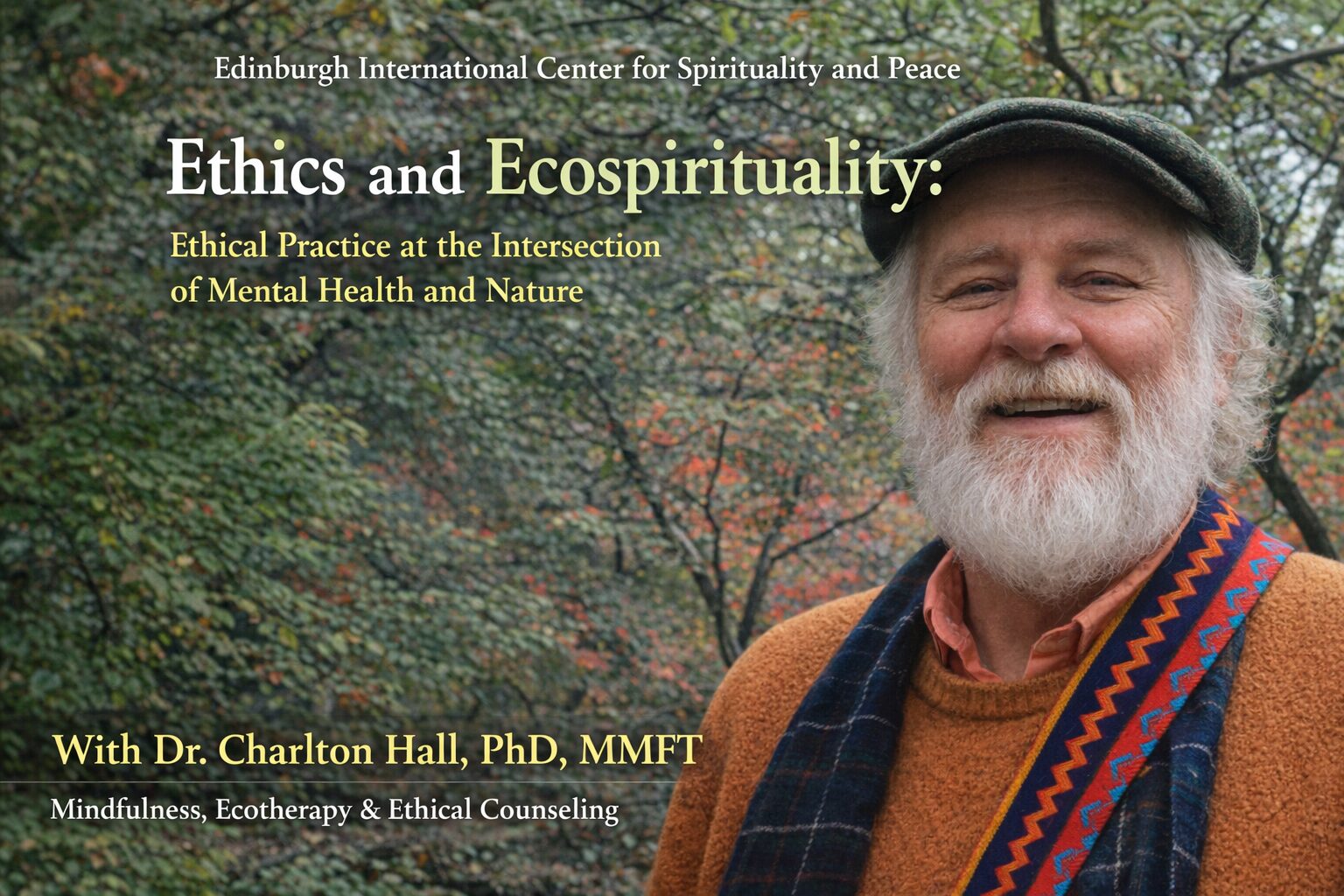
Dr. Charlton Hall, MMFT, PhD, founder of the Mindful Ecotherapy Center, addresses this directly in his presentation, Ethics and Ecospirituality: Ethical Practice at the Intersection of Mental Health and Nature. His work reflects a simple but inconvenient truth: good intentions are not enough. Ethical practice requires foresight, structure, and accountability, especially when the setting becomes less controlled and more dynamic.
Edinburgh Conference: Confidentiality
One of the most immediate concerns in ecotherapy is confidentiality. In a traditional office, privacy is engineered. Doors close, white noise hums, and interruptions are minimized. In a park, forest, or shoreline, none of that is guaranteed. Other people exist. Sound carries. The world refuses to cooperate with your treatment plan.
This means therapists must proactively address privacy risks with clients before sessions ever begin. Informed consent becomes more than a formality. Clients need to understand what can and cannot be controlled, and together, therapist and client must decide what level of exposure is acceptable. Ethical ecotherapy doesn’t ignore these risks. It names them clearly and plans around them.
Edinburgh Conference: Boundaries and Dual Relationships
Then there’s the issue of boundaries and dual relationships, which become far less theoretical once you leave the office. Community spaces blur roles. You might run into a client at a trailhead, a farmer’s market, or a meditation group. Suddenly, the clean lines between “therapist” and “person who also exists in the world” start to dissolve.
Dr. Hall emphasizes that maintaining professional boundaries in these contexts requires intentionality. Therapists must establish clear agreements about public interactions, social overlap, and expectations. Without that clarity, what feels like a casual encounter can quickly become ethically murky.
Edinburgh Conference: Risk Management
Risk management is another area where ecotherapy demands maturity. Nature is not a controlled environment, no matter how poetic people get about it. Weather shifts. Terrain changes. People trip, get lost, or underestimate their physical limits.
Ethical practice means anticipating these risks and preparing accordingly. This includes assessing client suitability for outdoor work, having emergency protocols, understanding the environment, and maintaining appropriate insurance and documentation. The goal is not to eliminate risk entirely. That would require locking everyone back indoors. The goal is to manage it responsibly.
Edinburgh Conference: Cultural Humility
Dr. Hall also highlights the importance of cultural humility, especially when working with ecospirituality. Nature-based practices often intersect with Indigenous traditions, spiritual worldviews, and cultural relationships to land that are not interchangeable or up for casual borrowing.
Ethical ecotherapy requires practitioners to examine their own assumptions and avoid appropriating practices without understanding their origins and significance. Respecting the land also means respecting the people and traditions connected to it. This is where ecotherapy moves beyond technique and into responsibility.
Edinburgh Conference: Integration
Finally, there is the question of integration. Just because nature is beneficial doesn’t mean every intervention is appropriate for every client. Ethical clinicians must ground their work in evidence-based practice while thoughtfully incorporating nature-based elements. This isn’t about replacing clinical skill with scenic views. It’s about enhancing therapeutic work in ways that remain accountable, measurable, and client-centered.
Dr. Charlton Hall brings decades of experience as a Marriage and Family Therapist, educator, and developer of mindfulness-based ecotherapy approaches. His work spans counseling, recovery programs, and international teaching, all grounded in the integration of mindfulness, evidence-based psychotherapy, and nature connection. At the Mindful Ecotherapy Center, that integration is not treated as a trend. It’s treated as a discipline.
Edinburgh Conference: The Takeaway
The takeaway is straightforward, even if people prefer to romanticize it: nature can deepen healing, but it doesn’t excuse sloppy practice. Ethical ecotherapy asks more of clinicians, not less. It requires awareness, preparation, and a willingness to hold complexity instead of pretending it isn’t there.
If you’re practicing, or planning to practice, ecotherapy in places like Edinburgh or anywhere else where people and landscapes intersect, the question isn’t whether nature helps. It’s whether you’re prepared to do the work responsibly.
Because the forest doesn’t care about your intentions. Your clients, however, should be able to trust them.
Share Your Thoughts About the Edinburgh Conference!
What do you think? Share your thoughts in the comments below!
And don’t forget to subscribe to our newsletter!