
Posted on Leave a comment

Guest Vlog: 12 Skills of Mindfulness-Based Ecotherapy

Guest vlog

Guest Vlog for Impact Continuing Education
Featuring Charlton Hall, MMFT, PhD — The 12 Skills of Mindfulness-Based Ecotherapy

In this special guest vlog for Impact Continuing Education, Charlton Hall, MMFT, PhD, presents a clear, practical, and experience-based introduction to the 12 Skills of Mindfulness-Based Ecotherapy. Drawing from his decades of clinical teaching and his work with the Mindful Ecotherapy Center, Hall offers a grounded walkthrough of how these twelve skills form a structured pathway for helping clients cultivate resilience, emotional regulation, and ecological awareness.

The video opens with an orientation to Mindfulness-Based Ecotherapy (MBE): a nature-centered, experiential approach combining traditional mindfulness practices with ecopsychology. Hall explains how each of the 12 skills builds on the one before it, gradually moving clients from internal awareness to a deeper connection with the natural world.

Guest Vlog: The 12 Skills

Viewers learn in this guest vlog how the skills are organized into four core modules:

1. Mindfulness
Breathwork, present-moment attention, and learning to observe thoughts and emotions without judgment. Hall outlines how these practices are used to help clients ground themselves before progressing to more complex ecological skills.

2. Ecotherapy
Skills focused on reconnecting with the natural environment. Hall demonstrates how exercises like sensory awareness, grounding, and nature-based inquiry can reduce stress and help clients feel more anchored in their environment.

3. Reciprocity
This section explores the relationship between the self and the ecosystem. The skills encourage clients to recognize interdependence, develop a sense of stewardship, and begin integrating ecological mindfulness into daily life.

4. Radical Acceptance
Hall includes the acceptance-based skills that help clients work through suffering, change, and uncertainty. These practices teach participants how to respond rather than react, building emotional flexibility and long-term resilience.

Throughout the guest vlog, Hall shows how Mindfulness-Based Ecotherapy supports a wide range of personality types, learning styles, and clinical needs. He also highlights how the approach blends cognitive insight with experiential learning, making it especially effective for educators, clinicians, and students seeking embodied therapeutic tools.

Mindfulness-Based Ecotherapy in Your Own Office

Dr. Hall concludes the guest vlog with how you don’t have to have access to an outdoor space to incorporate mindfulness-based ecotherapy into your own office or practice.

For more information on Mindfulness-Based Ecotherapy, training opportunities, or additional resources by Charlton Hall, visit the Mindful Ecotherapy Center at https://www.mindfulecotherapy.org


About Impact CE

This guest vlog by Charlton Hall, MMFT, PhD, was done in cooperation with Impact CE. Learn more about them at this link.

Our Values

We seek a mutually caring and respectful relationship with those who purchase courses, help develop courses, and partner with us. Although profit is necessary in order to continue to provide services, we value people and relationships ahead of today’s profits. We are keenly aware that we must earn a relationship of trust through integrity and a commitment to provide exceptional value that helps those we work with to help others.

Our Mission

Helping professionals is the cornerstone of our mission. We help by providing a great selection of quality, relevant, and affordable continuing education experiences along with exceptional service for practitioners. We seek to inspire the best…so that as professionals grow more in their knowledge and skills, they can do more for others.


Share Your Thoughts!

What do you think? Share your thoughts in the comments below!

Would you like Charlton Hall, MMFT, PhD, to do a guest video or post on your organization’s website? Would you like to schedule an interview with Dr. Hall? You may contact him here.

And don’t forget to subscribe to our newsletter!

Posted on

Dialectical Behavioral Therapy (DBT)

Dialectical Behavioral Therapy (DBT)

Dialectical Behavioral Therapy (DBT) is a transformative therapeutic approach that has been changing lives since its development in the 1970s by Dr. Marsha Linehan. Originally designed to treat individuals with borderline personality disorder (BPD), DBT has since expanded its reach to address a wide range of mental health challenges, including depression, anxiety, post-traumatic stress disorder (PTSD), and substance use disorders. At its core, Dialectical Behavioral Therapy (DBT) is about finding balance—between acceptance and change, between emotional intensity and calm, and between the complexities of life’s challenges and the skills to navigate them.

Charlton Hall, MMFT, PhD, LMFT, has been a dedicated practitioner of DBT since 2008, bringing over a decade of expertise to his work. As a Licensed Marriage and Family Therapist, Dr. Hall has helped countless individuals harness the power of DBT to transform their lives, fostering emotional resilience and healthier relationships.

What is Dialectical Behavioral Therapy?

DBT is a structured form of psychotherapy that combines elements of cognitive-behavioral therapy (CBT) with mindfulness practices. The term “dialectical” refers to the synthesis of opposites, a concept that is central to Dialectical Behavioral Therapy (DBT). This approach acknowledges that life is full of contradictions and that true growth often comes from finding a balance between opposing forces.

DBT is built on four key modules:

  1. Mindfulness: This foundational skill teaches individuals to be present in the moment, fostering awareness and acceptance of their thoughts and emotions without judgment.
  2. Distress Tolerance: This module equips individuals with tools to cope with difficult situations and emotions without resorting to harmful behaviors.
  3. Emotion Regulation: DBT helps individuals understand and manage their emotions, reducing the intensity of negative feelings and increasing emotional stability.
  4. Interpersonal Effectiveness: This module focuses on improving communication and relationship skills, enabling individuals to assert their needs while maintaining respect for others.

The Impact of DBT

One of the reasons Dialectical Behavioral Therapy (DBT) is so effective is its emphasis on both acceptance and change. It validates individuals’ experiences and emotions while also encouraging them to adopt healthier behaviors and thought patterns. This dual focus makes DBT particularly effective for individuals who struggle with intense emotions and impulsive behaviors.

Dr. Charlton Hall has witnessed firsthand the transformative power of DBT. Through his practice, he has helped clients develop the skills to navigate life’s challenges with greater confidence and resilience. His approach is compassionate and client-centered, ensuring that each individual receives the support they need to thrive.

Why Choose DBT?

Dialectical Behavioral Therapy (DBT) is not just a therapy; it’s a life-changing toolkit. Whether you’re dealing with overwhelming emotions, struggling to maintain healthy relationships, or seeking a greater sense of balance in your life, DBT offers practical skills that can make a profound difference.

Dr. Hall’s extensive experience in DBT, combined with his expertise in mindfulness and family systems therapy, makes him a trusted guide for those seeking emotional healing and growth. Since 2008, he has been at the forefront of helping individuals harness the power of DBT to create meaningful and lasting change.

Conclusion

Dialectical Behavioral Therapy is a beacon of hope for those navigating the complexities of mental health challenges. With its emphasis on balance, mindfulness, and practical skills, DBT empowers individuals to lead more fulfilling lives. Under the guidance of experienced practitioners like Charlton Hall, MMFT, PhD, LMFT, the journey toward emotional well-being becomes not just possible but transformative.

If you’re ready to take the first step toward a more balanced and resilient life, consider exploring Dialectical Behavioral Therapy (DBT) with a qualified therapist. The skills you learn could be the key to unlocking a brighter future.


Share Your Thoughts!

Please feel free to share your thoughts in the comments below!

Don’t forget to check out our YouTube channel for more information and content!


Schedule a Teletherapy Appointment with Charlton Hall, MMFT, PhD, LMFT

For those seeking personalized guidance in incorporating Mindfulness-Based Ecotherapy into their lives, Charlton Hall, MMFT, PhD, LMFT, offers professional teletherapy sessions. With extensive expertise in MBE, Dr. Hall provides tailored strategies to help individuals overcome insomnia and achieve restorative sleep.

How to Schedule an Appointment:

  1. Visit the Mindful Ecotherapy Center Website to find more information about Dr. Hall’s approach to sleep wellness and mindfulness-based therapies.
  2. Book a Consultation – Easily schedule a teletherapy session that fits your availability.
  3. Receive Expert Guidance – Work one-on-one with Dr. Hall to develop a personalized sleep-improvement plan using MBE techniques.

By integrating Mindfulness-Based Ecotherapy into your daily routine, you can naturally enhance your sleep quality, reduce stress, and achieve long-term wellness.


Schedule an Appointment Today!

Ready to take the next step? Schedule a session with Charlton Hall today and start your journey to better sleep through the healing power of nature.


Posted on

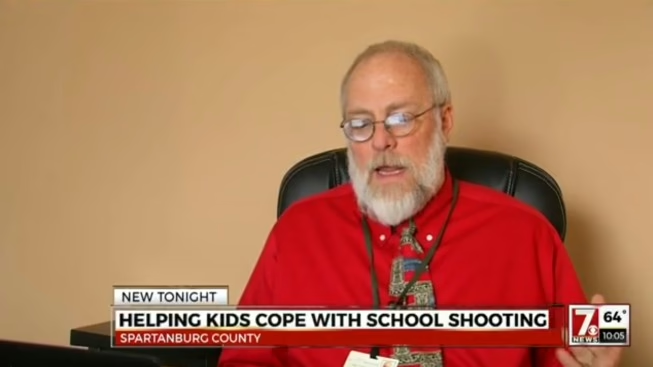
School Shootings – Charlton Hall on WSPA Channel 7

school shootings

Click here to watch the video

Understanding School Shootings: Focusing on Probability Over Possibility

When Charlton Hall, MMFT, PhD, served as Chair of Behavioral Health for ReGenesis Health Care in Spartanburg, South Carolina, he became a trusted voice on issues affecting children’s mental health and safety. Among the many topics he addressed, one particularly sensitive subject was that of school shootings. As tragic and terrifying as these events are, they present unique challenges for both parents and educators in how they discuss safety with children without instilling excessive fear. In interviews with local reporters, Dr. Hall emphasized a subtle but crucial distinction: when children ask about the likelihood of a school shooting, it is often more helpful to focus on probability rather than mere possibility.

The Normalization of School Shootings

In our current cultural climate, news of shootings appears frequently and often with intense coverage, giving the impression that such events are a constant, ever-present threat. For children and adults, this can trigger heightened anxiety and a sense of impending danger. Dr. Hall recognized that children’s natural curiosity and concerns about safety needed to be addressed with honesty, but also with perspective. His guidance was clear: while it is technically always possible that a school shooting could happen at any given school, the probability that it will occur at their particular school is relatively low. By framing the conversation around probability, children can develop a realistic understanding of risk without being paralyzed by fear.

Probability vs. Possibility

Dr. Hall’s approach utilizes behavioral health principles and child development research to help children understand risk and probability. Children may misinterpret rare events as common due to media coverage, but adults can assist by contextualizing these events and comparing them to more frequent risks. For instance, despite media reports of multiple school shootings, the actual probability of a child experiencing such an event at their own school is very low. Understanding the difference between possibility and probability can help children feel safer while acknowledging real dangers.

Pay Attention to the Emotional Component

Importantly, Dr. Hall also highlighted the emotional component of these conversations. Children often ask about school shootings not only to understand the facts but also to seek reassurance. By emphasizing probability, adults validate children’s concerns while simultaneously reinforcing that most schools remain safe environments. This balanced approach reduces anxiety without resorting to false assurances, which can undermine trust if children later encounter distressing news.

Beyond individual conversations, Dr. Hall advocated for proactive safety measures in schools, such as well-trained staff, emergency preparedness drills, and clear communication strategies. While these measures cannot eliminate the possibility of a school shooting, they do reduce risk and empower children and educators to respond effectively if an incident were ever to occur. By coupling probability-focused discussions with tangible safety practices, children gain both cognitive and practical tools for navigating their environment confidently.

Informed, Compassionate Conversations

In a society where sensationalized news and social media coverage amplify fears, Dr. Hall’s perspective is particularly relevant. Focusing on probability rather than possibility is not a matter of ignoring danger but of teaching children to weigh realistic risks against anxiety-inducing scenarios. This approach fosters resilience, critical thinking, and a grounded sense of personal safety, all of which are essential components of behavioral health.

Charlton Hall’s guidance on this delicate topic demonstrates the importance of informed, compassionate communication when addressing children’s fears. By explaining that while a school shooting is always possible, the probability of it occurring at their particular school is low, he provided parents, educators, and children alike with a framework for understanding risk, reducing anxiety, and maintaining emotional balance in the face of alarming news. His work continues to serve as a model for behavioral health professionals navigating the complexities of child safety, perception of risk, and media influence in contemporary society.

Transcript of the WSPA Interview

Charlton Hall chairs the behavioral health department at ReGenesis Health Care, and said the school shooting in Parkland, Florida, made it to the minds of his patients who’ve dealt with trauma.

“Because it’s just another reminder that the world isn’t always a safe place,” said Hall.

It’s a conversation, he said, parents need to have in their homes, too.

“[Help children] understand that unfortunately, this is the world we live in now and these things do happen,” he said. “The longer you [parents] sweep it under the rug, the more you’re going to have to deal with it at some point in the future.”

Hall advised limiting how much children are exposed to news of these shootings and leaving out the graphic details for younger children, while avoiding information they don’t ask for.

“Too much information for a small child would be something like going into graphic detail about what happened, about how many people were killed. Just let them know that something bad happened, and let the child be your guide,” he said. “But, in the same way, be realistic. Don’t try to minimize the danger, either.”

He says to remind children that school shootings are possible, but not always probable.

“Assure them that they’re safe. Review the procedures with the school,” said Hall, “And it’s important that they are looking to you as a role model as well, so if they feel stressed out, they’re looking to you as to how to respond to that.”

And, while at their own schools, he says kids need to know that making threats is never funny.

“If I hear a child making what they think is a joke, saying that they’re going to shoot up a school, or if a teacher hears that, or any kind of professional who’s a mandated reporter hears that, they’re required by law to report that,” said Hall. “It’s a very serious thing and can impact the rest of your life – it can keep you from getting into college, getting a job.”


Share Your Thoughts!

What do you think? Share your thoughts in the comments below! And don’t forget to subscribe to our newsletter!