Posted on Leave a comment

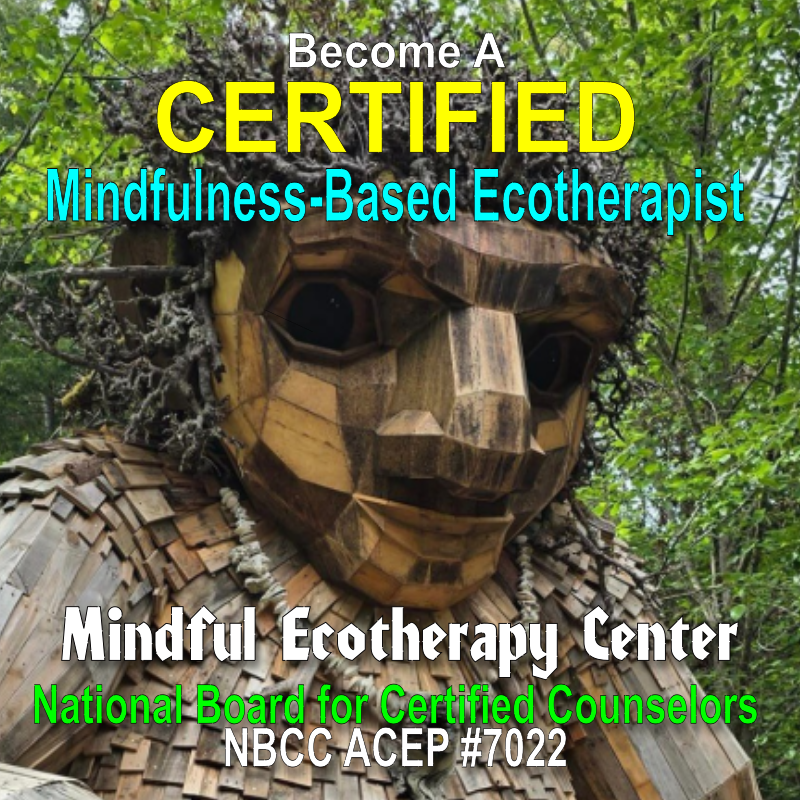
Student Discount for the Mindfulness-Based Ecotherapist Certification Program

student discount

At the Mindful Ecotherapy Center, PLLC, we are committed to supporting the next generation of mental health professionals as they develop skills in mindfulness-based and nature-based clinical practice. Graduate students represent the future of our field, and we recognize both the financial challenges and the educational dedication required to pursue advanced clinical training.

For that reason, we are pleased to offer a 25% student discount on the Mindfulness-Based Ecotherapist Certification Program for eligible graduate students currently enrolled in mental health degree programs.

You can learn more about the certification program here:
https://www.mindfulecotherapycenter.com/

Eligibility Requirements for the Student Discount

To qualify for the student discount, applicants must meet all of the following criteria:

  • You must be currently enrolled in a graduate-level mental health program (such as counseling, social work, marriage and family therapy, psychology, or a closely related field).
  • You must provide a valid student ID.
  • Your student ID must be submitted as both front and back images.
  • The student ID must be currently valid and not expired.
  • The expiration date must be clearly visible on the submitted documentation.

Discount approval is contingent upon verification of enrollment status and document authenticity.

Why We Offer a Student Discount

Graduate students are often balancing coursework, internships, and financial pressure while preparing for professional licensure. The Mindfulness-Based Ecotherapist Certification Program is designed to complement your graduate education by offering practical, integrative clinical tools that blend mindfulness practices with ecotherapy approaches.

This training supports your development in areas such as:

  • Integrating nature-based interventions into clinical practice
  • Strengthening mindfulness-based therapeutic skills
  • Enhancing client engagement through experiential and ecological awareness
  • Expanding your theoretical and applied understanding of ecotherapy frameworks

By offering a student discount, we aim to make this specialized training more accessible while supporting the growth of emerging clinicians who are interested in innovative, evidence-informed approaches to mental health care.

How to Apply the Student Discount

To apply, send an email to support@mindfulecotherapy.com. Include a copy of your student ID, both front and back, in either jpg or png format as an attachment or embedded in the email. Include the graduate program you’re enrolled in and your anticipated date of graduation. When your application is accepted, you will receive an email containing a coupon code for your discount. The process is usually completed in two weeks or less.

If you are eligible, simply submit your documentation or contact our administrative team with your enrollment verification and student ID (front and back). When you enter your coupon code, your 25% student discount will be applied to your enrollment in the certification program.

We encourage all applicants to ensure that their documents are clear, legible, and include an unexpired expiration date. Incomplete submissions may delay processing.

Advancing Your Clinical Skills

The Mindfulness-Based Ecotherapist Certification Program is designed for clinicians who want to expand their therapeutic toolkit beyond traditional office-based practice. It emphasizes the healing relationship between human well-being and the natural environment, integrating mindfulness practices into ecotherapy interventions.

As a student, this training can help you begin building a strong clinical foundation that aligns with emerging trends in holistic, experiential, and nature-based therapy models.

For full program details and enrollment information, visit:
https://www.mindfulecotherapycenter.com/


The Mindful Ecotherapy Center is honored to support your journey toward becoming a skilled, grounded, and ethically informed mental health professional. We look forward to welcoming you into the growing community of mindfulness-based ecotherapists!


Share Your Thoughts About Student Discounts!

What do you think? Share your thoughts in the comments below!


  And don’t forget to subscribe to our newsletter!


Posted on

Why I Left the AAMFT and Joined the American Counseling Association (ACA)

aamft

Why leave the AAMFT? As a Marriage and Family Therapist (MFT), being part of a professional organization is essential to maintaining professional standards, receiving ongoing education, and accessing support resources. For years, I was a loyal member of the American Association for Marriage and Family Therapy (AAMFT). It’s a respected organization that provides a wide range of resources for therapists.

However, over time, I became increasingly frustrated with the rising membership fees and the declining value of the services and benefits offered. Today, I attempted to renew my membership. Their website crashed. I called the tech support number that I found after great difficulty. They had it well-hidden on the site. After being put on hold for over an hour I was informed that no representatives were available to accept my call, and they hung up on me. They could’ve told me that before I waited on the phone for an hour.

After much consideration, I made the decision to leave AAMFT and join the American Counseling Association (ACA) instead. Here’s why I made that change, and why I believe other therapists might want to consider the same.

AAMFT Rising Membership Fees with Fewer Benefits

One of the biggest factors that led me to leave AAMFT was the consistently increasing membership fees. Each year, it seemed that the cost of being a member rose, while the value I received in return steadily diminished. I am and have been a member of multiple professional organizations in my professional career, and none have higher membership fees with fewer benefits. When I first joined AAMFT, I appreciated the resources, networking opportunities, and professional support. But as time went on, I noticed that many of the services I once found valuable were no longer being offered—or were being offered in a more limited capacity.

While the cost of membership continued to climb, the actual benefits I received in return seemed to be shrinking. The number of workshops, seminars, and continuing education opportunities that were once included or offered at a discount became fewer and less relevant to my practice. Access to industry-specific research also became more difficult, as more AAMFT content was locked behind additional paywalls.

I felt like I was paying more for less. As a professional who prides myself on providing high-quality care to my clients and staying informed about the latest developments in marriage and family therapy, this diminishing return on investment was frustrating. It became clear that AAMFT was not meeting my needs as it once had.

AAMFT’s Lack of Relevant Resources

Over time, I also began to notice that the resources offered by AAMFT felt increasingly irrelevant to my practice. The workshops and conferences offered by the organization didn’t align with the direction I wanted my career to go in. As a therapist focusing on mindfulness-based therapy, I found that AAMFT was often slow to embrace emerging therapeutic approaches or newer methodologies in the field. Much of the research published in the AAMFT journal seemed focused on self-care for therapists rather than on patient care. While self-care is important, patient care is at least as important as therapist self-care.

Furthermore, I was increasingly frustrated by the limited scope of networking opportunities with other professionals. As an MFT, much of my work intersects with the practices of other types of counselors, social workers, and psychologists. However, AAMFT’s narrow focus on marriage and family therapy left me feeling disconnected from a broader professional community. While COVID-19 had an impact on face-to-face networking opportunities, teleconferencing remained an option. Unfortunately, it was an option that AAMFT was slow to embrace when it comes to networking with mental health professionals who are not Marriage and Family Therapists.

Why I Chose the American Counseling Association (ACA)

After years of growing dissatisfaction with the AAMFT, I began researching other organizations that could better support my practice. That’s when I discovered the American Counseling Association (ACA). The ACA provides resources for a wide variety of mental health professionals, including Licensed Professional Counselors (LPCs), Marriage and Family Therapists (LMFTs), and other types of therapists. What initially attracted me to the ACA was its inclusive approach and commitment to supporting diverse therapeutic practices.

The ACA offers a wider variety of resources and professional development opportunities that are relevant to my current practice. From advanced certifications in specialized therapeutic techniques like mindfulness and ecotherapy to discounts on continuing education courses, the ACA provides far more comprehensive and varied benefits than AAMFT has done in recent years.

Another key factor in my decision to switch was the membership fees. The ACA offers competitive pricing for its membership, and I found that the benefits far outweighed the cost. As a member, I have access to exclusive webinars, workshops, and training opportunities, many of which align directly with the areas I want to grow in, such as mindfulness-based counseling and ecotherapy.

Networking and Professional Community

One of the most valuable aspects of joining the ACA is the opportunity to network with a wider range of mental health professionals. The ACA’s emphasis on a holistic view of therapy allows me to interact with counselors who specialize in everything from trauma-informed therapy to addiction counseling, and many other areas that complement my own expertise. This diversity of perspectives helps me grow as a therapist and expand my understanding of the various therapeutic methods that work for clients.

Moreover, the ACA offers several state chapters and interest networks that allow me to connect with local professionals who share similar interests or practice areas. This has helped me build meaningful relationships and expand my referral network, which was something I was struggling to achieve through AAMFT.

Final Thoughts

Leaving the American Association for Marriage and Family Therapists (AAMFT) was not an easy decision, as I’ve always respected the work the organization has done for our profession. However, as time passed, I realized that the increasing membership fees and the diminishing value of their services no longer aligned with my professional goals, and AAMFT leadership has been slow to respond if they bothered to respond at all. By joining the American Counseling Association (ACA), I’ve found a more inclusive, relevant, and supportive community for my work as a therapist.

If you’re an MFT or counselor considering which professional organization best suits your needs, I strongly encourage you to look into the ACA. With its comprehensive resources, professional development opportunities, and more affordable membership fees, it has been a game-changer for my practice.

The right professional organization can make all the difference in your career and for your patients/clients. For me, the ACA has become the resource I was searching for.


Share Your Thoughts on the AAMFT!

Are you a current member of the AAMFT? Have you been in the past? What’s your experience been? Share your thoughts in the comments below!