Posted on Leave a comment

Happy Pride Month from the Mindful Ecotherapy Center

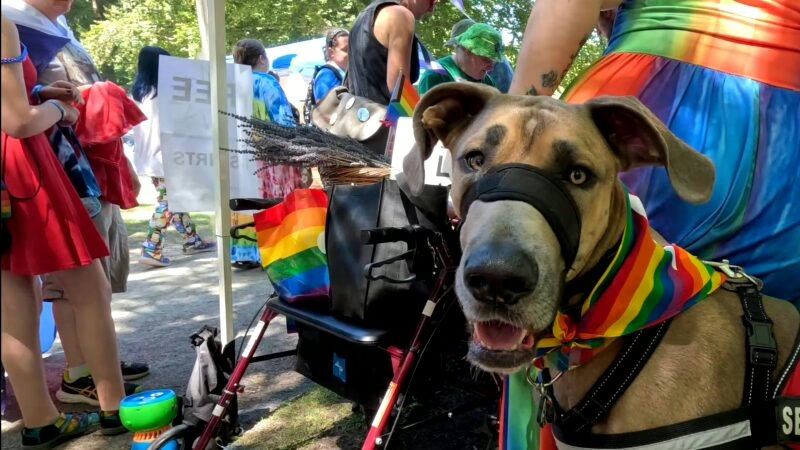
Happy Pride Month 2026

June marks Pride Month, a time of celebration, reflection, visibility, and advocacy for LGBTQ+ communities. At the Mindful Ecotherapy Center, we recognize Pride Month not only as a cultural observance but as an essential reminder of the importance of dignity, inclusion, and psychological safety for all people, regardless of sexual orientation, gender identity, or expression.

From its earliest foundations, the Mindful Ecotherapy Center has supported LGBTQ+ individuals and communities through affirming, trauma-informed, and nature-based therapeutic approaches. This commitment is woven into the fabric of our work, our teaching, and our understanding of what it means to heal in relationship with both self and environment.

You can learn more about our work here: Mindful Ecotherapy Center

A Commitment to Inclusion and Affirming Care

The Mindful Ecotherapy Center has always recognized that mental health cannot be separated from social context. For LGBTQ+ individuals, experiences of discrimination, marginalization, and identity invalidation have historically contributed to increased rates of anxiety, depression, and trauma-related symptoms, not because of identity itself, but because of societal responses to identity.

Our approach to mental health emphasizes affirmation, presence, and ecological connection. We believe healing happens when people are allowed to exist fully as themselves in safe relational and environmental spaces. This includes honoring diverse gender identities, relationship structures, cultural backgrounds, and lived experiences.

In practice, this means we intentionally integrate mindfulness-based ecotherapy principles with a commitment to inclusivity. Clients are met without assumptions. Language is inclusive and adaptable. Nature-based practices are used to support grounding, embodiment, and reconnection with a sense of belonging in the wider living world.

Pride Month as a Healing and Reflective Practice

Pride Month is both celebratory and deeply reflective. It honors the courage of those who have fought for visibility and rights, while also acknowledging ongoing challenges faced by LGBTQ+ people around the world.

From a mindfulness-based ecotherapy perspective, Pride Month can be understood as a collective practice of awareness. It invites reflection on questions such as:

  • What does it mean to feel safe in one’s identity?
  • How does the body carry experiences of acceptance or rejection?
  • How can connection to nature support resilience and self-acceptance?

Mindfulness-Based Ecotherapy integrates awareness practices with nature connection to support emotional regulation and meaning-making. For LGBTQ+ clients, this can be especially powerful in reclaiming embodied safety and grounding in environments that are nonjudgmental and restorative.

Rather than pathologizing identity, we focus on strengthening resilience, cultivating compassion, and restoring connection both internally and within community systems.

LGBTQ+ Mental Health and the Importance of Affirming Spaces

Affirming care is not optional; it is clinically significant. Research consistently shows that LGBTQ+ people experience better mental health outcomes when they are supported in environments that validate identity and reduce minority stress.

Organizations such as the Human Rights Campaign continue to highlight the importance of equality, visibility, and policy advocacy in reducing systemic harm and improving well-being.

At the Mindful Ecotherapy Center, we align with these values by creating educational content, training opportunities, and therapeutic frameworks that emphasize inclusion and respect.

Pride Month Resources for Education and Support

For those looking to learn more, connect with the community, or access support during Pride Month, the following resources offer valuable information:

These resources provide education, community connection, and pathways for advocacy and support, especially for individuals who may be exploring identity or seeking affirming spaces.

Continuing the Work Beyond Pride Month

While Pride Month is a dedicated time of visibility and celebration, the work of inclusion must continue throughout the entire year. At the Mindful Ecotherapy Center, we see Pride as an ongoing practice of presence, respect, and relational awareness.

We are committed to continuing to develop programs, trainings, and therapeutic resources that support LGBTQ+ individuals in their healing journeys. This includes integrating mindfulness practices with ecological awareness to foster resilience, self-acceptance, and connection to the more-than-human world.

Healing is not only personal. It is also ecological and communal. At the Mindful Ecotherapy Center, we believe that when people are supported in being their authentic selves, entire systems become more compassionate and sustainable.

Closing Reflection

As we honor Pride Month, we extend gratitude to LGBTQ+ communities for their resilience, creativity, and continued advocacy for dignity and equality. We recognize the importance of holding space for both celebration and reflection, joy and struggle, visibility and ongoing work.

At the Mindful Ecotherapy Center, we remain committed to standing alongside LGBTQ+ people not only in June, but in every season of the year.


Share Your Thoughts!

What do you think? Share your thoughts in the comments below!


  And don’t forget to subscribe to our newsletter!

Posted on

Conversion Therapy, SCOTUS, and the Ethical Mandate to “Do No Harm”

conversion therapy

The recent U.S. Supreme Court decision striking down Colorado’s ban on conversion therapy has reignited a critical conversation at the intersection of law, ethics, and mental health care. While the ruling reframes certain aspects of conversion therapy as protected speech under the First Amendment, it does not, and cannot, override the ethical responsibilities that govern licensed professionals.

For therapists, the takeaway is clear: just because conversion therapy may become legal again in Colorado does not mean it is ethical, safe, or professionally acceptable.

Conversion Therapy Remains a Harmful and Discredited Practice

Conversion therapy, also known as sexual orientation or gender identity change efforts (SOGICE), has been rejected by every major medical and mental health organization in the United States. Decades of research consistently demonstrate that conversion therapy is ineffective and associated with significant psychological harm.

Peer-reviewed studies highlight serious risks, particularly for LGBTQ+ youth who are subjected to these practices. These harms include:

  • Increased depression and anxiety
  • Heightened substance use
  • Elevated risk of suicidal ideation and suicide attempts

Green et al. (2020) found that exposure to sexual orientation or gender identity change efforts (SOGICE) was associated with significantly higher odds of lifetime suicide attempts. Similarly, Ryan et al. (2018) reported that LGBTQ youth exposed to conversion therapy were more than twice as likely to attempt suicide compared to those who were not.

These findings are widely accepted across the mental health field. Conversion therapy is not a neutral intervention. It is a harmful one.

Ethical Codes Are Clear: Do No Harm

All licensed mental health professionals, whether psychologists, counselors, social workers, or marriage and family therapists, are bound by core ethical principles. Chief among them is nonmaleficence, the obligation to “do no harm.”

Practicing sexual orientation or gender identity change efforts (SOGICE) violates this principle in multiple ways:

  • It relies on interventions lacking empirical support
  • It creates foreseeable psychological harm
  • It undermines client identity and autonomy
  • It falls outside accepted standards of care

Professional organizations such as the American Psychological Association (APA), the American Counseling Association (ACA), and the National Association of Social Workers (NASW) have all explicitly condemned conversion therapy.

Even if courts limit the ability of states to ban sexual orientation or gender identity change efforts (SOGICE), ethical standards remain fully enforceable through licensure boards.


The Supreme Court’s ruling addresses constitutional law and not clinical best practice. This distinction is essential.

A therapist engaging in conversion therapy may not face criminal penalties under state law, but they are still accountable to their licensing board. That accountability carries real consequences.

Therapists who practice sexual orientation or gender identity change efforts (SOGICE) risk:

  • Formal ethics complaints
  • Investigation by licensing boards
  • Suspension or revocation of their license

Licensing boards are tasked with protecting the public. When a clinician engages in a practice known to cause harm, the board has both the authority and the responsibility to intervene.

In other words, sexual orientation or gender identity change efforts (SOGICE) can still cost a therapist their career even if it is technically legal.

Why Reporting Conversion Therapy Matters

Given this legal shift, accountability becomes even more important. If sexual orientation or gender identity change efforts (SOGICE) begins to resurface under the protection of this ruling, harmful practices mustn’t go unchecked.

Clients, family members, and professionals should take action when they encounter conversion therapy:

  • Report practitioners to state licensing boards
  • Document harmful interventions
  • Support individuals harmed by conversion efforts
  • Advocate for affirming, evidence-based care

Reporting is not punitive. It is protective. It safeguards vulnerable individuals and upholds the integrity of the mental health profession.

The Role of Ethical Practice in Mindful Ecotherapy

At the Mindful Ecotherapy Center, we emphasize approaches that honor the whole person, including their identity, lived experience, and connection to the natural world. Conversion therapy stands in direct opposition to these values.

Mindfulness-Based Ecotherapy and Acceptance and Commitment Therapy (ACT) both emphasize:

  • Acceptance rather than a change of identity
  • Compassion and psychological flexibility
  • Alignment with authentic values

These approaches are grounded in evidence and ethics, unlike conversion therapy, which attempts to suppress or alter core aspects of self.

Conclusion: Ethics Must Lead the Way

The Supreme Court’s ruling on conversion therapy may change the legal landscape, but it does not change the science. It does not change the data. And it does not change the ethical obligations of mental health professionals.

Conversion therapy remains a harmful, discredited practice that violates the foundational principle of “do no harm.”

Therapists are entrusted with our clients’ well-being. That trust demands adherence to ethical standards, even when the law creates ambiguity. If conversion therapy re-emerges, the responsibility falls on the profession and the public to ensure it is challenged, reported, and ultimately rejected.


References

Green, A. E., et al. (2020). Association of conversion therapy with depression and suicide among LGBTQ individuals. JAMA Psychiatry, 77(1), 68–76.

Ryan, C., et al. (2018). Parent-initiated sexual orientation change efforts with LGBT adolescents: Implications for young adult mental health and adjustment. Journal of Homosexuality, 65(2), 159–173.

American Psychological Association. (2015). Guidelines for psychological practice with sexual minority persons.

Substance Abuse and Mental Health Services Administration (SAMHSA). (2015). Ending conversion therapy: Supporting and affirming LGBTQ youth.


Share Your Thoughts About Conversion Therapy!

What do you think? Share your thoughts in the comments below!


  And don’t forget to subscribe to our newsletter!