Posted on Leave a comment

Conversion Therapy: Legal Shifts Do Not Change Clinical Reality

conversion therapy

Recent developments at the level of the U.S. Supreme Court (SCOTUS) have created confusion for many people regarding the legality and ethics of so-called conversion therapy. While legal interpretations may shift over time, one fact remains firmly grounded in decades of research and clinical consensus: conversion therapy is harmful, ineffective, and potentially life-threatening.

At the Mindful Ecotherapy Center, we believe it is essential to separate legal discourse from clinical truth. The absence of a ban, or the striking down of one, does not make a practice safe, ethical, or acceptable within professional mental health care.

What Is Conversion Therapy?

Conversion therapy refers to a range of discredited practices aimed at changing an individual’s sexual orientation or gender identity. These approaches may include talk therapy framed around shame, aversion techniques, or spiritual coercion. Despite how they are presented, these interventions are not supported by credible psychological science.

Leading organizations such as the American Psychological Association, American Psychiatric Association, and National Association of Social Workers have all issued clear statements opposing conversion therapy, citing overwhelming evidence of harm and lack of efficacy.

The Evidence of Harm

Research consistently shows that individuals subjected to conversion therapy are at significantly increased risk for:

  • Depression
  • Anxiety
  • Substance use disorders
  • Self-harm
  • Suicidal ideation and attempts

A large-scale study by Ryan et al. (2020) found that exposure to conversion therapy was associated with more than double the likelihood of attempting suicide compared to those who were not exposed. Similarly, Turban et al. (2020) demonstrated that LGBTQ+ youth who underwent conversion efforts had significantly higher rates of severe psychological distress and suicidality.

These findings are not isolated. They reflect a broader pattern: attempts to suppress or alter core identity traits create profound internal conflict, shame, and psychological fragmentation. From a mindfulness and ecotherapy perspective, this represents a forced disconnection from the self. This is an outcome that is fundamentally at odds with healing.

Ethical Violations in Clinical Practice

Any licensed counselor or therapist who implements conversion therapy is violating core ethical principles, including:

  • Nonmaleficence (do no harm)
  • Beneficence (promote well-being)
  • Respect for client autonomy and dignity

Modern therapeutic approaches, including mindfulness-based therapies, trauma-informed care, and ecotherapy, emphasize acceptance, integration, and self-awareness, not suppression or eradication of identity.

Practitioners who continue to use conversion therapy are not practicing evidence-based care. They are engaging in interventions that have been widely discredited and condemned by the mental health community.

What You Can Do

If you become aware of a licensed therapist in your area practicing conversion therapy, it is important to take action:

  • Report them to their state licensing board immediately. Licensing boards exist to protect the public and uphold professional standards.
  • If someone is offering therapy services without a license, report them as well. Practicing psychotherapy without a license is illegal in most jurisdictions and may constitute a felony offense.
  • If you or someone you know has been harmed by conversion therapy, legal recourse may be available, including civil lawsuits.

Taking these steps is not punitive. It is protective. It safeguards vulnerable people from further harm and reinforces ethical standards within the profession.

A Mindful Ecotherapy Perspective

Healing involves reconnection to self, to body, to community, and to the natural world. Conversion therapy does the opposite. It fosters disconnection, self-rejection, and internalized stigma.

Mindfulness-based ecotherapy offers a radically different path:

  • Observing thoughts and feelings without judgment
  • Cultivating self-compassion
  • Reconnecting with natural rhythms and embodied experience
  • Supporting identity integration rather than suppression

From this perspective, the goal is not to change who someone is, but to help them fully inhabit and accept themselves.

Final Thoughts

Legal decisions may evolve, but the science is clear: conversion therapy is harmful. No court ruling can override decades of empirical evidence and clinical consensus. Mental health professionals have an ethical obligation to reject harmful practices and provide care that affirms and supports the whole person.

If you encounter conversion therapy in your community, do not ignore it. Speak up, report it, and advocate for safe, ethical care. Lives quite literally depend on it.


References

American Psychological Association. (2009). Report of the task force on appropriate therapeutic responses to sexual orientation. APA.

Ryan, C., Toomey, R. B., Diaz, R. M., & Russell, S. T. (2020). Parent-initiated sexual orientation change efforts with LGBT adolescents: Implications for young adult mental health and adjustment. Journal of Homosexuality, 67(2), 159–173. https://doi.org/10.1080/00918369.2018.1538407

Turban, J. L., Beckwith, N., Reisner, S. L., & Keuroghlian, A. S. (2020). Association between recalled exposure to gender identity conversion efforts and psychological distress and suicide attempts among transgender adults. JAMA Psychiatry, 77(1), 68–76. https://doi.org/10.1001/jamapsychiatry.2019.2285


Share Your Thoughts!

What do you think? Share your thoughts in the comments below!


  And don’t forget to subscribe to our newsletter!
Posted on Leave a comment

Conversion Therapy, SCOTUS, and the Ethical Mandate to “Do No Harm”

conversion therapy

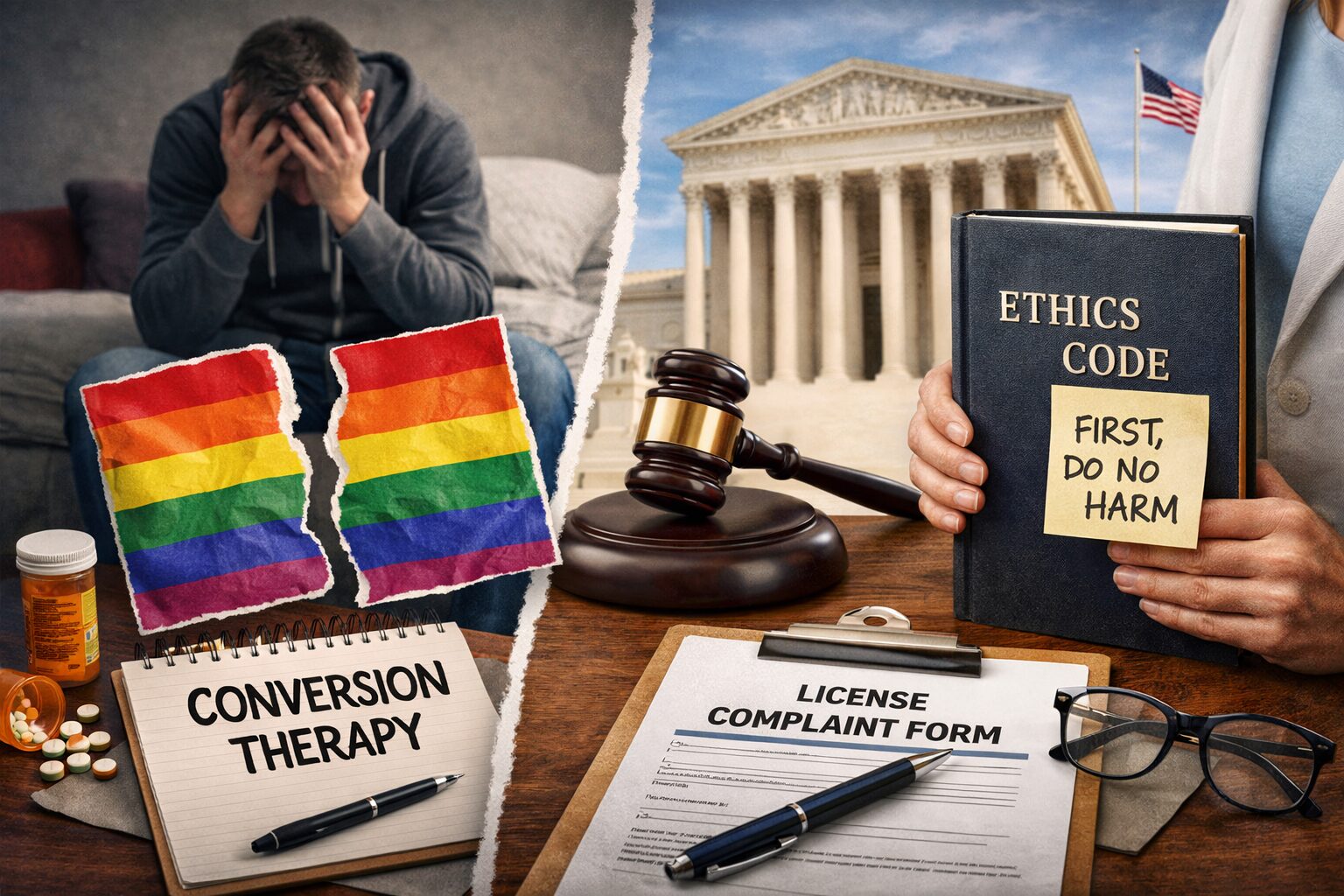
The recent U.S. Supreme Court decision striking down Colorado’s ban on conversion therapy has reignited a critical conversation at the intersection of law, ethics, and mental health care. While the ruling reframes certain aspects of conversion therapy as protected speech under the First Amendment, it does not, and cannot, override the ethical responsibilities that govern licensed professionals.

For therapists, the takeaway is clear: just because conversion therapy may become legal again in Colorado does not mean it is ethical, safe, or professionally acceptable.

Conversion Therapy Remains a Harmful and Discredited Practice

Conversion therapy, also known as sexual orientation or gender identity change efforts (SOGICE), has been rejected by every major medical and mental health organization in the United States. Decades of research consistently demonstrate that conversion therapy is ineffective and associated with significant psychological harm.

Peer-reviewed studies highlight serious risks, particularly for LGBTQ+ youth who are subjected to these practices. These harms include:

  • Increased depression and anxiety
  • Heightened substance use
  • Elevated risk of suicidal ideation and suicide attempts

Green et al. (2020) found that exposure to sexual orientation or gender identity change efforts (SOGICE) was associated with significantly higher odds of lifetime suicide attempts. Similarly, Ryan et al. (2018) reported that LGBTQ youth exposed to conversion therapy were more than twice as likely to attempt suicide compared to those who were not.

These findings are widely accepted across the mental health field. Conversion therapy is not a neutral intervention. It is a harmful one.

Ethical Codes Are Clear: Do No Harm

All licensed mental health professionals, whether psychologists, counselors, social workers, or marriage and family therapists, are bound by core ethical principles. Chief among them is nonmaleficence, the obligation to “do no harm.”

Practicing sexual orientation or gender identity change efforts (SOGICE) violates this principle in multiple ways:

  • It relies on interventions lacking empirical support
  • It creates foreseeable psychological harm
  • It undermines client identity and autonomy
  • It falls outside accepted standards of care

Professional organizations such as the American Psychological Association (APA), the American Counseling Association (ACA), and the National Association of Social Workers (NASW) have all explicitly condemned conversion therapy.

Even if courts limit the ability of states to ban sexual orientation or gender identity change efforts (SOGICE), ethical standards remain fully enforceable through licensure boards.


The Supreme Court’s ruling addresses constitutional law and not clinical best practice. This distinction is essential.

A therapist engaging in conversion therapy may not face criminal penalties under state law, but they are still accountable to their licensing board. That accountability carries real consequences.

Therapists who practice sexual orientation or gender identity change efforts (SOGICE) risk:

  • Formal ethics complaints
  • Investigation by licensing boards
  • Suspension or revocation of their license

Licensing boards are tasked with protecting the public. When a clinician engages in a practice known to cause harm, the board has both the authority and the responsibility to intervene.

In other words, sexual orientation or gender identity change efforts (SOGICE) can still cost a therapist their career even if it is technically legal.

Why Reporting Conversion Therapy Matters

Given this legal shift, accountability becomes even more important. If sexual orientation or gender identity change efforts (SOGICE) begins to resurface under the protection of this ruling, harmful practices mustn’t go unchecked.

Clients, family members, and professionals should take action when they encounter conversion therapy:

  • Report practitioners to state licensing boards
  • Document harmful interventions
  • Support individuals harmed by conversion efforts
  • Advocate for affirming, evidence-based care

Reporting is not punitive. It is protective. It safeguards vulnerable individuals and upholds the integrity of the mental health profession.

The Role of Ethical Practice in Mindful Ecotherapy

At the Mindful Ecotherapy Center, we emphasize approaches that honor the whole person, including their identity, lived experience, and connection to the natural world. Conversion therapy stands in direct opposition to these values.

Mindfulness-Based Ecotherapy and Acceptance and Commitment Therapy (ACT) both emphasize:

  • Acceptance rather than a change of identity
  • Compassion and psychological flexibility
  • Alignment with authentic values

These approaches are grounded in evidence and ethics, unlike conversion therapy, which attempts to suppress or alter core aspects of self.

Conclusion: Ethics Must Lead the Way

The Supreme Court’s ruling on conversion therapy may change the legal landscape, but it does not change the science. It does not change the data. And it does not change the ethical obligations of mental health professionals.

Conversion therapy remains a harmful, discredited practice that violates the foundational principle of “do no harm.”

Therapists are entrusted with our clients’ well-being. That trust demands adherence to ethical standards, even when the law creates ambiguity. If conversion therapy re-emerges, the responsibility falls on the profession and the public to ensure it is challenged, reported, and ultimately rejected.


References

Green, A. E., et al. (2020). Association of conversion therapy with depression and suicide among LGBTQ individuals. JAMA Psychiatry, 77(1), 68–76.

Ryan, C., et al. (2018). Parent-initiated sexual orientation change efforts with LGBT adolescents: Implications for young adult mental health and adjustment. Journal of Homosexuality, 65(2), 159–173.

American Psychological Association. (2015). Guidelines for psychological practice with sexual minority persons.

Substance Abuse and Mental Health Services Administration (SAMHSA). (2015). Ending conversion therapy: Supporting and affirming LGBTQ youth.


Share Your Thoughts About Conversion Therapy!

What do you think? Share your thoughts in the comments below!


  And don’t forget to subscribe to our newsletter!
Posted on

Conversion Therapy Case to be Heard by SCOTUS

conversion therapy

The U.S. Supreme Court is poised to hear a landmark case regarding the legality of conversion therapy bans. Conversion therapy, also known as “reparative therapy,” has been widely condemned by medical and psychological experts for being harmful and ineffective. As the nation grapples with the future of these controversial practices, it is crucial to examine the ethics surrounding therapy and why ethical treatment should always be evidence-based. Conversion therapy is not only scientifically unsupported but is also considered unethical by many professional organizations. Therapists and counselors who continue to practice it should be held accountable and stripped of their licenses.

What is Conversion Therapy?

Conversion therapy is a set of practices aimed at changing an individual’s sexual orientation or gender identity. It typically targets LGBTQ+ individuals, particularly those who identify as gay or bisexual, with the goal of altering their sexual preferences. These practices can include a range of harmful methods, such as verbal abuse, shock therapy, or other aversive techniques, all in an attempt to force individuals to align with heteronormative ideals.

Despite decades of research showing that sexual orientation and gender identity are inherent aspects of who a person is, some therapists and counselors still promote conversion therapy. This is despite the overwhelming rejection of these methods by leading medical and psychological organizations, including the American Psychological Association (APA) and the American Medical Association (AMA).

Ethical Treatment: Evidence-Based Practices

Ethical counseling and psychotherapy are rooted in the principle of evidence-based treatment. This means that the methods used by therapists and counselors are scientifically supported and have been shown to be effective through rigorous research and clinical studies. Evidence-based treatments ensure that clients are receiving the highest standard of care, tailored to their specific needs and goals.

Psychotherapies such as Cognitive Behavioral Therapy (CBT), Dialectical Behavioral Therapy (DBT), and other recognized forms of treatment have been proven to support individuals dealing with mental health challenges in an ethical and effective manner. These treatments are grounded in the understanding of human psychology and are consistently updated based on new findings from empirical research.

In contrast, conversion therapy lacks scientific support and has been widely denounced by experts as not only ineffective but also harmful. Studies have shown that individuals subjected to conversion therapy are at a significantly higher risk of developing depression, anxiety, suicidal ideation, and other long-term mental health issues. The process of attempting to “change” a person’s sexual orientation or gender identity is rooted in the false belief that being LGBTQ+ is a disorder or something to be “fixed.”

The Ethics of Therapy: Conversion Therapy Is Unethical

The ethical principle of do no harm is a cornerstone of any therapeutic practice. When therapists or counselors practice conversion therapy, they violate this fundamental tenet. These practices harm clients by promoting a false, discriminatory view of human sexuality and gender, often leading to emotional and psychological trauma.

Conversion therapy is unethical not only because it lacks evidence but also because it undermines the dignity and humanity of LGBTQ+ individuals. Instead of supporting clients in their journey of self-acceptance and identity, conversion therapy attempts to force them to conform to a societal norm that doesn’t align with their authentic selves. This can cause deep feelings of shame, isolation, and worthlessness, which only exacerbate mental health struggles.

Professional organizations such as the APA, the AMA, and the National Association of Social Workers (NASW) have all made strong public statements denouncing conversion therapy. They assert that therapy should be based on respect for a person’s identity and should aim to help individuals embrace who they truly are rather than change them.

Consequences for Counselors Practicing Conversion Therapy

Any counselor or therapist who continues to practice conversion therapy, knowing its harmful effects and lack of scientific support, is engaging in unethical behavior. Such practices not only violate the core ethical principles of psychotherapy but also put clients at great risk. These therapists should face accountability for their actions, which could include the revocation of their professional license.

Licensed professionals have a duty to adhere to ethical guidelines, ensuring that their practices are based on evidence and lead to positive outcomes for their clients. Engaging in harmful, unproven, and unethical practices like conversion therapy should result in professional consequences, including the loss of their license to practice.

Why the Supreme Court Case Matters

The upcoming case before the U.S. Supreme Court will determine whether states have the right to ban conversion therapy. If the Supreme Court upholds these bans, it will send a clear message that conversion therapy has no place in ethical counseling and psychotherapy. Such a decision would be a victory for LGBTQ+ rights, psychological integrity, and the protection of vulnerable individuals from harmful, pseudoscientific practices.

The Supreme Court case is a pivotal moment in the fight for mental health ethics and the protection of marginalized groups. It is vital that legal protections continue to be enacted to ensure that therapists uphold the highest standards of care and that harmful, unscientific practices like conversion therapy are eliminated once and for all.

Conclusion

The Supreme Court’s decision to hear the case on conversion therapy is a crucial step in protecting the mental health and well-being of LGBTQ+ individuals. Ethical treatment should always be based on evidence-based practices, and conversion therapy, which is neither scientifically supported nor ethically justified, has no place in modern therapy. Counselors and therapists who continue to practice such methods should be held accountable for their actions and stripped of their licenses to ensure the safety and dignity of their clients. The upcoming case is not just a legal matter—it is a moral issue that affects the lives of countless individuals and sets a precedent for the future of mental health care.


Share Your Thoughts on Conversion Therapy!

Should harmful forms of ‘therapy’ be allowed for religious or political reasons? Share your thoughts in the comments below!