Posted on

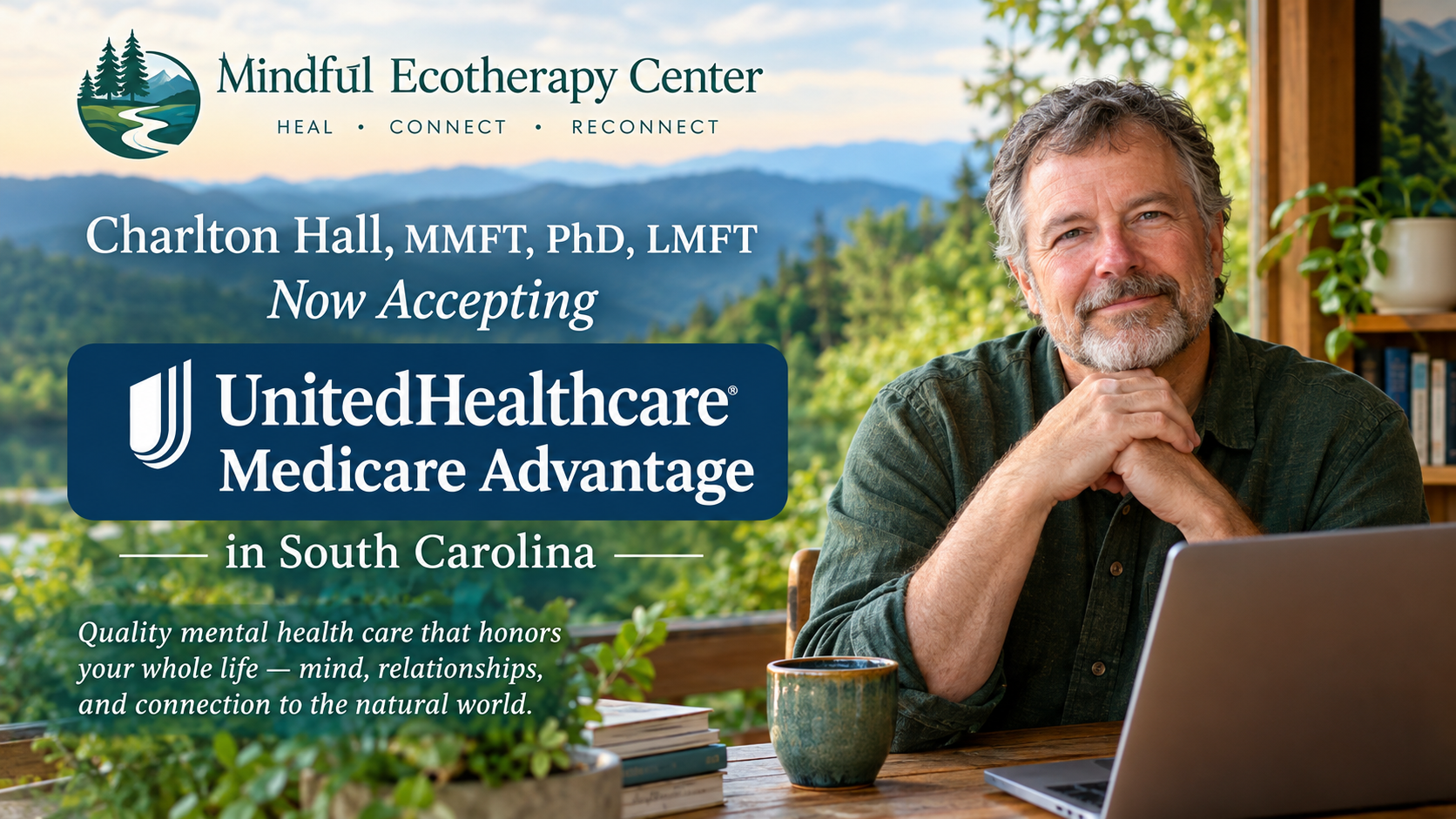
Now Accepting UnitedHealthcare Medicare Advantage in South Carolina

United

If you are a UnitedHealthcare Medicare Advantage member in South Carolina and are interested in psychotherapy with Charlton Hall, MMFT, PhD, LMFT, contact the Mindful Ecotherapy Center to learn more about services, availability, and insurance participation. Because Medicare Advantage plans differ, members should also confirm their specific behavioral health benefits and coverage requirements with UnitedHealthcare.

Access to quality mental health care should not depend on whether someone has the “right” insurance. For many people, particularly those approaching or living in retirement, the cost of psychotherapy can be a significant barrier to getting the support they need. We are pleased to announce that Charlton Hall, MMFT, PhD, LMFT, of the Mindful Ecotherapy Center, is now accepting UnitedHealthcare Medicare Advantage plans in South Carolina.

This change makes psychotherapy with Charlton Hall more accessible to eligible UnitedHealthcare Medicare Advantage members who are looking for professional support with depression, anxiety, relationship difficulties, life transitions, stress, and other mental health concerns.

Mental Health Care That Recognizes the Whole Person

At the Mindful Ecotherapy Center, psychotherapy is based on the understanding that mental health does not exist separately from the rest of a person’s life. Relationships, family dynamics, major life transitions, work, physical surroundings, stress, and connection with the natural world can all influence how we feel and function.

Charlton Hall’s approach incorporates mindfulness, ecotherapy, cognitive and behavioral approaches, interpersonal therapy, and other evidence-informed methods as appropriate to the needs of each client. Rather than treating people as collections of symptoms or diagnoses, therapy focuses on helping people understand what is happening in their lives, develop effective ways of responding, and build greater resilience and self-awareness.

For some clients, this may involve working through depression or anxiety. For others, therapy may center on difficult family relationships, grief, major changes in life circumstances, retirement, interpersonal boundaries, communication, or the challenges that can accompany aging and other significant transitions.

What Is UnitedHealthcare Medicare Advantage?

Medicare Advantage, also known as Medicare Part C, consists of Medicare-approved health plans offered by private insurance companies. UnitedHealthcare offers Medicare Advantage plans with benefits that can include behavioral health services. UnitedHealthcare also provides resources for members seeking mental and behavioral health care, including access to behavioral health providers and, where available under the applicable plan, virtual visits.

Because Medicare Advantage plans differ, coverage, copayments, authorization requirements, provider networks, and other conditions can vary according to the specific plan. UnitedHealthcare advises members to use their plan’s provider directory and member resources to determine which providers and services are covered under their particular plan.

Consequently, being enrolled in a UnitedHealthcare Medicare Advantage plan does not necessarily mean that every mental health service or every provider is covered under identical terms. Patients should verify their specific benefits and network status before beginning treatment.

Making Therapy More Accessible

Accepting Medicare Advantage is an important step toward making psychotherapy more accessible to people who might otherwise postpone treatment because of cost.

Depression, anxiety, family conflict, loneliness, grief, and major life transitions do not become less important simply because someone is older. In fact, later adulthood can bring a unique combination of changes: retirement, changes in health or mobility, loss of loved ones, changing family roles, relocation, caregiving responsibilities, and shifts in long-standing relationships.

Therapy can provide a place to examine these changes without judgment and develop practical ways of responding to them.

Mindful Ecotherapy also offers a perspective that recognizes the importance of a person’s relationship with the world around them. Nature can serve as a source of grounding, perspective, reflection, and restoration. Ecotherapy does not require a person to hike into the wilderness or spend every therapy session outdoors. Instead, it recognizes that our physical and social environments can influence our psychological well-being and that our relationship with the natural world can become part of the therapeutic process.

Serving South Carolina Clients

Charlton Hall is a Licensed Marriage and Family Therapist and provides psychotherapy to clients in South Carolina within the scope of his professional practice and applicable telehealth requirements. Teletherapy can make mental health services more convenient for people who have difficulty traveling to an office, live in rural areas, or simply prefer receiving therapy from a familiar environment.

UnitedHealthcare notes that virtual behavioral health visits may be available through contracted providers, although availability and coverage depend on the member’s particular plan.

If you have UnitedHealthcare Medicare Advantage coverage in South Carolina and are considering therapy, you can contact the Mindful Ecotherapy Center to discuss whether Charlton Hall’s services are appropriate for your needs and to verify current insurance participation and benefits.

A Different Way of Looking at Mental Health

Mindful Ecotherapy Center’s approach is grounded in the belief that psychological difficulties are not simply problems to be eliminated. Symptoms can also provide information about what is happening in a person’s life, relationships, environment, and internal experience.

Therapy can therefore involve learning to pay attention differently: becoming more aware of thoughts and emotions, recognizing patterns, accepting what cannot immediately be changed, establishing healthier boundaries, reconnecting with personal values, and discovering more constructive ways of responding to life’s challenges.

For people experiencing depression or distress related to family and relationship difficulties, this can mean moving beyond the question, “What’s wrong with me?” and beginning to ask, “What is happening, what do I need, and how can I respond differently?”

That shift can be an important part of meaningful therapeutic change.

If you are a UnitedHealthcare Medicare Advantage member in South Carolina and are interested in psychotherapy with Charlton Hall, MMFT, PhD, LMFT, contact the Mindful Ecotherapy Center to learn more about services, availability, and insurance participation. Because Medicare Advantage plans differ, members should also confirm their specific behavioral health benefits and coverage requirements with UnitedHealthcare.


The Mindful Ecotherapy Center on YouTube

Subscribe to the Mindful Ecotherapy Center’s YouTube channel to bring peace, presence, and healing into your daily life. Our videos guide you through mindfulness-based ecotherapy practices, including forest bathing, tree planting rituals, nature meditations, and reflective exercises for grief, stress, and emotional well-being. Whether you’re seeking to reconnect with the natural world, cultivate inner calm, or find restorative tools for personal growth, our content offers practical guidance, inspiration, and community support. Join us to explore the transformative power of nature and mindfulness, and start your journey toward balance, resilience, and deeper connection today!


Share Your Thoughts!

What do you think? Share your thoughts in the comments below! And don’t forget to subscribe to our newsletter!
Posted on

Join the SUD Group: 1x per Week Transformative Online Support for WA and SC Residents

SUD Group

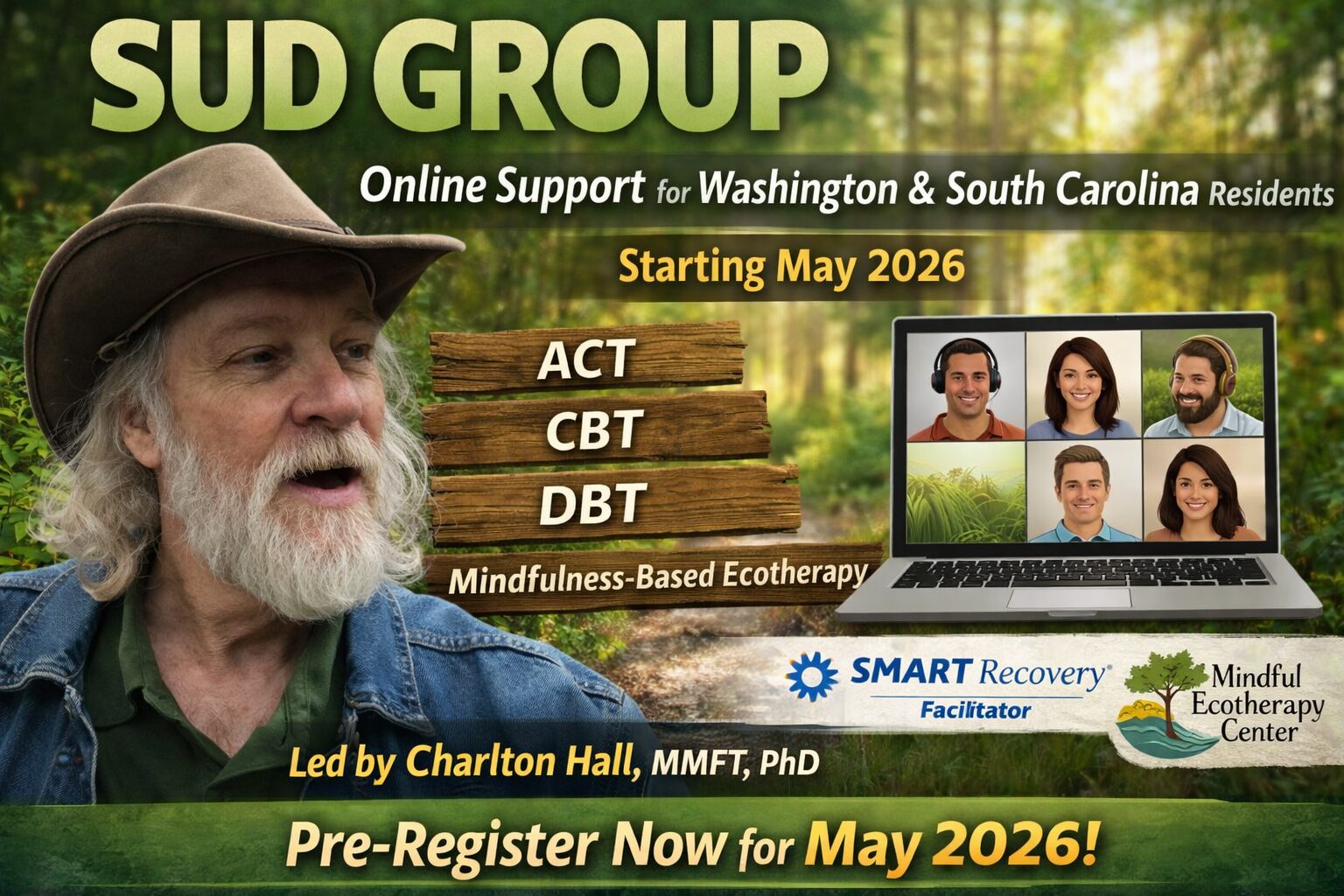
Since 2005, Charlton Hall, MMFT, PhD, has been at the forefront of evidence-based treatment for Substance Use Disorder (SUD). With over two decades of experience, Dr. Hall has combined traditional therapeutic methods with innovative approaches, creating a supportive and effective pathway for people seeking recovery. The Mindful Ecotherapy Center is excited to announce a new SUD Group for residents of Washington State and South Carolina, launching in May 2026.

Evidence-Based SUD Group Treatment

This upcoming online group provides a safe, structured space for participants to explore their recovery journey while connecting with others facing similar challenges. Dr. Hall integrates a variety of proven therapeutic approaches, including Acceptance and Commitment Therapy (ACT), Cognitive Behavioral Therapy (CBT), Dialectical Behavior Therapy (DBT), and Mindfulness-Based Ecotherapy. This combination allows participants not only to address the psychological and behavioral aspects of SUD but also to cultivate awareness, self-compassion, and resilience through nature-inspired mindfulness practices.

As a trained SMART Recovery facilitator, Dr. Hall brings a strengths-based, self-empowering approach to the SUD Group. His background includes serving as a Volunteer Advisor for South Carolina from 2011 to 2020, supporting local recovery communities and fostering peer-based engagement. This experience informs his online group facilitation, emphasizing accountability, peer support, and practical tools that participants can integrate into daily life.

Weekly SUD Group

The SUD Group will meet virtually, allowing residents of Washington State and South Carolina to participate without the constraints of geography. Sessions will provide structured discussions, guided mindfulness exercises, and actionable strategies for managing cravings, coping with triggers, and maintaining long-term recovery. Participants will have the opportunity to ask questions, share experiences, and learn from Dr. Hall’s expertise, all within a confidential and supportive environment.

Pre-Registration for the SUD Group Now Open!

Pre-registration for the group is now open. Limited to the first 20 participants, so register to save your spot today! Using the form below, interested participants can reserve a spot and receive updates about session schedules and materials. Early registration ensures access to all preparatory resources and allows participants to begin their recovery journey with confidence.

Mindfulness-Based Ecotherapy forms a cornerstone of the SUD Group experience. By integrating movement, nature observation, and reflective exercises, participants cultivate present-moment awareness and emotional regulation skills that support sustainable recovery. This holistic approach complements traditional therapies like ACT, CBT, and DBT, creating a comprehensive model that addresses both mind and body.

Additional Resources on the Website and Our YouTube Channel

Dr. Hall’s commitment to the recovery community is further demonstrated through his work on digital platforms. For additional resources, educational videos, and guided exercises, the Mindful Ecotherapy Center’s YouTube channel offers a rich library of content designed to complement the SUD Group experience. Visit Mindful Ecotherapy Center YouTube to explore these resources, and check out the Mindful Ecotherapy Center website for more information on courses, workshops, and upcoming programs.

Whether you are in the early stages of recovery, seeking support for maintaining sobriety, or interested in learning tools to prevent relapse, the SUD Group provides a compassionate, evidence-based environment tailored to your needs. By participating, you are joining a community dedicated to personal growth, emotional resilience, and meaningful connections.

Don’t wait to take this important step. Pre-register today and begin your journey with the guidance and expertise of Charlton Hall, MMFT, PhD, and the Mindful Ecotherapy Center. Recovery is not a solitary path. You don’t have to do it alone! Our SUD Group ensures you are supported every step of the way.

Insurance Plans Accepted

We accept the following insurance plans. A listing here is not a guarantee of payment by your insurance carrier. Check with your particular policy requirements prior to enrolling.

Charlton Hall, MMFT, PhD, currently accepts the following insurances:

Private-pay options are also available on a sliding fee scale.

Pre-register for the SUD Group below and reserve your spot for May 2026.


Posted on

What is the Counseling Compact? A Look at How It Impacts Teletherapy and the LPC Credential

Counseling Compact

If you’re considering a career in counseling, you may have heard the term Counseling Compact recently. This is a significant development in the field of mental health care that can directly impact Licensed Professional Counselors (LPCs) and others in the counseling profession. The Counseling Compact is designed to create greater mobility for counselors across state lines, which is particularly important for teletherapy and providing services in an increasingly interconnected world.

In this blog post, we’ll break down what the Counseling Compact is, why it matters, and how it could influence your decision to pursue the LPC credential.

What is the Counseling Compact?

The Counseling Compact is an agreement between participating states to allow professional counselors to practice across state lines without having to apply for a new license in each state. Similar to other interstate compacts, such as the Nurse Licensure Compact (NLC) or the Psychology Interjurisdictional Compact (PSYPACT), the Counseling Compact is designed to enhance access to counseling services, particularly as more people seek mental health care through digital platforms like teletherapy.

The compact allows counselors to practice in states other than the one in which they are originally licensed, assuming both states are part of the agreement. This is a huge benefit for counselors, especially as the demand for mental health services grows, and the need for access across state lines becomes more urgent.

Key Features of the Counseling Compact

  1. Cross-State Practice: Once a counselor is licensed in a compact state, they can practice in other compact states without needing to apply for a new license. This is particularly important in the growing field of teletherapy, where counselors can provide services to clients in multiple states, regardless of geographic location.
  2. Telehealth Flexibility: One of the biggest advantages of the Counseling Compact is its support for telehealth services. Many clients today prefer or need access to mental health services remotely, and counselors licensed through the compact can easily provide teletherapy services across state lines. This is especially important in rural or underserved areas where there is a lack of mental health professionals.
  3. Reduced Licensing Barriers: The Counseling Compact streamlines the process of getting licensed in multiple states, reducing the time and money spent on navigating different state licensing requirements. Counselors can focus more on helping clients and less on administrative hurdles.
  4. Reciprocity Among States: The compact ensures that counselors who are licensed in participating states meet uniform standards of practice and ethics. States that enter the compact agree to uphold the same set of professional standards, ensuring consistency across jurisdictions.

Why Should You Consider the LPC Credential?

If you’re considering a career in counseling, particularly in the field of mental health, pursuing the Licensed Professional Counselor (LPC) credential can be a smart move, especially in light of the Counseling Compact.

Here are several reasons why you might want to consider becoming an LPC:

  1. Increased Mobility Across States: The Counseling Compact is built on the premise of enhancing interstate mobility. With the LPC credential, you can take advantage of this compact and practice in multiple states without the burden of applying for separate licenses. This gives you more flexibility to work with clients in various locations and provides job opportunities across the country.
  2. Teletherapy Opportunities: The growing demand for telehealth services in the mental health field has transformed the way counselors provide care. If you hold an LPC license in a compact state, you can offer teletherapy services to clients who are in other compact states, making your practice more versatile and widening your reach. Whether you specialize in individual therapy, couples counseling, or family therapy, you can expand your client base by offering remote services across state lines.
  3. Broad Scope of Practice: The LPC credential is versatile and often covers a wide range of therapeutic practices. Whether you’re interested in individual counseling, family therapy, group therapy, or substance abuse counseling, the LPC license equips you to work in diverse settings. The Counseling Compact can help ensure that you’re not limited by state lines in your practice, offering you more opportunities in a variety of specialties.
  4. Job Security and Demand: With mental health needs on the rise and the demand for counselors increasing, becoming an LPC opens doors to numerous career opportunities. By joining the Counseling Compact, you also position yourself to be a part of an evolving mental health workforce that can adapt to new demands and trends in the industry. You can explore employment in hospitals, private practices, schools, and more—across state lines.
  5. Enhanced Professional Recognition: Becoming an LPC through the Counseling Compact means that you’re meeting high professional standards recognized across multiple states. This credential demonstrates your ability to meet consistent standards of practice and ethics, which can increase your professional credibility and marketability.

How the Counseling Compact Supports the Future of Teletherapy

The advent of teletherapy has revolutionized the way therapists connect with clients. With the Counseling Compact in place, counselors can offer services to clients in various states, providing crucial mental health services to underserved populations. Teletherapy is also often more convenient for clients, and the ease of receiving services remotely can help reduce the stigma associated with in-person therapy.

For therapists, the compact creates opportunities to expand their reach and provide valuable services across state lines, making the profession more dynamic and adaptable. With the flexibility of the Counseling Compact, LPCs are positioned to play a significant role in the teletherapy revolution, meeting the increasing demand for remote mental health services.

Final Thoughts

As you plan your career path in counseling, it’s essential to consider the opportunities that the LPC credential and the Counseling Compact provide. The ability to practice across state lines, the growing importance of teletherapy, and the increasing demand for mental health services make the LPC a highly attractive credential for those entering the field. The Counseling Compact is poised to reshape the landscape of counseling, offering greater access to care and increasing opportunities for counselors who are prepared to meet the challenges and benefits of practicing in a more interconnected world.

If you’re looking to build a career as a counselor that is both flexible and future-proof, becoming an LPC and taking advantage of the Counseling Compact could be your key to success.


Share Your Thoughts!

Are you considering a career in counseling or therapy? Would the Counseling Compact influence your decision? Share your thoughts in the comments below!

Don’t forget to check out our YouTube channel!


Schedule a Teletherapy Appointment with Charlton Hall, MMFT, PhD, LMFT

For those seeking personalized guidance in incorporating Mindfulness-Based Ecotherapy into their lives, Charlton Hall, MMFT, PhD, LMFT, offers professional teletherapy sessions. With extensive expertise in MBE, Dr. Hall provides tailored strategies to help individuals overcome insomnia and achieve restorative sleep.

How to Schedule an Appointment:

  1. Visit the Mindful Ecotherapy Center Website to find more information about Dr. Hall’s approach to sleep wellness and mindfulness-based therapies.
  2. Book a Consultation – Easily schedule a teletherapy session that fits your availability.
  3. Receive Expert Guidance – Work one-on-one with Dr. Hall to develop a personalized sleep-improvement plan using MBE techniques.

By integrating Mindfulness-Based Ecotherapy into your daily routine, you can naturally enhance your sleep quality, reduce stress, and achieve long-term wellness.


Schedule an Appointment Today!

Ready to take the next step? Schedule a session with Charlton Hall today and start your journey to better sleep through the healing power of nature.