
Posted on Leave a comment

Embodied Mindfulness: 4 Essential Ways Wise Mind and Wise Body Help

embodied mindfulness

Embodies mindfulness is crucial to good physical and mental health. At the Mindful Ecotherapy Center, we understand that mindfulness is not just something that happens in the mind. True, lasting change occurs when awareness moves out of abstract thought and into lived, physical experience. This is where the mindfulness-based ecotherapy skill of Wise Mind and Wise Body becomes central to cultivating embodied mindfulness, a state of awareness in which thoughts, emotions, bodily sensations, and the natural environment are experienced as an integrated whole.

What Is Embodied Mindfulness?

Embodied mindfulness refers to the capacity to be fully present in one’s body, moment by moment, with openness and curiosity. Rather than observing experience from a distance, embodied mindfulness invites individuals to inhabit their physical selves. Breathing, posture, muscle tension, heart rate, and sensory input all become sources of information rather than background noise.

For many people, especially those with chronic stress, trauma histories, or anxiety, embodiment does not come easily. The mind may be active and reflective while the body remains tense, numb, or disconnected. This split undermines emotional regulation, self-trust, and overall well-being. Embodied mindfulness closes this gap.

Embodied mindfulness aligns closely with Bessel van der Kolk’s central insight in The Body Keeps the Score: that the body remembers what the mind would rather forget. Van der Kolk demonstrates that trauma, stress, and emotional learning are stored not just as memories but as patterns of muscle tension, breath restriction, posture, and autonomic reactivity.

From this perspective, mindfulness that stays purely cognitive is incomplete at best and actively unhelpful at worst. Embodied mindfulness brings awareness to these somatic patterns in real time, allowing you to notice how the past shows up in the present body and to intervene gently before old survival responses take over. Mindfulness-based ecotherapy extends this work by engaging the body within a regulating natural environment, making it safer and more intuitive to reconnect with bodily sensations. Rather than forcing awareness inward, nature helps the nervous system settle enough for the body’s story to be felt, understood, and gradually rewritten through Sensing Mode.

Wise Mind and Wise Body: An Integrated Skill

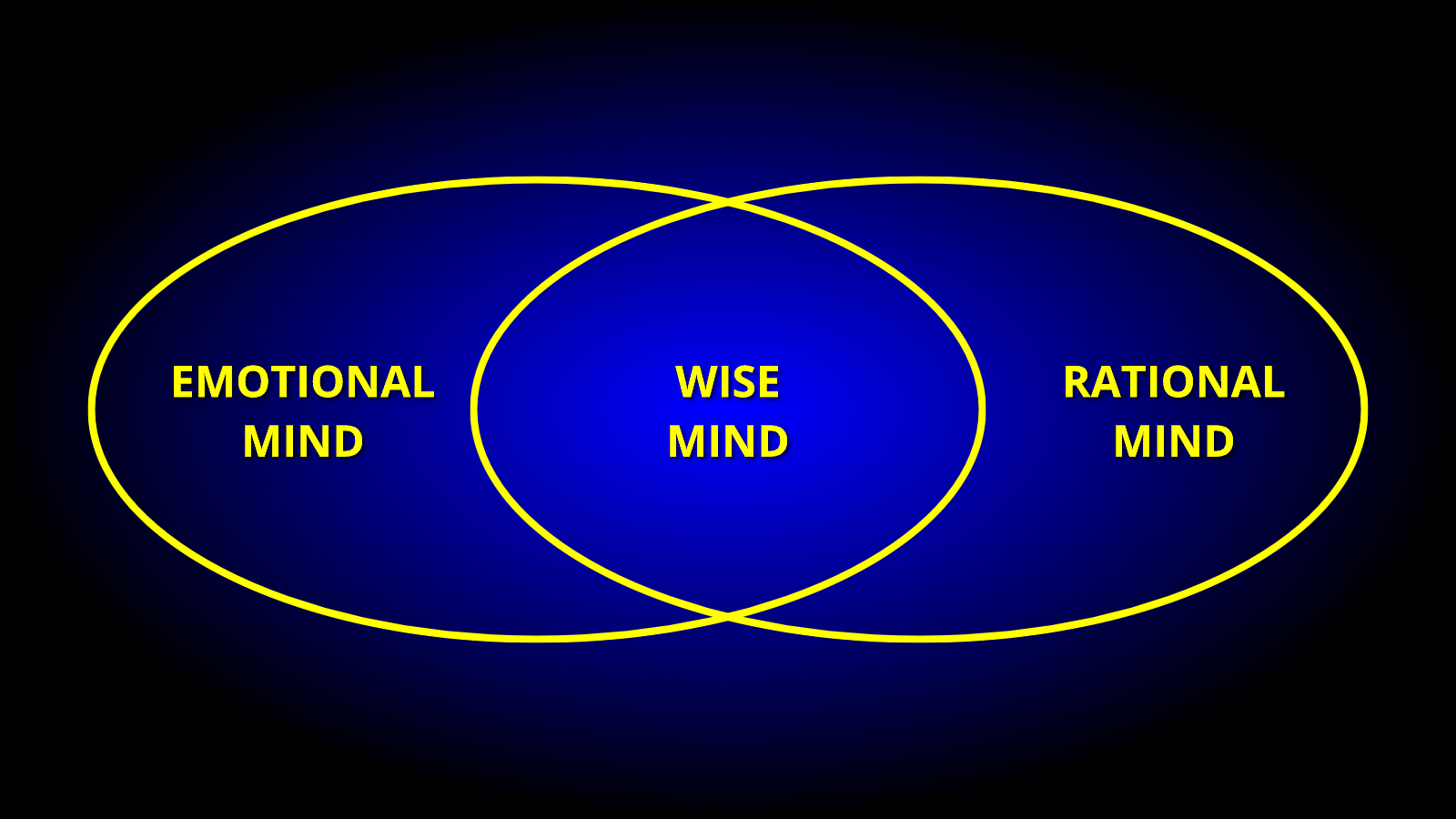
The concept of Wise Mind originates in dialectical approaches, describing the integration of rational mind and emotional mind. Mindfulness-based ecotherapy expands this framework by explicitly including the body and the natural world, giving rise to the combined skill of Wise Mind and Wise Body.

Wise Mind represents discernment, values-based awareness, and a balanced perspective. Wise Body represents the body’s innate intelligence: interoception, intuition, and the physiological signals that guide safety, connection, and rest. Together, they form a feedback loop. Wise Mind listens to Wise Body, and Wise Body grounds Wise Mind in lived reality.

This integration is essential for embodied mindfulness. Without Wise Body, mindfulness risks becoming intellectualized. Without Wise Mind, bodily sensations may feel overwhelming or confusing. Mindfulness-based ecotherapy trains you to move fluidly between the two.

embodied mindfulness

Why Embodied Mindfulness Matters

Embodied mindfulness is foundational for psychological health.

First, it improves emotional regulation. Emotions arise in the body before they are labeled by the mind. When individuals are embodied, they can notice early signals of emotional activation and respond skillfully rather than reactively.

Second, embodied mindfulness supports trauma recovery. Trauma often disrupts the relationship between mind and body, leading to dissociation or hyperarousal. By gently reconnecting awareness to bodily experience within a supportive ecological context, mindfulness-based ecotherapy restores a sense of safety and agency.

Third, embodied mindfulness enhances decision-making. Wise choices are rarely made through logic alone. The body often signals alignment or misalignment long before the mind catches up. Learning to trust Wise Body allows decisions to emerge from coherence rather than pressure.

The Unique Contribution of Mindfulness-Based Ecotherapy

Mindfulness-based ecotherapy offers a distinctive approach to Wise Mind and Wise Body by situating this skill within a relationship to the natural environment. In mindfulness-based ecotherapy, nature is not treated as a backdrop or metaphor alone, but as an active co-regulator.

Natural settings provide rhythmic, nonjudgmental sensory input that supports embodiment. The sound of wind, the feeling of ground underfoot, and the steady presence of trees or water all help anchor awareness in the present moment. This makes embodied mindfulness more accessible, especially for individuals who struggle with traditional seated practices.

In mindfulness-based ecotherapy, Wise Body is understood as part of a larger ecological system. Clients are invited to notice how their breath syncs with outdoor air, how muscle tension responds to natural textures, and how emotional states shift in different environments. Wise Mind then reflects on these experiences, integrating insight with sensation.

This ecological framing reduces self-blame and isolation. Dysregulation is seen as a signal of disconnection that can be addressed through reconnection with both body and environment.

Practicing Wise Mind and Wise Body for Embodied Mindfulness

Cultivating embodied mindfulness through Wise Mind and Wise Body involves intentional practice. This may include mindful walking in nature, body scans conducted outdoors, or grounding exercises that explicitly reference environmental cues. Reflection is encouraged, but never at the expense of sensory experience.

Over time, we learn to recognize bodily wisdom as a reliable source of guidance. Embodied mindfulness becomes less of a technique and more of a way of being.

Embodied Mindfulness and Healing

Embodied mindfulness is essential for genuine presence, resilience, and healing. The mindfulness-based ecotherapy skill of Wise Mind and Wise Body offers a powerful pathway to this state by honoring the intelligence of both cognition and sensation within an ecological context. By integrating mind, body, and nature, mindfulness-based ecotherapy provides a uniquely effective framework for living with awareness, balance, and authenticity.


Share Your Thoughts on Embodied Mindfulness!

What do you think? Have you experienced embodied mindfulness? Did mindfulness-based ecotherapy help? Share your thoughts in the comments below! And don’t forget to subscribe to our newsletter!
Posted on

Water Meditation: Using Rivers, Lakes, and Oceans for Emotional Healing

Water Meditation

Water has long been a symbol of purification, transformation, and renewal across cultures and spiritual traditions. Whether it is the gentle flow of a stream, the still surface of a lake, or the powerful rhythm of ocean waves, water meditation invites us into deeper states of presence and introspection. Through the practice of water meditation, we can harness the calming and restorative power of natural water bodies to support emotional healing and psychological resilience.

This practice is a core element of Mindfulness-Based Ecotherapy, which integrates mindfulness with immersive nature experiences. When combined, mindfulness and water-based nature therapy offer a profoundly grounding, sensory-rich way to process grief, soothe anxiety, release emotional tension, and reconnect with the self.

The Emotional Symbolism of Water

Water is a natural metaphor for human emotion. Like water, our feelings rise and fall, crash and calm, stagnate or flow. In many indigenous and psychological traditions, water is associated with the emotional body, the subconscious, and the process of letting go. Sitting by water or immersing oneself in it while practicing water meditation helps us attune to the fluid nature of emotion, inviting awareness, acceptance, and movement where there was once constriction or stuckness.

Spending time near or in water has measurable benefits for emotional well-being. Research shows that blue spaces, or environments in or around natural water, are associated with reduced stress and improved mood (White et al., 2020). Simply being near water can lower heart rate, decrease anxiety, and support emotional regulation. This is one of the reasons water meditation is so beneficial.

How Water Meditation Supports Emotional Healing

1. Promotes Emotional Flow and Release

Stagnant emotions such as unresolved grief, anger, or shame can weigh heavily on the mind and body. Water meditation encourages emotional flow by providing a sensory-rich, symbolic space in which feelings can be acknowledged and released.

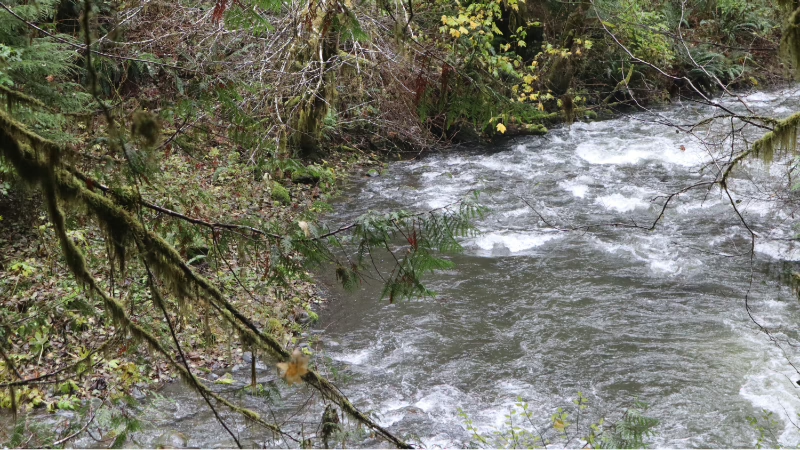
Sitting near a river or stream, for example, invites the mind to follow the current and visualize emotions flowing downstream, letting go of pain with each breath.

2. Encourages Mindful Presence

The rhythmic qualities of water lapping waves, trickling brooks, or crashing surf naturally draw attention to the present moment. This kind of environmental mindfulness reduces rumination and helps calm the nervous system, allowing deeper access to the emotional self.

According to Kabat-Zinn (1990), mindfulness is the act of paying attention, on purpose, in the present moment, and without judgment. Water’s gentle presence supports this kind of attention by offering a soothing focal point.

3. Offers a Safe Space for Reflection

Water often creates a boundary between the outer and inner world, offering quiet, reflective spaces where we can slow down and listen inwardly. Lakeshores and tide pools provide places of stillness, ideal for introspective healing and journaling. Oceans offer the vastness to hold big emotions, helping people feel part of something greater.

For people coping with trauma, heartbreak, or emotional overwhelm, these quiet “blue sanctuaries” can serve as safe containers to process difficult feelings without judgment or interruption.

4. Enhances Somatic Awareness

Water engages the body as well as the mind. Feeling cool waves against the skin, dipping toes in a stream, or listening to the gurgle of a brook encourages embodiment—the practice of being fully present in the body. This helps individuals become aware of where they hold tension or emotion, and gently release it.

Somatic-based therapies often use this approach to help people access and express feelings stored in the body (Van der Kolk, 2014). Water meditation, especially when practiced with touch, supports this healing pathway.

How to Practice Water Meditation

You don’t need to live near the ocean to practice water meditation. Lakes, rivers, fountains, or even a bowl of water at home can be effective. The key is intention and presence.

River Release Meditation (for Letting Go)

  1. Sit beside a flowing river or stream.
  2. Close your eyes and take several deep breaths.
  3. Visualize placing your emotional pain on leaves or petals and letting them float down the current.
  4. With each exhale, imagine releasing part of your burden into the moving water.
  5. Continue for 10–20 minutes, allowing the river to carry your pain away.

Ocean Breath Practice (for Soothing Anxiety)

  1. Sit facing the ocean (or listen to ocean wave recordings if you’re at home).
  2. Match your breath to the rhythm of the waves: inhale as a wave comes in, exhale as it retreats.
  3. Focus on the sound and motion, allowing tension to wash out with each outbreath.
  4. Let the ocean’s vastness hold your worries.

Still Water Reflection (for Self-Compassion)

  1. Find a calm body of water (lake, pond, tide pool).
  2. Gaze at your reflection without judgment.
  3. Silently repeat phrases such as, “May I be gentle with myself,” or “I am allowed to feel this.”
  4. Let the stillness of the water help calm your mind and soften your heart.

The Science Behind Blue Mind

Marine biologist Dr. Wallace J. Nichols coined the term “Blue Mind” to describe the mildly meditative state we enter when near water. According to Nichols (2014), exposure to water triggers a neurological response that increases dopamine, lowers cortisol, and stimulates the parasympathetic nervous system—supporting emotional regulation and creativity.

“Being near water,” Nichols writes, “can make us happier, healthier, more connected, and better at what we do.”

Final Thoughts

Emotional healing is rarely linear or easy. It often requires time, space, and patience. Water meditation offers a compassionate, sensory-rich environment where this healing can unfold naturally. Whether you are grieving a loss, managing anxiety, or simply feeling emotionally heavy, the rivers, lakes, and oceans offer a timeless sanctuary for reflection and release.

Nature doesn’t rush. Neither does healing. By sitting with water, we are reminded to flow—gently, courageously, and with self-compassion—toward our emotional freedom.


References

Kabat-Zinn, J. (1990). Full catastrophe living: Using the wisdom of your body and mind to face stress, pain, and illness. Delacorte Press.

Nichols, W. J. (2014). Blue mind: The surprising science that shows how being near, in, on, or under water can make you happier, healthier, more connected, and better at what you do. Little, Brown Spark.

Van der Kolk, B. (2014). The body keeps the score: Brain, mind, and body in the healing of trauma. Viking.

White, M. P., Elliott, L. R., Gascon, M., Roberts, B., & Fleming, L. E. (2020). Blue space, health and well-being: A narrative overview and synthesis of potential benefits. Environmental Research, 191, 110169. https://doi.org/10.1016/j.envres.2020.110169


Share Your Thoughts!

What do you think? Share your thoughts in the comments below! And don’t forget to subscribe to our newsletter!