
Posted on

Dark Green Religion

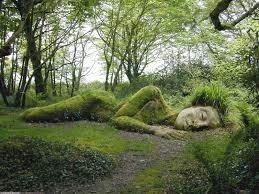
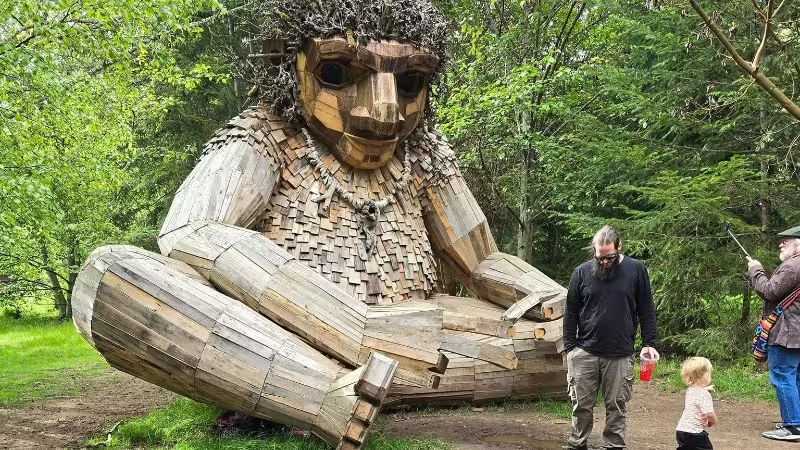
Plant A Dark Green Religion - Treebeard

“Empirical studies have begun to demonstrate that many people in advanced industrial cultures resonate deeply with what could be called nature spirituality or nature religion. Some of these people view the world as full of spiritual intelligences with whom one can be in relationship (an animistic perception), while others among them perceive the earth to be alive or even divine (a more pantheistic belief).”

–Bron Taylor, Dark Green Religion

As the human race has become increasingly urbanized, we have come to spend less and less time in natural settings. Many of us now live in cities. Even so, we still hear the calls of nature. The wildness cries out to something in our blood. Although the Industrial Revolution has forced us into an urban way of living, we were creatures of the wilderness for millennia before that. Evolution has hardwired our brains for the woods.

Bron Taylor is a professor of religion and nature, environmental ethics, and environmental studies, at the University of Florida. He coined the term “dark green religion” and is the author of a book by that name. According to his book, a dark green religion is one that has a set of beliefs and practices characterized by a central conviction that “nature is sacred, has intrinsic value, and is therefore due reverent care.”

The central theme of Taylor’s book is that the people involved in ecological awareness and the green movement display many of the characteristics usually associated with a religious or spiritual movement. Both are characterized by deeply-held beliefs about the nature of reality and our relationship with it. Both have ethical systems of behavior, and “prophets” who outline and discuss these ethical standards. Taylor cites Henry David Thoreau’s Walden and Rachel Carson’s Silent Spring as examples of “sacred texts” used by this Dark Green Religion.

Taylor differentiates between green religion and dark green religion. To him, traditional world religions that have added ecological practices into their worship services and holiday observations are green religions, but not dark green religions. So if you go to a church that recycles, or a temple that has a carpooling club, or a mosque that uses LED lighting, you may be partaking of green religion without becoming involved in a dark green religion. According to Taylor, the “dark green” part of dark green religion refers to what Arne Naess called deep ecology.

Dark Green Religion and Deep Ecology

Arne Naess was a Norwegian philosopher and founder of the Deep Ecology movement. He cited Rachel Carson’s book Silent Spring as instrumental in his development of the philosophy of deep ecology, which states that humans are not privileged above other living things and that all living things should be treated with equal respect and ethical consideration. Naess believed that all things have an equal right to thrive and to survive. This is similar to the Gaia Hypothesis.

Although NASA scientist James Lovelock is credited with creating the Gaia hypothesis, which says that the Earth herself is a living thing, and we are all a part of the much larger organism that is Gaia, the Earth, Native Americans had such a concept for thousands of years before Lovelock came along. The Oglala Medicine Man and Shaman, Black Elk, once said, “The first peace, which is the most important, is that which comes within the souls of people when they realize their relationship, their oneness with the universe and all its powers, and when they realize at the center of the universe dwells the Great Spirit, and that its center is really everywhere, it is within each of us.”

The scientists have discovered what the Native Americans knew all along: That the Earth is a living organism and that we are all a part of the web of life. We are all connected. This idea of the interconnectedness of all things is what Naess meant by “deep ecology,” and deep ecology pursued with a reverent and sacred attitude is what Taylor means by a “dark green religion.” A tenet of this dark green religion is that if we are all connected, then what we do to the web of life, we do to ourselves as well. If we poison the water, then we drink the water, we take the poison into ourselves. If we pollute the food with pesticides, then eat the food, we take the pesticides into our own bodies. If we pollute the air, then breathe in the air, we take our own pollutants into our lungs. If we fatten our beef animals with hormones, then eat the beef, we take the hormones into ourselves. If we poison the minds and souls of our neighbors with hatred, anger, and bitterness, then interact with those neighbors in negative ways, we take the hatred, anger and bitterness into ourselves as well.

The deep ecology of a dark green religion teaches us to be one with nature. This is true even if we are agnostic or atheist. We don’t have to believe in supernatural beings in order to realize that nature is something larger and more transcendent than ourselves. The divinity in a dark green religion is nature herself. This is true whether or not we choose to personify nature as a separate supernatural and divine entity. We are all interdependent, and a dark green religion teaches us that if we cannot live in a sustainable, ecological way, then the human race will have no future. This planet has limited resources, and we don’t have anywhere else to go. Eventually everything will run out, and when this happens, how will we survive? The only way that the human race can survive is to embrace a way of life that honors all life on the planet. Such a way of life is what Taylor means by a dark green religion.

Posted on

Memories: Making the Pieces Fit

memories

There are many types of memory. Let’s talk about two of them: Implicit Memory and Narrative Memory. Implicit memories are memories about specific events. What did you have for breakfast this morning? What outfit did you wear yesterday? Which people did you talk to today? The answers to these questions are implicit memories.

Narrative memories are memories that try to make sense of our various experiences on a day-to-day basis. Narrative memories integrate our implicit memories into a coherent whole. While implicit memories are the ‘what,’ narrative memories are the ‘why.’ Suppose I don’t usually eat eggs for breakfast, but today I decided to have scrambled eggs. The memory of having scrambled eggs is an implicit memory that answers the question, “What did I have for breakfast?” Further suppose that I was having breakfast with a friend who knew my eating habits, and my friend commented that I don’t usually eat eggs. If I search my own mind for a reason why I chose eggs for breakfast on this particular day, the reason I come up with will be the ‘why’ of narrative memory.

Our lives are made up of implicit memories of our daily events. In order to make sense of our lives, we link these events together in a narrative that gives our lives meaning. These stories that we create about our life experiences are our narrative memories. We all write our own autobiographies every day of our lives. This process of autobiography writing is our narrative memory fitting the pieces of our implicit memories together like a jigsaw puzzle.

Integrating Memories

For most of us, most of the time, our stories make sense and everything runs smoothly. But sometimes we get a bunch of implicit memories that we just can’t seem to fit into our own narratives. It’s as if, while working this jigsaw puzzle, we somehow grabbed a handful of pieces from another box. When this happens, we have to ‘change the picture’ of our life stories to incorporate these new puzzle pieces. This process of fitting the new pieces into the puzzle is called integration.

If we are able to successfully integrate all of these implicit memories, then there’s no problem. If we have difficulty making some of the pieces fit, it usually means that we’d have to change our worldview and re-write our own narrative in order to fit those pieces into the puzzle. This can be a frustrating experience. Sometimes that frustration manifests in emotional aggression.

Living a life of consistency means finding a way to make all of the pieces fit without getting frustrated or without having to act out in emotionally aggressive ways. By learning to integrate our True Selves into the story of our lives, we fit all of our implicit memories into a new narrative memory that creates this new paradigm. When all of these pieces have fit together, we are living at the core of our True Selves.

Posted on

Mindful Walking

mindful walking the coyote walk

Mindful Walking utilizes mindfulness and ecopsychology as emotional regulation skills. This is especially true if you are able to do this exercise outdoors. Mindful walking may be used to de-fuse potential emotional aggression. If you feel that one of your triggers has been activated, and you can take a break, go outside and do a little mindful walking!

The goal of a mindful walking exercise is to increase self-awareness by focusing on the sensations your body experiences while walking. Your brain takes in about 2 billion bytes of information per second. Of all this information being taken in, you are usually only conscious of about 4000 bytes of this information. This Mindful Walking exercise helps you to learn to become more consciously aware by learning to focus on only one thing at a time. By being present in the moment, we learn to let go of worries about the past, and anxieties about the future.

It is preferable to do this exercise outdoors if possible, but if necessary you may also do the exercise indoors. You may wish to make a recording of it for your mp3 player so that you may take it with you while you walk, or you can watch the video below to get a good idea of the process. the video below is for the Coyote Walk Meditation, a type of mindful walking that we use in our Ecospirituality Program.

Mindful Walking Instructions

Read over the instructions below, then try it on your own:

  • Start by standing with your feet about shoulder width apart, with your weight evenly distributed. Your hands should hang loosely and freely by your side. Gaze at the ground about five or six feet in front of you. Don’t focus your eyes on anything…just allow your eyes to relax.
  • Center yourself before beginning to walk by taking a few deep breaths before beginning to walk. Don’t begin to walk until your attention and intention are focused on the moment. Shift from Doing Mode to Being Mode.
  • When you are ready, slowly lift your right leg in preparation for taking the first step.
  • As you step, focus on feeling every muscle in your leg. Note what each muscle is doing as you move. Don’t hurry the step. Just allow yourself to experience all the sensations that your leg is giving to you. Step forward until your right foot makes contact with the ground. Notice how your foot makes contact with the surface.
  • Did your heel touch first, or was it your toes?
  • Did you feel the pressure of contact first with the inside edge of your foot, or with the outside edge?
  • Now as you begin to bring your left foot forward for another step, notice how the weight changes on your right foot. Is it changing from heel to toe, or the other way around? Where do your feet feel the pressure? Can you feel the pressure move across your right foot as you make the next step?
  • Now as you bring your left foot forward to make contact with the ground, repeat the procedure. Note how the pressure and weight change over your left foot and leg as you prepare to make another step with your right foot.
  • Continue on, walking in the same manner, paying attention only to the way your body moves as you continue to walk. Focus only on the sensations your body continues to give you.
  • At times you may find yourself becoming distracted. If you notice a fragrance on the breeze, or if an animal crosses your path, or if you hear a bird singing, your mind may wander from the sensations of walking. If this happens, simply stop walking until your attention returns to you.
  • Sometimes the distractions are not in the environment, but in your mind. If thoughts and feelings take your mind off of the walking, then once again, stop walking until your mind returns to focusing only on the walking.
  • Remember that the goal of this exercise is to practice paying attention to only one thing at a time, and one thing only. If you feel tempted to begin thinking about the past or the future, stop walking until your thoughts and feelings return only to the sensations of the walking.
  • As you continue to practice Mindful Walking as part of your daily routine, your mind will become more calm and relaxed. Mindful walking is something that you can practice at any time during the day whenever you need a quick break from doing.
  • As you continue to practice focusing on only one thing at a time, you we gain more control over your own thoughts and feelings. You will become less prone to periods of overwhelming emotions and thoughts. You will also learn to experience the joy and the happiness within you.
  • Continue your walk, directing your attention only to the sensations of your walking. As you come to an end to this mindful walking meditation, slowly take your last step, and come to a stop, resting comfortably where you stand.
  • End the meditation by taking a few deep breaths and expanding your awareness to the environment around you. You may wish to do a mindful meditation during your mindful walking exercise as well.

Use the Mindful Walking meditation whenever you have the opportunity to take a quick break; especially if you find yourself experiencing anxiety or depression. Strong emotions can lead to emotional aggression, and you can de-fuse such ruminating cycles by shifting from Doing Mode into Being Mode. Mindful Walking helps you to do this by taking energy out of the thinking cycle and shifting it into the sensing cycle.

Posted on

Emotional Regulation

Emotional Regulation

Successful mood management comes from successful emotional regulation. Emotional regulation means recognizing patterns of emotional aggression and stopping the cycle of emotional aggression before it starts. This means becoming aware of and attuned to your own cycles of emotions.

Before you can become attuned to your own cycles of emotional behavior, you must first be able to identify your emotions.

Society often teaches us that there are acceptable emotions to display in public, and unacceptable emotions to display in public. Those emotions that we feel safe displaying are our secondary emotions. In situations where people tend to become emotionally aggressive, there are underlying emotions driving these secondary emotions.

These underlying emotions, called primary emotions, are emotions that we do not feel safe displaying or discussing in public. If we suppress these primary emotions for long enough, it is possible that we may eventually forget what these emotions are and what they feel like. When this happens, the first step to emotional regulation is to identify these lost emotions.

By using the mindful skills of observing and describing, you can distract yourself from drowning in unpleasant emotions by simply identifying the emotions and describing their characteristics to yourself. As you step outside of the stream of feeling by distracting yourself with the process of observing and describing, it may help to name these emotions to yourself.

For example, if you’re feeling angry, repeat to yourself, “That’s anger.” As you begin to ponder this emotional state, trace it back to its origin. Are there any primary emotions driving the anger? Could it be that you are angry because you fear losing someone or something? Are you angry because of a fear of being inadequate in some area of your life? Are you angry because you are frustrated at a personal failure? The feeling behind the secondary emotion is the primary emotion.

Ruminating Cycles and Emotional Regulation

As you use your skills of observing and describing, you will not only be distracting yourself from fully experiencing the negative aspects of the mood. You will also be exploring the primary roots of the secondary emotion being experienced. As you observe and describe your emotional states to yourself, you become more emotionally aware of their origins. The more aware you are about the origins of those emotions, the more you are able to choose which emotions to give your full attention, and which emotions to let go.

A ruminating cycle is a cycle of thought or emotion. There are positive ruminating cycles and negative ruminating cycles. Such cycles consist of the self-talk we engage in as we go about our daily business.

Let’s look at a couple of scenarios involving ruminating cycles. These cycles are from Joe and Jim. Joe’s negative ruminating cycle might look like this:

“My wife just frowned at me. I wonder what she’s upset about?”
“What have I done wrong this time?”
“Can’t I ever do anything right?”
“Why is it so hard to please her?”
“Maybe I should just divorce her and get it over with. She’s never happy.”
“I’ll show her! I’ll give her the silent treatment!”

Jim’s positive ruminating cycle might look like this:

“My wife just frowned. I wonder if she’s upset?”
“Maybe she’s just having a bad day.”
“I wonder if there’s anything I can do to help?”
“I’m happy that she trusts me enough to share her innermost feelings with me!”

Joe’s negative ruminating cycle assumes that his wife’s frown was personal in that Joe believes that his wife was frowning at him. Jim, on the other hand, simply noted that his wife had frowned, without assuming that the frown was directed at him personally. Joe also assumed that his wife’s frown was indicative of a pervasive problem: That Joe cannot ever do anything to please his wife. Jim, on the other hand, recognized that this was just one incident, and not a pervasive problem. His response to his wife’s frown was, “Maybe she’s just having a bad day.”

Finally, Joe’s ruminating cycle assumes a permanent problem: That Joe can’t “ever do anything right,” while Jim doesn’t see it as a permanent problem. He’s even willing to try to change the situation by wondering if there is anything he can do to help his wife.

Try this: The next time you find yourself in a ruminating cycle, whether it is a positive cycle or a negative cycle, begin talking out loud. Verbalize your thought and feeling patterns by observing and describing them. Look for any permanent, personal or pervasive patterns of thinking and feeling.

Be on the lookout for all-or-nothing thinking. You can usually identify such patterns of thought by looking for words like always and never. The good news about thoughts like, “Things have always been this way,” and “Things are never going to change,” is that you only need one example to disprove them. If Joe has ever done a single thing to please his wife, then he cannot say, “I can never do anything to please her.”

If Joe can find just one example of where things have gone well, then he can’t say, “I always do the wrong thing.” He might do the wrong thing 99,999 times, but if there’s even one case in which he did the right thing, then he is not justified in saying, “I always do the wrong thing.”

If Joe can think of a single time when he was able to do the right thing, then it means that it is possible to do the right thing. If it is possible to do the right thing once, it is possible to do the right thing again. All that remains is figuring out what made it possible, and repeating the conditions that made it possible.

The key point to remember about ruminating cycles is that they are self-reinforcing. Emotions like to hang around once they’ve shown up. Research has shown that once a ruminating cycle of emotional aggression gets started, we tend to act, think, and feel in ways that perpetuate the cycle. We’re conditioned to believe that when we have strong emotions, we must immediately act upon them.

Mindfulness-Based Ecotherapy teaches us that we do not have to act on those emotions, and we don’t have to dwell on them. We can simply observe and describe those emotions without feeling the need to react or respond.

It may help to remember that there is no such thing as a ‘good’ or ‘bad’ feeling. What may be considered ‘good’ or ‘bad’ is the behavior that comes after the feeling. So the problem is in the behavior, not the feeling itself. One of the behaviors that can be labeled as ‘good’ or ‘bad,’ or ‘positive’ or ‘negative,’ is the ruminating cycle itself.

It works in this way: You have a negative feeling (anger, hostility, sadness, etc.). You then activate a ruminating cycle by continuing to dwell on the feeling. As you continue to dwell on the feeling, the negative emotion feeds off of the ruminating cycle and the emotion causes you to become more and more emotionally aroused, until you act out with emotional aggression.

You can change this behavior in this way: When you note a negative emotion, simply observe it and describe it, while recognizing that you do not have to dwell on it. The feeling itself is not ‘good’ or ‘bad.’ It simply is. You can decide not to give it power over you by disengaging from the ruminating cycle. In doing so, you don’t feed the negative emotion, and it eventually subsides.

When you have mastered this, you will be well on the way to managing your moods.

Posted on

NEW COURSE: Ethics and Ecotherapy

ethics and ecotherapy
  • Target Audience: Mental Health Professionals
  • ONLINE Continuing Education Hours: 2 (Two)
  • NBCC Approval: Yes
CLICK HERE TO PURCHASE THIS COURSE! ON SALE UNTIL JUNE 30, 2023!

Course Description for Ethics and Ecotherapy

Ecotherapy usually includes doing therapy outdoors. Therapy in non-traditional settings presents unique ethical challenges. These ethical issues are usually not covered in therapy graduate school programs. In this course, we will discuss how to address some common ethical issues for therapists and counselors that are unique to the process of ecotherapy. The Ethics and Ecotherapy online course offered by the Mindful Ecotherapy Center explores the complex moral and professional considerations that arise when integrating psychotherapy with nature-based interventions. As ecotherapy continues to grow as a clinical approach, it introduces unique ethical challenges that go beyond traditional office-based therapy, requiring practitioners to rethink boundaries, responsibility, and context in more-than-human environments. One of the central ethics issues addressed in the course is informed consent in outdoor settings. Unlike a controlled clinical office, ecotherapy often takes place in forests, parks, or other natural environments where risks are less predictable. Clients must be fully informed not only about therapeutic goals but also about environmental variables such as weather, terrain, wildlife, and physical exertion. The course emphasizes that consent is an ongoing process, not a one-time form, and must be revisited as conditions change in real time. Another major focus in the ethics of ecotherapy is therapeutic boundaries in nature-based settings. Traditional office boundaries are spatially clear, but ecotherapy blurs these lines. Walking side-by-side rather than sitting face-to-face, encountering community members during sessions, or sharing public natural spaces can challenge conventional notions of privacy and neutrality. The course explores how clinicians can maintain professionalism while adapting to more fluid and relational environments. The course also highlights dual relationships and ecological embeddedness . In rural or retreat-based ecotherapy contexts, therapists may share overlapping community roles with clients. Additionally, the “third presence” of nature complicates the dyadic therapist-client relationship. Students are encouraged to consider ethical frameworks that impact ethics when engaging in ecotherapy. These are ethics that include the natural world as an active participant rather than a passive backdrop. Environmental ethics is another distinctive component. Practitioners are asked to consider the impact of their presence on ecosystems, including issues like trail erosion, wildlife disturbance, and Leave No Trace principles. Ethical practice in ecotherapy extends beyond human welfare to include ecological stewardship and sustainability. Finally, the course addresses competence and scope of practice, emphasizing that therapists must be properly trained in both clinical mental health and outdoor facilitation skills, including risk assessment and emergency preparedness. Overall, the Ethics and Ecotherapy course by the Mindful Ecotherapy Center frames ethical practice as an evolving, relational process that integrates human well-being with ecological responsibility, recognizing that therapy in nature is always embedded in a living system.

Course Objectives for Ethics and Ecotherapy

After taking this Ethics and Ecotherapy course the student will be able to:
  • Discuss and describe confidentiality and informed consent issues common to the practice of ecotherapy
  • Discuss training recommendations regarding the practice of ecotherapy
  • Discuss assessment and client safety issues common to the practice of ecotherapy
  • Discuss and describe what constitutes dual relationships in ecotherapy
  • Discuss and describe values conflicts in ecotherapy settings
  • Develop a sense of self-awareness for counselors and therapists practicing ecotherapy

Course Instructions for Ethics and Ecotherapy

This is a recorded version of a course that was offered on Tuesday, June 20, 2023. This version of the course is for ONLINE CONTINUING EDUCATION CREDIT. Once you have purchased the course, there will be several course documents available for download, plus a series of lessons including a two-hour video presentation. When you have completed the presentation and the review, there will be a final exam. You have three attempts to pass the final exam with a score of 80% or higher. Once you have passed the final a certificate of completion will be generated in pdf format for your records.

Be informed when new courses are added –

subscribe to the Mindful Ecotherapy Center’s monthly newsletter.

Click here to read our refund and return policy

Click here to read our Privacy Policy, Terms and Conditions, and Program Policies


We have a feature that prevents brute force attacks on the website. If you have unsuccessfully attempted to login more than three times you will be locked out of your account for five minutes. Please try again after five minutes.
Posted on

Managing Beliefs with Mindfulness-Based Ecotherapy

managing beliefs

Managing beliefs is a way of dealing with patterns of behavior that lead to emotional aggression. When we examine the assumptions that support our beliefs, we can better manage our behavior and avoid the tendency to respond with emotional aggression. Managing beliefs is an essential part of emotional healing and personal growth. The beliefs you hold about yourself, other people, relationships, and the world often shape your emotional reactions and behavioral patterns. When these beliefs are rooted in fear, shame, insecurity, resentment, or unresolved trauma, they can contribute to emotionally aggressive behaviors that damage relationships and create emotional chaos.

From a mindful ecotherapy perspective, managing beliefs begins with awareness. You cannot change emotional patterns that you do not first recognize. By mindfully examining the assumptions underneath your reactions, you can begin to understand why certain situations trigger anger, defensiveness, manipulation, or emotional withdrawal.

In mindfulness-based ecotherapy, many people discover that their emotional responses are connected to deeply ingrained beliefs formed through past experiences, family systems, cultural conditioning, trauma, or unhealthy relationship dynamics.

Recognizing Beliefs That Lead to Harmful Consequences

One of the most important aspects of managing beliefs is recognizing when certain beliefs consistently lead to unwanted consequences. These consequences may include conflict in romantic relationships, damaged friendships, family tension, workplace problems, or even legal difficulties caused by emotional dysregulation or aggression.

For example, a person who unconsciously believes, “People will always abandon me,” may become emotionally controlling or reactive in relationships. Someone who believes, “I must always be in control,” may respond with anger or intimidation when feeling vulnerable. Another person may believe, “If I admit I’m wrong, I’m weak,” which can prevent accountability and healthy communication.

Mindful self-reflection allows you to ask difficult but necessary questions:

  • Are my beliefs helping or hurting my relationships?
  • Do my reactions create peace or emotional chaos?
  • Are my behaviors producing the kind of life I truly want?

The first step in healing is personal responsibility. Nobody else can change your beliefs for you. Managing beliefs requires a willingness to honestly examine your own patterns without blaming others for every emotional reaction.

Emotional Chaos and Emotional Aggression

Emotional aggression and emotional dysregulation often create emotional chaos both internally and externally. Many people who struggle with regulating difficult emotions unconsciously create conflict around them as a way of distracting themselves from their own pain, fear, insecurity, or unresolved trauma.

Managing beliefs

In addiction recovery, there is a pattern sometimes referred to as “drinking at” or “drugging at” someone. A person struggling with addiction may provoke arguments or create conflict so they can justify substance use by blaming another person for their emotional state. Instead of taking responsibility, they externalize blame.

This same pattern can occur with emotional aggression. A person who struggles with emotional regulation may provoke conflict, escalate arguments, manipulate emotions, or create instability to justify their reactions. In this way, emotional chaos becomes both a distraction and a coping mechanism.

From a mindful ecotherapy perspective, this cycle often reflects deep nervous system dysregulation. When people feel disconnected from themselves, from others, and from the natural world, they may unconsciously seek stimulation through conflict and emotional intensity.

Can People Become Addicted to Emotional States?

Neuroscience research suggests that emotional states trigger chemical responses within the brain. Intense anger, fear, conflict, drama, and emotional volatility can stimulate neurotransmitters that create temporary feelings of energy, control, excitement, or emotional release.

Over time, some individuals may develop what is known as a process addiction. Unlike substance addictions, process addictions involve becoming psychologically dependent on patterns of behavior or emotional states rather than chemicals themselves.

A person may become addicted to:

  • Conflict
  • Drama
  • Emotional intensity
  • Control
  • Anger
  • Victimhood
  • Relationship chaos

When emotional aggression becomes a repeated coping strategy, the nervous system may begin to normalize chaos as familiar and emotionally stimulating.

This does not make someone “bad” or hopeless. It means their nervous system may have adapted to unhealthy emotional environments and developed patterns that now require healing and conscious change.

Managing Beliefs Through Mindful Ecotherapy

Mindful ecotherapy offers a holistic approach to managing beliefs and emotional regulation by reconnecting people with self-awareness, embodiment, and the calming rhythms of nature.

Nature provides an environment that slows emotional reactivity and supports nervous system regulation. Forest walks, mindful breathing outdoors, gardening, grounding practices, and observing natural ecosystems can help create the internal space necessary for honest self-reflection.

When you spend time in nature mindfully, you often become more aware of your emotional patterns without immediately reacting to them. This awareness helps interrupt cycles of emotional aggression and allows healthier responses to emerge.

Mindfulness practices can also help you identify the beliefs beneath emotional reactions. Instead of automatically responding with anger or blame, you learn to pause and ask:

  • What belief is driving this reaction?
  • Is this belief actually true?
  • Is this belief helping me heal or harming my relationships?
  • What would happen if I chose a different response?

Managing beliefs does not mean suppressing emotions. It means learning to respond consciously instead of reacting impulsively.

Healing Emotional Aggression Through Responsibility and Awareness

Healing emotional aggression requires courage, accountability, and compassion for yourself and others. Blaming others for every emotional reaction keeps people trapped in cycles of conflict and emotional suffering. Taking responsibility for your beliefs and behaviors creates the possibility for genuine transformation.

From a mindful ecotherapy perspective, healing is not about perfection. It is about becoming more aware, more grounded, and more connected to yourself, your relationships, and the living world around you.

The more consciously you begin managing beliefs, the more freedom you create within your emotional life. Emotional peace often begins when you stop trying to control others and begin understanding yourself.


References

Singh R, Sharma R, Chauhan VS, Chatterjee K. Neurobiological underpinnings of emotions. Ind Psychiatry J. 2021 Oct;30(Suppl 1): S308-S310. doi: 10.4103/0972-6748.328838. Epub 2021 Oct 22. PMID: 34908718; PMCID: PMC8611534.


Share Your Thoughts About Managing Beliefs!

What do you think? Share your thoughts in the comments below!


  And don’t forget to subscribe to our newsletter!

Posted on

Learning to be Mindful: The Fisherman and His Son

fisherman and his son

The Fisherman and His Son is a parable that illustrates how to be mindfully intentional. It’s been said that the definition of insanity is “Doing the same thing in the same way and expecting different results.” In other words, if what you’re doing isn’t working, doing more of the same isn’t likely to work either. It may be time to do something different.

Mindfulness is a way to do something different.

When we commit to change, it sometimes feels strange at first. If you think about it, this only makes sense because if it didn’t feel weird, you’d probably already be doing it. Sometimes you have to think outside the box to get the change you want. This parable illustrates the concept of being open to trying something new, even if it feels strange at first.

The Fisherman and His Son: A Mindful Parable

A fisherman and his son were at sea, going about the daily tasks of catching enough fish to make their living. It was a beautiful spring day, and they were both enjoying the ocean. They were having a particularly good day. They had caught many fish, and they were ready to turn for home and make their way back to the shore when the fisherman noticed a tiny leak at the bow of the boat. The boat was slowly filling up with water. While the leak wasn’t a big one, they both realized that the boat would be full of water before they could row back to shore.

The father and son began to panic as they thought of the prospect of losing not only their boat, but the fine catch they had made that day. In his panic, the father suddenly seized upon an idea. He grabbed the oar and punched a hole in the side of the boat.

The son thought his fisherman father had gone mad. “What are you doing?” the son shouted.

The father replied, “I’m punching a hole in the bottom of the boat so the water can flow out!”

They both watched in horror as more water rushed into the boat the father had made. Seeing that his idea had not succeeded, but had only made things worse, the father began to furiously punch even more holes in the bottom of the boat.

The son, upon seeing this, yelled at his father, “Will you please stop it? Can’t you see you are only making things worse?”

But the fisherman said, “No, my idea will work! I just didn’t have enough holes in the boat! If I keep punching holes in the boat, the water will eventually flow out!”

The son watched helplessly as the father, in a frenzy, continued to batter more holes into the hull of the boat. Finally, the boat overflowed, sinking to the bottom of the sea and taking the catch of the day with it. The father and son had to swim to shore.

Upon arriving at the shore, totally exhausted, they both realized that they had not only lost a fine catch, but they had also lost their means of making a living. With the boat gone, they could no longer be fishermen. With great sadness, they turned to make their way home, wondering about what they’d do to survive in the future.

To think about

What solutions to problems have you been trying that only make the problem worse? How could you make it better instead? If what you’re doing isn’t working, could it be time to try something different?


Share Your Thoughts About The Fisherman and His Son!

What do you think? Share your thoughts in the comments below!


  And don’t forget to subscribe to our newsletter!
Posted on

What is Ecotherapy?

ecotherapy
Ecotherapy

For most of its existence, homo sapiens has lived in harmony with nature as hunter/gatherers. Such a lifestyle requires a vast knowledge of the seasons, and of the patterns and habits of wildlife, and of plants and herbs and their healing powers. Industrialization and urbanization are fairly recent phenomena on an evolutionary scale. We still carry the genetic memory of our ancestors who lived in untamed nature. Our brains are wired for the outdoors and nature. A growing body of research demonstrates that not only do we feel better when we make time for nature, but it is also actually a requirement for good physical and mental health!

Ecopsychology and Ecotherapy

The field of ecopsychology studies how humans interact with nature. Ecopsychology is a philosophy combining elements of psychology and ecology. It is the philosophy that mental health is contingent upon the health of the environment. Humankind and the environment are part of an interrelated system. We are not separate from nature. We are a part of nature.

ecotherapy

Ecopsychology suggests that there is a synergistic relation between planetary and personal well-being; that the needs of the one are relevant to the needs of the other. In short, what we do to the environment, we do to ourselves. Ecotherapy is the practical application of this knowledge. In ecotherapy, nature is the “therapist.” In practicing the techniques of ecotherapy, we allow the healing power of nature to work its magic on us. Hölzel et al (2011) demonstrated that meditative states of mindfulness stimulate neural growth in the cerebral cortex in the areas of the brain responsible for emotional regulation, good judgment, insight, and impulse control. Nature experiences have been demonstrated in several studies to produce meditative states (fascination, relaxation, and mindfulness).

Ecotherapy: Natural Experiences with Nature

Experiences in and with nature, or natural experiences, are ways in which we consciously choose to allow nature to work its healing magic on us. Some types of natural experiences include:

Facilitated Wilderness Experiences

In these types of experiences, a trained facilitator takes you into the woods for an adventure. These events can be anything from a wilderness experience in ecotherapy led by a therapist or counselor to a hunting trip led by a wilderness guide. Kuo & Taylor (2004) demonstrated that therapy and other activities conducted in outdoor settings reduced symptoms of Attention-Deficit Hyperactivity Disorder. Whittington (2006) found that wilderness skills training gave adolescent girls increased self-esteem and self-confidence and helped to shatter gender stereotypes.

Animal-Assisted Therapy

Animal therapy in the form of contact with pets and/or wild or domesticated animals enhances self-actualization and can lessen symptoms of depression. Antonioli & Reveley (2005) found that simply swimming with dolphins can greatly reduce symptoms of depression. Other studies have shown that owning pets, or even just watching fish in an aquarium, can greatly reduce stress. Equine Therapy uses horses to facilitate mental and physical well-being. There are many other ways that animals can help us lead happier lives, as any pet owner can tell you!

Therapeutic Gardens

Sempik & Spurgeon (2006) demonstrated that therapeutic gardening reduces stress and lessens symptoms of depression. Blair (2009) discovered that gardening can be used as a means of helping school children to enhance self-sufficiency, social identity, meaning, and self-integration. There’s just something very healing about planting something and nurturing it as you watch it grow.

Vacations

Berto (2014) discovered that outdoor activities reduce stress and restore energy. If you’ve ever had to miss a vacation, you’re probably painfully aware of the regenerative power of taking a week or so off to spend time in nature. Cole (2012) found that you don’t need a facilitator or guide to enjoy health and well-being benefits from the use of wilderness areas. There’s a reason we’re attracted to beaches and national parks!

Architecture Incorporating Natural Spaces

Nature can be incorporated into the home environment through the use of plants, an aquarium, or even recorded nature sounds. Alvarsson et al (2010) studied the positive mental health effects of listening to nature sounds.

Outdoor Classrooms

Dennis, Wells & Bishop (2014) revealed that outdoor classrooms enhanced many critical factors of the educational experience, including: Enhanced retention, better focus, more attention to detail, less hyperactivity, more relaxation, increased confidence and self-esteem, and better cognitive functioning

Why Mindfulness-Based Ecotherapy?

Mindfulness-based ecotherapy (MBE) enhances traditional ecotherapy by combining the restorative benefits of nature with the self-regulation and awareness skills cultivated through mindfulness practices. Ecotherapy alone has been shown to reduce stress, improve mood, and increase feelings of connectedness to the natural environment (Berto, 2014).

By integrating mindfulness, participants are encouraged to attend fully to present-moment sensory experiences within natural settings, which can deepen emotional processing, reduce rumination, and amplify psychological restoration (Kabat-Zinn, 2003). This combination strengthens the therapeutic impact, particularly for individuals prone to anxiety or depression, by not only providing exposure to nature but also fostering intentional engagement with it. Mindfulness enhances attentional control, allowing participants to notice subtle natural cues, reflect without judgment, and cultivate a sense of grounded presence, thereby making ecotherapy sessions more effective and transformative (Berto, 2014; Kabat-Zinn, 2003).


References

Alvarsson JJ, Wiens S, Nilsson ME. Stress recovery during exposure to nature sound and environmental noise. Int J Environ Res Public Health. 2010 Mar;7(3):1036-46. doi: 10.3390/ijerph7031036. Epub 2010 Mar 11. PMID: 20617017; PMCID: PMC2872309.

Antonioli C, Reveley MA. Randomised controlled trial of animal facilitated therapy with dolphins in the treatment of depression. BMJ. 2005 Nov 26;331(7527):1231. doi: 10.1136/bmj.331.7527.1231. PMID: 16308382; PMCID: PMC1289317.

Berto, R. (2014). The role of nature in coping with psycho-physiological stress: A literature review on restorativeness. Behavioral Sciences, 4(4), 394–409. https://doi.org/10.3390/bs4040394

Blair, D. (2009). The child in the garden: An evaluative review of the benefits of school gardening. Journal of Environmental Education, 40(2), 15–38.

Cole, D. N. (2012). Wilderness visitor experiences: A selective review of 50 years of research. Park Science, 28(3), Winter 2011‑2012. https://www.fs.usda.gov/rm/pubs_other/rmrs_2012_cole_d001.pdf

Dennis, S. F., Wells, A., & Bishop, C. (2014). A post-occupancy study of nature-based outdoor classrooms in early childhood education. Children, Youth and Environments, 24(2). https://doi.org/10.7721/chilyoutenvi.24.2.0035

Fieldhouse J, Sempik J. ‘Gardening without Borders’: Reflections on the Results of a Survey of Practitioners of an ‘Unstructured’ Profession. British Journal of Occupational Therapy. 2007;70(10):449-453. doi:10.1177/030802260707001006

Hölzel BK, Carmody J, Vangel M, Congleton C, Yerramsetti SM, Gard T, Lazar SW. Mindfulness practice leads to increases in regional brain gray matter density. Psychiatry Res. 2011 Jan 30;191(1):36-43. doi: 10.1016/j.pscychresns.2010.08.006. Epub 2010 Nov 10. PMID: 21071182; PMCID: PMC3004979.

Kabat-Zinn, J. (2003). Mindfulness-based interventions in context: Past, present, and future. Clinical Psychology: Science and Practice, 10(2), 144–156. https://doi.org/10.1093/clipsy/bpg016

Taylor AF, Kuo FE. Children with attention deficits concentrate better after walk in the park. J Atten Disord. 2009 Mar;12(5):402-9. doi: 10.1177/1087054708323000. Epub 2008 Aug 25. PMID: 18725656.


Share Your Thoughts!

What do you think? What courses would you like the Mindful Ecotherapy Center to add in the future? Share your thoughts in the comments below! And don’t forget to subscribe to our newsletter!

Posted on

What is Ecotherapy?

What is Ecotherapy

What is Ecotherapy?

For most of its existence, homo sapiens has lived in harmony with nature as hunter/gatherers. Such a lifestyle requires a vast knowledge of the seasons, and of the patterns and habits of wildlife, and of plants and herbs and their healing powers. Industrialization and urbanization are fairly recent phenomena on an evolutionary scale. We still carry the genetic memory of our ancestors who lived in untamed nature. Our brains are wired for the outdoors and nature. A growing body of research demonstrates that not only do we feel better when we make time for nature, but it is also a requirement for good physical and mental health!

Ecopsychology and Ecotherapy

The field of ecopsychology studies how humans interact with nature. Ecopsychology is a philosophy combining elements of psychology and ecology. It is the philosophy that mental health is contingent upon the health of the environment. Humankind and the environment are part of an interrelated system. We are not separate from nature. We are a part of nature.

At its core, ecopsychology suggests that there is a synergistic relation between planetary and personal well-being; that the needs of the one are relevant to the needs of the other. In short, what we do to the environment, we do to ourselves. Ecotherapy is the practical application of this knowledge. In ecotherapy, nature is the “therapist.” In practicing the techniques of ecotherapy, we allow the healing power of nature to work its magic on us. Hölzel et al (2011) demonstrated that meditative states of mindfulness stimulate neural growth in the cerebral cortex in the areas of the brain responsible for emotional regulation, good judgment, insight, and impulse control. Nature experiences have been demonstrated in several studies to produce meditative states (fascination, relaxation, and mindfulness).

Ecotherapy Techniques

Experiences in and with nature, or natural experiences, are ways in which we consciously choose to allow nature to work its healing magic on us. Some types of natural experiences include:

Facilitated Wilderness Experiences

In these types of experiences, a trained facilitator takes you into the woods for an adventure. These events can be anything from a wilderness experience in ecotherapy led by a therapist or counselor, to a hunting trip led by a wilderness guide. Kuo & Taylor (2004) demonstrated that therapy and other activities conducted in outdoor settings reduced symptoms of Attention-Deficit Hyperactivity Disorder. Whittington (2006) found that wilderness skills training gave adolescent girls increased self-esteem and self-confidence and helped to shatter gender stereotypes.

Animal Assisted Therapy

Animal therapy in the form of contact with pets and/or wild or domesticated animals enhances self-actualization and can lessen symptoms of depression. Antonioli & Reveley (2005) found that simply swimming with dolphins can greatly reduce symptoms of depression. Other studies have shown that owning pets, or even just watching fish in an aquarium, can greatly reduce stress. Equine Therapy uses horses to facilitate mental and physical wellbeing. There are many other ways that animals can help us lead happier lives, as any pet owner can tell you!

Therapeutic Gardens

Sempik & Spurgeon (2006) demonstrated that therapeutic gardening reduces stress and lessens symptoms of depression. Blair (2009) discovered that gardening can be used as a means of helping school children to enhance self-sufficiency, social identity, meaning, and self-integration. There’s just something very healing about planting something and nurturing it as you watch it grow.

Vacations

Sponselee, et al (2004) discovered that outdoor activities reduce stress and restore energy. If you’ve ever had to miss a vacation, you’re probably painfully aware of the regenerative power of taking a week or so off to spend time in nature. Roggenbuck & Driver (2000) found that you don’t need a facilitator or guide to enjoy health and well-being benefits from the use of wilderness areas. There’s a reason we’re attracted to beaches and national parks!

Architecture Incorporating Natural Spaces

Nature can be incorporated into the home environment through the use of plants, an aquarium, or even recorded nature sounds. Alvarsson et al (2010) studied the positive mental health effects of listening to nature sounds.

Outdoor Classrooms

Purcell, et all in 2007 revealed that outdoor classrooms enhanced many critical factors of the educational experience, including: Enhanced retention, better focus, more attention to detail, less hyperactivity, more relaxation, increased confidence and self-esteem, and better cognitive functioning.

Ecotherapy for Mental Health

Numerous studies affirm that ecotherapy (also called nature‑based interventions) supports mental well‑being by reducing anxiety and depression and enhancing mood and cognitive function. A systematic meta‑analysis of randomized controlled trials found that outdoor nature‑based interventions were effective in improving depressive mood and lowering anxiety scores. Even brief nature exposure matters—one meta‑analytic review reports that as little as 10 minutes in natural settings can provide measurable short‑term mental health benefits for adults. Beyond individual experiences, cost‑effectiveness studies show that ecotherapy programs for mild to moderate mental health issues can be delivered more affordably than traditional treatments and may reduce healthcare usage. Collectively, this body of evidence underscores ecotherapy as a powerful, accessible complement to conventional mental health care.


Share Your Thoughts!

What do you think? Share your thoughts in the comments below! And don’t forget to subscribe to our newsletter!

Posted on

What is Mindfulness-Based Ecotherapy (MBE)?

Mindfulness-Based Ecotherapy

“I went to the woods because I wished to live deliberately, to front only the essential facts of life, and see if I could not learn what it had to teach, and not, when I came to die, discover that I had not lived.”

– Henry David Thoreau, Walden

Do you enjoy nature? Have you ever been camping, hiking, or canoeing? Do you enjoy hunting and fishing? If so, you are probably already aware of nature’s power to relax and heal. A large and growing body of research demonstrates that nature is good for the mind as well as the body.

Mindfulness is a way of paying attention to the moment in which you find yourself by focusing on your immediate experience rather than on ruminations that may be producing stress, depression, or anxiety. The benefits of mindfulness as a tool for stress reduction and self-improvement have been thoroughly researched. Mindfulness works so well in this capacity that it has been referred to as the “penicillin of mental health.”

Defining Mindfulness-Based Ecotherapy

Mindfulness-Based Ecotherapy (MBE) is a blending of Mindfulness and Ecopsychology. Mindfulness-Based Ecotherapy (MBE)uses nature to facilitate mindful awareness, the first skill of Mindfulness-Based Ecotherapy (MBE).

Mindfulness-Based Ecotherapy (MBE) is used as a framework for helping individuals and families to find deeper connections in their own lives, and to give more meaning and enjoyment to the activities of daily living. By re-integrating ourselves with nature, we are able to tap into nature’s healing power and to heal the earth as we heal ourselves.

Think about the last time you were stressed out or depressed about something. Hold that thought in your mind and ask yourself, “Was the stress due to something that happened in the past? Was it about something that may or may not happen in the future? How much of what I was anxious about has to do with right now, at this very moment, as I read this sentence?”

Mindful Awareness in Mindfulness-Based Ecotherapy (MBE)

Mindfulness is a way of paying attention to what is happening right now, in this moment.

Mindfulness-Based Ecotherapy

By focusing on our experiences in the now, from moment to moment, we come to realize that we are free to choose which thoughts and feelings to pay attention to, and which thoughts and feelings not to focus on. This doesn’t mean that we’re trying to stop thinking or feeling. It means that we’re just making a conscious choice on how much attention to focus on those thoughts or feelings.

The past only exists in our memories. The future is only a projection of the past. Anxiety about future events is the result of playing the odds based on past experiences and expecting similar occurrences to happen in the future. Mindfulness is a way of using the present moment to choose what to believe about the past and the future. We can choose which memories to pay attention to and which projections about the future to focus our attention on. Mindfulness isn’t about trying to make anxious or depressing thoughts and feelings go away. It is about choosing whether or not to dwell on such thoughts and feelings.

Mindfulness-Based Ecotherapy and Experiential Avoidance

Try this: Imagine that everything that has ever stressed you out or depressed you is written on a sheet of paper. Now imagine holding this sheet of paper about six inches from your nose, or as close to your face as you can while still being able to read the words on this page.

With the page this close to your face, how much of your surroundings can you see? If you’re like most people, you probably can’t see much of anything in the immediate environment. If your stressful thoughts and feelings were written on this page, they’d be in the way. They’d be blocking your view. When we let our stressful thoughts and feelings occupy all of our attention, then like this page, they tend to block our view of anything else that might be going on in our lives.

Now, instead of having all your stressful and depressing thoughts written on this page, imagine that they’re written on a boomerang. If you tried to throw that boomerang away, it would eventually come back to you. If you weren’t careful, it might actually smack you in the head on its return trip!  The harder you try to throw this boomerang away, the faster it comes back to you. When we try to “throw away” stressful and depressing thoughts and feelings, they tend to come right back at us as well. That’s because, like it or not, stressful and depressing thoughts and feelings are just as much a part of us as happy thoughts and feelings. Trying to throw them away is trying to throw away a part of ourselves. It’s what Acceptance and Commitment Therapy calls “experiential avoidance.”

What if, instead of trying to throw that boomerang away, you simply set it in your lap? If you did this, those negative thoughts and feelings written on the boomerang would still be with you, but they wouldn’t be blocking your view. You could still see and interact with the world, but you also wouldn’t be trying to throw away a part of yourself.

Mindfulness is a way of setting that boomerang of stressful and depressing thoughts in your lap so you can see the world around you. It’s not a way of trying to throw those thoughts and feelings away. Remember, if you try to do that, the boomerang may come back with a vengeance! Instead, mindfulness is about learning to accept that such thoughts and feelings are a natural part of existence, and accepting that we don’t have to let them keep us from interacting with the world unless we consciously choose to do so.


References

Wang Y, Tian J, Yang Q. Experiential Avoidance Process Model: A Review of the Mechanism for the Generation and Maintenance of Avoidance Behavior. Psychiatry Clin Psychopharmacol. 2024 Jun 1;34(2):179-190. doi: 10.5152/pcp.2024.23777. PMID: 39165887; PMCID: PMC11332439.


Share Your Thoughts!

What do you think? Share your thoughts in the comments below! And don’t forget to subscribe to our newsletter!