Posted on Leave a comment

Join the SUD Group: 1x per Week Transformative Online Support for WA and SC Residents

SUD Group

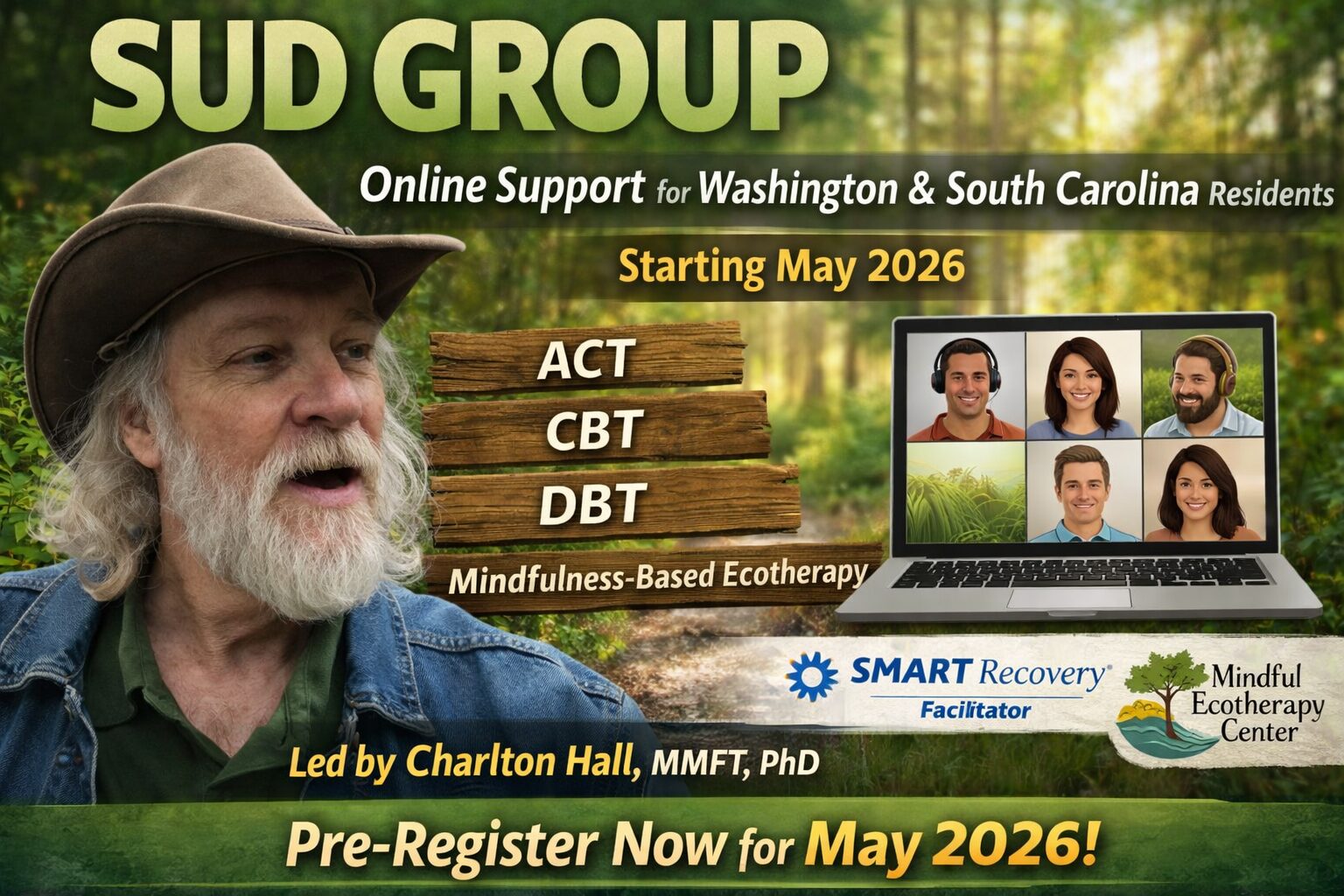
Since 2005, Charlton Hall, MMFT, PhD, has been at the forefront of evidence-based treatment for Substance Use Disorder (SUD). With over two decades of experience, Dr. Hall has combined traditional therapeutic methods with innovative approaches, creating a supportive and effective pathway for people seeking recovery. The Mindful Ecotherapy Center is excited to announce a new SUD Group for residents of Washington State and South Carolina, launching in May 2026.

Evidence-Based SUD Group Treatment

This upcoming online group provides a safe, structured space for participants to explore their recovery journey while connecting with others facing similar challenges. Dr. Hall integrates a variety of proven therapeutic approaches, including Acceptance and Commitment Therapy (ACT), Cognitive Behavioral Therapy (CBT), Dialectical Behavior Therapy (DBT), and Mindfulness-Based Ecotherapy. This combination allows participants not only to address the psychological and behavioral aspects of SUD but also to cultivate awareness, self-compassion, and resilience through nature-inspired mindfulness practices.

As a trained SMART Recovery facilitator, Dr. Hall brings a strengths-based, self-empowering approach to the SUD Group. His background includes serving as a Volunteer Advisor for South Carolina from 2011 to 2020, supporting local recovery communities and fostering peer-based engagement. This experience informs his online group facilitation, emphasizing accountability, peer support, and practical tools that participants can integrate into daily life.

Weekly SUD Group

The SUD Group will meet virtually, allowing residents of Washington State and South Carolina to participate without the constraints of geography. Sessions will provide structured discussions, guided mindfulness exercises, and actionable strategies for managing cravings, coping with triggers, and maintaining long-term recovery. Participants will have the opportunity to ask questions, share experiences, and learn from Dr. Hall’s expertise, all within a confidential and supportive environment.

Pre-Registration for the SUD Group Now Open!

Pre-registration for the group is now open. Limited to the first 20 participants, so register to save your spot today! Using the form below, interested participants can reserve a spot and receive updates about session schedules and materials. Early registration ensures access to all preparatory resources and allows participants to begin their recovery journey with confidence.

Mindfulness-Based Ecotherapy forms a cornerstone of the SUD Group experience. By integrating movement, nature observation, and reflective exercises, participants cultivate present-moment awareness and emotional regulation skills that support sustainable recovery. This holistic approach complements traditional therapies like ACT, CBT, and DBT, creating a comprehensive model that addresses both mind and body.

Additional Resources on the Website and Our YouTube Channel

Dr. Hall’s commitment to the recovery community is further demonstrated through his work on digital platforms. For additional resources, educational videos, and guided exercises, the Mindful Ecotherapy Center’s YouTube channel offers a rich library of content designed to complement the SUD Group experience. Visit Mindful Ecotherapy Center YouTube to explore these resources, and check out the Mindful Ecotherapy Center website for more information on courses, workshops, and upcoming programs.

Whether you are in the early stages of recovery, seeking support for maintaining sobriety, or interested in learning tools to prevent relapse, the SUD Group provides a compassionate, evidence-based environment tailored to your needs. By participating, you are joining a community dedicated to personal growth, emotional resilience, and meaningful connections.

Don’t wait to take this important step. Pre-register today and begin your journey with the guidance and expertise of Charlton Hall, MMFT, PhD, and the Mindful Ecotherapy Center. Recovery is not a solitary path. You don’t have to do it alone! Our SUD Group ensures you are supported every step of the way.

Insurance Plans Accepted

We accept the following insurance plans. A listing here is not a guarantee of payment by your insurance carrier. Check with your particular policy requirements prior to enrolling.

Charlton Hall, MMFT, PhD, currently accepts the following insurances:

Private-pay options are also available on a sliding fee scale.
Pre-register for the SUD Group below and reserve your spot for May 2026.


Posted on

Replacing Negative Coping Mechanisms with Nature-Based Mindfulness Practices

negative coping mechanisms

Coping with stress, trauma, or overwhelming emotions can sometimes lead people to adopt harmful habits, such as substance use, overeating, or other compulsive behaviors. While these negative coping mechanisms may provide temporary relief, they often create long-term physical, emotional, and psychological harm. Recovery and behavioral change require replacement strategies that are nurturing, restorative, and sustainable. Mindfulness-based ecotherapy (MBE) offers a powerful solution by integrating mindfulness practices with direct engagement in nature. This approach not only supports emotional regulation but also fosters resilience, self-awareness, and healthy coping skills to replace negative coping mechanisms.

Understanding Negative Coping Mechanisms

Negative coping mechanisms often emerge as a response to stress, grief, trauma, or chronic anxiety. For many people, these behaviors serve as a temporary escape from discomfort, providing immediate, but fleeting relief. Substance use, for example, may numb emotional pain or alleviate anxiety, yet it does not address underlying emotional issues. Over time, reliance on negative coping mechanisms and harmful coping strategies can exacerbate emotional instability, increase dependency, and reduce overall well-being.

Replacing negative coping mechanisms requires interventions that both soothe and empower. Mindfulness-based ecotherapy offers an integrative method for doing just that: it helps people pause, reflect, and engage with their emotions in healthy, constructive ways while reconnecting with the restorative qualities of nature.

Why Nature Matters in Healing

Nature has profound physiological and psychological benefits. Spending time in natural environments reduces stress hormones, lowers heart rate, and calms the nervous system. Sensory-rich experiences can include things like feeling the texture of tree bark, hearing birdsong, and observing sunlight through leaves. These sensory experiences anchor attention in the present moment. This grounding in the here and now is essential for disrupting automatic negative coping mechanisms and retraining the brain to respond in healthier ways.

Nature also provides symbolic guidance. Observing seasonal change, growth, decay, and renewal can inspire people to reflect on their own processes of transformation. Just as a tree sheds leaves in autumn to prepare for new growth, people can release harmful coping patterns and cultivate healthier alternatives.

Mindfulness-Based Ecotherapy Practices

Integrating mindfulness with nature provides practical strategies for replacing negative coping mechanisms:

  1. Mindful Walking – Walking slowly in a park, forest, or along a river encourages attention to the present moment. Focusing on the sensation of each step, breath, and surrounding sights helps people disrupt habitual responses and cultivate intentional behavior.
  2. Nature Observation Meditation – Sitting quietly and observing natural patterns, such as flowing water, rustling leaves, or cloud formations, enhances attention and emotional regulation. People learn to notice thoughts and urges without judgment, reducing the impulse to resort to negative coping strategies.
  3. Reflective Journaling Outdoors – Writing about stressors, cravings, or emotional triggers in a natural setting helps people externalize difficult emotions and process them constructively. Journaling strengthens self-awareness and reinforces positive coping alternatives.
  4. Sensory Grounding Exercises – Engaging touch, sight, hearing, and smell in nature anchors people in the present moment. Touching soil, feeling the wind, or listening to natural sounds can replace harmful behaviors with calming, grounding sensations.
  5. Rituals and Creative Expression – Activities like planting trees, creating natural art, or tending a garden provide symbolic and tangible acts of renewal. These rituals reinforce intention, provide a sense of accomplishment, and activate reward pathways in the brain in positive ways.

Benefits of Nature-Based Mindfulness in Recovery

Replacing negative coping mechanisms with nature-based mindfulness offers numerous benefits:

  • Stress Reduction – Nature engagement reduces physiological stress responses, lowering the likelihood of reverting to harmful habits.
  • Emotional Regulation – Mindfulness helps people observe cravings and emotions without reacting impulsively, fostering self-control and resilience.
  • Cognitive Rewiring – Repeated mindfulness practice in nature strengthens neural pathways associated with healthy coping and executive functioning.
  • Self-Compassion – Nature and mindfulness together cultivate nonjudgmental awareness, allowing people to treat themselves with care and patience during recovery.
  • Connection and Meaning – Spending time in nature nurtures a sense of belonging and interconnectedness, countering isolation and enhancing well-being.

Practical Steps for Incorporating Nature-Based Mindfulness

  1. Start Small – Even ten minutes of mindful nature observation daily can create meaningful changes in coping habits.
  2. Create a Routine – Consistency reinforces new habits and strengthens brain pathways associated with healthy coping.
  3. Engage the Senses – Fully immerse in the environment, paying attention to tactile, visual, auditory, and olfactory experiences.
  4. Reflect and Journal – Record observations, emotions, and progress to track patterns and insights over time.
  5. Combine with Support Systems – Pair MBE practices with therapy, support groups, or medical guidance for comprehensive recovery support.

Conclusion

Negative coping mechanisms may offer temporary relief, but they ultimately undermine long-term well-being. Mindfulness-based ecotherapy provides a sustainable, restorative alternative by combining the grounding, calming influence of nature with mindful awareness of thoughts, emotions, and behaviors. By engaging in practices such as mindful walking, nature observation, journaling, and ritualized activities, people can replace harmful habits with positive coping strategies that support emotional regulation, resilience, and holistic health.

At the Mindful Ecotherapy Center, we encourage people seeking to break free from negative coping patterns to explore nature-based mindfulness practices as a central component of their healing journey. By connecting deeply with the natural world and cultivating present-moment awareness, people can develop healthier responses to stress, navigate cravings, and foster a more balanced, empowered, and meaningful life. Nature is not only a sanctuary for reflection—it is a partner in transformation and recovery.


The Mindful Ecotherapy Center on YouTube

Subscribe to the Mindful Ecotherapy Center’s YouTube channel to bring peace, presence, and healing into your daily life. Our videos guide you through mindfulness-based ecotherapy practices, including forest bathing, tree planting rituals, nature meditations, and reflective exercises for grief, stress, and emotional well-being. Whether you’re seeking to reconnect with the natural world, cultivate inner calm, or find restorative tools for personal growth, our content offers practical guidance, inspiration, and community support. Join us to explore the transformative power of nature and mindfulness, and start your journey toward balance, resilience, and deeper connection today!


Share Your Thoughts!

What do you think? Share your thoughts in the comments below! And don’t forget to subscribe to our newsletter!