Posted on

Mirror Neurons: How Mindfulness-Based Ecotherapy Helps You Reset Them

mirror neurons

By Charlton Hall, MMFT, PhD
Mindful Ecotherapy Center

Mirror neurons teach us that you don’t just think your way through relationships. You absorb them. Other people’s moods, facial expressions, tone of voice, and emotional states don’t politely stop at your skin. They leak in. That’s why you flinch when someone else stubs their toe. A major reason for this lies in a fascinating piece of neuroscience known as mirror neurons.

Mirror neurons are specialized brain cells that activate both when you perform an action and when you observe someone else performing that same action. In plain language, your nervous system is wired to echo the experiences of others internally. This is how empathy happens. It is also how emotional contagion, burnout, and relational distress quietly take hold.

Understanding mirror neurons helps explain why some relationships feel nourishing while others leave you depleted, irritable, or strangely unlike yourself. Mindfulness-Based Ecotherapy offers a grounded, embodied way to work with this process rather than being unknowingly run by it.

What Are Mirror Neurons and Why Do They Matter in Relationships?

Mirror neurons were first identified in the 1990s and are now understood to play a central role in empathy, social learning, attachment, and emotional attunement. When you watch someone smile, your brain partially activates the same neural circuits as if you were smiling yourself. When someone is anxious, angry, or withdrawn, your nervous system often mirrors that state before your rational mind catches up.

This process is how humans bond, cooperate, and survive socially. The problem arises when you are repeatedly exposed to dysregulated, hostile, or emotionally unavailable people without sufficient grounding or boundaries. Over time, your own baseline emotional state can shift without you realizing why.

In intimate relationships, mirror neurons help partners synchronize their emotional responses. In unhealthy dynamics, they can trap people in cycles of reactivity, resentment, or emotional exhaustion.

Mirror Neurons, Emotional Regulation, and Relationship Patterns

Mirror neurons do not operate in isolation. They interact with your stress response system, attachment history, and beliefs about safety and connection. If your nervous system is already on edge, you are more likely to absorb and amplify others’ emotional states.

This explains why:

  • Conflict often escalates faster than logic would predict
  • One person’s anxiety spreads through a room like a contagion
  • Calm, grounded people feel stabilizing to be around
  • Chronic exposure to hostility can change how you feel about yourself

Without awareness, mirror neuron activation drives automatic reactions. You snap back, shut down, over-accommodate, or emotionally withdraw. You think you are responding to the present moment, but you are often responding to your nervous system’s interpretation of another person’s internal state.

How Mindfulness Interrupts Automatic Mirroring

Mindfulness creates a pause between sensation and reaction. Instead of immediately absorbing and reflecting what someone else is feeling, you learn to notice what is happening inside you without becoming it.

Through mindfulness practice, you begin to recognize:

  • “This anxiety may not be mine”
  • “My body is reacting before my values have a say”
  • “I can observe this emotion without acting on it”

Mindfulness strengthens your capacity to stay present without being hijacked by mirror neuron activation.


Why Mindfulness-Based Ecotherapy Is Especially Effective

Mindfulness-Based Ecotherapy adds a critical missing element: the regulating power of the natural world. Human nervous systems evolved in relation to nature. Natural environments offer rhythmic, nonjudgmental sensory input that helps stabilize mirror neuron activity.

When you practice mindfulness outdoors, your nervous system receives signals of safety and continuity. Trees do not escalate conflict. Water does not demand emotional labor. Wind does not project unresolved trauma onto you.

Nature provides what many relationships cannot: steady regulation without expectation.

This allows you to:

  • Reset after emotionally intense interactions
  • Discharge absorbed stress and tension
  • Reestablish a sense of self separate from others’ moods
  • Strengthen relational boundaries without hostility

In ecotherapy-informed practice, people often report feeling more emotionally resilient, less reactive, and better able to engage in relationships from choice rather than reflex.

Mirror Neurons, Boundaries, and Emotional Health

Healthy boundaries are not walls. They are filters. Understanding mirror neurons reframes boundaries as a neurological necessity rather than a personal failing. You are not “too sensitive.” You are biologically responsive to your own needs.

Mindfulness-Based Ecotherapy supports boundary-setting by helping you:

  • Notice when emotional absorption from others is happening
  • Regulate your body before responding
  • Choose values-based actions rather than reactive ones
  • Restore balance through intentional contact with nature

Over time, this reduces resentment, emotional burnout, and the sense of losing yourself in relationships.

Working With Mirror Neurons Instead of Fighting Them

You cannot turn mirror neurons off, nor should you want to. They are the foundation of empathy, compassion, and connection. They’re what make it possible to live in community with others. The goal here is to create emotional and cognitive flexibility.

Mindfulness-Based Ecotherapy teaches you how to stay open without being overwhelmed, connected without being consumed, and compassionate without abandoning yourself. In a world saturated with emotional noise, this is not a luxury. It is a survival skill.

If your relationships feel exhausting, volatile, or emotionally confusing, the issue may not be your communication skills. It may be that your nervous system needs grounding, space, and reconnection with the living world that shaped it.

Learn more about mindfulness-based ecotherapy and our work at:
https://www.mindfulecotherapycenter.com

Subscribe for reflections, practices, and resources:
https://mindfulecotherapy.substack.com/subscribe


References

Gallese, V. (2001). The “shared manifold” hypothesis: From mirror neurons to empathy. Journal of Consciousness Studies, 8(5–7), 33–50.

Hartig, T., Mitchell, R., de Vries, S., & Frumkin, H. (2014). Nature and health. Annual Review of Public Health, 35, 207–228. https://doi.org/10.1146/annurev-publhealth-032013-182443

Iacoboni, M. (2009). Mirroring people: The science of empathy and how we connect with others. Farrar, Straus and Giroux.

Siegel, D. J. (2012). The developing mind: How relationships and the brain interact to shape who we are (2nd ed.). Guilford Press.

Ulrich, R. S., et al. (1991). Stress recovery during exposure to natural and urban environments. Journal of Environmental Psychology, 11(3), 201–230.


Share Your Thoughts About Mirror Neurons!

What do you think? Share your thoughts in the comments below!


  And don’t forget to subscribe to our newsletter!

Posted on

Paypal: Why the Mindful Ecotherapy Center No Longer Accepts It

paypal

We recently dropped PayPal. At the Mindful Ecotherapy Center, we believe healing begins with trust, transparency, and human connection. Whether you are enrolling in a mindfulness-based ecotherapy course, purchasing educational materials, booking a consultation, or supporting our work through donations, you deserve a payment process that is reliable, respectful, and straightforward.

For years, we offered PayPal as one of our payment options because it was widely recognized and convenient for many people. Unfortunately, over time, we encountered repeated problems that made continuing to use PayPal increasingly difficult for both our organization and the people we serve. After careful consideration, we made the decision to discontinue PayPal as a payment option.

We understand that some visitors may wonder why this change was made, so we want to explain our reasoning openly and honestly.

Payment Holds and Delays

One of the biggest issues we experienced involved payment holds and delays. Funds connected to legitimate transactions were sometimes placed on hold for extended periods without clear explanations or meaningful communication about why, causing delays for our customers and clients. For a small organization focused on mental health education, mindfulness training, and ecotherapy services, consistent cash flow matters.

When payments are unexpectedly frozen or delayed, it creates uncertainty that can directly affect planning and sustainability.

Difficulty Reaching Human Support

Another challenge involves PayPal customer service. Like many people today, we increasingly encounter automated systems and AI-driven support loops that make it difficult to speak with a real human representative. While automation can sometimes improve efficiency, it can also become frustrating when a real issue requires nuance, context, and direct communication, taking time and effort and costing us money that could better be spent on supporting our customers.

paypal customer service

Unlike massive corporations with large financial reserves, small educational and wellness organizations often rely on timely payments to maintain operations, cover hosting and educational expenses, support content creation, and continue offering affordable services to the public.

When financial questions arise with PayPal, especially involving held funds or account reviews, organizations need access to responsive human support. Unfortunately, our experiences often involved being redirected through repetitive automated responses that did not adequately resolve the underlying issue.

As a mental health and mindfulness-centered organization, we place a high value on genuine human interaction. Technology should support people, not create barriers between them.

Aligning With Our Values

Mindfulness-based ecotherapy emphasizes grounding, authenticity, balance, and healthy relationships not only with nature, but also with the systems we engage with every day. Over time, we realized that continuing to rely heavily on a payment platform that frequently created stress and uncertainty for our clients was inconsistent with the calm, transparent experience we want to provide for our community.

Mindfulness encourages paying attention to what creates unnecessary tension and making intentional changes when possible. This decision reflects that same philosophy. By simplifying our payment systems and moving toward alternatives that better meet our operational needs, we hope to reduce complications for both our organization and our supporters.

Supporting a Better Experience for Visitors

Removing PayPal is not about punishing users who prefer it. We recognize that many people have had perfectly fine experiences with the platform. Our decision is simply based on what has worked best for our organization and community over time.

We want the process of enrolling in programs, purchasing materials, or supporting the Mindful Ecotherapy Center to feel simple and dependable. Payment systems should operate quietly in the background without creating additional anxiety or confusion.

Mental health and wellness services already involve enough emotional vulnerability. Administrative frustrations should not add to that burden.

Continuing to Offer Secure Alternatives

Although PayPal is no longer available on our website, we continue to offer secure payment methods designed to protect customer information and provide a smooth checkout experience.

Our goal is to ensure that visitors can still access all services and resources conveniently while reducing the likelihood of transaction complications or delayed access to purchased materials.

If anyone experiences payment issues or has questions about available payment methods, we encourage direct communication through the Mindful Ecotherapy Center website. We are committed to responding personally and helping resolve concerns as quickly as possible.

A Broader Conversation About Technology and Human Well-Being

This decision also reflects a larger cultural issue that many people are noticing. Increasingly, people find themselves trapped in automated systems that make it difficult to solve problems, ask questions, or receive compassionate support. From banks to social media platforms to online retailers, many companies are replacing human interaction with layers of automation.

Mindfulness invites us to examine how technology affects our nervous systems, relationships, and daily lives. Convenience is valuable, but not when it comes at the expense of clarity, accountability, and human dignity.

At the Mindful Ecotherapy Center, we believe technology should serve people and not the other way around.

Moving Forward

We remain deeply grateful for everyone who supports the Mindful Ecotherapy Center and participates in our mindfulness-based ecotherapy work. Your encouragement allows us to continue creating educational resources focused on mindfulness, nature connection, emotional resilience, and psychological well-being.

Removing PayPal was not a decision made lightly, but ultimately, we believe it was the right choice for maintaining stability, reducing unnecessary stress, and aligning our operations with the values we teach.

Thank you for your understanding and continued support as we move forward with systems that better reflect our commitment to mindfulness, transparency, and authentic human connection.

For more information, visit the Mindful Ecotherapy Center website: Mindful Ecotherapy Center


Share Your Thoughts About Paypal!

What do you think? Share your thoughts in the comments below!


  And don’t forget to subscribe to our newsletter!

Posted on

Outdoor Mindfulness Practices for Couples: Strengthening Relationships Naturally

outdoor mindfulness

By Charlton Hall, MMFT, PhD
Mindful Ecotherapy Center

Modern relationships are not failing because people do not care. They are struggling because the conditions most couples live in are relentlessly dysregulating. Chronic stress, constant digital input, economic pressure, and overstimulation wear down even strong relational bonds. Many couples report feeling disconnected, reactive, or emotionally distant, even when love and commitment are still present. One effective and underutilized way to address this disconnect is through outdoor mindfulness practices rooted in Mindfulness-Based Ecotherapy.

Outdoor mindfulness shifts couples out of environments that amplify stress and into settings that naturally support regulation, presence, and connection. Nature slows the nervous system, reduces defensive reactivity, and makes emotional attunement more accessible. When couples practice mindfulness together outdoors, they are not just relaxing. They are retraining how they relate to themselves and to each other.

Why Outdoor Mindfulness Supports Healthy Relationships

Relationships are shaped as much by physiology as by communication skills. When one or both partners are chronically stressed, the nervous system prioritizes protection over connection. This leads to misattunement, quick escalation, and repeated conflict loops. Outdoor mindfulness works because it begins with regulation, not problem-solving.

Natural environments have been shown to lower cortisol levels, reduce heart rate, and activate the parasympathetic nervous system. When partners experience these effects together, their capacity for empathy and emotional presence increases. Conversations soften. Listening improves. Reactivity decreases.

Mindfulness adds intention to this process. Rather than being distracted or task-focused outdoors, couples intentionally bring awareness to the present moment. This shared attention becomes a form of relational attunement, strengthening the sense of being together rather than merely coexisting.

Outdoor Mindfulness as a Relational Practice

In Mindfulness-Based Ecotherapy, outdoor mindfulness is not about achieving a calm state or avoiding difficult topics. It is about cultivating awareness, safety, and connection in the context of the natural world. For couples, this means learning to be present with one another without immediately trying to fix, defend, or withdraw.

Nature offers a nonjudgmental container for relational work. There is less pressure to perform or resolve everything at once. This makes outdoor mindfulness especially helpful for couples experiencing burnout, recurring conflict, or emotional distance.

Over time, these practices help couples reconnect with shared values, mutual care, and a sense of partnership grounded in lived experience rather than constant discussion.

Practical Outdoor Mindfulness Practices for Couples

One foundational outdoor mindfulness practice for couples is mindful walking. Partners walk together at a comfortable pace, paying attention to the rhythm of their steps, breath, and the surrounding environment. Conversation is optional. The focus is on shared presence rather than analysis.

Another practice involves sensory grounding. Couples sit together outdoors and take turns naming what they notice through the senses. What they hear. What they see. What they feel physically. This builds awareness and co-regulation while reinforcing emotional safety.

A third practice is nature-based reflective sharing. After a few minutes of quiet observation, each partner shares a brief reflection, such as a word, image, or feeling that arose. The other partner listens without responding or interpreting. This strengthens trust and reduces habitual defensiveness.

These practices are intentionally simple. Their effectiveness lies in consistency of application, not complexity.

Using Outdoor Mindfulness to Manage Conflict

Outdoor mindfulness practices can also support healthier conflict engagement. Nature reduces physiological arousal, making it easier to stay grounded during difficult conversations. Mindfulness helps partners notice early signs of activation, such as tension or shallow breathing, before escalation occurs.

Rather than avoiding conflict, through Mindfulness-Based Ecotherapy, couples learn to approach it with greater awareness and compassion. The natural environment reinforces perspective, reminding both partners that conflict is part of a relationship, not a sign of failure.

In therapeutic contexts, outdoor mindfulness is often used alongside communication skills and values clarification, providing a stable foundation for deeper relational work.

How Mindfulness-Based Ecotherapy Enhances Couple Connection

Mindfulness-Based Ecotherapy emphasizes the interconnectedness between people and the natural world. For couples, this perspective helps shift focus away from blame, shame, and guilt-tripping each other and toward shared experience. Partners are encouraged to see themselves as part of a larger system rather than isolated adversaries.

This approach is especially beneficial for couples dealing with stress, life transitions, or emotional fatigue. Outdoor mindfulness becomes a way to restore balance, reconnect emotionally, and cultivate resilience together.

Over time, these practices can evolve into meaningful practices that support long-term relationship health.

Strengthening Relationships Naturally

Outdoor mindfulness offers couples a grounded, accessible way to strengthen their connection. By slowing down together, engaging the senses, and practicing mindful awareness in nature, couples create space for regulation, empathy, and intimacy with each other.

At the Mindful Ecotherapy Center, outdoor mindfulness practices are integrated into therapeutic work to support relational healing in a way that is both sustainable and deeply human. Strengthening relationships does not always begin with more talking. Sometimes it begins by stepping outside together and simply paying attention.


References

Hartig, T., Mitchell, R., de Vries, S., & Frumkin, H. (2014). Nature and health. Annual Review of Public Health, 35, 207–228. https://doi.org/10.1146/annurev-publhealth-032013-182443

Kabat-Zinn, J. (2003). Mindfulness-based interventions in context: Past, present, and future. Clinical Psychology: Science and Practice, 10(2), 144–156. https://doi.org/10.1093/clipsy.bpg016

Rogers, C. R. (1961). On becoming a person: A therapist’s view of psychotherapy. Houghton Mifflin.

Ulrich, R. S., Simons, R. F., Losito, B. D., Fiorito, E., Miles, M. A., & Zelson, M. (1991). Stress recovery during exposure to natural and urban environments. Journal of Environmental Psychology, 11(3), 201–230. https://doi.org/10.1016/S0272-4944(05)80184-7


Share Your Thoughts About Outdoor Mindfulness Practices for Couples!

What do you think? Share your thoughts in the comments below!


  And don’t forget to subscribe to our newsletter!

Posted on

Eco Sound Therapy: Using Nature’s Sounds for Deep Relaxation

eco sound therapy

By Charlton Hall, MMFT, PhD
Mindful Ecotherapy Center

Sleep problems have become common. You lie down, your body is tired, but your mind refuses to stand down. Screens, stress, artificial noise, and constant stimulation keep your nervous system locked in alert mode long after the day has ended. One increasingly effective, evidence-informed approach to this problem is Eco Sound Therapy, a practice grounded in mindfulness-based ecotherapy that uses the natural soundscape to support deep relaxation and restorative sleep.

Eco Sound Therapy is not about drowning out your thoughts with white noise. It is about reconnecting your nervous system to the acoustic environment it evolved in. For most of human history, sleep happened to the sound of wind in trees, insects, water, distant animals, and rhythmic environmental patterns. These sounds signal safety. They tell your brain there are no immediate threats, no engines revving, no alarms, no notifications demanding attention. When used intentionally, nature’s sounds can help your body remember how to rest.

What Is Eco Sound Therapy?

Eco Sound Therapy is a mindfulness-based ecotherapy practice that uses natural sounds, either experienced directly in outdoor settings or through high-quality recordings, to regulate the nervous system. Unlike generic relaxation audio, Eco Sound Therapy emphasizes attunement. You are not passively consuming sound. You are mindfully listening, grounding your awareness in the present moment through the auditory senses.

This approach works because sound has a direct pathway to the brain areas responsible for emotion, memory, and arousal. Natural sounds tend to be non-repetitive, rhythmic, and layered in ways that the nervous system finds stabilizing rather than stimulating. Ocean waves, rainfall, forest ambience, and nighttime insect choruses gently guide the brain toward slower, more coherent patterns associated with relaxation and sleep.

Within Mindfulness-Based Ecotherapy, Eco Sound Therapy is often paired with breath awareness, body scanning, and grounding practices to deepen its effect.


Why Natural Sounds Support Deep Relaxation

eco sound therapy

Your nervous system is constantly scanning for cues of danger or safety. Artificial environments bombard you with sharp, unpredictable sounds that keep this system on edge. Nature sounds do the opposite. They provide consistent, low-frequency information that tells your body it can stand down.

Research has shown that exposure to natural soundscapes can lower cortisol levels, reduce heart rate, and increase parasympathetic nervous system activity. In plain terms, your body shifts from survival mode into restoration mode. This is essential for sleep, especially if you struggle with racing thoughts, hypervigilance, or stress-related insomnia.

Eco Sound Therapy also supports cognitive quieting. When your attention rests on the sound of rain or wind, there is less mental space for rumination. Thoughts may still arise, but they tend to pass more easily without pulling you into a spiral.

Grounding Techniques in Nature to Promote Deeper Sleep

Grounding is the practice of anchoring your awareness in the present moment through sensory experience. When combined with Eco Sound Therapy, grounding becomes a powerful sleep-support tool.

One simple practice involves spending time outdoors in the early evening. Sit or stand comfortably and focus exclusively on the sounds around you. Notice near sounds and far sounds. Notice rhythm, volume, and movement. When your mind wanders, gently return to listening. This trains your nervous system to associate natural sound with safety and settling.

If outdoor access is limited, recorded nature soundscapes can be used intentionally. Choose recordings that are uninterrupted and free of artificial overlays. Before sleep, lie down and place one hand on your body. Allow the sound to be the primary focus while noticing the physical sensations of rest. This pairing of auditory grounding and body awareness helps signal to your brain that it is time to sleep.

Another effective technique is sound mapping. As you listen, mentally note where sounds appear in space. Left, right, near, far. This engages your orienting response in a non-threatening way, reducing hyperarousal and preparing the body for rest.

How Mindfulness-Based Ecotherapy Enhances Eco Sound Therapy

Mindfulness-Based Ecotherapy strengthens Eco Sound Therapy by adding intention, awareness, and relational depth. Rather than using sound as a distraction, mindfulness encourages you to enter into a relationship with the natural world, even when experienced indirectly.

This approach is especially helpful for people with anxiety, trauma histories, or chronic stress. Mindful listening builds tolerance for stillness and quiet without forcing relaxation. Over time, your nervous system learns that rest is not dangerous, boredom is not a threat, and silence does not require vigilance.

In clinical practice, Eco Sound Therapy can be integrated into sleep hygiene plans, trauma-informed care, and stress reduction strategies. It supports emotional regulation, reduces nighttime anxiety, and helps reestablish healthy sleep rhythms without relying solely on medication.

Relearning How to Sleep in a Noisy World

You were never designed to sleep next to glowing screens and constant mechanical noise. Eco Sound Therapy offers a way back to a more natural rhythm, using sound as a bridge between modern life and your nervous system’s ancient wisdom.

By grounding yourself in nature’s soundscape and practicing mindful listening, you give your body permission to rest. Sleep becomes less of a battle and more of a return. Not perfect every night, but gentler, deeper, and more sustainable over time.

At the Mindful Ecotherapy Center, Eco Sound Therapy is one of many ways mindfulness and nature-based practices support whole-person healing. When you reconnect with the sounds of the natural world, you reconnect with your capacity for rest.


References

Annerstedt, M., & Währborg, P. (2011). Nature-assisted therapy: Systematic review of controlled and observational studies. Scandinavian Journal of Public Health, 39(4), 371–388. https://doi.org/10.1177/1403494810396400

Buxton, O. M., & Marcelli, E. (2010). Short and long sleep are positively associated with obesity, diabetes, hypertension, and cardiovascular disease among adults in the United States. Social Science & Medicine, 71(5), 1027–1036. https://doi.org/10.1016/j.socscimed.2010.05.041

Hartig, T., Mitchell, R., de Vries, S., & Frumkin, H. (2014). Nature and health. Annual Review of Public Health, 35, 207–228. https://doi.org/10.1146/annurev-publhealth-032013-182443

Krause, A. E., North, A. C., & Hewitt, L. Y. (2015). Music and emotion: The importance of valence and arousal. Journal of Research in Personality, 56, 44–49. https://doi.org/10.1016/j.jrp.2015.01.006

Pigeon, W. R., & Crabtree, V. M. (2009). Behavioral interventions for insomnia: Theory and practice. Sleep Medicine Clinics, 4(4), 487–498. https://doi.org/10.1016/j.jsmc.2009.07.003

Ulrich, R. S., Simons, R. F., Losito, B. D., Fiorito, E., Miles, M. A., & Zelson, M. (1991). Stress recovery during exposure to natural and urban environments. Journal of Environmental Psychology, 11(3), 201–230. https://doi.org/10.1016/S0272-4944(05)80184-7


Share Your Thoughts About Eco Sound Therapy!

What do you think? Share your thoughts in the comments below!


  And don’t forget to subscribe to our newsletter!
Posted on

Living in True Self: A Courageous Path to Meaning and Harmony

living in true self

Living in True Self is the culminating skill of Mindfulness-Based Ecotherapy, and it asks something both simple and deeply uncomfortable: that you stop living in reaction to expectations, conditioning, and fear, and start living in alignment with who you actually are. Your True Self is the part of you that knows what matters, recognizes your limits, and acts from values rather than avoidance. When you live in True Self, your actions, aspirations, and relationships begin to line up instead of pulling you in opposite directions.

In Mindfulness-Based Ecotherapy, living in True Self begins with self-awareness. You cannot align with what you refuse to notice. Mindfulness helps you observe your thoughts, emotions, and bodily signals without immediately obeying them. Over time, you start to recognize patterns. You notice where you abandon yourself to keep the peace, where you override your values for approval, and where fear quietly makes your decisions for you. This awareness is not meant to shame you. It gives you information. And information creates choice.

Accepting Yourself

Acceptance is the next step. Living in True Self does not mean eliminating flaws or becoming endlessly serene and “perfect.” It means accepting that you are complex, imperfect, and still worthy of compassion. When you stop fighting who you are, you free up energy to live intentionally. Research since 2020 shows that self-acceptance and values-based living are associated with greater psychological flexibility, reduced distress, and increased life satisfaction (Hayes et al., 2020; Kashdan et al., 2020). In other words, alignment works better than self-criticism, even if your inner critic insists otherwise.

Ecotherapy and Living in True Self

Nature plays a critical role in this process. In ecotherapy, you are not treated as separate from the natural world, but as part of it. Nature models authenticity relentlessly. A tree does not apologize for growing crooked. A river does not justify its course. Seasons change without consulting public opinion. When you spend time in nature mindfully, you are reminded that living in alignment is not a personal failure waiting to happen. It is how life actually functions. This perspective can dissolve the pressure to perform and replace it with permission to be.

Being Compassionate with Others…and with Yourself

Living in True Self also involves compassion, both toward yourself and others. When you are aligned internally, you are less reactive and less defensive. You listen more clearly. You set boundaries without hostility. You recognize that other people are also navigating their own misalignment. Studies on mindfulness and compassion show that increased self-compassion is linked to improved emotional regulation and more authentic relationships (Neff & Germer, 2022). You stop trying to manage how you are perceived and start focusing on how you are living.

From an ecotherapeutic lens, living in True Self is inseparable from interconnectedness. You are not an isolated unit trying to optimize yourself in a vacuum. You exist within systems, relationships, and ecosystems. When you live out of alignment, the cost shows up as burnout, resentment, and disconnection. When you live in alignment, your choices tend to support sustainability, reciprocity, and care. This is not accidental. When you remember you belong to the natural world, your values often expand beyond survival toward meaning.

Living in True Self: Not Always Comfortable

Living in True Self does not guarantee ease. It often requires courage. You may disappoint people. You may have to grieve paths you did not take. But what you gain is coherence. Your thoughts, values, and actions start telling the same story. That coherence is deeply regulating to your nervous system and profoundly grounding over time.

At the Mindful Ecotherapy Center, Living in True Self is not framed as a destination, but as a practice. Alignment is something you return to again and again, especially when life pulls you off course. Mindfulness gives you awareness. Ecotherapy gives you the context. Together, they support a way of living that is honest, grounded, and sustainable.

To learn more about Mindfulness-Based Ecotherapy and how living in alignment with your True Self can support healing and meaning, visit www.mindfulecotherapycenter.com


References

Hayes, S. C., Strosahl, K. D., & Wilson, K. G. (2020). Acceptance and commitment therapy: The process and practice of mindful change (2nd ed.). Guilford Press.

Kashdan, T. B., Disabato, D. J., Goodman, F. R., Doorley, J. D., & McKnight, P. E. (2020). Understanding psychological flexibility: A multimethod exploration of pursuing valued goals despite the presence of distress. Journal of Personality and Social Psychology, 119(2), 1–21. https://doi.org/10.1037/pspp0000266

Neff, K. D., & Germer, C. K. (2022). The mindful self-compassion program: Effects on self-compassion, mindfulness, and well-being. Journal of Clinical Psychology, 78(2), 389–402. https://doi.org/10.1002/jclp.23297

Schutte, N. S., & Malouff, J. M. (2021). Mindfulness and connectedness to nature: A meta-analytic investigation. Personality and Individual Differences, 179, 110984. https://doi.org/10.1016/j.paid.2021.110984


The Mindful Ecotherapy Center on YouTube

Subscribe to the Mindful Ecotherapy Center’s YouTube channel to bring peace, presence, and healing into your daily life. Our videos guide you through mindfulness-based ecotherapy practices, including forest bathing, tree planting rituals, nature meditations, and reflective exercises for grief, stress, and emotional well-being.

Whether you’re seeking to reconnect with the natural world, cultivate inner calm, or find restorative tools for personal growth, our content offers practical guidance, inspiration, and community support. Join us to explore the transformative power of nature and mindfulness, and start your journey toward balance, resilience, and deeper connection today!


Share Your Thoughts!

What do you think? Share your thoughts in the comments below! And don’t forget to subscribe to our newsletter!
Posted on

Nature as Healer: The Healing Power of Nature

nature as healer

Nature as Healer is a core skill that highlights the innate therapeutic qualities of the natural world. Nature actively facilitates healing when you engage with it mindfully. By practicing Mindfulness-Based Ecotherapy, you can use the restorative qualities of natural environments to reduce stress, regulate emotions, and enhance resilience. Nature becomes a partner in your well-being, offering support for self-discovery, reflection, and personal growth.

Mindful Awareness and Healing

Engaging with nature as a healer begins with mindful awareness. When you are present, you notice the textures, sounds, and rhythms of your surroundings. This sensory immersion calms your nervous system, decreases rumination, and promotes relaxation. Research into the role of nature as healer since 2020 demonstrates that mindful engagement with natural settings improves emotional regulation, reduces cortisol levels, and supports cardiovascular health (Bratman et al., 2021; Kuo, 2021). Simply put, being in nature helps your mind and body recover from the cumulative effects of stress.

Nature Builds Resilience

Nature as Healer also supports psychological resilience. Observing seasonal cycles, the persistence of growth after disruption, and the interconnectedness of ecosystems provides a powerful metaphor for human adaptability. When you witness a forest recovering after a wildfire or a river carving its way around obstacles, it offers a model for overcoming challenges in your own life. Studies show that exposure to natural environments strengthens problem-solving, enhances coping strategies, and increases overall psychological well-being (Passmore & Howell, 2020; Schutte & Malouff, 2021).

Fully Participating in the Moment

Importantly, healing in nature is about active participation. Walking barefoot on the earth, tending a garden, or practicing mindful observation of a stream engages both mind and body, reinforcing embodied mindfulness. This dual engagement amplifies the restorative effects of nature, allowing insight, emotional processing, and physiological regulation to occur simultaneously. Mindfulness-Based Ecotherapy emphasizes that healing emerges from this holistic engagement rather than from passive observation alone.

Healing through Connection with Nature

Nature as Healer also fosters a sense of connectedness. When you experience yourself as part of a living system, isolation diminishes, and empathy grows both for yourself and for the world around you. This relational healing is particularly relevant in modern life, where disconnection from natural rhythms often contributes to stress, anxiety, and emotional exhaustion. Engaging with nature cultivates a grounded, centered state that supports both mental and physical restoration.

By integrating Nature as Healer into your daily life, you are supported in creating conditions for ongoing well-being. Healing becomes a lived, embodied experience rather than a distant goal. Nature provides consistent, nonjudgmental support that complements other therapeutic practices, helping you cultivate calm, insight, and resilience.

To explore more about Nature as Healer and other Mindfulness-Based Ecotherapy skills, visit www.mindfulecotherapycenter.com


References

Bratman, G. N., Anderson, C. B., Berman, M. G., Cochran, B., de Vries, S., Flanders, J., … Daily, G. C. (2021). Nature and mental health: An ecosystem service perspective. Science Advances, 7(20), eaba113. https://doi.org/10.1126/sciadv.aba113

Kuo, M. (2021). How might contact with nature promote human health? Promising mechanisms and a research agenda. Frontiers in Psychology, 12, 691399. https://doi.org/10.3389/fpsyg.2021.691399

Passmore, H. A., & Howell, A. J. (2020). Nature involvement increases hedonic and eudaimonic well-being: A two-week experimental study. Ecopsychology, 12(1), 1–11. https://doi.org/10.1089/eco.2019.0025

Schutte, N. S., & Malouff, J. M. (2021). Mindfulness and connectedness to nature: A meta-analytic investigation. Personality and Individual Differences, 179, 110984. https://doi.org/10.1016/j.paid.2021.110984

van den Bosch, M., & Ode Sang, Å. (2021). Urban natural environments as nature-based solutions for improved public health – A systematic review of reviews. Environmental Research, 158, 373–384. https://doi.org/10.1016/j.envres.2017.05.040


The Mindful Ecotherapy Center on YouTube

Subscribe to the Mindful Ecotherapy Center’s YouTube channel to bring peace, presence, and healing into your daily life. Our videos guide you through mindfulness-based ecotherapy practices, including forest bathing, tree planting rituals, nature meditations, and reflective exercises for grief, stress, and emotional well-being.

Whether you’re seeking to reconnect with the natural world, cultivate inner calm, or find restorative tools for personal growth, our content offers practical guidance, inspiration, and community support. Join us to explore the transformative power of nature and mindfulness, and start your journey toward balance, resilience, and deeper connection today!


Share Your Thoughts!

What do you think? Share your thoughts in the comments below! And don’t forget to subscribe to our newsletter!
Posted on

Nature as Nurture: The Nurturing Power of Nature

nature as nurture

Nature as Nurture is one of the core ecotherapy skills in Mindfulness-Based Ecotherapy, and it addresses something your nervous system already knows: you are not designed to live in constant stimulation, artificial light, and the chronic urgency imposed by modern life. Nature as Nurture emphasizes the healing and supportive qualities of natural environments and recognizes nature as a reliable source of comfort, restoration, and emotional regulation. This skill is a practical, evidence-informed way of helping you recover from stress, overwhelm, and emotional depletion.

In Mindfulness-Based Ecotherapy, nurturing does not mean avoiding difficulty or pretending life is gentle. It means creating conditions where healing becomes possible. When you intentionally immerse yourself in natural settings, your body often responds before your mind catches up. Your breathing slows. Muscle tension eases. Your attention widens. This is not because you are trying harder, but because nature reduces the cognitive and sensory load that keeps you locked in Doing Mode. Nature gives your system permission to rest.

Mindfulness and Nature as Nurture

nature as nurture

Mindfulness is what allows you to receive this nurturing effect instead of rushing past it. When you practice mindful awareness in nature, you engage your senses more fully. You notice the temperature of the air, the texture of the ground beneath your feet, and the soundscape around you. These sensory experiences anchor you in the present moment and gently guide your nervous system toward regulation.

Exploring nature with your senses naturally brings you into the present moment because it’s impossible to see, touch, taste, smell, or hear anything in the past or in the future. You can only experience nature through your senses in the present moment. Nature does not demand productivity. It offers presence. That alone can feel deeply nurturing in a culture that treats relaxation like a moral failure instead of an imperative for good health.

Nature as Nurture: The Restorative Power of the Environment

Nature as Nurture is especially powerful during times of grief, burnout, anxiety, or emotional exhaustion. When you are depleted, insight and problem-solving often make things worse. What you need first is restoration. Sitting near water, walking beneath trees, or even tending a small garden can provide a sense of being held by something larger than your thoughts. This sense of being supported, rather than needing to perform, helps rebuild emotional resilience from the ground up.

This skill also reframes self-care. Instead of asking what you should be doing to fix yourself, Nature as Nurture asks what kind of environment supports your well-being. In nature, nourishment happens through exposure, not effort. You do not have to earn the shade of a tree or the calm of a shoreline. You simply have to allow yourself to be there. That experience can soften harsh self-judgment and remind you that care does not always require struggle.

We are One

From an ecotherapy perspective, Nature as Nurture helps repair the false separation between you and the natural world. When you feel supported by nature, you begin to experience belonging rather than isolation. This sense of connection can be profoundly regulating, particularly if you struggle with chronic stress or trauma. Nature offers consistency without conditions. It shows up whether you feel worthy or not.

nature as nurture

At the Mindful Ecotherapy Center, Nature as Nurture is practiced intentionally, not passively. You are guided to notice how different environments affect your mood, energy, and sense of safety. Over time, you learn which natural settings help you settle, which help you process emotion, and which help you recharge. This turns nature from an occasional escape into a reliable resource for healing and resilience.

Ultimately, Nature as Nurture reminds you that healing does not always come from insight or effort. Sometimes it comes from being somewhere that allows your body and mind to remember how to settle. In a world that constantly pulls you outward, nature invites you back to yourself, quietly and without judgment.

To learn more about Mindfulness-Based Ecotherapy and how nature-based practices can support your healing and resilience, visit www.mindfulecotherapycenter.com


References

Bratman, G. N., Anderson, C. B., Berman, M. G., Cochran, B., de Vries, S., Flanders, J., Folke, C., Frumkin, H., Gross, J. J., Hartig, T., Kahn, P. H., Kuo, M., Lawler, J. J., Levin, P. S., Lindahl, T., Meyer-Lindenberg, A., Mitchell, R., Ouyang, Z., Roe, J., … Daily, G. C. (2021). Nature and mental health: An ecosystem service perspective. Science Advances, 7(20), eaba113. https://doi.org/10.1126/sciadv.aba113

Kuo, M. (2021). How might contact with nature promote human health? Promising mechanisms and a research agenda. Frontiers in Psychology, 12, 691399. https://doi.org/10.3389/fpsyg.2021.691399

Passmore, H. A., & Howell, A. J. (2020). Nature involvement increases hedonic and eudaimonic well-being: A two-week experimental study. Ecopsychology, 12(1), 1–11. https://doi.org/10.1089/eco.2019.0025

Schutte, N. S., & Malouff, J. M. (2021). Mindfulness and connectedness to nature: A meta-analytic investigation. Personality and Individual Differences, 179, 110984. https://doi.org/10.1016/j.paid.2021.110984

Twohig-Bennett, C., & Jones, A. (2020). The health benefits of the great outdoors: A systematic review and meta-analysis of greenspace exposure and health outcomes. Environmental Research, 166, 628–637. https://doi.org/10.1016/j.envres.2018.06.030

van den Bosch, M., & Ode Sang, Å. (2021). Urban natural environments as nature-based solutions for improved public health – A systematic review of reviews. Environmental Research, 158, 373–384. https://doi.org/10.1016/j.envres.2017.05.040


Share Your Thoughts About Nature as Nurture!

What do you think? Share your thoughts in the comments below!


  And don’t forget to subscribe to our newsletter!
Posted on

Nature as Teacher: A Grounded Path to Growth and Healing

nature as teacher

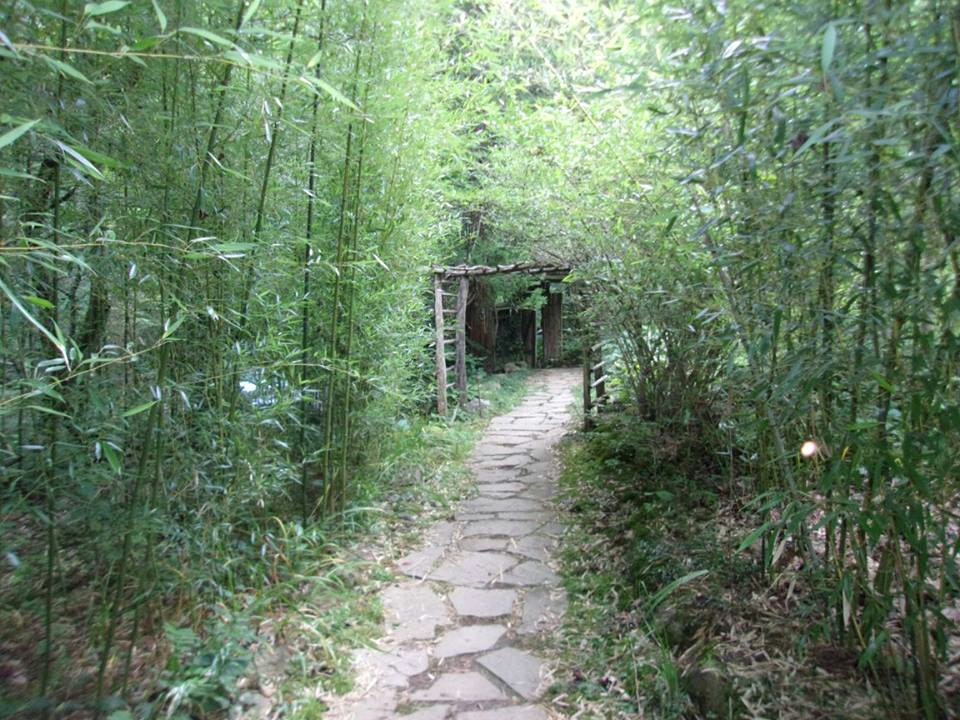
Nature as Teacher is one of the core ecotherapy skills in Mindfulness-Based Ecotherapy, and it rests on a simple but often forgotten truth: the natural world is already instructing you. Whether you are paying attention or not, nature is constantly modeling resilience, adaptation, balance, and renewal. When you approach nature mindfully, you stop treating it as scenery or background noise and begin engaging with it as an active source of learning. In this way, nature becomes not just a place you visit, but a teacher you relate to.

Observing and Reflecting

In Mindfulness-Based Ecotherapy, Nature as Teacher invites you to observe the rhythms, cycles, and processes of the natural world and reflect on how they mirror your own internal experiences. Seasons change without apology. Storms come and go. Trees lose their leaves and grow them back. Nature is a perpetual cycle of birth, growth, and decay. All of it is part of a natural process. Nothing in nature clings to a single state forever, and yet everything belongs. When you allow yourself to learn from these patterns, you begin to see your own emotions, challenges, and transitions differently. Growth no longer feels like a personal failure or moral test. It becomes a natural process.

Nature Teaches Mindful Presence

Mindfulness is essential here because learning from nature requires presence. You cannot learn from what you rush past. When you slow down and observe mindfully, nature starts offering lessons without words. A fallen tree teaches impermanence without judgment. A river teaches persistence without force. A forest teaches interdependence without hierarchy. These lessons land not because you analyze them to death, but because you experience them directly. This is where mindfulness-based ecotherapy differs from abstract self-help concepts. You are not just thinking about resilience. You are watching it happen.

Reframing with Nature as Teacher

Nature as Teacher also helps you reframe struggle. In human culture, struggle is often treated as something gone wrong. In nature, struggle is information. A plant that grows crooked adapts to light. A trail eroded by water reveals where pressure accumulates. When you view your own anxiety, grief, or uncertainty through this lens, you stop asking, “What is wrong with me?” and start asking, “What is this teaching me?” That shift alone can reduce shame and increase self-compassion.

This skill is particularly powerful for people who feel stuck or disconnected from their own intuition. Nature teaches without lectures and without demands. You are free to notice what resonates and leave the rest. A long winter can teach patience. A controlled burn can teach the necessity of endings. Migration can teach you when it is time to move on. These lessons emerge organically when you permit yourself to listen.

Nature Teaches Adaptability

Within the framework of Mindfulness-Based Ecotherapy, Nature as Teacher is not about romanticizing the outdoors or pretending that nature is always gentle. Nature is honest. It includes decay, loss, and disruption alongside beauty and growth. That honesty makes it a trustworthy teacher. When you sit with nature as it is, you learn to sit with yourself as you are. You begin to understand that healing does not mean avoiding pain, but moving through it with awareness and respect.

Over time, engaging with Nature as Teacher strengthens your sense of belonging. You are no longer a separate, broken thing trying to fix yourself. You are part of a living system that knows how to adapt, recover, and continue. That perspective can be deeply regulating for your nervous system and profoundly reassuring during times of change.

Mindfulness-Based Ecotherapy integrates this skill intentionally, helping you translate what you observe in nature into meaningful insights for your daily life. When nature becomes your teacher, learning no longer feels forced. It feels remembered.

To learn more about Mindfulness-Based Ecotherapy and how nature-based practices can support your growth and healing, visit www.mindfulecotherapycenter.com


References

Dahl, C. J., Wilson-Mendenhall, C. D., & Davidson, R. J. (2020). The plasticity of well-being: A training-based framework for the cultivation of human flourishing. Proceedings of the National Academy of Sciences, 117(51), 32197–32206. https://doi.org/10.1073/pnas.2014859117

Kuo, M. (2021). How might contact with nature promote human health? Promising mechanisms and a research agenda. Frontiers in Psychology, 12, 691399. https://doi.org/10.3389/fpsyg.2021.691399

Mathieson, F., Jordan, J. R., & Carter, J. D. (2020). Metaphor in psychotherapy: A systematic review. Clinical Psychology Review, 81, 101892. https://doi.org/10.1016/j.cpr.2020.101892

Neff, K. D., & Germer, C. K. (2022). The mindful self-compassion program: Effects on self-compassion, mindfulness, and well-being. Journal of Clinical Psychology, 78(2), 389–402. https://doi.org/10.1002/jclp.23297

Passmore, H. A., & Howell, A. J. (2020). Nature involvement increases hedonic and eudaimonic well-being: A two-week experimental study. Ecopsychology, 12(1), 1–11. https://doi.org/10.1089/eco.2019.0025

Piff, P. K., Dietze, P., Feinberg, M., Stancato, D. M., & Keltner, D. (2021). Awe, the small self, and prosocial behavior. Journal of Personality and Social Psychology, 120(1), 1–23. https://doi.org/10.1037/pspi0000267

Schutte, N. S., & Malouff, J. M. (2021). Mindfulness and connectedness to nature: A meta-analytic investigation. Personality and Individual Differences, 179, 110984. https://doi.org/10.1016/j.paid.2021.110984


Share Your Thoughts About Nature as Teacher!

What do you think? Share your thoughts in the comments below!


  And don’t forget to subscribe to our newsletter!
Posted on

Nature as Metaphor: A Mindful Way Forward

nature as metaphor

Nature as Metaphor is a core ecotherapy skill that helps you understand your internal world by reflecting it through the natural one. Instead of analyzing your experiences in isolation, you learn to see emotions, thoughts, and life transitions mirrored in forests, rivers, seasons, and ecosystems. Nature becomes a symbolic language, one that often communicates more clearly and compassionately than words alone.

Nature as Metaphor refers to using elements of the natural world as symbolic representations of internal experiences, emotional states, and life processes. When you draw parallels between natural phenomena and your psychological dynamics, insight often arises without force. You do not have to dig for meaning. It emerges organically through observation, reflection, and resonance. Research since 2020 supports the idea that metaphor-based reflection enhances emotional processing, self-understanding, and cognitive flexibility, particularly when paired with mindfulness practices (Stott et al., 2021).

Why Nature as Metaphor Works

Metaphor works because the brain naturally thinks in images and patterns. Long before formal language, humans understood life through cycles, movement, growth, and decay. When you notice that your grief feels like winter, or your anxiety feels like a storm that keeps looming on the horizon without fully breaking, you gain distance without detachment. You are no longer trapped inside the experience. You are in a relationship with it. Studies in psychotherapy research suggest that metaphor allows you to engage difficult emotions safely, reducing defensiveness and increasing insight through externalization (Mathieson et al., 2020).

The Power of Intention

nature as metaphor

In Mindfulness-Based Ecotherapy, Nature as Metaphor is practiced intentionally. You might observe how a river moves around obstacles instead of resisting them and recognize how this mirrors the skill of radical acceptance. You might notice how a tree bends in the wind without snapping and reflect on resilience rather than rigidity. These metaphors are not imposed. They arise through mindful awareness and personal meaning-making. This process strengthens self-trust because the insight comes from your own observation, not external interpretation.

Nature’s cycles are particularly powerful metaphors for change. Growth, decay, rest, and renewal exist simultaneously in healthy ecosystems. When you witness this directly, you may begin to question the belief that you should always be productive, happy, or improving. Ecotherapy research since 2020 highlights that exposure to natural cycles supports emotional regulation and reduces shame by normalizing fluctuation and impermanence (Passmore & Howell, 2020). Nature shows you that pauses are not failures. They are part of the process.

Self-Compassion and Nature

Using nature metaphorically also deepens self-compassion. When you view yourself through mechanistic or moralistic lenses, mistakes feel like flaws. When you view yourself through ecological metaphors, struggle becomes understandable. A burned forest is not broken. It is responding to conditions. A flooded river is not immoral. It is overwhelmed. This shift reduces self-judgment and supports acceptance-based coping, which is strongly linked to psychological well-being (Neff & Germer, 2022).

Mindfulness is essential here. Without mindful awareness, nature becomes scenery. With mindfulness, it becomes communication. You slow down. You notice. You reflect. You allow symbolic meaning to arise rather than forcing interpretation. Research on mindfulness and meaning-making suggests that present-moment awareness enhances your ability to integrate metaphor into self-understanding, supporting emotional clarity and resilience (Dahl et al., 2020).

Nature Offers a New Perspective

Nature as Metaphor also promotes perspective. When you feel overwhelmed, nature reminds you of scale and context. A mountain does not erase your pain, but it may help you see that your current struggle is part of a much larger story. Studies on awe and nature exposure since 2020 show that experiences of vastness reduce rumination and increase cognitive flexibility and prosocial attitudes (Piff et al., 2021). Perspective does not minimize your experience. It softens its grip.

At the Mindful Ecotherapy Center, Nature as Metaphor is taught as a contemplative, experiential skill. You are not asked to interpret nature “correctly.” You are invited to listen. Over time, you begin to recognize that insight does not always come from thinking harder. Sometimes it comes from watching leaves fall, tides turn, or seeds break open underground.

To learn more about Nature as Metaphor and other Mindfulness-Based Ecotherapy skills, visit www.mindfulecotherapycenter.com


References

Dahl, C. J., Wilson-Mendenhall, C. D., & Davidson, R. J. (2020). The plasticity of well-being: A training-based framework for the cultivation of human flourishing. Proceedings of the National Academy of Sciences, 117(51), 32197–32206. https://doi.org/10.1073/pnas.2014859117

Mathieson, F., Jordan, J., & Carter, J. D. (2020). Metaphor in psychotherapy: A systematic review. Clinical Psychology Review, 81, 101892. https://doi.org/10.1016/j.cpr.2020.101892

Neff, K. D., & Germer, C. K. (2022). The mindful self-compassion program: Effects on self-compassion, mindfulness, and well-being. Journal of Clinical Psychology, 78(2), 389–402. https://doi.org/10.1002/jclp.23297

Passmore, H. A., & Howell, A. J. (2020). Nature involvement increases hedonic and eudaimonic well-being: A two-week experimental study. Ecopsychology, 12(1), 1–11. https://doi.org/10.1089/eco.2019.0025

Piff, P. K., Dietze, P., Feinberg, M., Stancato, D. M., & Keltner, D. (2021). Awe, the small self, and prosocial behavior. Journal of Personality and Social Psychology, 120(1), 1–23. https://doi.org/10.1037/pspi0000267


The Mindful Ecotherapy Center on YouTube

Subscribe to the Mindful Ecotherapy Center’s YouTube channel to bring peace, presence, and healing into your daily life. Our videos guide you through mindfulness-based ecotherapy practices, including forest bathing, tree planting rituals, nature meditations, and reflective exercises for grief, stress, and emotional well-being.
Whether you’re seeking to reconnect with the natural world, cultivate inner calm, or find restorative tools for personal growth, our content offers practical guidance, inspiration, and community support. Join us to explore the transformative power of nature and mindfulness, and start your journey toward balance, resilience, and deeper connection today!


Share Your Thoughts!

What do you think? Share your thoughts in the comments below! And don’t forget to subscribe to our newsletter!

Posted on

Connecting: A Healing Path to Presence, Compassion, and Belonging

connecting

At the Mindful Ecotherapy Center, connecting is understood as far more than social interaction. Connecting is a skill. It is the intentional practice of being fully present and genuinely engaged with others in a way that deepens empathy, understanding, and compassion. When you are connecting, you are not waiting to speak, rehearsing your response, or judging what is happening. You are here. You are attentive. You are open to both your own experience and the experience of the person in front of you.

Connecting through Presence

In Mindfulness-Based Ecotherapy, connecting begins with presence. Presence is simply the act of engaging in one-mindfulness by focusing on your direct experience through your senses in the present moment. Without presence, connection collapses into performance or habit. You may appear engaged while internally distracted, defended, or preoccupied. Mindfulness allows you to notice when this happens and gently return your attention to the moment.

Research since 2020 shows that mindful presence in relationships is associated with increased empathy, emotional attunement, and relationship satisfaction, largely because it reduces automatic judgment and reactivity (Kozlowski et al., 2021).

Attentive Listening in Being Mode

Connecting involves attentive listening, where you are focused not only on words but also on tone, pace, and emotional undercurrents. It includes open-hearted communication, where you speak honestly without attacking or withdrawing. Just as importantly, it involves non-judgmental awareness of what is arising in you. You may notice defensiveness. You may notice discomfort. You may notice warmth or resonance. Instead of acting on these impulses, you allow them to exist without feeling the need to react to them. This creates psychological space, which is where empathy lives.

Connecting in the Moment

When you practice connecting this way, you stop treating relationships as problems to solve or roles to perform. You meet people as they are, in this moment. Studies on interpersonal mindfulness demonstrate that this stance increases compassion and decreases conflict escalation, because people feel seen rather than evaluated (Donald et al., 2020). Connection thrives when judgment softens.

From an ecotherapy perspective, connecting is not limited to human relationships. It is a relational orientation that extends outward. When you feel disconnected from yourself or others, your relationship with the natural world often reflects that same fragmentation. Mindfulness-Based Ecotherapy recognizes that reconnection happens across systems, internal, interpersonal, and ecological. Nature can support this process by regulating your nervous system and reminding you that connection does not require force. It requires attention.

Connection and Ecospirituality

This is where ecospirituality becomes relevant. In ecospirituality, spirituality is defined as inspirational connecting.” This definition removes spirituality from doctrine and places it firmly in lived experience. Spirituality is not about belief. It is about connection that inspires meaning, humility, and care. When you feel deeply connected, whether to another person, a forest, or something larger than yourself, your sense of isolation softens. Research since 2020 supports this framing, showing that experiences of connection and awe are associated with increased prosocial behavior and psychological well-being (Piff et al., 2021).

Connection and Empathy

Connecting also requires vulnerability. You cannot truly connect while armoring yourself against discomfort. This does not mean oversharing or abandoning boundaries. It means allowing yourself to be affected by others while remaining grounded in your own experience. Mindfulness helps you stay regulated while being open. Ecotherapy helps by providing relational templates. In nature, connection does not demand perfection. A forest allows diversity, decay, and growth to coexist. When you absorb this lesson somatically, it becomes easier to extend the same compassion to yourself and others.

Over time, practicing connecting in this way changes how you experience relationships. You listen more deeply. You speak more honestly. You react less defensively. You experience compassion not as an obligation but as a natural outcome of presence. Connection becomes less exhausting because you are no longer managing impressions. You are simply participating.

Connection as a Skill

At the Mindful Ecotherapy Center, connecting is taught as a skill that can be practiced, strengthened, and repaired. You do not need to be perfectly calm or endlessly empathetic. You need to be present, willing, and kind enough to notice what is happening without judgment.

To learn more about connecting and other Mindfulness-Based Ecotherapy skills, visit www.mindfulecotherapycenter.com


References

Donald, J. N., Atkins, P. W. B., Parker, P. D., Christie, A. M., & Ryan, R. M. (2020). Daily stress and the benefits of mindfulness: Examining the daily and longitudinal relations between present-moment awareness and stress outcomes. Journal of Personality, 88(4), 759–775. https://doi.org/10.1111/jopy.12509

Kozlowski, A., Hutchinson, D., Hurley, J., & Browne, G. (2021). The role of mindfulness in interpersonal relationships: A systematic review. Mindfulness, 12(6), 1458–1472. https://doi.org/10.1007/s12671-021-01604-8

Piff, P. K., Dietze, P., Feinberg, M., Stancato, D. M., & Keltner, D. (2021). Awe, the small self, and prosocial behavior. Journal of Personality and Social Psychology, 120(1), 1–23. https://doi.org/10.1037/pspi0000267


Share Your Thoughts About Connecting!

What do you think? Share your thoughts in the comments below!


  And don’t forget to subscribe to our newsletter!