
Posted on

The Adverse Childhood Experiences Study and Mental and Physical Health

ACEs Study

The Adverse Childhood Experiences (ACEs) Study is a groundbreaking research project that has transformed our understanding of how early-life trauma impacts long-term health. Conducted by the Centers for Disease Control and Prevention (CDC) and Kaiser Permanente, the study revealed a strong correlation between childhood adversity and a wide array of mental and physical health issues in adulthood. This blog explores the ACEs Study, its implications for health, and how Mindfulness-Based Ecotherapy (MBE) can offer a pathway to healing.

What is the ACEs Study?

The ACEs Study evaluates the impact of adverse experiences during childhood, such as abuse, neglect, and household dysfunction. Participants answer questions across ten categories:

  1. Physical abuse
  2. Emotional abuse
  3. Sexual abuse
  4. Physical neglect
  5. Emotional neglect
  6. Parental separation or divorce
  7. Household substance abuse
  8. Household mental illness
  9. Domestic violence
  10. Incarcerated household member

Each positive response counts as one ACE. Higher ACE scores correlate with increased risks of health challenges such as depression, anxiety, chronic diseases, and even early death.

ACEs Survey:

  1. Did a parent or other adult in your household often or very often… swear at you, insult you, put you down, or humiliate you? Or act in a way that made you afraid you might be physically hurt?
  2. Did a parent or other adult in your household often or very often… push, grab, slap, or throw something at you? Or ever hit you so hard that you had marks or were injured?
  3. Did an adult or person at least 5 years older than you ever… touch or fondle you in a sexual way? Or have you touch their body in a sexual way? Or attempt or actually have oral, anal, or vaginal intercourse with you?
  4. Did you often or very often feel that… no one in your family loved you or thought you were important or special? Or your family didn’t look out for each other, feel close to each other, or support each other?
  5. Did you often or very often feel that… you didn’t have enough to eat, had to wear dirty clothes, and had no one to protect you? Or your parents were too drunk or high to take care of you or take you to the doctor if you needed it?
  6. Were your parents ever separated or divorced?
  7. Was your mother or stepmother: Often or very often pushed, grabbed, slapped, or had something thrown at her? Or sometimes, often, or very often kicked, bitten, hit with a fist, or hit with something hard? Or ever repeatedly hit over at least a few minutes or threatened with a gun or knife?
  8. Did you live with anyone who was a problem drinker or alcoholic or who used street drugs?
  9. Was a household member depressed or mentally ill, or did a household member attempt suicide?
  10. Did a household member go to prison?
ACEs Study mindfulness

Impacts of ACEs on Health

The ACEs Study uncovered that individuals with higher ACE scores are at greater risk for the following:

  • Mental Health Issues: Depression, anxiety, PTSD, and suicidal ideation are common among those with high ACE scores.
  • Physical Health Problems: Chronic diseases such as heart disease, diabetes, and autoimmune disorders are more prevalent in those with childhood trauma.
  • Behavioral Challenges: Increased likelihood of substance abuse, risky behaviors, and difficulty forming healthy relationships.
  • Shortened Lifespan: Studies indicate a reduced life expectancy of up to 20 years for those with the highest ACE scores.

Healing Through Mindfulness-Based Ecotherapy

Mindfulness-Based Ecotherapy (MBE) is a therapeutic approach that combines mindfulness practices with nature-based activities. It is particularly effective for individuals recovering from childhood trauma and attachment disorders. Here’s how MBE can help:

1. Rebuilding Secure Attachments

ACEs often disrupt the ability to form secure relationships. MBE includes exercises like grounding and mindful observation in natural settings, fostering a sense of safety and connection. These practices encourage individuals to rebuild trust—both in themselves and in their environment.

2. Managing Stress and Anxiety

MBE techniques such as mindful breathing, walking meditations, and sensory awareness exercises help regulate the nervous system. These activities mitigate the hyperarousal and emotional dysregulation common in individuals with high ACE scores.

3. Fostering Resilience

By engaging in eco-art activities like sandtray therapy or nature journaling, participants can explore their trauma narratives in a non-threatening way. These creative outlets enable them to reframe their experiences, cultivating resilience and empowerment.

4. Improving Physical Health

Spending time in nature has been shown to lower blood pressure, reduce inflammation, and improve overall physical health. The incorporation of mindfulness enhances these benefits by reducing chronic stress, a key factor linking ACEs to poor health outcomes.

5. Encouraging Emotional Regulation

Nature-based mindfulness exercises encourage individuals to stay present and process emotions as they arise. Over time, these practices strengthen emotional regulation skills, reducing symptoms of PTSD and anxiety.

Conclusion

The ACEs Study has provided invaluable insights into how childhood adversity impacts health across the lifespan. While the effects of high ACE scores can be profound, healing is possible. Mindfulness-Based Ecotherapy offers a holistic approach to addressing trauma, fostering resilience, and improving both mental and physical health. By integrating mindfulness practices with the healing power of nature, MBE provides a pathway for individuals to reclaim their well-being and build a brighter future.

If you or someone you know has experienced childhood trauma, consider exploring Mindfulness-Based Ecotherapy as a powerful tool for healing and growth.


Share Your Thoughts on the Adverse Childhood Experiences Study!

Do you find the ACE Study useful? Share your thoughts in the comments below!

Don’t forget to check out our YouTube Channel!


Posted on

How Depression Affects Your Brain and Body

depression affects body and brain

Depression affects millions worldwide, leaving a profound impact on both the brain and body. While its emotional toll is often the most recognized, depression’s physical effects can be just as debilitating. Understanding these effects and how therapeutic interventions like Mindfulness-Based Ecotherapy (MBE) can provide relief is crucial for those seeking holistic approaches to mental health.

The Brain Under Depression

Depression affects more than just mood; it fundamentally changes how the brain operates. Key areas affected include:

  1. Hippocampus: This region, responsible for memory and learning, often shrinks in people with chronic depression. Prolonged exposure to stress hormones like cortisol can damage hippocampal cells, leading to memory issues and difficulty concentrating.
  2. Prefrontal Cortex: Essential for decision-making, emotional regulation, and planning, the prefrontal cortex becomes less active during depressive episodes. This contributes to the feelings of hopelessness and indecision commonly associated with depression.
  3. Amygdala: Often referred to as the brain’s emotional center, the amygdala becomes hyperactive during depression. This heightened activity can exacerbate anxiety and intensify negative emotions, creating a cycle of emotional overwhelm.

How Depression Affects the Body

Depression affects the body as well as the brain in the following ways:

  • Immune System: Chronic depression weakens the immune system, making individuals more susceptible to infections and illnesses.
  • Cardiovascular System: Depression affects the risk of heart disease due to elevated stress hormones and unhealthy lifestyle choices often accompanying the condition.
  • Digestive Issues: The gut-brain axis highlights the connection between mental health and digestion. Depression affects stomach problems, appetite changes, and irritable bowel syndrome (IBS).
  • Chronic Pain: Depression affects the body physically through unexplained aches and pains, further compounding emotional distress.

The Role of Mindfulness-Based Ecotherapy

Mindfulness-Based Ecotherapy (MBE) is an innovative therapeutic approach that combines the principles of mindfulness and nature-based practices. By engaging clients in outdoor, mindful activities, MBE fosters a deeper connection to the natural world, promoting mental and physical well-being. Here’s how it can help counteract depression:

  1. Reducing Cortisol Levels Spending time in nature has been shown to lower cortisol levels, the primary stress hormone linked to depression. Activities like mindful walking, forest bathing, or simply observing natural surroundings can calm the mind and body, reducing stress.
  2. Enhancing Neuroplasticity MBE encourages practices that stimulate neuroplasticity, the brain’s ability to adapt and rewire itself. Mindfulness exercises improve the functioning of the prefrontal cortex, helping to regulate emotions and restore a sense of control.
  3. Improving Physical Health Engaging in gentle outdoor activities can boost physical health by improving cardiovascular function, enhancing immune response, and alleviating chronic pain. These benefits create a positive feedback loop that supports mental health recovery.
  4. Promoting Mindful Awareness Depression affects individuals by trapping them in cycles of rumination and negative thinking. MBE teaches mindfulness techniques to interrupt these cycles, fostering greater awareness of the present moment and reducing the grip of depressive thoughts.
  5. Building a Sense of Connection Isolation is a hallmark of depression. By encouraging interaction with nature and participation in group activities, MBE helps individuals feel connected—both to their environment and others—alleviating feelings of loneliness.

Practical Steps to Incorporate Mindfulness-Based Ecotherapy

If you’re interested in exploring MBE, here are some practical ways to start:

  1. Mindful Walking: Take a walk in a natural setting, focusing on the sensations of your steps, the sounds of the environment, and the rhythm of your breath.
  2. Nature Journaling: Spend time observing a tree, flower, or landscape, then write about what you notice. This practice can enhance your connection to the natural world.
  3. Eco-Art Therapy: Use natural materials like leaves, stones, or twigs to create art. This creative outlet can help you express emotions and foster a sense of accomplishment.
  4. Forest Bathing: Immerse yourself in a forested area, engaging all your senses to experience the environment fully.

Why Choose MBE for Depression?

Mindfulness-Based Ecotherapy offers a holistic approach that addresses the interconnectedness of mental, physical, and emotional health. By leveraging the therapeutic power of nature and mindfulness, MBE provides a refreshing alternative to traditional treatments. It’s particularly effective for individuals seeking non-pharmaceutical options or complementary therapies to enhance their overall well-being.

Final Thoughts

Depression is a complex condition that requires comprehensive care. While its effects on the brain and body can be profound, approaches like Mindfulness-Based Ecotherapy offer hope and healing. By reconnecting with nature and cultivating mindfulness, individuals can find relief from depressive symptoms and embark on a path toward lasting recovery. If you or someone you know is struggling with depression, consider exploring the transformative potential of MBE as part of your mental health journey.


Share Your Thoughts on Depression!

Do you suffer from depression? What helps? Share your thoughts in the comments below!

Don’t forget to check out our YouTube channel!


Posted on

Overcome the Top 10 Mental Disorders with Mindfulness-Based Ecotherapy

mental disorder

The top ten mental disorders are health challenges that are a growing concern worldwide, with millions of individuals affected by them. While traditional therapies are highly effective, incorporating mindfulness-based ecotherapy (MBE) offers a unique, nature-centered approach to enhancing mental health. This post explores the top ten mental disorders and how MBE can play a transformative role in treatment.


1. Anxiety Disorders

By far the number one type of mental disorder, anxiety disorders, including generalized anxiety disorder (GAD), social anxiety, and panic disorders, affect over 40 million adults in the United States annually. These conditions manifest as excessive worry, fear, and physical symptoms like a racing heart.

How MBE Helps:
Mindfulness-based ecotherapy encourages grounding techniques and exposure to nature, which reduces anxiety. Activities like forest bathing and mindful walking help regulate breathing and calm the mind.


2. Depression

Depression, the number two most common mental disorder, is characterized by persistent sadness, fatigue, and loss of interest in activities. Depression is a leading cause of disability worldwide.

How MBE Helps:
Being in natural settings stimulates the production of serotonin and dopamine, hormones responsible for mood regulation. Mental disorders like depression are caused by a deficit of these hormones. Nature-based mindfulness exercises promote a sense of connection and purpose, alleviating depressive symptoms.


3. Bipolar Disorder

Bipolar disorder involves dramatic shifts in mood, energy, and activity levels, alternating between manic and depressive episodes. In many cases, bipolar disorder is a debilitating mental disorder unless properly treated.

How MBE Helps:
Mindfulness techniques in natural settings help individuals recognize early signs of mood shifts. Practicing eco-art therapy, such as creating mandalas from natural materials, fosters emotional stability and self-expression.


4. Obsessive-Compulsive Disorder (OCD)

OCD is marked by intrusive thoughts and repetitive behaviors. People with OCD often struggle with stress and perfectionism.

How MBE Helps:
Mindfulness practices encourage acceptance of intrusive thoughts without judgment. Ecotherapy activities like gardening promote a healthy focus and reduce compulsive tendencies.


5. Post-Traumatic Stress Disorder (PTSD)

PTSD develops after exposure to traumatic events, leading to flashbacks, nightmares, and heightened anxiety.

How MBE Helps:
Nature therapy provides a safe space to process trauma. Techniques, like guided mindfulness meditations in calming natural environments, reduce hyperarousal and promote a sense of safety.


6. Eating Disorders

Conditions such as anorexia, bulimia, and binge eating disorder stem from unhealthy relationships with food and body image.

How MBE Helps:
Practicing mindfulness outdoors encourages body positivity and self-compassion. Mindful eating exercises, such as savoring natural foods during picnics, reconnect individuals with the joy of nourishment.


7. Attention Deficit Hyperactivity Disorder (ADHD)

ADHD affects attention, impulsivity, and hyperactivity, making it difficult for individuals to focus or stay organized.

How MBE Helps:
Nature-based activities help improve focus and reduce overstimulation. Structured outdoor games that require attention and teamwork can enhance cognitive skills in children and adults with ADHD.


8. Substance Use Disorders

Substance use disorders involve dependence on drugs or alcohol, often as a coping mechanism for underlying mental health issues.

How MBE Helps:
Ecotherapy provides alternative coping strategies by fostering resilience and emotional regulation. Activities like hiking and journaling in nature aid in recovery by building self-worth and creating healthier routines.


9. Schizophrenia

Schizophrenia is a severe mental disorder involving hallucinations, delusions, and disorganized thinking.

How MBE Helps:
While not a replacement for medical treatment, mindfulness in nature can help reduce stress and improve social interactions. Ecotherapy sessions in group settings encourage connection and reduce isolation.


10. Borderline Personality Disorder (BPD)

BPD is characterized by emotional instability, fear of abandonment, and difficulty maintaining relationships.

How MBE Helps:
Mindfulness-based ecotherapy helps individuals with BPD develop emotional regulation skills. Mindful observation of nature, such as watching flowing water, mirrors the process of letting emotions pass without acting on them.


Why Mindfulness-Based Ecotherapy Works

MBE integrates mindfulness with ecotherapy principles, promoting healing through nature’s therapeutic power. Key benefits include:

  • Stress Reduction: Time in nature lowers cortisol levels.
  • Enhanced Mood: Natural environments boost serotonin production.
  • Improved Focus: Mindfulness practices foster attention and clarity.
  • Community Connection: Group ecotherapy fosters support and reduces loneliness.

Incorporating MBE into Mental Health Treatment

Mindfulness-based ecotherapy complements traditional therapies and can be tailored to individual needs. Simple practices include:

  • Mindful Breathing in Nature: Focus on your breath while surrounded by trees.
  • Eco-Art Therapy: Use natural materials to create expressive art.
  • Nature Journaling: Reflect on feelings while observing your environment.
  • Forest Bathing: Immerse yourself in the sights and sounds of a forest.

Conclusion

The challenges posed by mental disorders require innovative and holistic approaches to treatment. Mindfulness-based ecotherapy offers a bridge between modern therapy and nature’s timeless wisdom, providing tools for healing, connection, and personal growth.

By integrating MBE into mental health care, individuals can rediscover balance, resilience, and a renewed sense of purpose. Explore this transformative approach to see how it can improve mental health and well-being.


Share Your Thoughts!

What do you think? Share your thoughts in the comments below!


  And don’t forget to subscribe to our newsletter!

Posted on

Mindful Acceptance: Letting Go with Mindfulness-Based Ecotherapy

mindful acceptance

“Never underestimate your power to change yourself; never overestimate your power to change others.”

— H. Jackson Brown, Jr.

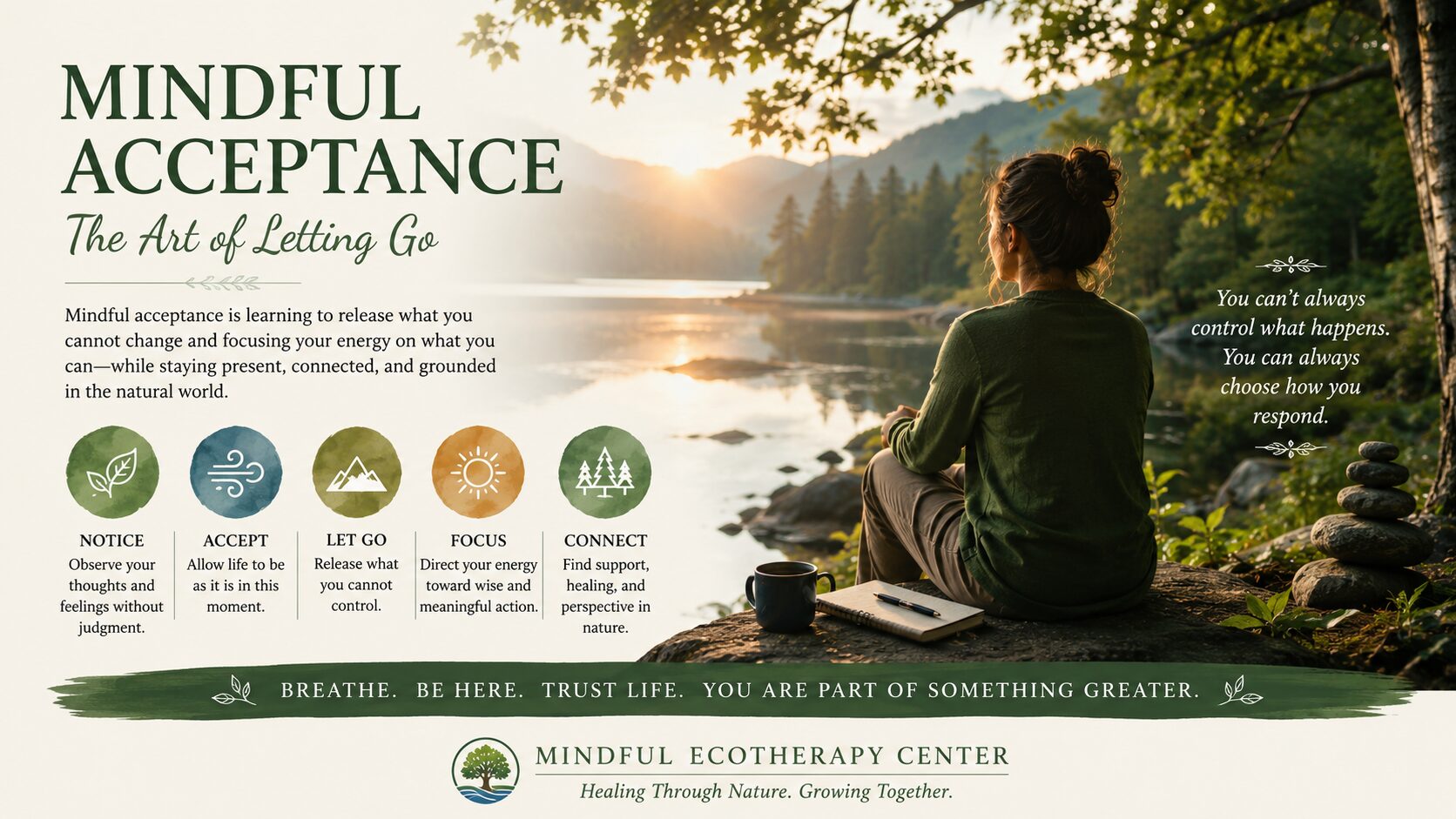
One of the most powerful skills in mindfulness-based ecotherapy is mindful acceptance. Mindful acceptance is the art of letting go of unnecessary suffering while remaining fully present with life as it is. Unlike some approaches that focus only on changing thoughts or managing symptoms internally, mindfulness-based ecotherapy (MBE) emphasizes reconnecting with the natural world, the body, the senses, and the present-moment experience as pathways toward healing and resilience.

Mindfulness-based ecotherapy differs from many traditional mindfulness practices because it does not view mindfulness as something that occurs only inside the mind. Instead, MBE recognizes that humans are part of an interconnected ecological system. Healing happens not only through awareness of thoughts and emotions, but also through restoring a relationship with the earth, the body, community, and the rhythms of nature itself.

The skill of mindful acceptance teaches you to recognize the difference between what you can change and what you cannot. Once you have done everything realistically within your power to address a problem, continued anxiety and rumination no longer serve a useful purpose. At that point, mindful acceptance asks you to loosen your grip on the stress attached to the situation.

Mindful Acceptance Doesn’t Mean Giving Up

Importantly, letting go of anxiety does not necessarily mean giving up on solving the problem.

Suppose you have a car payment due and you do not currently have the money to pay it. Naturally, this situation may trigger fear, worry, and stress. You may brainstorm solutions, ask for help, reduce expenses, or search for additional income. However, once you have taken every practical step available in the present moment, the constant cycle of worry becomes emotionally exhausting and often counterproductive.

In mindfulness-based ecotherapy, one of the twelve core skills involves learning to observe your thoughts and feelings nonjudgmentally while grounding yourself in sensory awareness. You might sit outdoors beneath a tree, feel your feet on the earth, notice the movement of the wind, or listen to birdsong while observing the anxious thoughts moving through your awareness. Nature becomes an anchor that reminds you that life continues unfolding even during uncertainty.

Unlike purely cognitive approaches that may focus primarily on changing thought patterns, MBE integrates embodied awareness and ecological connection. The natural world helps regulate the nervous system by drawing your attention away from repetitive mental loops and back into the present moment.

Mindful Acceptance, Observing, and Describing

Another essential MBE skill is mindful observing. Instead of immediately reacting to anxiety, you learn to notice it with curiosity. What does the anxiety feel like in your body? Is your chest tight? Is your breathing shallow? Are your thoughts racing toward worst-case scenarios? By observing rather than fighting the experience, you create space between yourself and the anxiety.

This space allows you to make conscious decisions rather than reacting automatically.

The same principle applies in relationships. Imagine you feel disconnected from your partner because they rarely spend time with you. You suggest activities, initiate conversations, and communicate your feelings honestly, yet nothing changes. Many people respond to this situation by escalating their efforts to control the outcome. They may criticize, plead, withdraw emotionally, or become consumed with resentment.

Mindfulness-based ecotherapy approaches this differently.

Self-Compassion and Mindful Acceptance

One of the MBE skills involves recognizing the limits of personal control while strengthening self-awareness and self-compassion. You cannot force another person to change. However, you can change how you respond internally and externally. Practicing mindful acceptance means acknowledging your sadness, frustration, or disappointment without allowing those emotions to dominate your life.

In ecotherapy, the natural world often serves as a mirror for this process. Seasons change without resistance. Trees release leaves when it is time to let go. Rivers flow around obstacles instead of endlessly struggling against them. Nature teaches flexibility, adaptation, and resilience.

This ecological perspective is one of the major ways MBE differs from other mindfulness approaches. While many mindfulness practices emphasize internal awareness alone, mindfulness-based ecotherapy intentionally uses nature as both teacher and therapeutic partner.

Another of the twelve skills of MBE involves reducing rumination through present-moment sensory grounding. Rumination occurs when the mind repeatedly replays fears, regrets, or imagined future disasters. The more mental energy you feed into these cycles, the stronger they become.

Mindful acceptance interrupts this process.

You may notice the anxious thought arise, acknowledge it compassionately, and then redirect your awareness toward immediate sensory experience: the smell of rain, the warmth of sunlight, the sound of leaves moving in the wind, or the sensation of breathing deeply in fresh air. These practices help regulate emotional overwhelm by reconnecting you with the physical world instead of remaining trapped inside mental narratives.

Anxiety Has a Purpose

Mindfulness-based ecotherapy also recognizes that anxiety itself has a purpose. Anxiety evolved as a protective system designed to alert us to danger. In mindful acceptance, you are not trying to destroy anxiety or suppress difficult emotions. Instead, you learn to relate to them differently.

You might silently say:

“Thank you, anxiety, for trying to protect me. I am listening carefully, but I will also trust my own wisdom.”

This compassionate inner dialogue reflects another MBE principle: developing a collaborative relationship with your emotions instead of waging war against them.

Finally, mindful acceptance teaches that mistakes are not evidence of failure, but growth opportunities. In nature, growth rarely occurs without struggle. Forests regenerate after fires. Rivers carve canyons through persistence over time. Ecosystems adapt continuously to changing conditions.

Human beings are no different.

Every mistake contains information that can deepen wisdom, resilience, and self-understanding. Through mindful acceptance, you learn that healing does not require perfection. It requires awareness, compassion, flexibility, and the willingness to remain present even during uncertainty.

Mindfulness-based ecotherapy reminds you that while you cannot always control life’s circumstances, you can learn to live more peacefully within them. By reconnecting with nature, practicing mindful awareness, and letting go of unnecessary struggle, you create space for healing, growth, and inner balance.


Share Your Thoughts About Mindful Acceptance!

What do you think? Share your thoughts in the comments below!


  And don’t forget to subscribe to our newsletter!
Posted on

Learning to be Mindful: The Fisherman and His Son

fisherman and his son

The Fisherman and His Son is a parable that illustrates how to be mindfully intentional. It’s been said that the definition of insanity is “Doing the same thing in the same way and expecting different results.” In other words, if what you’re doing isn’t working, doing more of the same isn’t likely to work either. It may be time to do something different.

Mindfulness is a way to do something different.

When we commit to change, it sometimes feels strange at first. If you think about it, this only makes sense because if it didn’t feel weird, you’d probably already be doing it. Sometimes you have to think outside the box to get the change you want. This parable illustrates the concept of being open to trying something new, even if it feels strange at first.

The Fisherman and His Son: A Mindful Parable

A fisherman and his son were at sea, going about the daily tasks of catching enough fish to make their living. It was a beautiful spring day, and they were both enjoying the ocean. They were having a particularly good day. They had caught many fish, and they were ready to turn for home and make their way back to the shore when the fisherman noticed a tiny leak at the bow of the boat. The boat was slowly filling up with water. While the leak wasn’t a big one, they both realized that the boat would be full of water before they could row back to shore.

The father and son began to panic as they thought of the prospect of losing not only their boat, but the fine catch they had made that day. In his panic, the father suddenly seized upon an idea. He grabbed the oar and punched a hole in the side of the boat.

The son thought his fisherman father had gone mad. “What are you doing?” the son shouted.

The father replied, “I’m punching a hole in the bottom of the boat so the water can flow out!”

They both watched in horror as more water rushed into the boat the father had made. Seeing that his idea had not succeeded, but had only made things worse, the father began to furiously punch even more holes in the bottom of the boat.

The son, upon seeing this, yelled at his father, “Will you please stop it? Can’t you see you are only making things worse?”

But the fisherman said, “No, my idea will work! I just didn’t have enough holes in the boat! If I keep punching holes in the boat, the water will eventually flow out!”

The son watched helplessly as the father, in a frenzy, continued to batter more holes into the hull of the boat. Finally, the boat overflowed, sinking to the bottom of the sea and taking the catch of the day with it. The father and son had to swim to shore.

Upon arriving at the shore, totally exhausted, they both realized that they had not only lost a fine catch, but they had also lost their means of making a living. With the boat gone, they could no longer be fishermen. With great sadness, they turned to make their way home, wondering about what they’d do to survive in the future.

To think about

What solutions to problems have you been trying that only make the problem worse? How could you make it better instead? If what you’re doing isn’t working, could it be time to try something different?


Share Your Thoughts About The Fisherman and His Son!

What do you think? Share your thoughts in the comments below!


  And don’t forget to subscribe to our newsletter!

Posted on

What is Ecotherapy?

ecotherapy
Ecotherapy

For most of its existence, homo sapiens has lived in harmony with nature as hunter/gatherers. Such a lifestyle requires a vast knowledge of the seasons, and of the patterns and habits of wildlife, and of plants and herbs and their healing powers. Industrialization and urbanization are fairly recent phenomena on an evolutionary scale. We still carry the genetic memory of our ancestors who lived in untamed nature. Our brains are wired for the outdoors and nature. A growing body of research demonstrates that not only do we feel better when we make time for nature, but it is also actually a requirement for good physical and mental health!

Ecopsychology and Ecotherapy

The field of ecopsychology studies how humans interact with nature. Ecopsychology is a philosophy combining elements of psychology and ecology. It is the philosophy that mental health is contingent upon the health of the environment. Humankind and the environment are part of an interrelated system. We are not separate from nature. We are a part of nature.

ecotherapy

Ecopsychology suggests that there is a synergistic relation between planetary and personal well-being; that the needs of the one are relevant to the needs of the other. In short, what we do to the environment, we do to ourselves. Ecotherapy is the practical application of this knowledge. In ecotherapy, nature is the “therapist.” In practicing the techniques of ecotherapy, we allow the healing power of nature to work its magic on us. Hölzel et al (2011) demonstrated that meditative states of mindfulness stimulate neural growth in the cerebral cortex in the areas of the brain responsible for emotional regulation, good judgment, insight, and impulse control. Nature experiences have been demonstrated in several studies to produce meditative states (fascination, relaxation, and mindfulness).

Ecotherapy: Natural Experiences with Nature

Experiences in and with nature, or natural experiences, are ways in which we consciously choose to allow nature to work its healing magic on us. Some types of natural experiences include:

Facilitated Wilderness Experiences

In these types of experiences, a trained facilitator takes you into the woods for an adventure. These events can be anything from a wilderness experience in ecotherapy led by a therapist or counselor to a hunting trip led by a wilderness guide. Kuo & Taylor (2004) demonstrated that therapy and other activities conducted in outdoor settings reduced symptoms of Attention-Deficit Hyperactivity Disorder. Whittington (2006) found that wilderness skills training gave adolescent girls increased self-esteem and self-confidence and helped to shatter gender stereotypes.

Animal-Assisted Therapy

Animal therapy in the form of contact with pets and/or wild or domesticated animals enhances self-actualization and can lessen symptoms of depression. Antonioli & Reveley (2005) found that simply swimming with dolphins can greatly reduce symptoms of depression. Other studies have shown that owning pets, or even just watching fish in an aquarium, can greatly reduce stress. Equine Therapy uses horses to facilitate mental and physical well-being. There are many other ways that animals can help us lead happier lives, as any pet owner can tell you!

Therapeutic Gardens

Sempik & Spurgeon (2006) demonstrated that therapeutic gardening reduces stress and lessens symptoms of depression. Blair (2009) discovered that gardening can be used as a means of helping school children to enhance self-sufficiency, social identity, meaning, and self-integration. There’s just something very healing about planting something and nurturing it as you watch it grow.

Vacations

Berto (2014) discovered that outdoor activities reduce stress and restore energy. If you’ve ever had to miss a vacation, you’re probably painfully aware of the regenerative power of taking a week or so off to spend time in nature. Cole (2012) found that you don’t need a facilitator or guide to enjoy health and well-being benefits from the use of wilderness areas. There’s a reason we’re attracted to beaches and national parks!

Architecture Incorporating Natural Spaces

Nature can be incorporated into the home environment through the use of plants, an aquarium, or even recorded nature sounds. Alvarsson et al (2010) studied the positive mental health effects of listening to nature sounds.

Outdoor Classrooms

Dennis, Wells & Bishop (2014) revealed that outdoor classrooms enhanced many critical factors of the educational experience, including: Enhanced retention, better focus, more attention to detail, less hyperactivity, more relaxation, increased confidence and self-esteem, and better cognitive functioning

Why Mindfulness-Based Ecotherapy?

Mindfulness-based ecotherapy (MBE) enhances traditional ecotherapy by combining the restorative benefits of nature with the self-regulation and awareness skills cultivated through mindfulness practices. Ecotherapy alone has been shown to reduce stress, improve mood, and increase feelings of connectedness to the natural environment (Berto, 2014).

By integrating mindfulness, participants are encouraged to attend fully to present-moment sensory experiences within natural settings, which can deepen emotional processing, reduce rumination, and amplify psychological restoration (Kabat-Zinn, 2003). This combination strengthens the therapeutic impact, particularly for individuals prone to anxiety or depression, by not only providing exposure to nature but also fostering intentional engagement with it. Mindfulness enhances attentional control, allowing participants to notice subtle natural cues, reflect without judgment, and cultivate a sense of grounded presence, thereby making ecotherapy sessions more effective and transformative (Berto, 2014; Kabat-Zinn, 2003).


References

Alvarsson JJ, Wiens S, Nilsson ME. Stress recovery during exposure to nature sound and environmental noise. Int J Environ Res Public Health. 2010 Mar;7(3):1036-46. doi: 10.3390/ijerph7031036. Epub 2010 Mar 11. PMID: 20617017; PMCID: PMC2872309.

Antonioli C, Reveley MA. Randomised controlled trial of animal facilitated therapy with dolphins in the treatment of depression. BMJ. 2005 Nov 26;331(7527):1231. doi: 10.1136/bmj.331.7527.1231. PMID: 16308382; PMCID: PMC1289317.

Berto, R. (2014). The role of nature in coping with psycho-physiological stress: A literature review on restorativeness. Behavioral Sciences, 4(4), 394–409. https://doi.org/10.3390/bs4040394

Blair, D. (2009). The child in the garden: An evaluative review of the benefits of school gardening. Journal of Environmental Education, 40(2), 15–38.

Cole, D. N. (2012). Wilderness visitor experiences: A selective review of 50 years of research. Park Science, 28(3), Winter 2011‑2012. https://www.fs.usda.gov/rm/pubs_other/rmrs_2012_cole_d001.pdf

Dennis, S. F., Wells, A., & Bishop, C. (2014). A post-occupancy study of nature-based outdoor classrooms in early childhood education. Children, Youth and Environments, 24(2). https://doi.org/10.7721/chilyoutenvi.24.2.0035

Fieldhouse J, Sempik J. ‘Gardening without Borders’: Reflections on the Results of a Survey of Practitioners of an ‘Unstructured’ Profession. British Journal of Occupational Therapy. 2007;70(10):449-453. doi:10.1177/030802260707001006

Hölzel BK, Carmody J, Vangel M, Congleton C, Yerramsetti SM, Gard T, Lazar SW. Mindfulness practice leads to increases in regional brain gray matter density. Psychiatry Res. 2011 Jan 30;191(1):36-43. doi: 10.1016/j.pscychresns.2010.08.006. Epub 2010 Nov 10. PMID: 21071182; PMCID: PMC3004979.

Kabat-Zinn, J. (2003). Mindfulness-based interventions in context: Past, present, and future. Clinical Psychology: Science and Practice, 10(2), 144–156. https://doi.org/10.1093/clipsy/bpg016

Taylor AF, Kuo FE. Children with attention deficits concentrate better after walk in the park. J Atten Disord. 2009 Mar;12(5):402-9. doi: 10.1177/1087054708323000. Epub 2008 Aug 25. PMID: 18725656.


Share Your Thoughts!

What do you think? What courses would you like the Mindful Ecotherapy Center to add in the future? Share your thoughts in the comments below! And don’t forget to subscribe to our newsletter!
Posted on

Upstairs Brain vs. Downstairs Brain

upstairs brain nature rewires the brain
upstairs brain

Feelings of depression, anxiety, sadness, and other emotions are generated in a part of the brain called the limbic system. This ‘downstairs’ portion of the brain is only interested in three things: Fighting, fleeing, or freezing. In ‘fight’ mode, the downstairs brain wants to protect you from harm by fighting against the threat. When it is triggered, your heart may race, your palms may get sweaty, and you may have a sharp increase in irritability and anger. In ‘flee’ mode, you may experience a similar adrenaline rush, but in this instance, your brain is preparing your body to run away from the danger. In ‘freeze’ mode, we tend to retreat inside ourselves. This is the deer-in-the-headlights feeling of “If I’m very quiet and still, the bad thing won’t see me.”

How the Upstairs Brain Interacts with the Downstairs Brain

Whether you’re in fight, flee, or freeze mode, your downstairs brain is preparing you to deal with a real or perceived threat in the only way it knows how. When your downstairs brain is engaged, the upstairs part of your brain tends to get overwhelmed. The upstairs brain, which consists of the neocortex of the brain, is the part responsible for thinking things through, figuring things out, and solving problems. When the downstairs brain takes over, the upstairs brain is out to lunch. That’s why when you’re emotionally overwhelmed, it is nearly impossible to figure out a way to deal with it. The upstairs brain is all about finding solutions to problems, but the downstairs brain is all about fighting, fleeing, or freezing. When your upstairs brain is overwhelmed, thinking things over isn’t going to work. That’s because at that point, your downstairs brain is in charge. For those times when your downstairs brain is running the show, mindfulness is a way of disengaging from the thinking cycle for a while so that you can re-center yourself and reconnect with yourself and the world around you.

How Mindfulness-Based Ecotherapy Supports the Upstairs Brain, the Downstairs Brain, and a Calmer Nervous System

The “upstairs brain vs. downstairs brain” model offers a simple way to understand how our minds react to stress. The “downstairs brain” refers to evolutionarily older structures such as the amygdala, brain stem, and limbic regions. These areas handle survival instincts, fight-or-flight responses, and quick emotional reactions. The “upstairs brain” includes the prefrontal cortex and other regions responsible for reasoning, emotional regulation, empathy, and long-term decision-making. In moments of stress, the sympathetic nervous system activates the downstairs brain, often overwhelming the upstairs brain’s ability to respond calmly. This imbalance can lead to impulsive reactions, emotional flooding, or a sense of being perpetually on edge.

Mindfulness-Based Ecotherapy: A Practical Solution

Mindfulness-Based Ecotherapy offers a practical, grounded way to restore balance between these two systems. By integrating mindfulness practices with nature-based experiences, it supports regulation of the sympathetic nervous system while strengthening the upstairs brain’s capacity to stay engaged even during difficult moments.

One of the most powerful aspects of nature-based mindfulness is how quickly it downshifts the nervous system. Being outdoors, or even visualizing natural environments, has been shown to reduce sympathetic arousal and increase activity in the parasympathetic system. This shift creates the physiological conditions necessary for the upstairs brain to come back online. When the body stops signaling danger, the prefrontal cortex is freed to resume its role in planning, reflection, and problem-solving. Mindfulness in nature makes this transition smoother by encouraging sensory awareness, present-moment attention, and slower breathing, each of which directly supports parasympathetic activation.

How Mindfulness Trains Attention

Another key component is how mindfulness trains attention. The downstairs brain often hijacks the mind by pulling attention toward perceived threats. Mindfulness practice teaches individuals to notice this pull without automatically following it. In ecotherapy, this awareness is supported by grounding elements: the texture of tree bark, the rhythm of waves, and the sound of wind through leaves. These sensory anchors provide a natural counterweight to the internal storm generated by the sympathetic nervous system. Over time, this helps strengthen neural pathways associated with emotional regulation, making it easier for the upstairs brain to remain active even when the downstairs brain fires up.

Interoceptive Literacy and the Upstairs Brain

Mindfulness-Based Ecotherapy also promotes what some therapists refer to as “interoceptive literacy,” the ability to recognize and interpret internal body signals. A dysregulated sympathetic system often produces sensations such as a tight chest, rapid heartbeat, or restlessness. When people learn to identify these early cues without judgment, they gain a moment of choice. This pause allows the upstairs brain to intervene before the downstairs brain drives behavior. Practices like mindful walking, breath-based grounding, or observing natural cycles help individuals connect more deeply with these signals in a supportive, non-threatening environment.

Emotional Processing and the Upstairs Brain

Nature-based mindfulness also supports emotional processing. The downstairs brain often stores unresolved emotional material that surfaces during stress. Natural environments provide a calming backdrop for working through these experiences without becoming overwhelmed. The sense of spaciousness and the absence of artificial stimuli reduce cognitive load, giving the upstairs brain more bandwidth to integrate emotional information. This creates a more flexible, resilient nervous system that can adapt to challenges rather than reacting automatically.

Connectedness and the Upstairs Brain

Finally, Mindfulness-Based Ecotherapy strengthens the sense of connectedness that is crucial for nervous system regulation. Feelings of isolation can intensify sympathetic activation, while experiences of belonging and connection activate systems of safety and social engagement. Ecotherapy offers a double form of connection: with nature and with one’s own internal experience. This sense of being part of something larger reduces the perception of threat and supports long-term regulation of both the upstairs and downstairs brain.

In this way, Mindfulness-Based Ecotherapy provides a holistic path to balancing instinctive emotional responses with thoughtful, grounded awareness. By soothing the sympathetic nervous system and strengthening the upstairs brain, it helps people respond to life’s challenges with clarity, resilience, and a greater sense of peace.


References

Jo H, Song C, Miyazaki Y. Physiological Benefits of Viewing Nature: A Systematic Review of Indoor Experiments. Int J Environ Res Public Health. 2019 Nov 27;16(23):4739. doi: 10.3390/ijerph16234739. PMID: 31783531; PMCID: PMC6926748.


Share Your Thoughts!

What do you think? Share your thoughts in the comments below! And don’t forget to subscribe to our newsletter!